DARK FIRESORIGINS UNKNOWN

Author: Dark Fires

  • Seventh ISS Roll-Out Solar Array Is Generating Power After October 29 Spacewalk

    Seventh ISS Roll-Out Solar Array Is Generating Power After October 29 Spacewalk

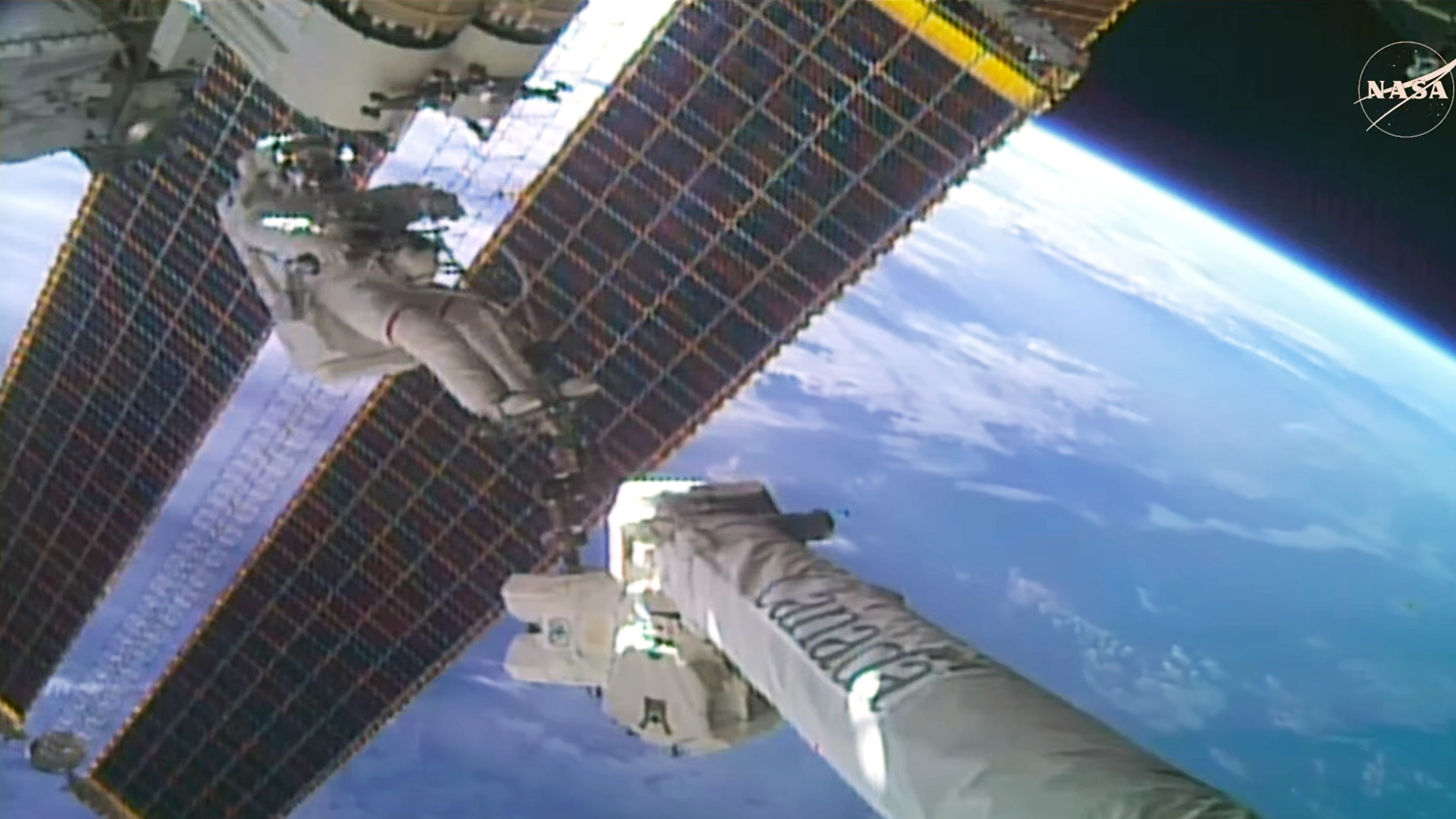
    The International Space Station has moved from receiving its latest power hardware to putting it to work. On October 29, 2026, NASA astronaut Anil Menon and Canadian Space Agency astronaut Joshua Kutryk installed and deployed the station’s seventh roll-out solar array during a spacewalk lasting seven hours and 11 minutes.

    NASA’s completion report identifies the newly equipped circuit as the 2A power channel. The astronauts also prepared for another excursion, planned for November 5, to install the eighth and final array on channel 3B. That final installation remains scheduled work, not a finished upgrade.

    What was accomplished

    The latest installation is a separate milestone from cargo delivery or the earlier fitting of mounting hardware. The array was attached, connected and unfurled outside the station. NASA’s October 30 station update confirmed that it was generating power and described an approximately ten-minute deployment after the tension bolts were released.

    The same update placed the work in the longer campaign that began in June 2021. The intended end state is eight new arrays augmenting the station’s original power system. NASA gives the resulting generation capacity as approximately 215 kilowatts, compared with 160 kilowatts before the augmentation. Those numbers describe the overall upgrade, not the output added by this one panel.

    A Canadian first, with a robotic work platform

    The Canadian Space Agency’s October 30 account identifies this as Kutryk’s first spacewalk. It also records the less visible support behind the two astronauts outside: Luke Delaney operated Canadarm2 from inside the station, with assistance from Jessica Watkins, while the arm provided Menon with a stable platform.

    Canadian astronaut Jenni Gibbons served as capsule communicator. Robotics teams in Longueuil and mission controllers in Houston supported the operation. The successful deployment was therefore not just a test of two suited astronauts’ endurance; it depended on communication, robotic positioning and coordinated work across the station and ground teams.

    Why the panel rolls out

    A NASA technical presentation from 2019 describes the engineering behind the design. Composite booms store strain energy when coiled. Releasing them drives deployment; once extended, they supply stiffness and support. The technology followed a smaller demonstration flown at the station in June 2017.

    The new arrays augment rather than simply replace the old ones. NASA’s design description places them ahead of existing wings, using the station’s established tracking and electrical infrastructure. Unshadowed portions of the older arrays continue contributing power. This is why adding a new array is both a mechanical installation and an electrical integration task.

    The remaining milestone is straightforward to watch: a completed eighth installation, followed by confirmation of the intended configuration. Until then, the supported result is substantial but narrower—the seventh array is deployed and generating electricity. That is real operational progress, without needing to describe the entire campaign as already complete.

    Featured image: Anil Menon on Canadarm2 during the October 29 spacewalk. Credit: NASA+. NASA imagery used for factual editorial reporting under its media-use guidelines.

  • What Smile’s Full Auroral Ring Reveals—and What It Does Not

    What Smile’s Full Auroral Ring Reveals—and What It Does Not

    The European-Chinese Smile mission offers a planetary view of the northern lights. This review examines ESA’s September 30, 2026 commissioning report, not a newly announced October discovery.

    The report said Smile had been cleared for science operations on September 23, after its May 19 launch and June 20 arrival in its science orbit. ESA released ultraviolet footage recorded on July 24, showing activity around the northern auroral ring. It described the camera as the first since 2008 to capture that full ring in ultraviolet, with observations lasting as long as 45 hours.

    Why an ultraviolet camera changes the view

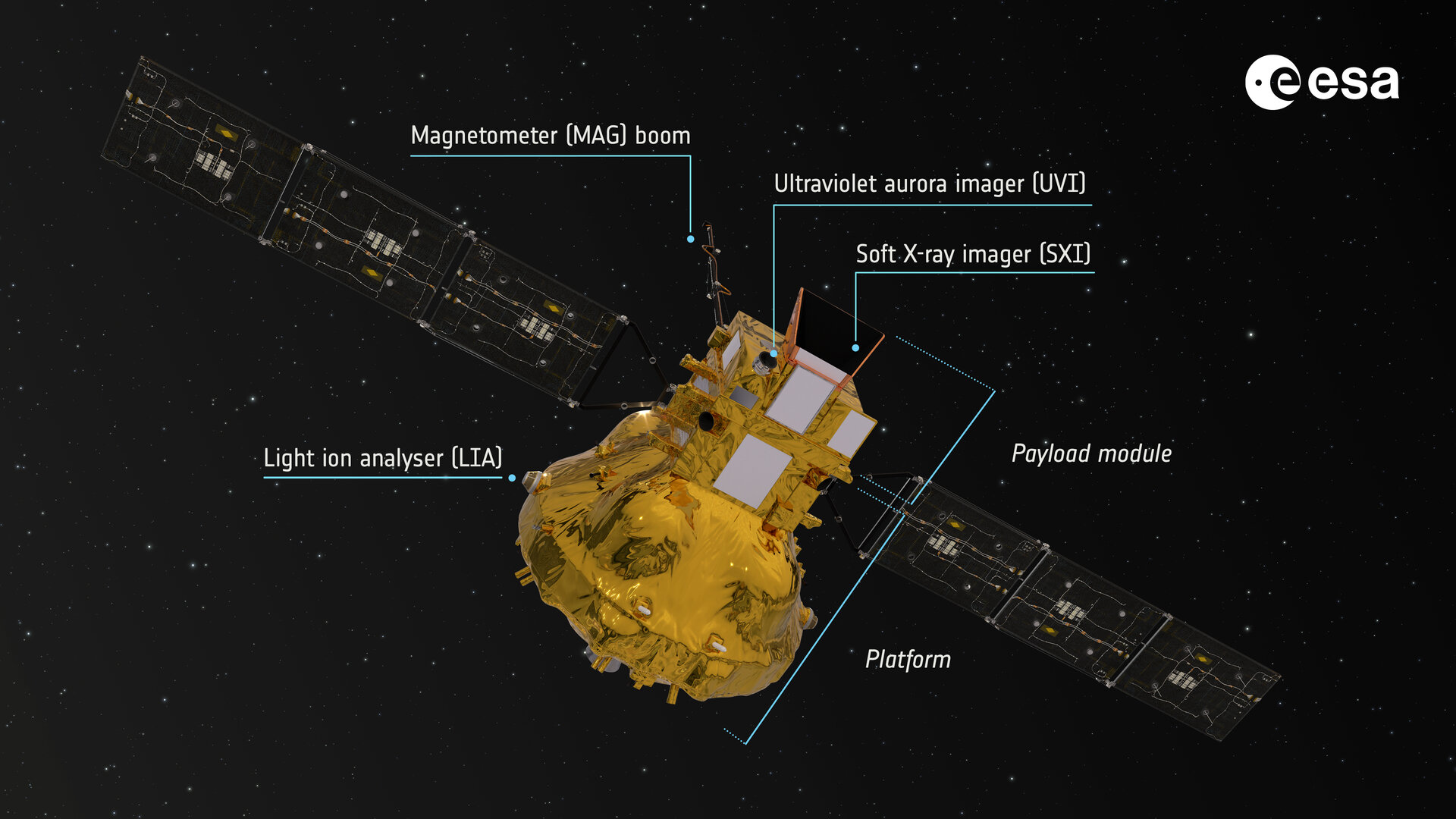
    A photograph from the ground samples one observer’s sky. Smile’s ultraviolet aurora imager, UVI, instead watches the polar region from above. ESA’s instrument explanation describes how ultraviolet measurements allow the mission to follow auroras on both the night and day sides, while filtering the upper atmosphere’s ultraviolet dayglow.

    This is important because an aurora does not stop existing merely because sunlight prevents a person on the ground from seeing it. A full-ring view can show where activity develops and how it moves, rather than forcing researchers to infer the global pattern from a limited viewing area.

    Duration matters as well as coverage. ESA says geomagnetic storms typically persist for two to three days, while earlier spacecraft could follow the resulting auroras for about 15 hours at a time. Smile’s longer observing stretches reduce the gaps in that evolving record. Its orbit carries it high above the North Pole for observations and close to the South Pole for data delivery.

    The other half of the experiment

    Smile’s soft X-ray imager, SXI, is designed to study the Sun-facing boundary of Earth’s magnetosphere. It uses emissions produced when solar-wind particles interact with neutral particles, a process called charge exchange. Those emissions can help map the interaction region; the camera is not taking an ordinary visible-light photograph of magnetic field lines.

    The scientific ambition is to connect changes at that boundary with the auroral response. Comparing broad images with measurements taken at the spacecraft can add spatial context to observations that would otherwise represent a single location. A bright auroral ring alone does not establish every step of that causal chain.

    A caveat the striking images should not hide

    In September, ESA reported excessive stray light in Earth-pointing SXI observations. Software adjustments and changing geometry were expected to help, with a seasonal minimum in mid-October. The prediction does not confirm subsequent resolution.

    The evidence supports ultraviolet progress, not an assumption that every promised capability was already demonstrated. Instruments must be assessed separately: an attractive image cannot substitute for verification of another detector’s performance.

    Featured image: artist’s impression of the labelled Smile spacecraft. Credit: ESA; work performed by ATG under contract to ESA. Source; CC BY-SA 3.0 IGO. This is a spacecraft concept illustration, not the auroral data.

  • Why the ELT Needs 931 Mirror Segments for a 798-Piece Mirror

    Why the ELT Needs 931 Mirror Segments for a 798-Piece Mirror

    The Extremely Large Telescope’s main mirror is not a single enormous disc awaiting delivery. It is an optical system assembled from hundreds of precisely shaped pieces—and maintaining it will require a continuing exchange of those pieces. An ESO milestone announced October 14, 2026 makes that distinction especially useful: nearly 500 mirror segments had reached Chile.

    That shipment count is more than half the complete production run of 931, not a claim that half the telescope was already observing. The working primary mirror will contain 798 segments. Another 133 provide replacements while used segments receive fresh reflective coatings. ESO also reported that the last segment had entered production at Safran Reosc in France.

    Why build more mirrors than fit?

    According to ESO’s technical description of M1, the 39-metre mirror has six sectors, each containing 133 segment types. A seventh set supplies a corresponding spare for every type. The pieces are not all interchangeable: their optical shapes depend on where they sit in the overall curved surface.

    Over time, reflective coatings need renewal. The maintenance plan calls for exchanging two segments a day, keeping the telescope supplied with freshly coated surfaces without routinely leaving an empty position. That makes the spare set part of the operating design, not simply insurance against broken glass.

    The mirror also has to behave as one surface while the telescope moves and temperatures and wind conditions change. Sensors measure neighboring segments’ relative positions; actuators correct their alignment. Merely placing hundreds of polished hexagons side by side would not produce the intended image.

    A delivery milestone, not first light

    The arriving segments go to the ELT Technical Facility at Paranal for inspection and coating. They are not being counted as installed, aligned and commissioned on the telescope at Cerro Armazones. ESO’s October announcement put the overall project above 75 percent complete and scheduled first observations with scientific instruments for late 2030. That remains a plan, not a completed event.

    It is worth separating several milestones that are often compressed into “the telescope is ready”: manufacturing a component, delivering it, integrating it into a working system, and demonstrating scientific performance. The October update establishes real progress at the manufacturing and logistics stages. It does not erase the later engineering work.

    What the size is intended to buy

    ESO’s specifications give the telescope a light-collecting area of 978 square metres and describe an optical and near-infrared observatory with a five-mirror design. Its location is Cerro Armazones in Chile’s Atacama Desert, at an altitude of 3,046 metres.

    Collecting area and image quality are different requirements. A larger collecting surface supplies more light for measuring faint targets, while alignment, atmospheric correction and the scientific instruments determine how usefully that light can be analyzed. The mirror shipment matters because it supplies the physical surface on which those later capabilities depend. The less photogenic work of storage, coating and replacement will remain essential long after the construction headlines end.

    Featured photograph: mirror-segment containers at the ELT Technical Facility, early October 2026. Credit: ESO, CC BY 4.0.

  • Satellite Glints and Reentries: Two Different Explanations for Strange Sky Lights

    Satellite Glints and Reentries: Two Different Explanations for Strange Sky Lights

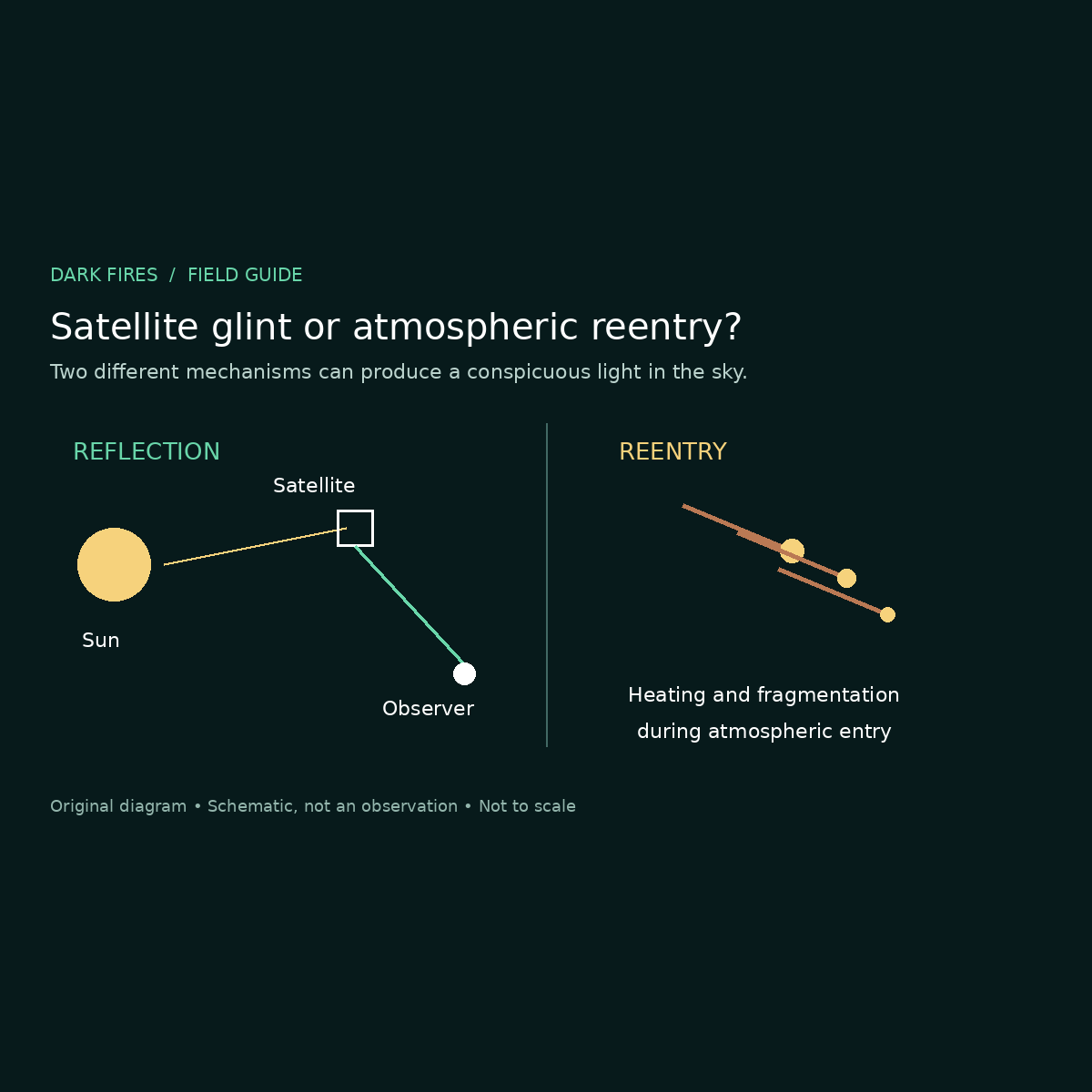
    A satellite brightening dramatically and a spacecraft breaking apart during reentry are not the same phenomenon. One can be a change in reflected sunlight; the other involves passage through the atmosphere. Distinguishing those mechanisms gives a UAP investigation better questions than simply asking whether a light “looked like a satellite.”

    A flash does not require an explosion

    In a paper submitted to arXiv on May 21, 2024, Anthony Mallama and Richard E. Cole investigated extreme Starlink flares. They found that strong specular reflections—sunlight preferentially directed toward an observer—could account for the brightness they examined. They also applied their analysis to a flare reported as a UAP by pilots of two commercial aircraft.

    This is a specific research analysis, not evidence that every cluster of unusual lights is Starlink. Its useful general lesson is that apparent brightness can change sharply because illumination and viewing geometry change, without a corresponding explosive event or burst of propulsion.

    There is also a less dramatic way for an orbiting object to disappear. NASA’s Spot the Station FAQ explains that the International Space Station is visible by reflected sunlight and can leave view when it enters Earth’s shadow. The observer’s darkness and the spacecraft’s illumination are different questions.

    Reentry is a different physical process

    NASA’s Orbital Debris Program Office describes spacecraft entering the atmosphere after natural orbital decay or a controlled manoeuvre. Aerodynamic forces can exceed structural limits, breaking a vehicle apart; fragments then continue descending and experiencing heating. Some materials and components survive longer than others, and some can reach the ground.

    A group of luminous fragments can therefore be consistent with a reentry. But “consistent with” is not a confirmed identification. The visual description alone does not name the spacecraft, establish its orbit, or exclude other luminous events.

    Build two hypotheses, not one label

    For a reflection hypothesis, ask whether a candidate satellite’s predicted position and direction fit the observation at the recorded location and time. Then ask whether its illumination and viewing geometry make the brightness behaviour plausible. A brightening by itself answers neither question.

    For a reentry hypothesis, compare the observation with the relevant object’s trajectory and reentry information. Note whether the recording shows distinguishable fragments, how their relative positions change, and how that evidence fits the proposed event. Do not assign a universal duration threshold: an observer may capture only part of an event.

    These are proposed lines of investigation, not a claim that a casual observer can derive a secure identification from appearance. A match should account for the sequence, not merely one impressive frame. A missing catalogue match is also not positive evidence for an extraordinary alternative.

    Keep the mechanism and the identification separate

    “Possible reflection,” “possible reentry” and “identified satellite” represent different evidentiary stages. Preserve that distinction in the headline and conclusion. Ordinary space activity supplies testable explanations for some striking lights, but selecting the right explanation still requires event-specific records.

    Image: Original diagram by Dark Fires comparing reflection and atmospheric entry. It is conceptual, not an observation or a reconstruction of the 2024 paper’s case.

  • A Polygon in the Sky—or in the Lens? Understanding Defocused UAP Images

    A Polygon in the Sky—or in the Lens? Understanding Defocused UAP Images

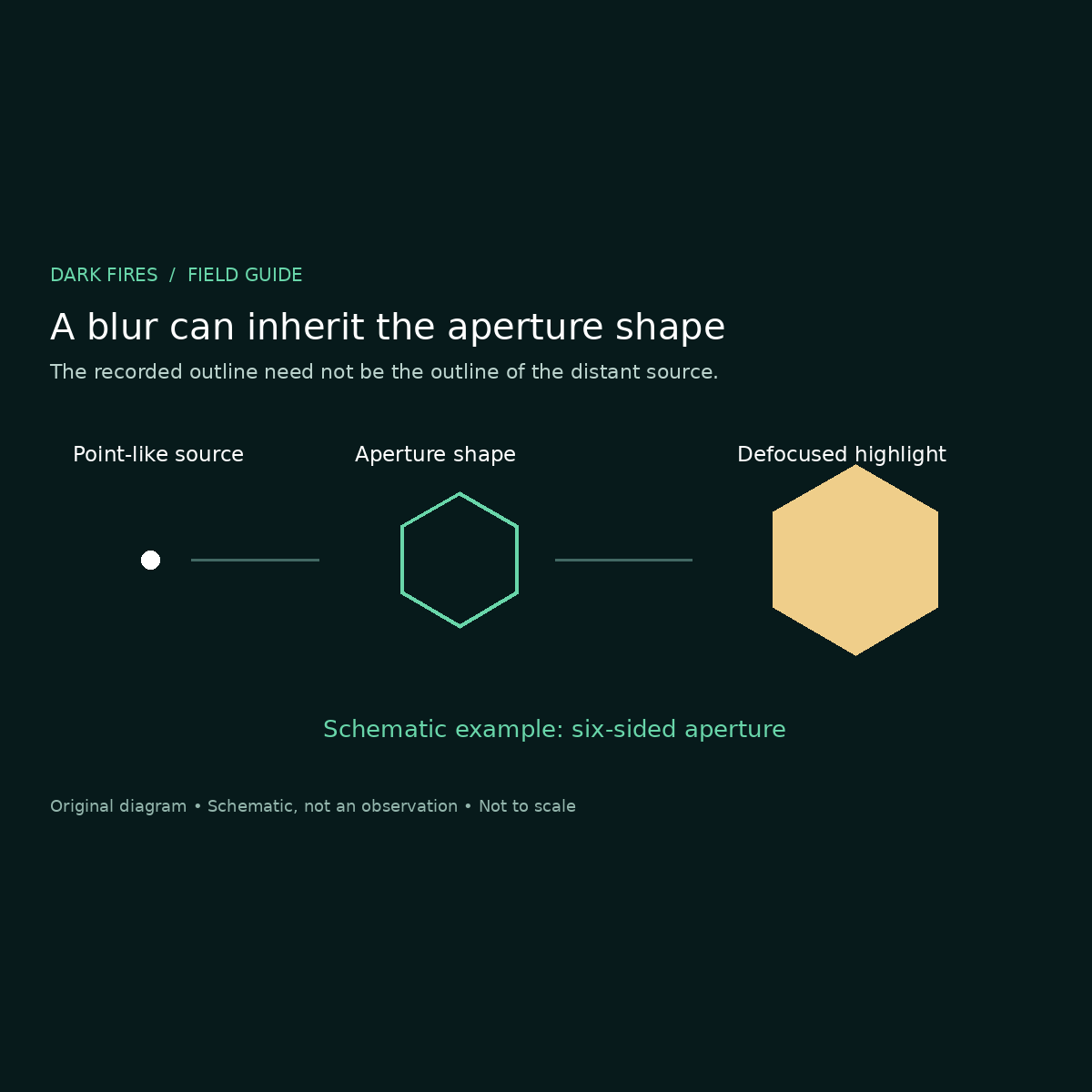
    A glowing polygon in a night-sky photograph is not automatically a polygonal object. Before interpreting its edges as the shape of a UAP, ask a more basic question: was the light in focus? An optical system can impose a recognizable outline on a source too small to reveal its own shape.

    Where the polygon comes from

    Nikon’s explanation of bokeh describes how the lens diaphragm affects out-of-focus highlights. A more circular opening produces rounder highlights; a more hexagonal opening can produce six-sided ones. This is a property of image formation, not evidence that the light source itself has six sides.

    The term bokeh normally refers to the character or quality of out-of-focus rendering, rather than a special class of object. Canon’s 2025 beginner guide also describes the influence of aperture, lens choice and the separation of subject and background. Familiar decorative-light photographs deliberately exploit this effect.

    Those manufacturer explanations establish an optical mechanism. They do not establish that a particular unexplained image was produced by it. Moving from “this can happen” to “this happened here” requires information about the actual recording.

    A practical comparison

    Suppose a video contains several unrelated distant lights. If all acquire similar polygonal outlines when focus changes, a shared camera effect becomes a strong candidate explanation for the common shape. If one light alone has a stable, sharply resolved structure while other objects are demonstrably in focus, the same inference is less straightforward.

    That comparison is an analytical proposal, not a universal diagnostic. Sources at different distances may not share focus, and brightness differences can make them appear unlike each other. A test should preserve those complications rather than selecting only the frames that resemble the desired answer.

    Test the equipment, not just the silhouette

    A useful reconstruction uses the same camera and lens, with the original focal length, aperture and focus behaviour documented as closely as possible. Photograph a known distant light under comparable conditions, then vary focus while retaining the original recordings. The question is whether the system can reproduce the observed shape under relevant settings—not whether some camera somewhere can make a similar blob.

    Do not treat every camera as having an adjustable, multi-bladed aperture. Determine what the actual device uses. Nor should a demonstration with one setting silently stand in for an event recorded with another. A convincing optical explanation is specific enough to make a testable prediction.

    Where the original device or settings are unavailable, the appropriately limited conclusion may be that defocus is plausible but unconfirmed. An enlarged crop alone cannot provide the missing camera history.

    What remains unexplained

    Explaining the outline is not necessarily identifying the source. A defocused light could still require separate investigation of its location, motion and timing. Conversely, not reproducing one outline immediately does not demonstrate an exotic craft. Keep two questions separate: what emitted or reflected the light, and what did the camera do to that light?

    Image: Original diagram by Dark Fires. The six-sided example illustrates an optical possibility; it is not a reconstruction of a reported UAP.

  • McMinnville’s UFO Photos: Why an Authentic Image Does Not Settle Distance

    McMinnville’s UFO Photos: Why an Authentic Image Does Not Settle Distance

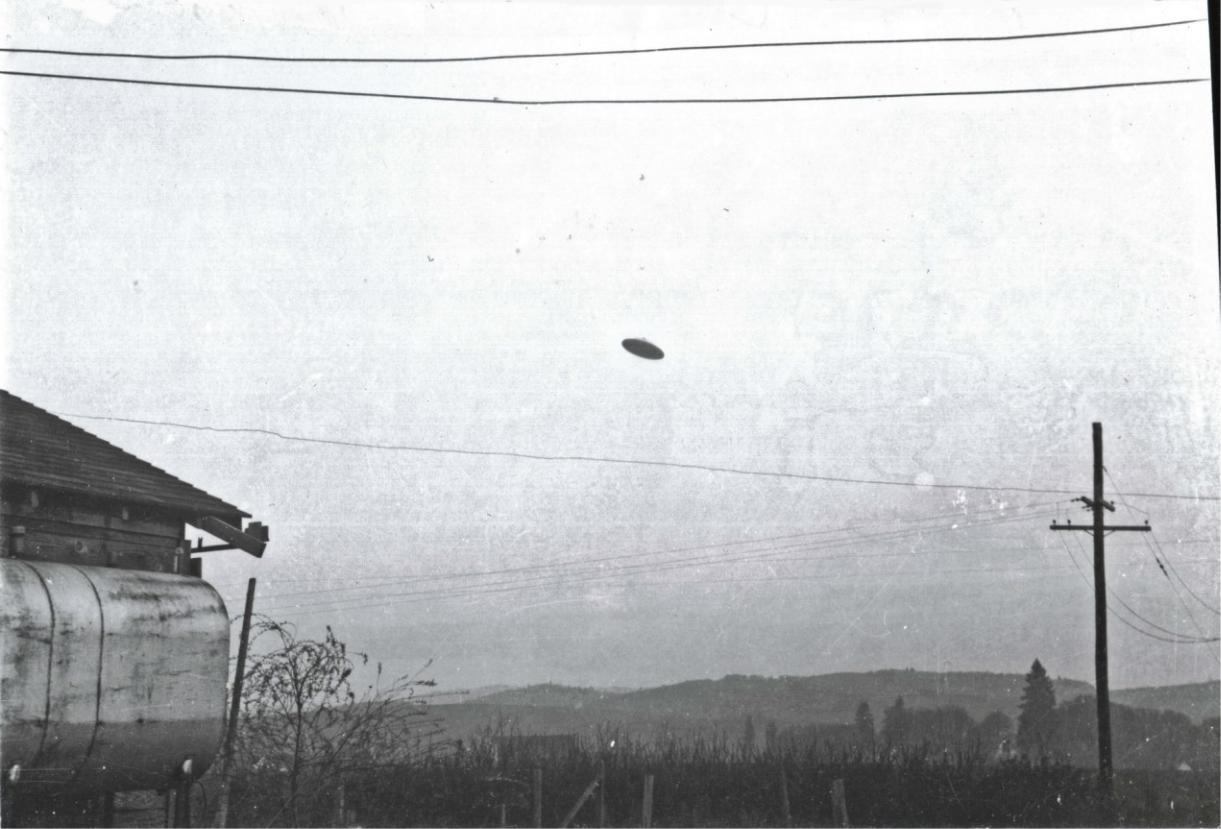
    Two photographs associated with McMinnville, Oregon, have survived a debate far longer than the encounter they purportedly show. Paul and Evelyn Trent reported the sighting on May 11, 1950; the local Telephone-Register published the pictures on June 8. The useful question is not simply whether the photographs are “real.” A photograph can faithfully record either a distant object or a nearby model.

    What Hartmann actually concluded

    William K. Hartmann investigated the photographs for the University of Colorado UFO study. His Case 46 analysis, preserved in an NCAS transcription, describes examining the original negatives and interviewing the witnesses years after the event. He considered the evidence compatible with a large, distant object, but expressly did not claim to have excluded fabrication.

    His strongest argument involved brightness. Atmospheric scattering can make a distant dark surface look paler. The object’s relatively bright underside therefore appeared significant. But estimating distance that way required assumptions about its surface reflectance and illumination. Hartmann also acknowledged that its position beneath the overhead wires in both exposures supported a suspended-model possibility.

    This is why quoting only his favorable concluding sentence misrepresents the investigation. His analysis was conditional, and the alternative explanation was inside the report, not an objection discovered decades afterward.

    Maccabee revisited the optical assumptions

    Physicist Bruce Maccabee later argued that the brightness evidence still favored distance after additional corrections. In an archived version of his own analysis, he describes incorporating laboratory estimates of veiling glare, a film-exposure curve and field measurements of surface-brightness ratios. Veiling glare is light scattered within a camera that can brighten darker parts of an image.

    Maccabee concluded that the underside remained too bright for an ordinary nearby white-paper surface under his model. His paper originated in the proceedings of a 1976 Center for UFO Studies conference; the linked version says it was modified in April 2000. The 2013 print timestamp visible in the PDF is not the date of a new investigation.

    The important distinction is between improving a model and directly measuring an unknown object’s range. Maccabee’s work offers a competing optical interpretation, not a second camera position with an independently known baseline.

    A later study argued for a suspended model

    Antoine Cousyn, François Louange and Geoff Quick reached the opposite assessment in their 2013–2014 IPACO study. They examined geometry involving the object and wires, then used an image-processing method to search for a faint suspension thread. Their introductory chronology distinguishes an April 2013 study, a June supplement and a May 2014 update that included corrections to the software’s calculations.

    The authors regarded the resulting evidence as decisive for a model. That remains their analytical conclusion: this article has not independently reproduced their processing. Readers should examine the input scans, reconstruction assumptions and detection procedure rather than treat a computer-assisted result as automatically assumption-free.

    McMinnville is therefore more instructive as a disagreement about inference than as a slogan about authenticity. The surviving images permit serious analysis, yet distance, surface properties and photographic processing remain central to the competing explanations. Preserving those distinctions neither proves a spacecraft nor excuses a weak hoax argument. It makes clear what each analysis actually has to demonstrate.

    Featured image: Paul Trent’s first McMinnville photograph, reported taken May 11, 1950. Paul Trent; public domain in the United States (published without a copyright notice). Scan reproduced in the IPACO analysis. The object’s identity and distance are disputed. Photograph reproduced in the IPACO report (PDF page 2). Public-domain provenance.

  • Chiles–Whitted 1948: Separating Pilot Statements from the Air Force Checklist

    Chiles–Whitted 1948: Separating Pilot Statements from the Air Force Checklist

    In the early hours of July 24, 1948, Eastern Air Lines pilots Clarence Chiles and John Whitted reported an unusual object passing their DC-3 near Montgomery, Alabama. Their account became one of the early UFO era’s best-known aviation cases. Reading the surviving documents reveals a distinction that dramatic retellings can lose: a government case file can contain several kinds of evidence, including estimates and material copied from newspapers.

    A pilot explicitly called the speed an estimate

    NICAP preserves a five-page reproduction of the witness statements, sketches and Air Force checklist. Whitted’s statement describes an object passing on the right, with a cigar-like appearance and what he interpreted as two rows of illuminated windows. He estimated a speed around 700 mph, but expressly qualified it as an estimate.

    He placed the viewing duration between five and ten seconds and said he heard no noise and felt no turbulence from the object. These are significant features of his account. They should not be replaced with a claim that a measured shock wave or aircraft wake independently verified a close encounter.

    Even an experienced aviator’s estimate does not supply a known distance to an unfamiliar light or shape. Without that distance, apparent angular motion cannot uniquely determine physical speed. Recognizing this limitation does not accuse the witness of dishonesty; it distinguishes an observation from a reconstructed trajectory.

    The checklist names its newspaper source

    The last page of the same PDF is particularly revealing. Its speed entry cites the Atlanta Constitution of July 25, 1948. The entry describing an abrupt climb and a burst of flame cites that newspaper too. The checklist is an authentic part of the investigative record, but those particular entries are not an additional independent observation merely because they appear on an Air Force form.

    There are also differences in numerical descriptions: the checklist gives ten to fifteen seconds in sight, whereas Whitted’s statement gives five to ten. These discrepancies do not automatically solve the case. They show why combining every dramatic detail into one seamless account overstates the precision of the surviving evidence.

    How the fireball explanation fits the debate

    Researcher Martin Shough’s later technical review argues that a fragmenting fireball remains viable. His proposed mechanism is that separated bright fragments can be interpreted as illuminated windows within a single vehicle, while changing viewing geometry can suggest a maneuver. He compares early statements with later accounts rather than treating all descriptions as equally contemporaneous.

    That is a retrospective explanatory model, not a recovered instrument track of this event. It is useful because it identifies specific features an ordinary explanation would need to reproduce; it should not be upgraded into a measured reconstruction simply because it is plausible.

    Even the chronology needs care. A later Air Force intelligence report, transcribed by Project 1947, assigns July 25 to its summary of the incident, while the case checklist records July 24. The newspaper citation is also July 25. The distinction between event date, newspaper date and later compilation is precisely what archival reading must preserve.

    The Chiles–Whitted record documents a striking report by two pilots. Its strongest historical lesson is not that every reported detail was independently verified, but that source provenance matters inside an official file as much as outside it.

    Featured image: U.S. Air Force checklist for Incident 144, July 24, 1948. Public-domain federal record, reproduced in NICAP’s archive. Its entries include explicitly attributed newspaper material. Archived Air Force checklist (PDF page 5).

  • Exeter 1965: What the Air Force File Says About Lights, Aircraft and Timing

    Exeter 1965: What the Air Force File Says About Lights, Aircraft and Timing

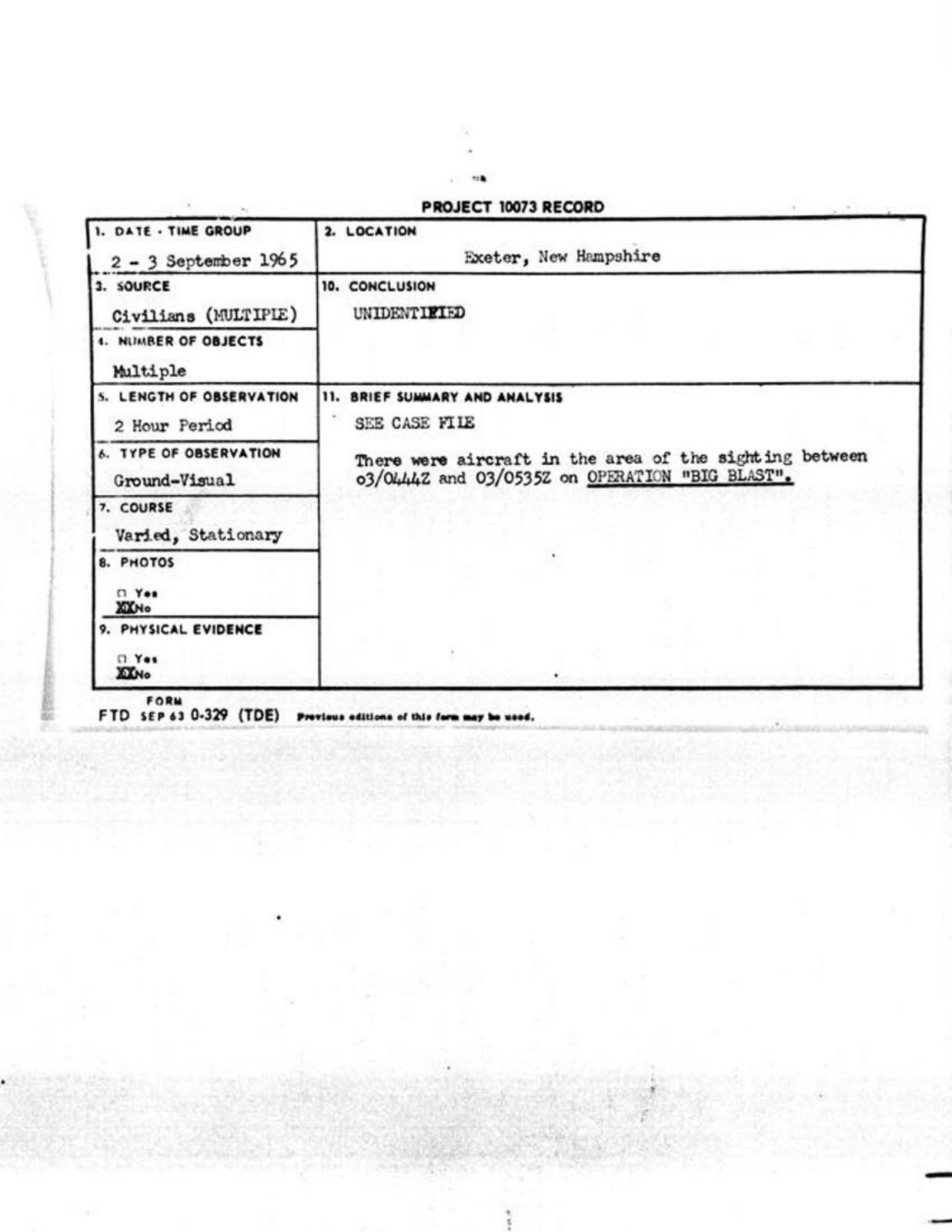
    The Exeter, New Hampshire, UFO case is often presented as a contest between three witnesses and an aircraft explanation. The surviving Air Force file shows something more useful: investigators checking competing timelines, witnesses challenging an explanation, and a case summary that retained an unidentified conclusion. None of those facts establishes an extraterrestrial visitor.

    The sighting and the first military assessment

    The central encounter was reported in the early hours of September 3, 1965. The people named in the initial military report were Norman Muscarello and Exeter police patrolmen Eugene Bertrand and David Hunt. The Blue Book records reproduced by NICAP contain a September 15 report from Pease Air Force Base describing five bright red lights that appeared to move together. The report labels the observation ground-visual, not radar tracking, and preserves estimated positions and motion supplied by witnesses.

    On PDF page 36, Major David H. Griffin reported that he had not identified a probable cause. He considered the observers reliable and said he had inspected the area. He also noted B-47 aircraft activity, but did not believe it explained the sighting. That is an investigator’s contemporary judgment. Reliability is relevant to whether an account deserves investigation; it does not turn an estimated altitude into a measured one.

    Aircraft activity was a real lead, not a completed identification

    The file documents an effort to check military operations rather than merely invoke them. An Eighth Air Force reply on PDF page 23 says the operational portion of the Big Blast “Coco” training mission was complete by 04:30 UTC on September 3. Ten participating B-47s from Pease were estimated to reach their initial approach fix between 04:44 and 05:35 UTC. The reply explains that Exeter lay within the recovery traffic pattern and lists the lights approaching aircraft might display.

    These details support investigating aircraft as a possible explanation. They do not independently place a particular bomber at the witnesses’ reported location and time. An estimated arrival at an approach fix is also not a recorded landing time. Substituting one for the other makes a reconstruction look more precise than its source.

    Time zones matter here. New Hampshire was on Eastern Daylight Time, four hours behind UTC: that stated approach interval corresponds to 12:44–1:35 a.m. locally. Those are conversions of the document’s operational estimates, not newly recovered observations.

    The witnesses disputed the timing

    In their December 2, 1965, letter, reproduced on PDF pages 20–21, Bertrand and Hunt objected to the public explanation and its effect on their professional credibility. They distinguished Muscarello’s earlier report from their subsequent visit to the site and placed their own observation nearly an hour after 2 a.m. They also described seeing what they thought was a high-altitude B-47 after the unusual lights disappeared.

    The letter is important testimony about the witnesses’ position, not independent confirmation that their identification judgments were infallible. Conversely, documented aircraft activity elsewhere in the timeline does not automatically invalidate their account.

    The file’s front summary marks the case unidentified and records no photographs or physical evidence. Read together, the pages establish a serious investigation with unresolved identification—not a measured demonstration of extraordinary flight. Exeter’s enduring value is the unusually visible paper trail: readers can compare the report, the operational information and the witnesses’ objections instead of choosing a verdict first and fitting the records around it.

    Featured image: U.S. Air Force Project Blue Book case summary for Exeter, September 1965. Public-domain federal record, reproduced in NICAP’s document archive. Archived Blue Book record (PDF page 1).

  • The Gorman UFO Pursuit: What the Early Air Force Record Actually Says

    The Gorman UFO Pursuit: What the Early Air Force Record Actually Says

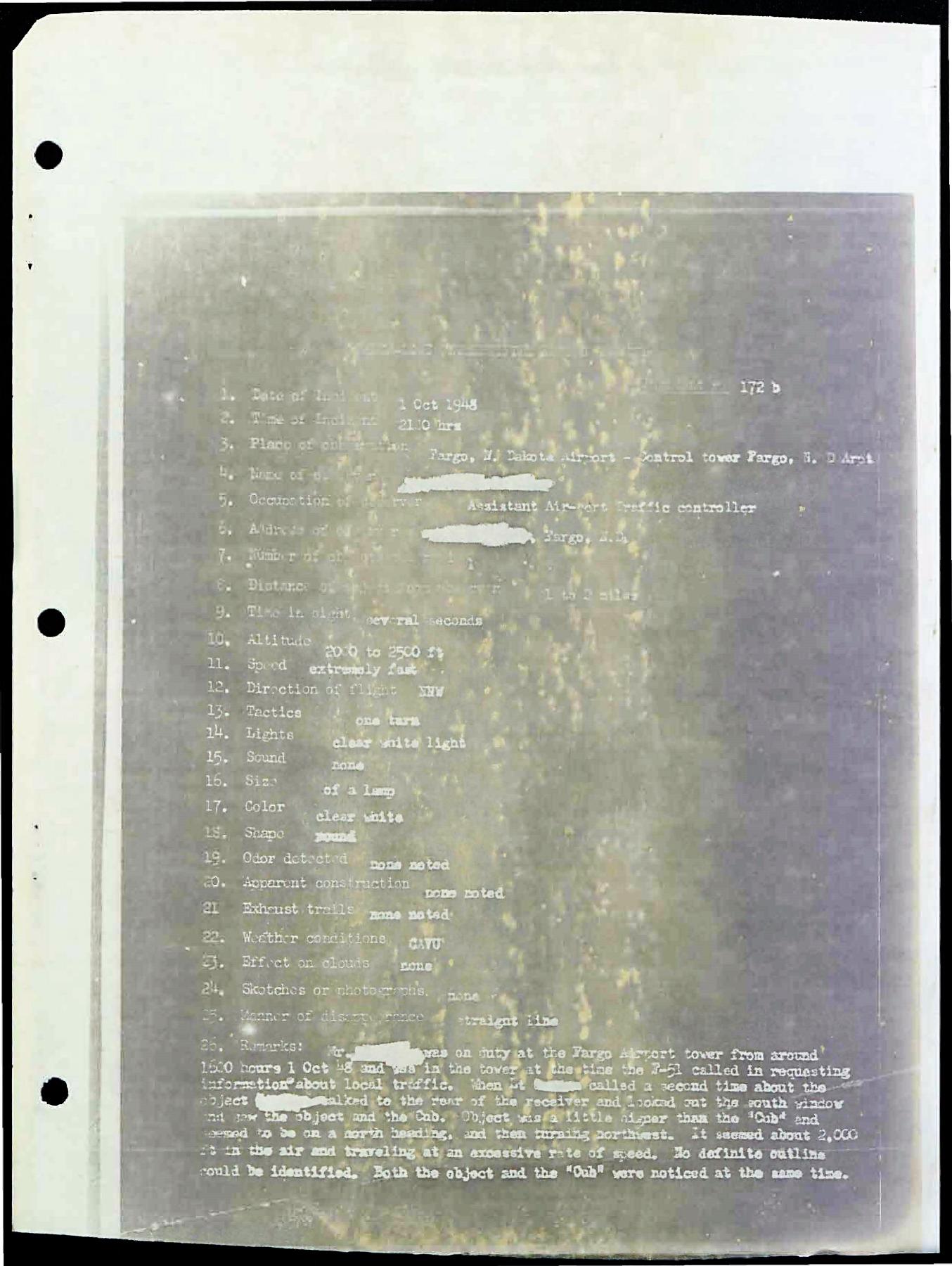
    On October 1, 1948, North Dakota Air National Guard pilot George F. Gorman reported pursuing an unexplained light near Fargo. The familiar label “UFO dogfight” compresses a complicated record into a dramatic conclusion. A better starting point is what the early Air Force documents actually describe—and which parts were observations rather than measurements.

    A pursuit described through a single light

    An Air Force intelligence report bearing a cover date of April 28, 1949, summarized Gorman’s account: while flying an F-51 near Fargo at approximately 8:30 p.m., he noticed an intermittent white light below him and attempted to intercept it. The summary described a 27-minute encounter and attributed apparent evasive movements and superior performance to the light. These are the report’s descriptions of the episode, not independently instrumented flight data. The document is available as a Project 1947 transcription of Air Intelligence Report 100-203-79, especially Appendix C, paragraphs s and its continuation.

    The same summary contains a crucial limitation: the witnesses described a small white light without a visible structure attached. That is a very different evidentiary situation from observing a clearly outlined aircraft at a known distance. A light’s apparent movement across a cockpit is real as an observation, but converting that movement into an object’s speed requires its distance and the observer’s own motion.

    What the additional witnesses add

    The University of Wyoming’s collection guide links copies of the Project Sign records preserved in the Richard F. Haines papers. In the digitized file, PDF page 11 records an assistant airport traffic controller’s observation. His form describes a white light, no identifiable outline and a brief view. It also records seeing the light and a Cub aircraft at the same time.

    That matters: the case cannot fairly be reduced to one pilot reporting something nobody else noticed. But corroboration has a scope. A controller’s brief sighting of a light is not automatically confirmation of every turn, estimated speed or apparent response described during a longer airborne pursuit. The individual forms deserve to be read before their observations are merged into one narrative.

    A provisional report, not a measured performance test

    The 1949 intelligence summary stated that investigation had eliminated another aircraft or a meteorological balloon. That statement establishes the assessment expressed in this particular document. It does not, by itself, supply the underlying tests or make the conclusion immune to revision. The report’s broader introduction explicitly framed its analysis as provisional and said firm conclusions about the existence and origin of the reported objects were not substantiated.

    Those two layers should stay together: investigators took the reports seriously, while the same document acknowledged limits in what could be established. Its speculation about possible origins is historical evidence of intelligence thinking, not proof that any proposed origin was correct.

    Gorman remains useful as a record-review case because it separates three questions often collapsed into one: was a light reported by multiple people, did the pilot experience an apparent pursuit, and was extraordinary flight performance demonstrated? The early documents support taking the first two seriously. They do not provide a calibrated range-and-position record that independently settles the third.

    Featured image: U.S. Air Force Project Sign witness-report page, October 1948. Public-domain federal record; archival copy courtesy of the American Heritage Center, University of Wyoming, Richard F. Haines papers, Collection 12722, Box 1. Archived Project Sign record (PDF page 11).

  • When the Observer Moves: Why Parallax Matters in UAP Footage

    When the Observer Moves: Why Parallax Matters in UAP Footage

    A UAP crossing a landscape in a moving aircraft’s video may be moving in the world, moving only in the image, or doing both. Before turning that crossing into a speed estimate, an investigator has to reconstruct the observer’s motion. Parallax is the geometric reason.

    A change of viewpoint changes the view

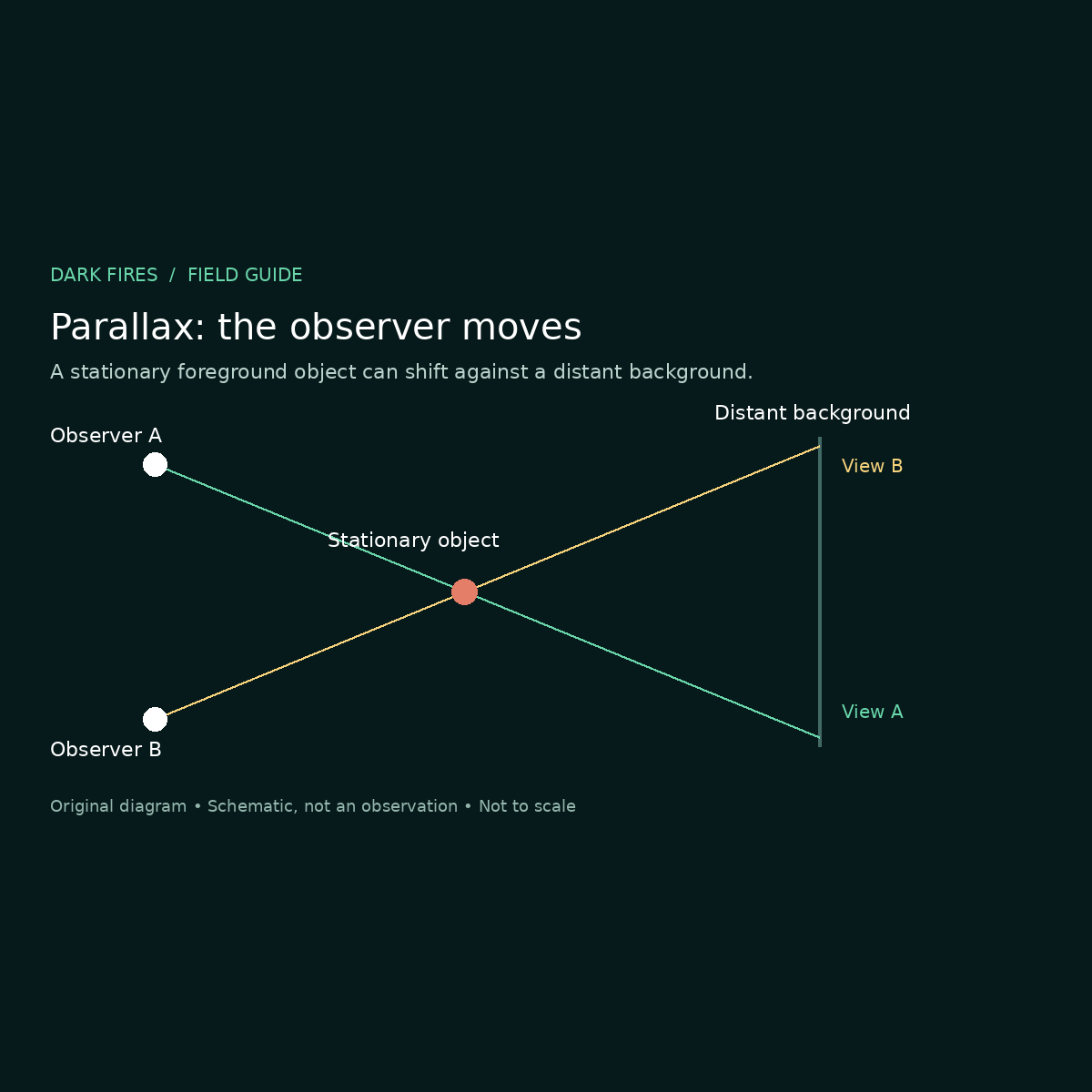
    ESA’s explanation of parallax uses an accessible demonstration: hold a finger still and alternate which eye is open. The finger shifts relative to the background even though it has not changed position. A nearer finger produces a larger displacement. Astronomers exploit the same underlying geometry, using known observing baselines to measure distances.

    The lesson for a moving camera is not that a suspicious object must be stationary. It is that apparent motion combines the geometry of the scene with changes in the observing position. A background is a reference in the picture, not automatically a complete reference frame for physical speed.

    A roadside experiment

    Imagine riding as a passenger past a stationary fence post with a distant hill behind it. The post sweeps across the hill in your view. If a camera tracks the post, keeping it near the centre, the hill instead appears to slide behind it. Neither description requires the post to travel across the countryside.

    Now replace the post with an airborne object whose range is unknown. Motion relative to the background remains measurable, but the reconstruction has more unknowns. The object could also be drifting or flying. To distinguish those possibilities, the analysis needs more than the speed at which scenery passes through the frame.

    A real warning from aviation records

    NASA’s Aviation Safety Reporting System discussed observer-dependent visual confusion in CALLBACK issue 246, published in December 1999. One report described observers initially interpreting lights from two separate aircraft as one rapidly approaching aircraft; the distinction became apparent when more lighting detail was visible. The bulletin emphasized the difficulty of night scenes with few surface references.

    These are safety reports and teaching examples, not controlled experiments establishing what happened in an unrelated UAP encounter. Their value is narrower: experienced observers can share a compelling interpretation before enough scene information is available to test it.

    What a reconstruction must keep separate

    Record the camera platform’s position and motion, its viewing direction, and the object’s measured position within the image. Changing camera aim is not the same thing as moving the camera’s location. A reconstruction should account for both, rather than attributing every shift to the target.

    Then test plausible ranges and trajectories. Does a slow or stationary object fit the observed sequence once observer motion is included? If several solutions fit, state that ambiguity. If none fits, identify the residual mismatch instead of declaring that parallax has been “ruled out” without showing the geometry.

    Parallax is neither a universal explanation nor a dismissal of witnesses. It is a necessary bookkeeping step: separate movement of the viewpoint from movement of the thing being viewed before deciding how extraordinary the latter really is.

    Image: Original diagram by Dark Fires. The two sightlines illustrate changed alignment; this is not an observed UAP track and is not to scale.