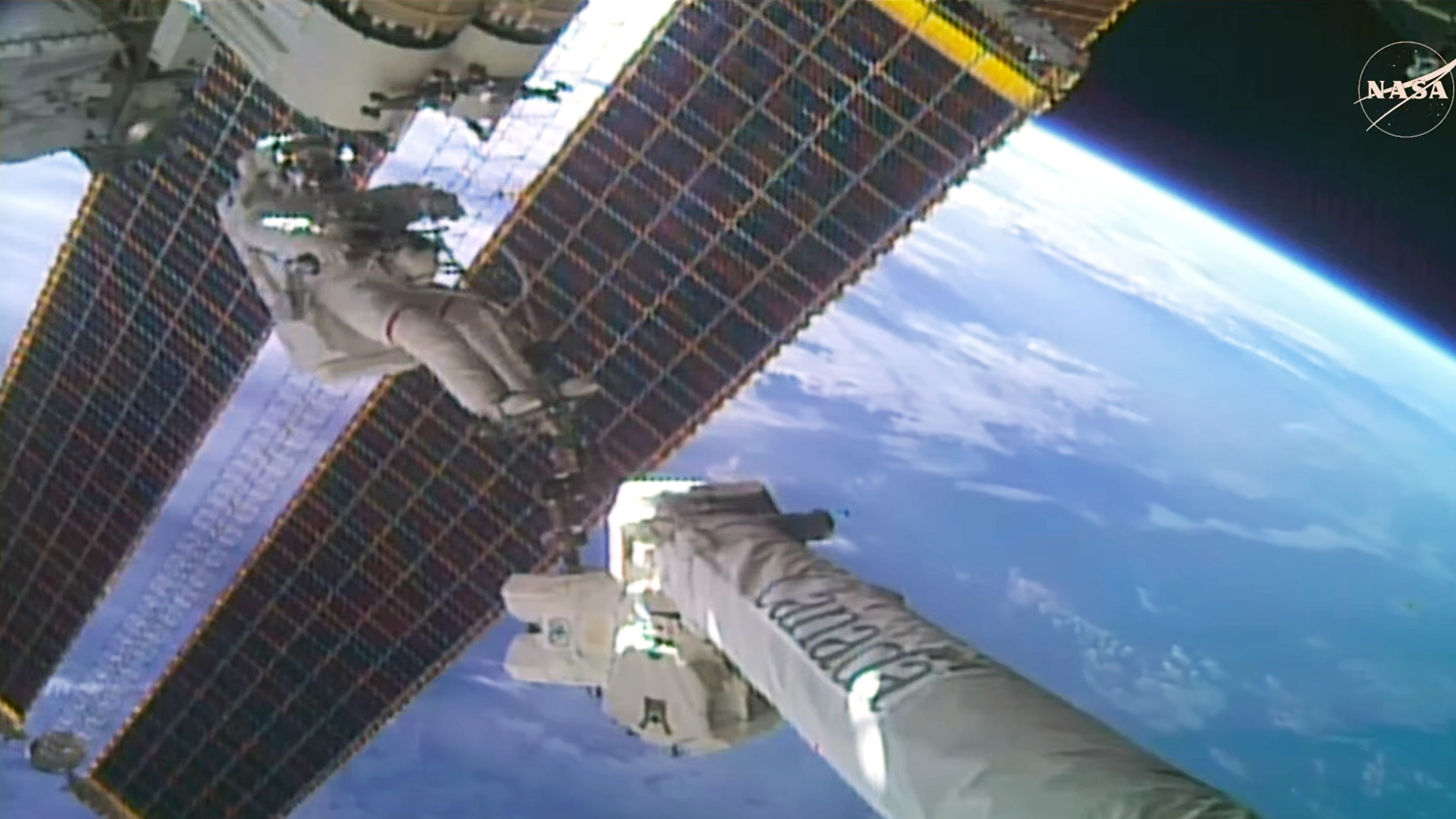
The International Space Station has moved from receiving its latest power hardware to putting it to work. On October 29, 2026, NASA astronaut Anil Menon and Canadian Space Agency astronaut Joshua Kutryk installed and deployed the station’s seventh roll-out solar array during a spacewalk lasting seven hours and 11 minutes.
NASA’s completion report identifies the newly equipped circuit as the 2A power channel. The astronauts also prepared for another excursion, planned for November 5, to install the eighth and final array on channel 3B. That final installation remains scheduled work, not a finished upgrade.
What was accomplished
The latest installation is a separate milestone from cargo delivery or the earlier fitting of mounting hardware. The array was attached, connected and unfurled outside the station. NASA’s October 30 station update confirmed that it was generating power and described an approximately ten-minute deployment after the tension bolts were released.
The same update placed the work in the longer campaign that began in June 2021. The intended end state is eight new arrays augmenting the station’s original power system. NASA gives the resulting generation capacity as approximately 215 kilowatts, compared with 160 kilowatts before the augmentation. Those numbers describe the overall upgrade, not the output added by this one panel.
A Canadian first, with a robotic work platform
The Canadian Space Agency’s October 30 account identifies this as Kutryk’s first spacewalk. It also records the less visible support behind the two astronauts outside: Luke Delaney operated Canadarm2 from inside the station, with assistance from Jessica Watkins, while the arm provided Menon with a stable platform.
Canadian astronaut Jenni Gibbons served as capsule communicator. Robotics teams in Longueuil and mission controllers in Houston supported the operation. The successful deployment was therefore not just a test of two suited astronauts’ endurance; it depended on communication, robotic positioning and coordinated work across the station and ground teams.
Why the panel rolls out
A NASA technical presentation from 2019 describes the engineering behind the design. Composite booms store strain energy when coiled. Releasing them drives deployment; once extended, they supply stiffness and support. The technology followed a smaller demonstration flown at the station in June 2017.
The new arrays augment rather than simply replace the old ones. NASA’s design description places them ahead of existing wings, using the station’s established tracking and electrical infrastructure. Unshadowed portions of the older arrays continue contributing power. This is why adding a new array is both a mechanical installation and an electrical integration task.
The remaining milestone is straightforward to watch: a completed eighth installation, followed by confirmation of the intended configuration. Until then, the supported result is substantial but narrower—the seventh array is deployed and generating electricity. That is real operational progress, without needing to describe the entire campaign as already complete.
Featured image: Anil Menon on Canadarm2 during the October 29 spacewalk. Credit: NASA+. NASA imagery used for factual editorial reporting under its media-use guidelines.
Leave a Reply