DARK FIRESORIGINS UNKNOWN

Author: Dark Fires

  • How to evaluate a UAP video: an evidence checklist

    A striking UAP clip can raise a good question without answering it. Before deciding what an object is, establish what the recording actually shows. This Dark Fires guide offers a repeatable way to separate an observation, an interpretation, and the information still missing.

    Start with the claim, not the caption

    Write the central claim in one sentence. “A light crosses the frame” is an observation. “A craft accelerates beyond known technology” is an interpretation that requires measurements. If a caption supplies distance, speed, or size, ask where those numbers came from. A confident narrator cannot supply information absent from the recording.

    NASA’s UAP FAQ emphasizes the shortage of high-quality observations and the difficulty of drawing scientific conclusions from limited data. NASA also states that it has found no credible evidence of extraterrestrial life and no evidence that UAP are extraterrestrial. That is a useful standard for reading a clip: uncertainty should remain visible in the conclusion.

    Build a small evidence file

    1. Find the earliest available upload. Record its URL, uploader, publication date, and any claimed recording date. Those two dates are different pieces of information. Look for the full sequence rather than a cropped repost.
    2. Record the circumstances. Note location, local time and time zone, viewing direction, weather, and whether the camera operator was stationary or moving. Mark each item as documented, reported by the witness, or unknown.
    3. Identify the recording system. A phone, infrared sensor, telescope, and screen recording do not provide identical information. Ask whether zoom, stabilization, playback speed, or editing changed during the sequence.
    4. Look for a reference. Is there a horizon, building, star field, or another independently identified object? Without a reliable reference, avoid treating motion across the image as a measured trajectory through space.
    5. Seek independent evidence. A second angle or a documented observation by another person can add information. Ten accounts reposting the same clip are still one recording.

    Keep an untouched original and a working copy

    If you recorded the footage, keep the camera file and a backup before cropping, stabilizing, brightening or adding labels. Work on a separate copy and keep a short edit log. Preserve the seconds before and after the striking moment: they may show a zoom change, a camera turn or a useful landmark.

    NIST’s work on digital video exchange notes that conversion can reduce image quality and lose metadata. A downloaded social-media version may therefore be less informative than the camera original. Ask whether the available file is original, exported, screen-recorded or reposted, and leave the answer as unknown when it cannot be established.

    For a more formal record, a file hash can help check that a later copy matches the one preserved. NIST’s digital-evidence preservation guidance explains integrity checks and transfer records. Matching hashes do not prove that a scene was genuine or that a file was never edited before preservation.

    A reusable observation worksheet

    Copy these prompts into your notes. Label each answer measured, witness-reported or unknown; do not fill a gap with a guess. Keep exact locations and personal details private unless sharing them is necessary and authorized.

    • Source: original URL or filename; uploader; recording date; publication date; original file available?
    • Time and place: local time with time zone; observing location; direction faced; approximate duration.
    • Camera: device or sensor; zoom and field of view if known; stabilization or tracking; camera or vehicle movement.
    • Scene: weather; horizon or landmarks; stars or identified objects; changes outside the cropped view.
    • Observation: describe the visible light, shape and motion before naming an object. Record exact timestamps for important changes.
    • Comparison: proposed explanation; supporting evidence; evidence against it; missing test; conclusion and confidence.

    This worksheet is an editorial adaptation of the measurement questions in the NASA UAP independent study report, not an official reporting form. The report emphasizes sensor information, reliable context and complementary observations.

    A worked example: the “instant turn”

    Imagine a hypothetical twelve-second video of a white dot that appears to turn sharply. The uploader says it was miles away, but provides no method for estimating range. The camera also pans at the apparent turn.

    A responsible first description is: “The dot changes position within the image while the camera moves.” To go further, request the uncut recording and compare the dot with a stable background reference. If none is visible, explain that limitation. Do not calculate acceleration from a guessed distance and then present the result as a measurement. Equally, do not name a specific ordinary object solely because the clip is inconclusive.

    Test explanations without choosing a favorite

    Make a short list of candidate explanations and write what evidence would support or weaken each one. For an aircraft hypothesis, relevant questions might concern a matching route, timing, and light pattern. For an image artifact, ask whether the feature follows camera movement or appears in other footage from the same device. A missing match is a reason for another check, not automatic proof of an extraordinary origin.

    Keep a distinction between “consistent with,” “likely,” and “identified.” Identification should explain which evidence connects the object to the proposed explanation. If the available material cannot decide the question, “unresolved with the available data” is a useful result.

    Use ordinary sky observations as a comparison

    A scheduled satellite pass provides a useful practice case because its time and path can be checked. Our ISS spotting guide compares common satellite, aircraft and meteor clues. A visual resemblance is a hypothesis to test against the circumstances, not a substitute for a timing and direction match.

    Distance is especially important when a claim involves speed. Galileo’s three-site study shows why separated, synchronized observations can provide information that one camera cannot. Our account of the PR135 bird-wingbeat analysis illustrates a different testable clue while preserving the limitations of the released flight data.

    Share a conclusion someone else can check

    When sharing your assessment, include the original link, relevant timestamps, the strongest observation, and the largest uncertainty. Separate witness statements from your own analysis. Keep the original file intact if you recorded it, and make any enhanced or annotated version clearly identifiable as an edit.

    Dark Fires follows this approach in our editorial policy. If you spot a factual error or have source material that changes an assessment, send the article link and supporting evidence to admin@darkfires.org. This is a reader’s evidence checklist, not a forensic authentication of any particular video.


  • Jay Stratton’s UAP memoir is being developed for television

    A television adaptation is being developed from Out of the Shadows, Jay Stratton’s memoir about his work in government UAP investigations, according to The Debrief’s September 24 report.

    What has been announced?

    Terence Winter and filmmaker Dan Farah are attached as executive producers. The book concerns Stratton’s career, including his leadership of the Unidentified Aerial Phenomena Task Force. The reported publication date is October 13, 2026.

    The report did not identify a cast, distribution platform, or release date for the series. A development announcement should therefore be distinguished from a scheduled broadcast.

    How to read this story

    A screen adaptation can bring the history of UAP investigations to a wider audience. It is an entertainment development, however, and does not independently verify claims about the origin of unidentified objects. Readers should assess any factual claims against the underlying records and corroborating evidence.

    For a documentary angle on the same period, see our brief on the Navy’s Scott Bray email release.

    Source: Micah Hanks, The Debrief, September 24, 2026. This is an original editorial summary of that report.

  • Scott Bray UAP emails: what the Navy released and withheld

    Scott Bray UAP emails: what the Navy released and withheld

    A Navy Freedom of Information Act response has opened a substantial collection of correspondence involving former Deputy Director of Naval Intelligence Scott Bray. The Black Vault reported the release on September 24, 2026.

    The numbers need context

    The Navy identified 1,321 responsive pages. It released 1,019 pages with redactions and withheld 302 pages entirely. Those figures distinguish the records found from the material actually available to readers.

    The request, filed in May 2022, searched for UAP-related terms in Bray’s email correspondence. The released exchanges cover subjects including briefings, public communications, the UAP Task Force, and the government’s organizational response.

    What this evidence can tell us

    Emails can help establish who was communicating, when a discussion occurred, and how officials prepared public statements. A forwarded article or allegation is not automatically an official endorsement. Redactions and a search limited to specific terms also prevent this collection from serving as a complete history.

    For readers examining a particular claim, the strongest approach is to locate the original email chain, read its surrounding context, and separate the author’s own words from attached or forwarded material.

    Source: John Greenewald, The Black Vault’s report and document archive, September 24, 2026.

  • AARO workshop records: what narrative UAP data can reveal

    AARO workshop records: what narrative UAP data can reveal

    Newly released records add administrative detail to AARO’s August 2025 research workshop, according to The Black Vault’s September 25, 2026 report. The documents concern participants, planning, and outreach rather than a new determination about the origin of UAP.

    Why narrative data is difficult

    The workshop examined how researchers might organize witness accounts drawn from different reporting systems. Unlike a standardized sensor measurement, a narrative can vary in terminology, precision, and supporting documentation.

    This creates an important distinction for readers: finding patterns in accounts is not the same as identifying the objects described. Similar descriptions can be useful leads, but conclusions require corroboration and attention to ordinary explanations.

    A partial administrative record

    The released FOIA response and records identify 89 responsive pages. Nineteen were withheld entirely; the remaining 70 contained redactions. The release also describes engagement with Uruguay’s official UAP investigators.

    These records can help researchers trace institutional decisions and collaboration. They should not be presented as proof of extraterrestrial activity.

    The working agenda identifies scheduled speakers, while correspondence describes a planned Pentagon meeting with Uruguay’s official commission, CRIDOVNI. The wider effort concerned connecting datasets, improving the handling of witness reports and using analytical tools with human oversight.

    The available material does not establish whether a formal information-sharing agreement resulted or whether the proposed follow-up workshop took place. Plans and invitations document intent; they do not by themselves document the outcome.

    For a practical way to examine narrative records, see our NUFORC archive-reading guide.

    Source: John Greenewald, The Black Vault, September 25, 2026.

    Editorial update, 14 October 2026: The earlier Dark Fires brief on this same records release has been consolidated here, preserving its unique context. This article is based on the linked reporting and released documents; it does not claim an independent investigation.

  • UAP shootdown allegations: what remains unverified

    UAP shootdown allegations: what remains unverified

    Liberation Times reported on September 26, 2026 that the White House had not answered its questions about alleged authorization to engage unidentified airborne objects by the outlet’s September 25 deadline.

    A claim is not a confirmed event

    The questions followed journalist Ross Coulthart’s allegations that U.S. forces had brought down unidentified objects. The outlet reported that a defense official referred questions about presidential authorization to the White House. The report explicitly described the alleged UAP shootdowns as unverified.

    A missed response deadline establishes that questions remained unanswered at the time of publication. It does not establish that a claimed operation took place, what any object was, or whether it had an extraterrestrial origin.

    What would strengthen the record?

    Useful corroboration would include attributable official statements, contemporaneous records, independently examinable sensor data, and a clear chain of custody. Dates and locations should be established before drawing connections between separate aviation incidents and witness accounts.

    The outlet also sought clarification about an alleged operation to attract unidentified objects. Neither allegation is verified by the lack of a response. This account concerns what the outlet reported at its September 25 deadline, rather than a claim that the White House has remained silent through today.

    The aviation-safety questions deserve attention even while the extraordinary claims remain unresolved. Our UAP evidence checklist explains how to separate an observation, an interpretation and missing information.

    Source: Christopher Sharp, Liberation Times, September 26, 2026. This assessment concerns the evidence described in that report.

    Editorial update, 14 October 2026: The earlier Dark Fires brief on the same unanswered inquiry has been consolidated into this article, preserving its unique context. This is a source-based summary and assessment, not an independent investigation of the alleged operations.

  • Alien oceans and strange waves: a science roundup in context

    Alien oceans and strange waves: a science roundup in context

    The Debrief’s September 29, 2026 science roundup connects several frontiers of research, from Saturn’s moon Enceladus to unusual wave behavior and archaeological discoveries. For readers interested in life beyond Earth, the Enceladus item is the most directly relevant.

    Habitability is a research question

    The roundup points to research suggesting that conditions on Enceladus could be favorable for life and that possible signs might be detectable. That is a reason to investigate, not an announcement that extraterrestrial organisms have been found.

    When reading an astrobiology headline, distinguish an environment that could support life, a proposed way to detect a biological signal, and an actual observation that survives competing non-biological explanations. Each is a different step.

    Other discoveries in the roundup

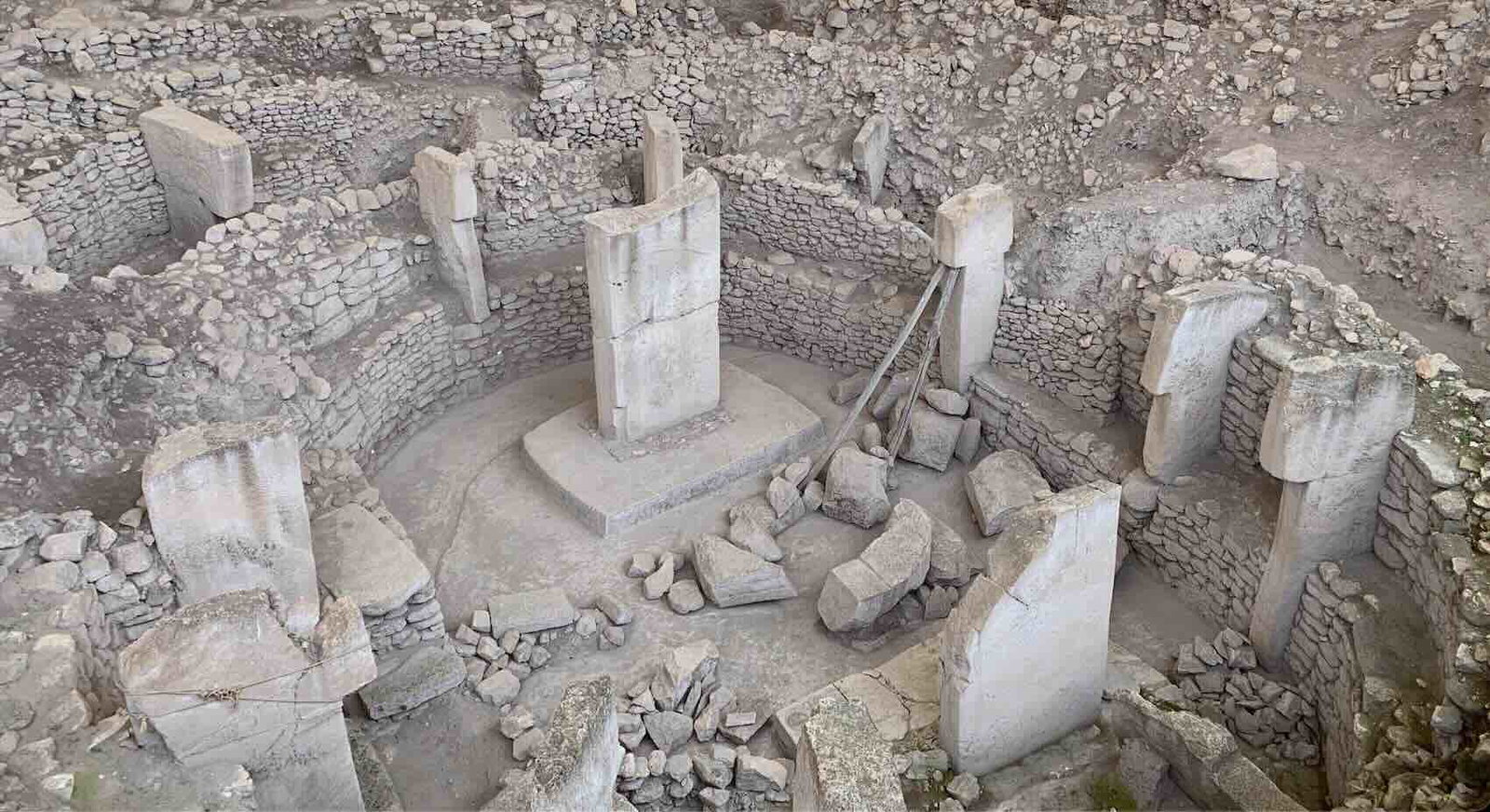
    The report also highlights stable wave patterns called hyperbolic wave attractors, intact human burials at Göbekli Tepe, and ancient arrows emerging from Norwegian ice. These stories concern physics and human history; they should not be treated as evidence of alien intervention simply because they are unusual.

    The linked reporting provides the details behind each item. Readers can follow the individual studies and excavation reports to assess the evidence more closely.

    Source: Micah Hanks, The Debrief, September 29, 2026.

  • Wyoming witnesses report renewed lights near Cody

    Cowboy State Daily reports that a Cody resident has again seen unusual lights near Cedar Mountain after a months-long gap. Emma Jane Jackson’s article also describes a separate witness’s account from the Bighorn Mountains.

    Wyoming MUFON director Richard Beckwith reviewed the videos. He said one recording might show a distant airplane, while he could not explain the Cedar Mountain footage with the information available.

    These remain witness reports and preliminary interpretations, not independently established evidence of alien craft. Apparent motion, distance, camera movement, and missing contextual data can complicate the identification of nighttime lights. The linked report includes the witnesses’ accounts and video material for readers to assess.

    Source: Cowboy State Daily — original reporting, published September 26, 2026.

    Dark Fires news brief. This original summary is based on the linked outlet’s reporting; it is not an independent investigation.

  • Senator Rounds declines to identify cause of Langley drone incursions

    Senator Mike Rounds declined to discuss a suggested Chinese connection to the 2023 Langley Air Force Base drone incursions in a September 24 interview published by Ask a Pol UAP on September 26.

    Reporter Matt Laslo asked whether Chinese technology was responsible. Rounds did not confirm that premise. He pointed to legislation concerning foreign ownership of land near sensitive U.S. sites and said adversaries exploit American freedoms.

    The interview supplies a current congressional response to an older aviation-security incident. It does not identify the objects’ operator or establish an alien origin. Readers should distinguish the reporter’s question from what the senator actually confirmed.

    Source: Ask a Pol UAP — original reporting, published September 26, 2026.

    Dark Fires news brief. This original summary is based on the linked outlet’s reporting; it is not an independent investigation.