The European-Chinese Smile mission offers a planetary view of the northern lights. This review examines ESA’s September 30, 2026 commissioning report, not a newly announced October discovery.
The report said Smile had been cleared for science operations on September 23, after its May 19 launch and June 20 arrival in its science orbit. ESA released ultraviolet footage recorded on July 24, showing activity around the northern auroral ring. It described the camera as the first since 2008 to capture that full ring in ultraviolet, with observations lasting as long as 45 hours.
Why an ultraviolet camera changes the view
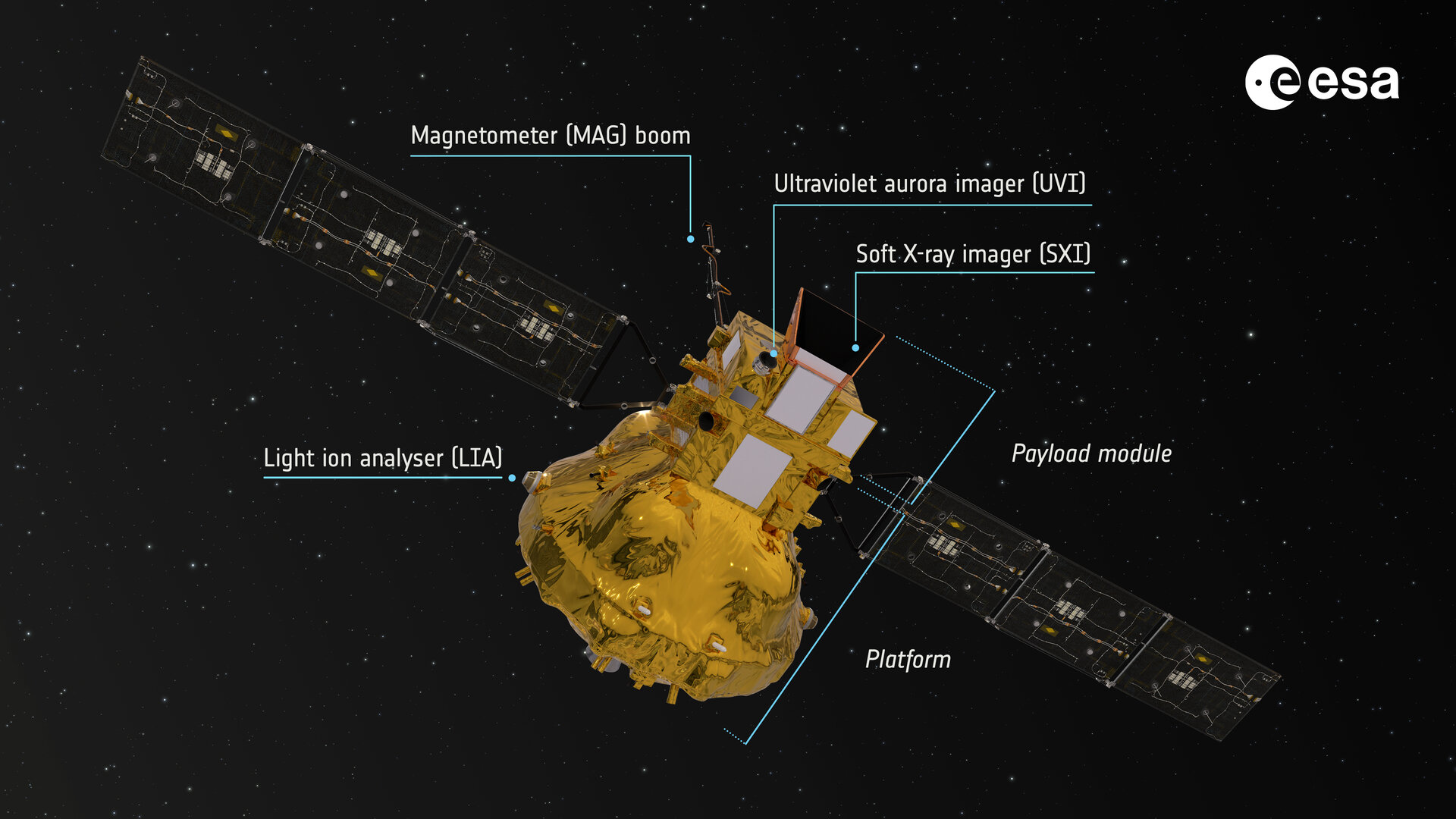
A photograph from the ground samples one observer’s sky. Smile’s ultraviolet aurora imager, UVI, instead watches the polar region from above. ESA’s instrument explanation describes how ultraviolet measurements allow the mission to follow auroras on both the night and day sides, while filtering the upper atmosphere’s ultraviolet dayglow.
This is important because an aurora does not stop existing merely because sunlight prevents a person on the ground from seeing it. A full-ring view can show where activity develops and how it moves, rather than forcing researchers to infer the global pattern from a limited viewing area.
Duration matters as well as coverage. ESA says geomagnetic storms typically persist for two to three days, while earlier spacecraft could follow the resulting auroras for about 15 hours at a time. Smile’s longer observing stretches reduce the gaps in that evolving record. Its orbit carries it high above the North Pole for observations and close to the South Pole for data delivery.
The other half of the experiment
Smile’s soft X-ray imager, SXI, is designed to study the Sun-facing boundary of Earth’s magnetosphere. It uses emissions produced when solar-wind particles interact with neutral particles, a process called charge exchange. Those emissions can help map the interaction region; the camera is not taking an ordinary visible-light photograph of magnetic field lines.
The scientific ambition is to connect changes at that boundary with the auroral response. Comparing broad images with measurements taken at the spacecraft can add spatial context to observations that would otherwise represent a single location. A bright auroral ring alone does not establish every step of that causal chain.
A caveat the striking images should not hide
In September, ESA reported excessive stray light in Earth-pointing SXI observations. Software adjustments and changing geometry were expected to help, with a seasonal minimum in mid-October. The prediction does not confirm subsequent resolution.
The evidence supports ultraviolet progress, not an assumption that every promised capability was already demonstrated. Instruments must be assessed separately: an attractive image cannot substitute for verification of another detector’s performance.
Featured image: artist’s impression of the labelled Smile spacecraft. Credit: ESA; work performed by ATG under contract to ESA. Source; CC BY-SA 3.0 IGO. This is a spacecraft concept illustration, not the auroral data.
Leave a Reply