DARK FIRESORIGINS UNKNOWN

Author: Dark Fires

  • Shag Harbour 1967: The Search Record Is Stronger Than the Recovery Story

    Shag Harbour 1967: The Search Record Is Stronger Than the Recovery Story

    Shag Harbour offers something more useful than a dramatic retelling: a dated operational trail showing how authorities responded to reports of lights descending toward the sea. That trail establishes an investigation. It does not establish that investigators recovered a spacecraft.

    Start with the emergency

    The Canadian government’s June 2025 Sky Canada report describes the October 4, 1967 event in Nova Scotia as a reported row of lights descending and entering the water. The RCMP and Coast Guard responded on the assumption that an aircraft might have crashed. No wreckage was found. That modern summary is a retrospective account, not a newly released 1967 finding.

    The contemporary paperwork is more granular. In the National Research Council archival file reproduced here, a Rescue Co-ordination Centre message sent on October 5 records an RCMP corporal and six other witnesses. It relays a dark object with four lights, an apparent descent, a flash and a light remaining on the surface. These details are reported observations, not instrument-derived measurements of a vehicle.

    Orders are not recoveries

    The file’s subsequent messages show an underwater investigation being requested, divers assigned and the search area expanded. An October 8 status message says two days of underwater searching in good conditions produced no result, and plans another search that morning. The next status report records another negative result and termination of the search at 2130Z on October 8.

    That final date deserves care. An administrative receipt stamp can show October 9 without moving the search itself into the next day. A record’s transmission time, receipt time and description of an earlier event are three separate dates or times. The scan preserves those distinctions rather than a single simplified timeline.

    What the official response can tell us

    A rescue deployment demonstrates that authorities took a possible emergency seriously enough to act. It is not an official endorsement of every inference made by a caller. Search teams routinely have to choose a working location and mobilize before the identity of a reported object is settled.

    Equally, a search that finds nothing does not demonstrate that nobody saw anything. Its result belongs to a specified area, period and method. It cannot supply the missing identity by itself. The defensible conclusion is narrower: the documented operation failed to produce the physical recovery that would have allowed investigators to test an object directly.

    Any separate claim about a hidden recovery, movement to another location or a later encounter needs its own dated records. It cannot borrow verification merely from the existence of the original rescue operation. Shag Harbour’s historical interest survives that discipline. The file preserves a substantial public response to an unresolved report, while leaving the central identification question open.

    Source note: the linked PDF is a third-party reproduction of Canadian government archival records, including operational messages on PDF pages 10–18, rather than an official-hosted download.

    Featured image: Generated illustration. Conceptual maritime-search artwork, not a photograph or reconstruction of the operation.
  • Trans-en-Provence 1981: Physical Traces Without a Proven Craft

    Trans-en-Provence 1981: Physical Traces Without a Proven Craft

    The Trans-en-Provence investigation is often invoked as a UFO case with physical evidence. The phrase is fair only if the next question follows: evidence of what? The French investigators documented and tested material from a reported landing location, but their conclusions did not establish that an extraordinary aircraft caused it.

    A brief observation, a longer investigation

    The GEIPAN case page dates the event to January 8, 1981. A man working on his property reported a whistling sound and a gray, circular object descending, briefly touching down and departing. He described the entire observation as lasting roughly 30 to 40 seconds. A ground mark was subsequently examined by gendarmes, who visited on January 9 and collected samples.

    GEIPAN’s summary separates the sighting from the laboratory findings. It describes compacted soil, small deposits including iron-related material, and plant changes varying with distance from the trace. It also explicitly says the work did not prove the lone witness’s narrative. The cause remained undetermined.

    The timing of the samples matters

    GEPAN Technical Note 16, dated March 1, 1983, supplies the investigation’s structure. GEPAN learned of the case on January 12, after gendarmes had sampled the location. Heavy rain had fallen over the intervening weekend. The scientific team visited on February 17, when further soil and vegetation samples were collected.

    The report describes comparisons between plants close to the mark and plants farther away. Its conclusion says the physical analyses were insufficient for precise estimates of mass, pressure or heating. Several possible mechanisms could fit the effects; the plant results likewise lacked a single, precise interpretation. The researchers considered the environmental changes significant while keeping their relationship to the reported object open.

    Why measurements do not automatically identify a source

    This is a distinction between measuring an effect and identifying its cause. A laboratory can detect differences between two samples. To turn those differences into a claim about a particular vehicle requires a further link: a characteristic signature, a well-controlled comparison or another independent observation that excludes competing causes.

    Distance-dependent changes are interesting because they can guide new tests. They are not, on their own, a unique fingerprint of a propulsion system. Nor is an electrical-field hypothesis equivalent to measuring such a field during the event. A proposed mechanism must survive tests that distinguish it from other processes capable of altering the same material.

    The strongest reading of Trans-en-Provence therefore avoids two shortcuts. It should not dismiss the entire inquiry as merely a strange anecdote, because samples and analyses exist. It should not describe those analyses as proof of an alien landing, because the report preserves uncertainty about the connection. The enduring value is a concrete experimental problem, with a dated sampling history and explicit limits, rather than a solved identity.

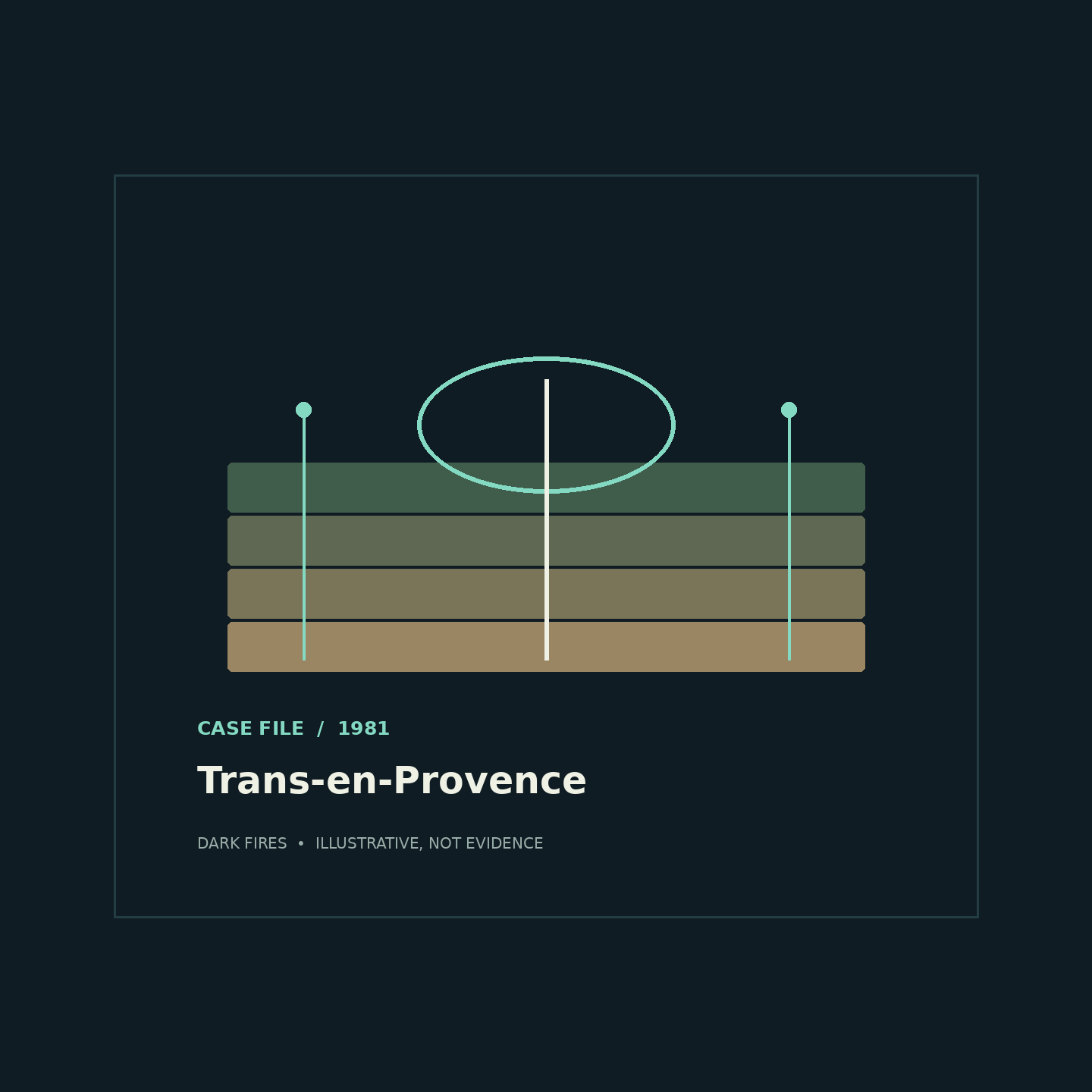
    Featured image: Generated illustration. Conceptual soil-sampling diagram, not actual case evidence.

  • Valensole 1965: Why the Archive’s “D” Label Needs Its Footnote

    Valensole 1965: Why the Archive’s “D” Label Needs Its Footnote

    A letter in a UFO database can look more decisive than the investigation behind it. Valensole, the French close-encounter report dated July 1, 1965, is a particularly useful test: GEIPAN’s own anniversary note explains that its unexplained classification was assigned by default to help people find the case.

    The report and the later paperwork

    According to the official GEIPAN case summary, a farmer in a lavender field reported a whistling sound, an unfamiliar dark object on the ground and two figures who returned to it before it departed. He later described star-shaped ground marks with a central hole. Those are the witness’s claims, rather than a sequence photographed or independently recorded as it happened.

    The chronology matters. Local gendarmes first interviewed him on July 2, then accompanied him to the location that evening. Another brigade documented and photographed the site on July 3. A further detailed statement followed on August 18. GEIPAN says curiosity-seekers had already walked over the marks. It also records no additional witness account and no further clue found around the observation site.

    What GEIPAN actually said in 2015

    The agency’s June 26, 2015 publication note is unusually candid. GEPAN, the predecessor to GEIPAN, did not exist in 1965; it was created in 1977. Successive officials had collected material about Valensole, but had not published an in-depth investigation. The note presents access to three gendarmerie reports as the useful contribution of the fiftieth anniversary.

    It also explains the classification. Because of the case’s unusual character, it was placed in category D by default to make online searches easier. That explanation is narrower than a claim that a modern scientific inquiry had exhausted every ordinary explanation and established an unknown vehicle. The document is dated 2015, not 1965, and should not be mistaken for a contemporary verdict.

    Three questions that should stay separate

    Did somebody report a remarkable experience? What did investigators subsequently find at the location? What caused the reported experience and any marks? These are different questions. A police record can establish that a statement was taken without validating everything in it. A photograph of disturbed soil can document the soil without showing how the disturbance occurred.

    That distinction does not require calling the witness dishonest. It requires identifying which parts of a story can be checked independently. The gap between an observation and a scene examination also matters: additional visitors introduce possible changes that later measurements cannot simply reverse.

    Valensole remains worth reading because the archive preserves both the extraordinary narrative and a warning about its institutional label. Readers should follow that warning. The case is a documented report with unresolved interpretation, not an official certification of extraterrestrial visitors.

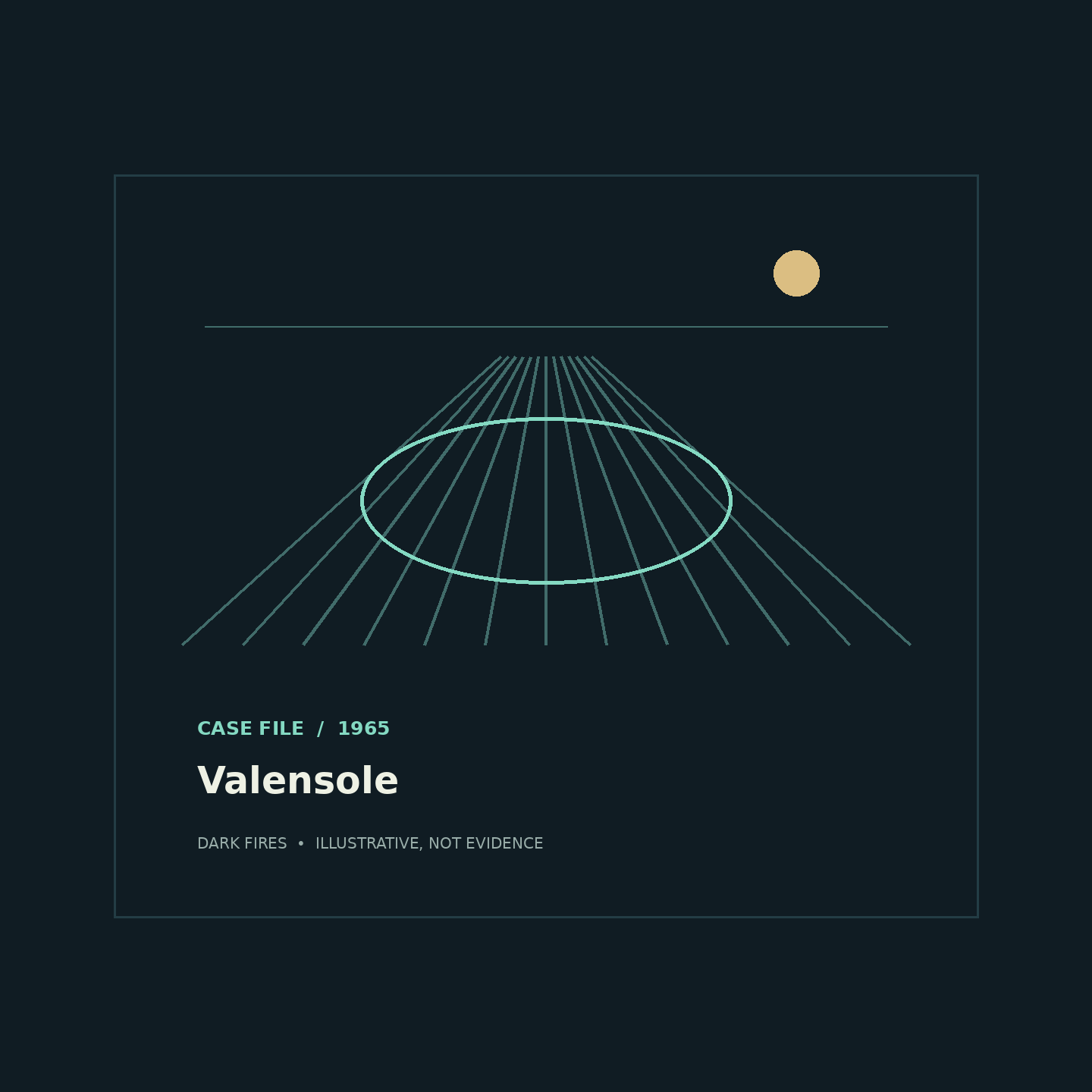
    Featured image: Generated illustration. Conceptual field diagram, not a reconstruction or photograph of the reported encounter.

  • A Light That Flashes Colors May Be Twinkling: Scintillation and UAP Reports

    A Light That Flashes Colors May Be Twinkling: Scintillation and UAP Reports

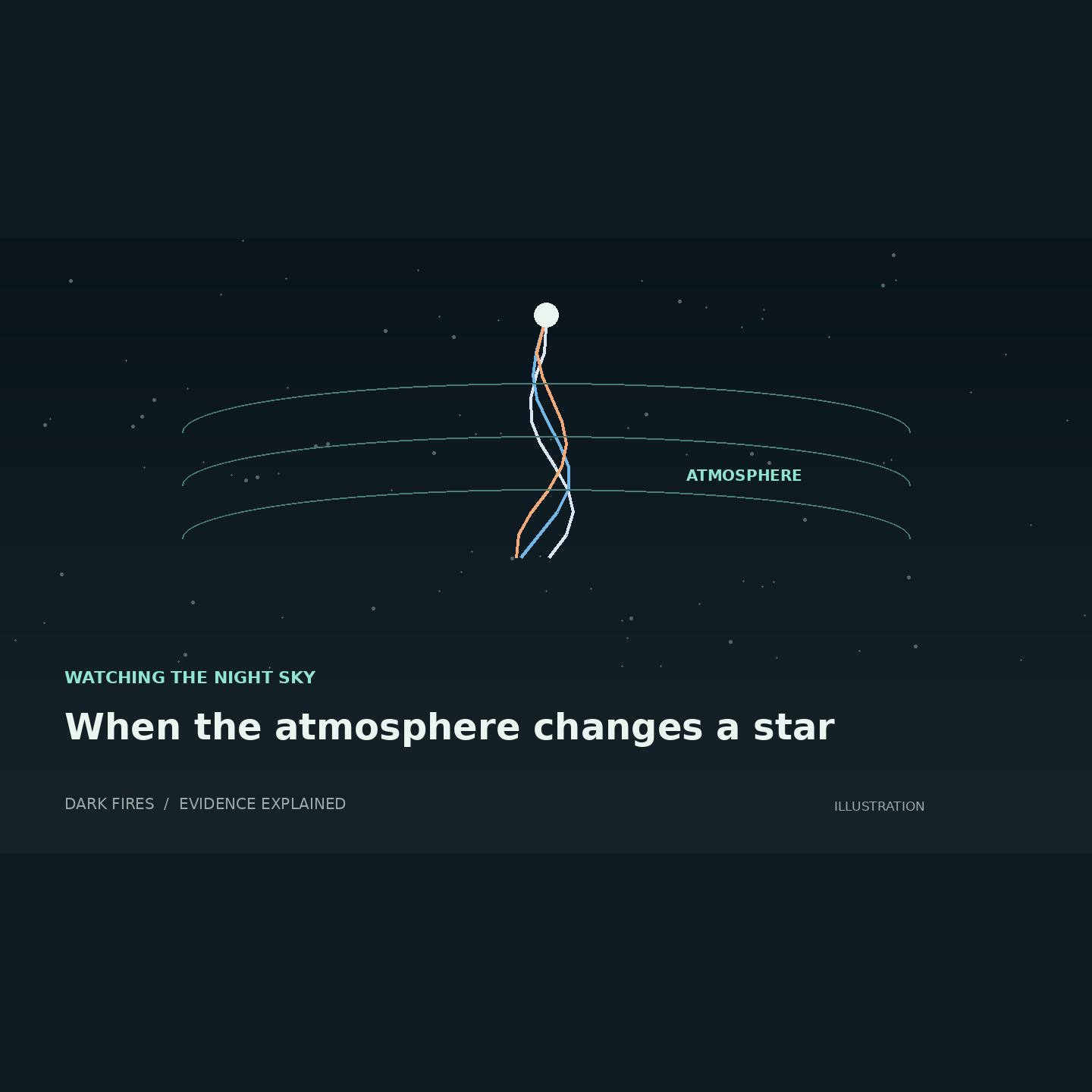
    A bright point hangs low in the sky, flickering and changing color. Those are real visual observations, but they do not necessarily describe a light source changing its own output. The air between the observer and the source can produce some of the variation.

    The World Meteorological Organization’s International Cloud Atlas defines scintillation as rapid fluctuations in light from stars or terrestrial sources. Changing atmospheric refraction can affect apparent brightness, color and position. Other conditions being equal, a longer atmospheric path produces stronger scintillation, which is why stars near the horizon tend to twinkle more strongly than stars overhead.

    The atmosphere is part of the observation

    NASA’s October 2000 StarChild explanation describes how moving air bends incoming starlight so that different amounts reach an observer. The familiar word “twinkle” can sound too gentle for a report of rapid colored flashes, but the WMO description explicitly includes color changes.

    This is not a license to identify every flashing light as a star. The WMO definition also includes terrestrial lights. More importantly, knowing that scintillation exists does not establish that it explains a particular observation. The source’s position and behavior still need to be tested against the record.

    Consider a hypothetical report of a red-and-blue point above a distant roofline. The color sequence alone cannot distinguish a changing emitter from changing atmospheric transmission. If a proposed stellar identification places the star in the wrong part of the sky at the recorded time, the identification fails even though the physical mechanism is real.

    Make the next observation more useful

    Record the date, local time with time zone, observing location, direction and approximate height above the horizon. Include the duration. A close-up may reveal flickering, but a wider view containing fixed landmarks helps another person reconstruct where the light was seen.

    Compare the suspected source with nearby known stars without changing the basic observing conditions. Are several points fluctuating? Does one stand out? Record the comparison rather than compressing it into “everything else was normal.” An absence of obvious twinkling in neighboring objects is information to retain, not a final verdict.

    If consulting a sky chart, set the correct place and time before selecting a bright candidate. Treat the match as a hypothesis to check against the entire account. A source identified only because it was the brightest available star is a weak match. A source fitting direction, elevation and the observation’s timeline offers a more useful test.

    It is equally important to preserve features that do not fit. A reported rapid journey across the sky is a different claim from a point’s small apparent fluctuations. Do not let a general discussion of twinkling silently replace the witness’s more specific description.

    Scintillation gives investigators a concrete atmospheric explanation to evaluate, especially for low, bright, changing-color points. Its greatest benefit is not an instant answer. It is a better question: how much of the observed variation belonged to the source, and how much could have been introduced along the light’s path?

    Featured image: Generated illustration. Original Dark Fires atmospheric-light schematic, not a sighting photograph.

  • A Matching Hash Protects a UFO File, Not the Truth of Its Story

    A Matching Hash Protects a UFO File, Not the Truth of Its Story

    Two researchers can agree that they possess exactly the same UFO video while still disagreeing about what it shows. A cryptographic hash helps establish the first point. It cannot settle the second.

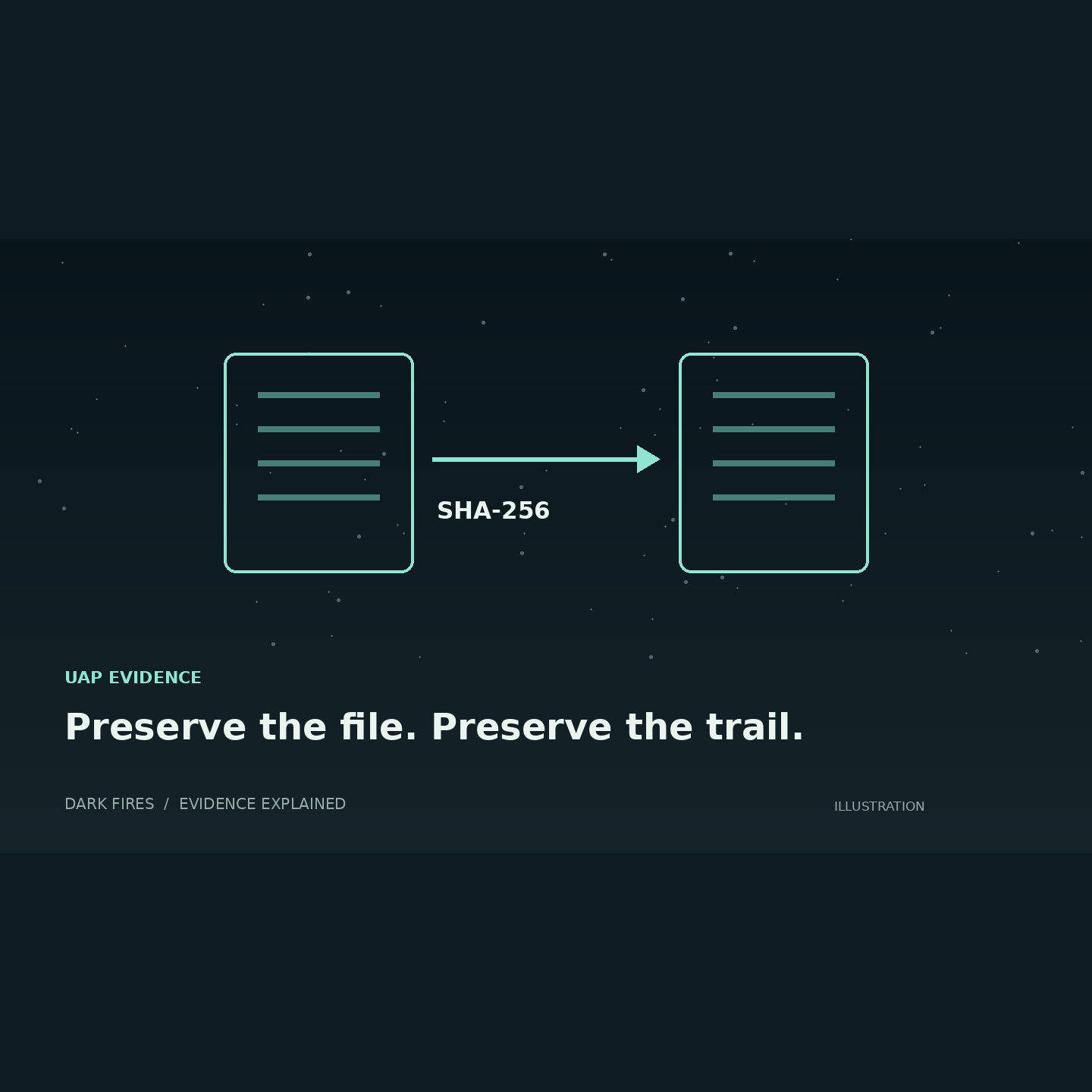
    A hash is a value calculated from a file’s data. Used with an appropriate secure algorithm, it provides a practical way to check whether a later copy matches the version that was recorded and hashed earlier. This is valuable for UAP research, where clips may pass through witnesses, investigators, editors and social-media accounts before reaching an analyst.

    Integrity starts at a particular moment

    NIST’s September 2022 digital-evidence preservation report recommends documenting a file’s source and transfers, calculating secure hashes, and protecting the stored hash information. It also identifies an important weakness: evidence can be altered before its first hash is made.

    Suppose an investigator downloads a clip on Monday and calculates its hash. An identical hash on Friday supports the conclusion that the file has not changed between those checks. It says nothing by itself about what happened before Monday. The clip might be a camera original, an edited export, a staged scene or a copy of something posted years earlier.

    The Scientific Working Group on Digital Evidence’s image-authentication guidance, version 1.0 dated July 11, 2018, explicitly separates file integrity from the truth of the depicted scene. That distinction prevents a technical check from becoming an unsupported claim of authenticity.

    Preserve a trail, not just a checksum

    For a civilian UAP collection, a useful record can be straightforward: identify who supplied the file, when it was received, its original filename, how it was transferred and which version was hashed. Keep the received file unchanged. Work on a separate copy, and label every crop, brightness adjustment, stabilization or annotated export.

    SWGDE’s Digital Forensic Video Analysis guidance, version 2.0, calls for documented processing that can be reproduced. It warns that even changing a video’s container while preserving the video stream can affect metadata. A different file hash after conversion therefore needs explanation, not an immediate accusation of deception.

    Separate two kinds of questions in the case notes. “Are these files identical?” concerns bytes and transfers. “Was this recorded where and when the witness says?” requires other support. A believable account, a plausible timestamp and a clean-looking image do not make those questions interchangeable.

    Privacy also matters. A preservation copy may contain location details or bystander information that should not be published. Retain the original securely and clearly identify any public redacted derivative. Do not erase the distinction merely to make the public package simpler.

    A matching hash is a modest but powerful promise: this is the same file that was previously checked. Keeping that promise narrow makes the evidence stronger. Expanding it into proof of an extraordinary event makes it weaker.

    Featured image: Generated illustration. Original Dark Fires file-integrity diagram.

  • No Plane on the Map? What a Flight-Tracker Gap Can Tell a UAP Investigation

    No Plane on the Map? What a Flight-Tracker Gap Can Tell a UAP Investigation

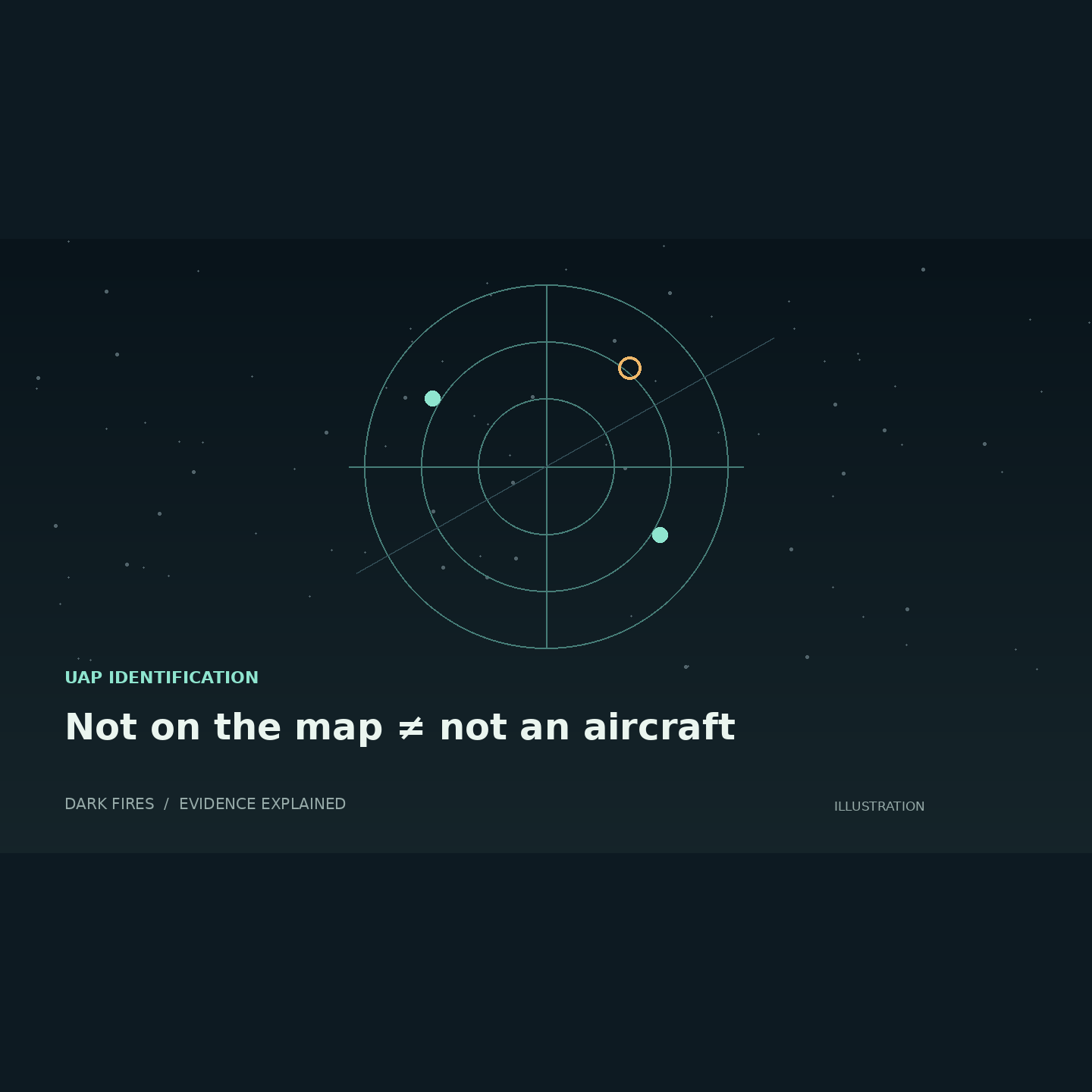
    A witness sees a light, opens a flight-tracking app and finds no aircraft at the apparent location. That is worth recording. It does not, by itself, rule out an aircraft. A public map is the output of a detection and display system, not a complete census of everything overhead.

    The useful question is not simply whether an icon appeared. It is whether that service could reasonably have detected and displayed the particular kind of aircraft, at that altitude and location, during the relevant interval.

    Three different gaps

    First comes equipment. ADS-B Out broadcasts an aircraft’s position and other information, but the United States does not impose a universal requirement covering every flight everywhere. The FAA’s airspace guide lists the airspace and altitude conditions where equipage is required. A rule tied to particular airspace is not proof that every aircraft visible from the ground must appear on a consumer screen.

    Second comes reception. Flightradar24’s own explanation of missing aircraft says visibility depends on local coverage and aircraft/transponder type. It specifically notes difficulties at low altitudes and says aircraft may become visible only after climbing high enough for receivers to pick them up.

    Third comes display policy. The same provider says some military and government aircraft are blocked for security reasons. This describes that service’s display, not a claim that every tracker follows an identical policy. It also does not establish that a particular unexplained light was military.

    Turn a blank screen into a documented check

    For a useful record, save the service name, time searched, map extent, filters and any playback settings. State the sighting time separately from the time of the lookup. Record the witness’s position and viewing direction, rather than treating a guessed point on the map as a measured target location.

    Consider a hypothetical light seen low over a ridge. Searching only directly above the ridge could miss an aircraft much farther away along the same line of sight. That example is a geometric caution, not an identification. A candidate flight needs to match the observation’s direction, timing and apparent movement, with uncertainties acknowledged.

    Compare another source where available, but ask what it adds. Two websites may rely on overlapping receivers or data feeds. Agreement is more useful when their coverage and data origins are understood. Conversely, a flight appearing on one map but not another is a reason to investigate the difference, not to assume the aircraft itself behaved anomalously.

    A defensible conclusion might be: no matching track was found in the services and interval checked. That wording preserves the negative result without claiming an exhaustive exclusion. A strong aircraft identification requires a positive fit; a strong claim that aircraft have been excluded requires evidence about the search’s completeness.

    The blank map is therefore a limit to investigate. It is neither proof of an extraordinary object nor permission to disregard a careful witness account.

    Featured image: Generated illustration. Original Dark Fires conceptual tracking diagram, not a real flight plot.

  • When a Camera Builds a Frame in Strips: Rolling Shutter and UAP Shapes

    When a Camera Builds a Frame in Strips: Rolling Shutter and UAP Shapes

    A strange outline in a UFO video may be an important observation. It is not automatically the outline of a strange object. Before measuring a bent, stretched or slanted shape, investigators need to know whether the camera recorded the whole scene at once.

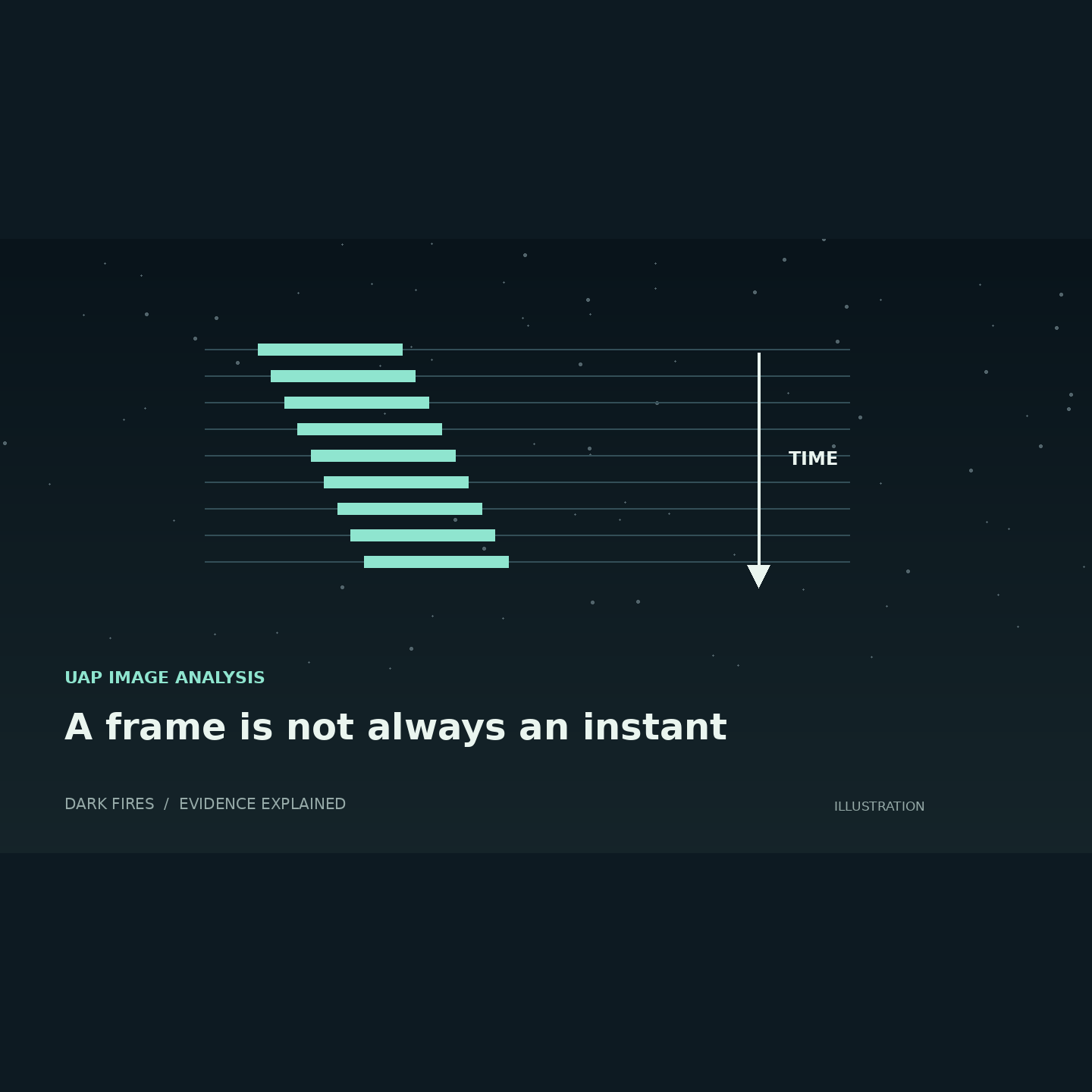
    With a rolling shutter, different rows of the sensor begin their exposures at different times. Basler’s camera documentation describes this row-by-row offset and explains that movement of either the subject or camera can distort the result. The finished frame combines measurements made across an interval, rather than one perfectly shared instant.

    Sharp does not necessarily mean undistorted

    Imagine a straight vertical marker moving sideways while the sensor scans downward. Its upper portion is recorded earlier than its lower portion. Combining those strips can produce a slanted marker, even though the real object never bent. This is a conceptual example, not a reconstruction of any reported encounter.

    There are two separate timing questions: how long each row collects light, and how far apart the rows are in time. A short exposure can reduce motion blur without removing the second effect. Axis’s August 2026 technical white paper illustrates that distinction with rapidly moving objects and propellers. It also explains why a brief flash can illuminate only a band of a rolling-shutter image.

    For a UAP clip, this means that crisp edges are not sufficient evidence that the shape is geometrically faithful. It also means that a distorted propeller is not proof that an entire object has changed shape. Claims must identify which feature is being measured.

    A testable camera explanation

    Start with the camera model and the actual recording mode. Do not assume every camera uses the same sensor timing, or that every mode on one device behaves identically. Basler notes that row timing varies between camera models. Preserve the full recording, including moments when the camera moves across recognizable background features.

    Then ask whether the proposed explanation predicts the observed pattern. If a quick pan coincides with slanted background structures and a skewed target, that is a useful clue. If the suggested distortion requires motion that the clip does not support, simply naming rolling shutter has accomplished little. A comparison recording made with the same device and mode can help test the idea, provided it is clearly labeled as a test.

    A corrected-looking image is not independent confirmation. Any correction introduces assumptions about camera motion and timing. Publish those assumptions alongside the processed result, keep the untouched source available, and avoid treating an aesthetically convincing reconstruction as a recovered ground truth.

    Rolling shutter is one specific mechanism with specific conditions. It cannot be invoked to dismiss every unusual video. Its value is narrower and more useful: it tells us which apparent shapes need a camera-timing check before they become claims about an object’s structure or behavior.

    Featured image: Generated illustration. Original Dark Fires explanatory diagram, not sighting footage.

  • UVEX Clears NASA Review for a New Ultraviolet Map of the Sky

    UVEX Clears NASA Review for a New Ultraviolet Map of the Sky

    NASA has confirmed the UltraViolet EXplorer, or UVEX, after a major technical and programmatic review, moving the observatory from planning toward final design and fabrication. The agency’s October 27, 2026, announcement commits to a launch by January 2031 and a total lifecycle cost of $590 million.

    The milestone is Key Decision Point C. It is not a launch, a first-light observation, or a new astronomical discovery. It establishes a development commitment for a mission designed to supply a missing part of the modern multiwavelength sky map. NASA’s confirmation notice identifies an all-sky ultraviolet survey and rapid observations of neutron-star-merger aftermaths among its goals.

    Why another wavelength matters

    Astronomical objects do not tell the same story in every band of light. An infrared survey and an ultraviolet survey can emphasize different components of the same galaxy or different phases of an explosion. Combining them therefore adds physical information, not merely a new color treatment for an existing picture.

    Caltech’s mission announcement describes UVEX as a successor to the Galaxy Evolution Explorer, which mapped ultraviolet skies between 2003 and 2013. UVEX is intended to reach much fainter sources while adding dedicated capabilities for a changing sky. It will obtain spectra as well as images, separating received light by wavelength to investigate the properties of its sources.

    The project is led by Caltech principal investigator Fiona Harrison. UC Berkeley’s Space Sciences Laboratory manages the mission, Northrop Grumman will build the spacecraft, and JPL contributes detector technology. Caltech’s IPAC will process and archive the data. These responsibilities underline how much engineering and data infrastructure stands between a confirmed concept and an astronomical survey.

    Small galaxies and short-lived flashes

    The University of Maryland’s account highlights two complementary observing jobs. One is finding low-mass galaxies with few heavy elements, many of which remain difficult to detect. The other is turning quickly toward transient events, including supernovae and the luminous aftermaths of neutron-star collisions.

    Early ultraviolet emission can fade on timescales of hours to days. A telescope that arrives late may still observe an interesting object, but miss the short-lived information needed to distinguish competing explanations of the initial outburst. Rapid response is consequently part of the measurement strategy, not just operational convenience.

    The mission’s dynamic-universe lead, Maryland astronomer Suvi Gezari, describes ultraviolet spectra as a way to examine the physics, chemistry and surroundings of these events. The university also reports that a portion of observing time will be available to outside researchers, allowing the wider community to propose targeted observations.

    A capability, not a guaranteed discovery list

    The scientific promise should remain separate from results. Predictions that UVEX could uncover millions of additional small galaxies are survey ambitions, not a catalog already produced. Likewise, pointing at an explosion will not automatically resolve every uncertainty about its origin.

    What has changed this week is the project’s status. NASA has accepted a defined path toward building an observatory that can connect deep ultraviolet mapping with time-sensitive follow-up. The payoff, if development and operations succeed, will be a new way to compare where the universe’s faint populations reside with how its most energetic events evolve.

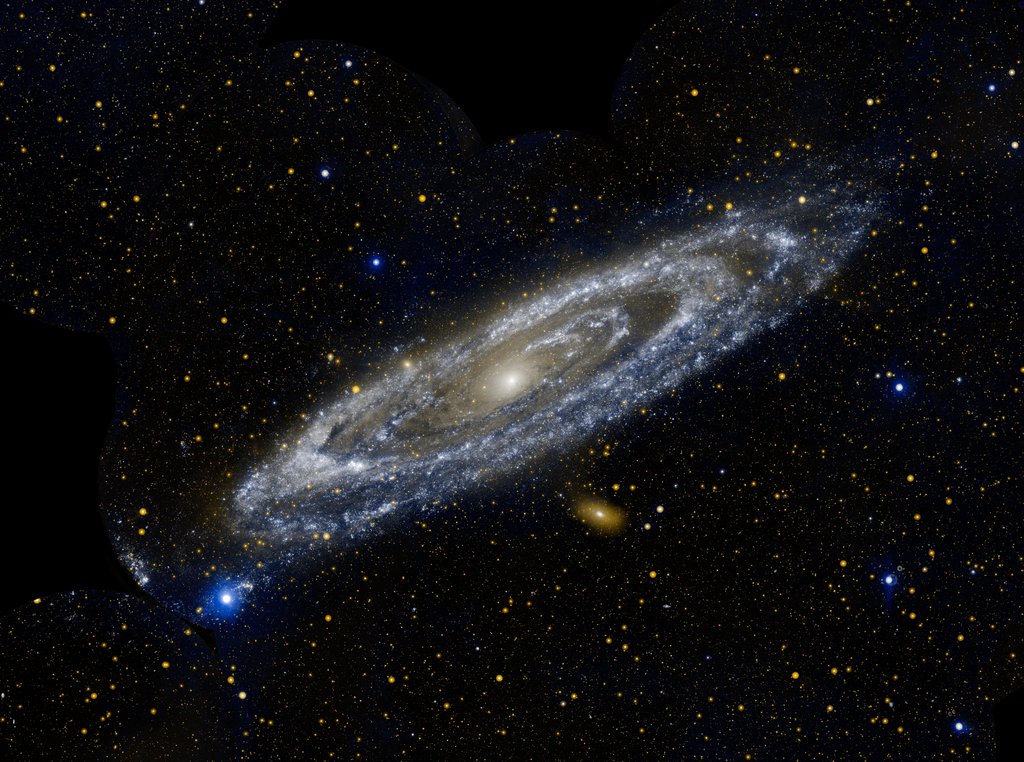
    Featured image: The Andromeda galaxy in ultraviolet light from GALEX, UVEX’s predecessor. Archival GALEX image, not an observation by the unlaunched UVEX mission. Credit: NASA/JPL-Caltech.

  • Perseverance’s Spacesuit Swatches Reveal Dust That Refuses to Shake Off

    Perseverance’s Spacesuit Swatches Reveal Dust That Refuses to Shake Off

    Perseverance does not need a spacesuit, but small pieces of spacesuit material carried on the rover are helping researchers prepare for people who eventually might. A study highlighted by NASA on October 26, 2026, examines dust accumulated during 1,645 Martian days, including particles far smaller than those previously resolved on the planet.

    The practical finding is not simply that Mars is dusty. Different surfaces collect different particle populations, and the smallest grains can remain attached through years of driving and drilling. NASA’s account describes measurements extending down to roughly 100 nanometers on some samples, alongside fine particles measured in micrometers.

    A calibration target becomes an exposure experiment

    The rover carries material swatches associated with SHERLOC, its instrument for examining rock chemistry, and additional reference materials used by PIXL, its X-ray spectrometer. These targets support instrument calibration, but exposure to the Martian environment gives them another role: they record what happens when dust encounters particular surfaces.

    Teflon provides an especially useful reference because PIXL does not directly detect its constituent elements. Detectable elemental signals from that target therefore reveal deposited material rather than the substrate itself. NASA reports that static charging appears to help determine which particle sizes adhere to different materials.

    Less abrasion does not mean no concern

    An October 29 report from Washington University in St. Louis, where lead researcher Scott VanBommel works, describes little visible wear on the swatches over the study interval. Martian grains tend to be smoother than the sharp lunar particles that caused trouble during Apollo missions.

    That is encouraging for material durability, but it answers a different question from whether dust can enter a habitat or affect a person. A fabric may look intact while still carrying a persistent coating of very small particles. Treating those two observations as contradictory would obscure the engineering problem.

    The university explains that VanBommel developed a method to estimate the tiny particles’ sizes. The health relevance comes from knowledge of fine and ultrafine particles on Earth; the rover experiment itself did not expose astronauts, measure a human dose, or establish a safe indoor concentration for a Mars habitat.

    From measurements to mission design

    A 2026 conference contribution from the Mars 2020 team situates these observations within a wider program supporting future human exploration. Dust composition, weather, hardware degradation and the availability of local resources all enter that planning. Several rover instruments contribute different pieces of the environmental picture rather than one instrument supplying a complete safety assessment.

    The immediate use of the new dust measurements is to sharpen questions for ground testing. Which materials retain the least troublesome particle population? How much survives repeated cleaning? Can an airlock arrangement keep contaminated surfaces outside living areas? Those are design questions the observations help inform, not solutions already certified by a rover on another planet.

    The lesson is a measured one: long-lived hardware on Mars can reveal hazards before crews arrive. It can show what sticks and how surfaces change, while leaving exposure limits and protective-system performance to additional experiments. The swatches are small, but the distinction between visible damage and invisible contamination is central to the much larger task of building a habitable outpost.

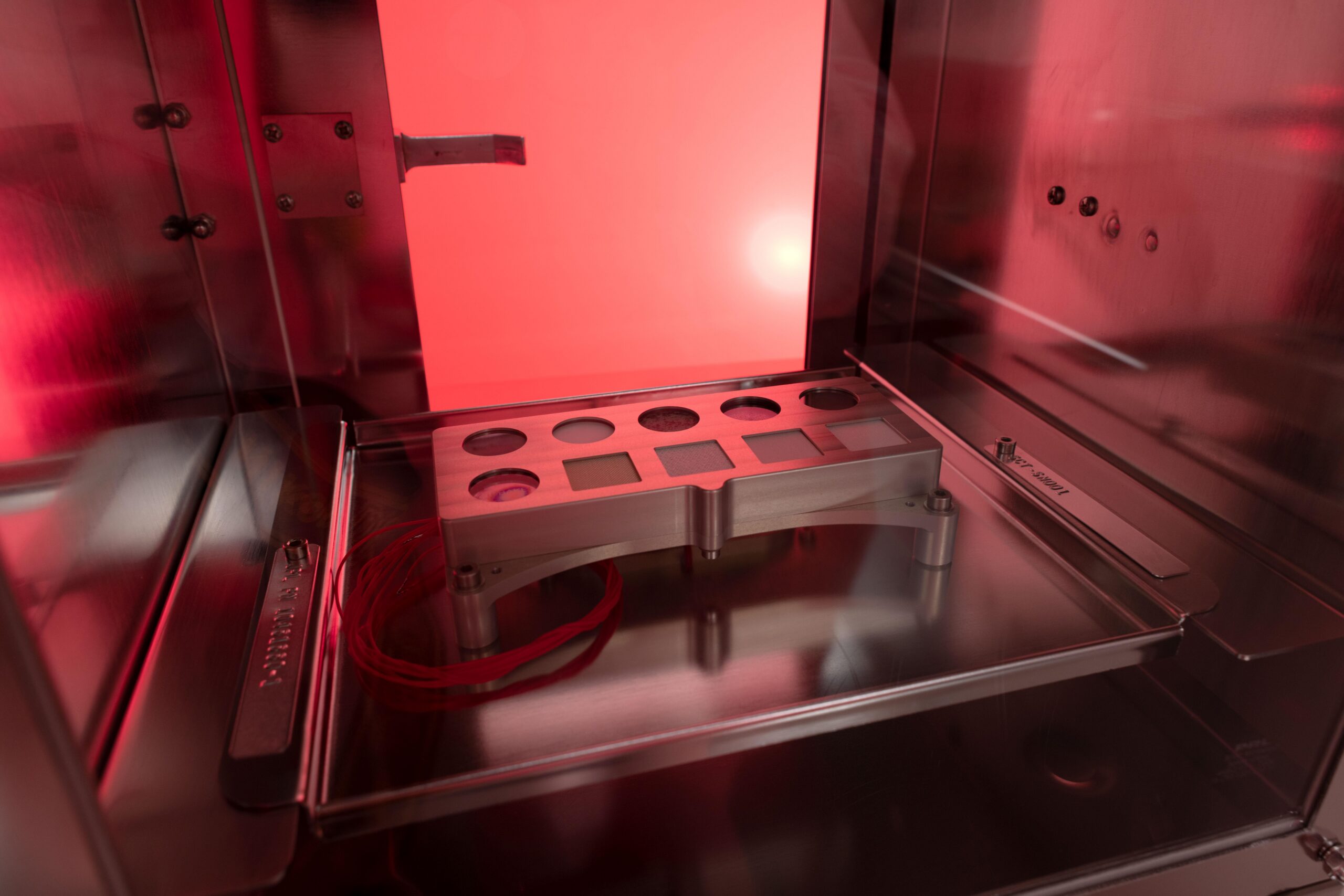
    Featured image: SHERLOC’s calibration target during prelaunch preparation on Earth. It carries reference materials and spacesuit samples; archival NASA photograph released in July 2020, not a view of the 2026 dust measurements. Credit: NASA/JSC.

  • Voyager 1 Restores Contact as Its One-Light-Day Milestone Approaches

    Voyager 1 Restores Contact as Its One-Light-Day Milestone Approaches

    Voyager 1 is approaching a distance that turns a familiar measurement of time into a striking measure of space. NASA predicts that on November 18, 2026, the spacecraft will be one light-day from Earth: about 25.9 billion kilometers, or 16.1 billion miles. As of November 1, that milestone remains ahead, not already achieved.

    The approach comes after two very different engineering developments. In an October 29 mission update, NASA’s Jet Propulsion Laboratory reported a successful power-saving change in September and a brief, unexplained loss of communications in October.

    A signal returns before commands arrive

    The Deep Space Network did not detect Voyager 1 during scheduled contacts on October 18 and 19. The signal returned on October 20, before engineers sent troubleshooting commands. The team found that one set of thrusters had gone offline and a backup set had activated, but the cause of the interruption was still being investigated.

    That is an important distinction: restored communications establish that contact resumed, not that the underlying fault has been fully explained. The spacecraft has automatic protective responses, allowing it to enter a stable condition without waiting for instructions from Earth.

    Separately, September’s coordinated substitution of three lower-power devices reduced electrical demand while preserving the spacecraft’s thermal balance. The maneuver buys operating margin for science instruments; it does not give the aging probe an unlimited supply of power.

    Distance measured by light

    NASA’s Voyager tracking page gives the predicted crossing as November 18 at 2:16:07 a.m. Pacific Standard Time, equivalent to 10:16:07 UTC. The reference point is Earth. A distance from the Sun is not interchangeable with a distance from our moving planet, particularly when a headline attaches an exact date to the crossing.

    A light-day means the distance light travels in 24 hours, not a special speed that Voyager has reached. Radio signals are electromagnetic radiation too, so the same scale helps explain why deep-space operations demand patience. At roughly this separation, a command and its eventual reply involve about two days of signal travel, before allowing for processing and ground-station scheduling.

    Not a new border of interstellar space

    Voyager 1 crossed the heliopause in August 2012; Voyager 2 followed in November 2018. That boundary marks the transition from the Sun’s solar-wind environment to interstellar space. The one-light-day marker is instead a distance milestone, not another physical wall waiting in the spacecraft’s path. NASA’s November Night Sky Notes places the coming anniversary in that longer journey.

    The difference makes the event more meaningful, not less. There is no sudden change in the laws of physics on November 18. What changes is the scale of a human undertaking: a machine launched in 1977 will soon be far enough away that even light needs a day to bridge the distance. The October interruption is a reminder that maintaining that connection remains an active engineering challenge.

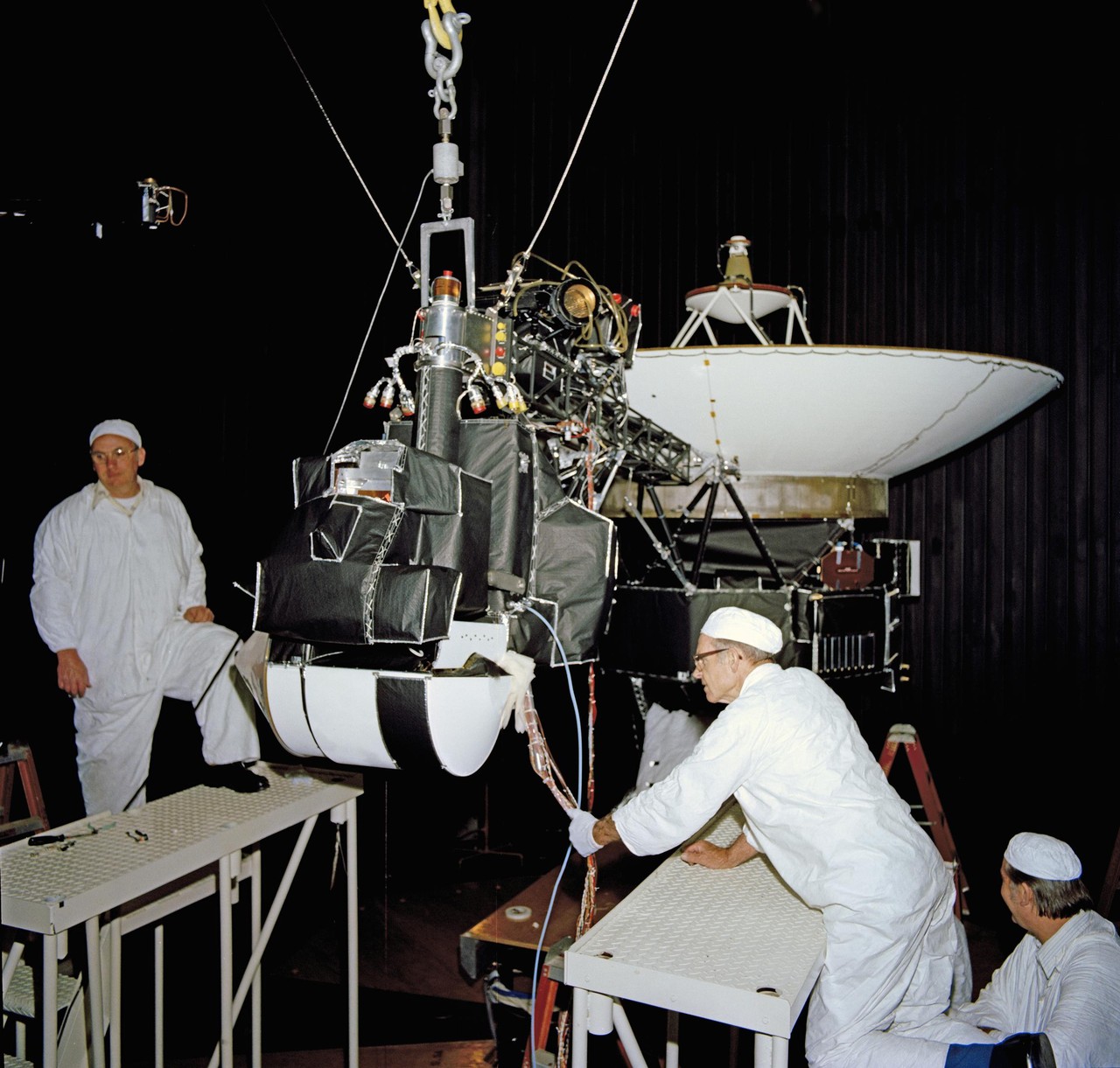
    Featured image: A Voyager spacecraft undergoing testing at JPL in 1977; archival photograph, not a current view from interstellar space. Credit: NASA/JPL-Caltech.