DARK FIRESORIGINS UNKNOWN

Author: Dark Fires

  • Rendlesham Forest: The Memo at the Heart of Britain’s Famous UFO Case

    Rendlesham Forest: The Memo at the Heart of Britain’s Famous UFO Case

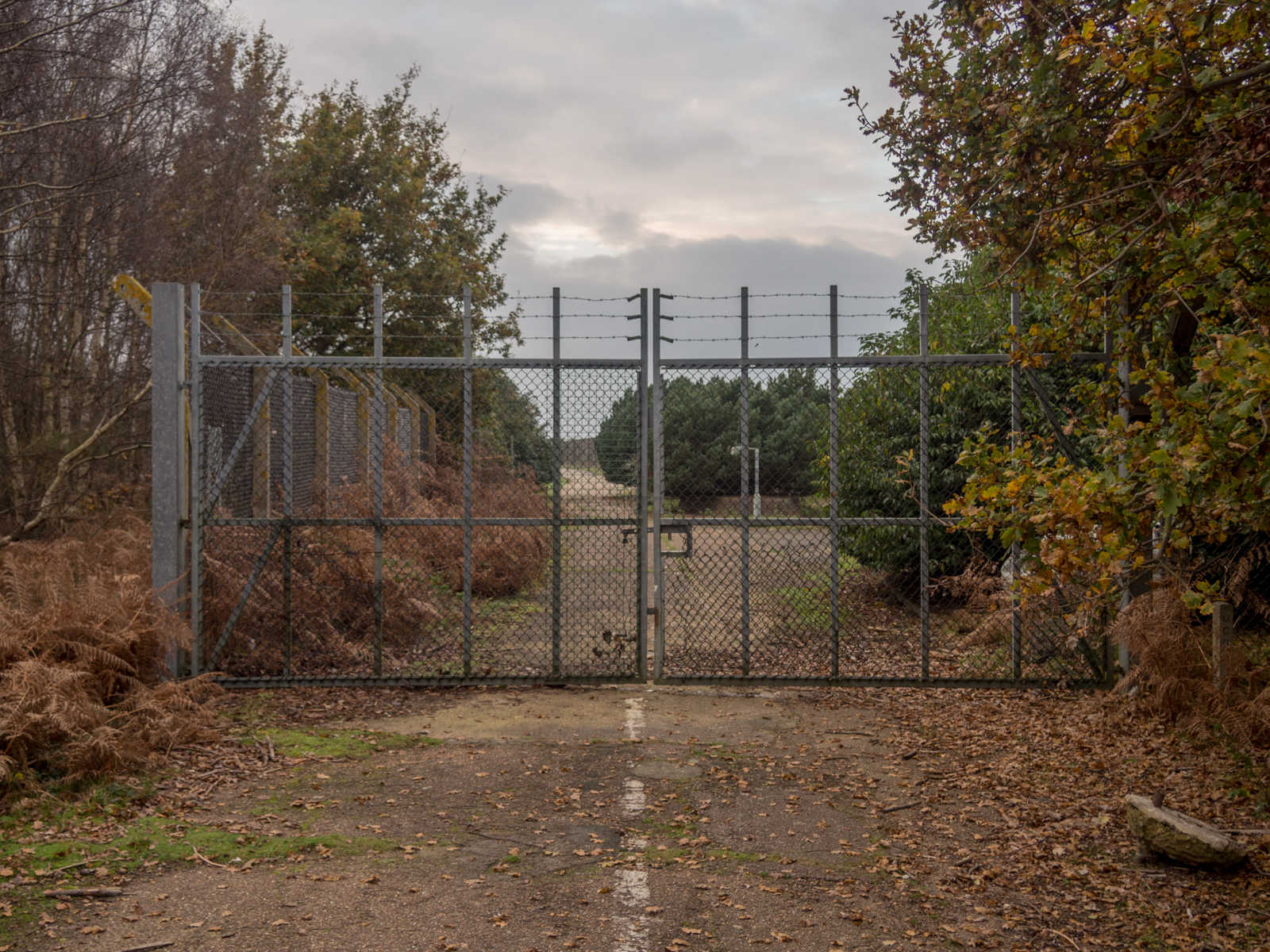
    RAF Woodbridge’s East Gate, November 2014. A later view of the location, not a photograph of the 1980 sightings. Photo: Taras Young / Wikimedia Commons, CC BY-SA 4.0. Resized for display; thumbnail previews may be cropped.

    Lieutenant Colonel Charles I. Halt’s January 1981 memo runs to a single page. Under the subject “Unexplained Lights,” it records strange events reported near RAF Woodbridge in Suffolk.

    That short memo is a useful starting point for the Rendlesham Forest case. It preserves a dated military account against which later versions of the story can be compared. It also contains an important distinction that is easily lost when the whole incident is retold as one continuous encounter.

    Whose observation was it?

    The first paragraph of the memo, dated 13 January 1981, relates what security personnel reported. Lights outside the base prompted concern about a downed aircraft. Three patrolmen investigated, reporting a glowing, apparently metallic triangular object with coloured lights that moved through the trees and disappeared.

    The remaining paragraphs describe ground depressions, radiation readings and later lights seen through the trees and in the sky. At the end, Halt explicitly says that he and other people witnessed the activities described in paragraphs two and three. His signature therefore does not make him an eyewitness to every detail of the patrolmen’s earlier encounter.

    A report with limits

    The distinction matters when weighing the document. A description of an object’s appearance, a measurement written into a memo and an independently established explanation are different kinds of evidence. The memo gives reported radiation figures but does not supply a full measurement protocol or a laboratory analysis tying them to an unusual source. Its account of depressions likewise leaves their cause unestablished.

    There is more to the contemporary record than the letter alone. The National Archives’ UFO research guide describes Halt taking a team into the forest after further lights were reported and making a live audio recording during the investigation. For research purposes, that recording and the later written summary deserve to be considered separately, with attention to when each was made and what each can actually establish.

    What the Ministry of Defence decided

    The British government’s response focused on defence significance. In a 1996 parliamentary answer, defence minister Nicholas Soames said the report had been assessed by staff responsible for air defence. Their judgement that it contained nothing of defence significance led to no further action.

    In January 2001, the Ministry reiterated that position, saying no additional information had emerged to overturn the original assessment. This tells us how officials handled the report. It does not provide a detailed physical explanation for each observation in Halt’s account.

    Following the paper trail

    The National Archives identifies the memo and follow-up inquiries in file DEFE 24/1512. A later dedicated file, DEFE 24/1948/1, opened to the public in August 2009, contains the memo alongside parliamentary briefing material and years of correspondence. Those later papers trace the dispute’s long afterlife as much as the events in the forest.

    Rendlesham rewards a patient approach. Begin with the dated records, keep witnesses’ individual claims separate, and ask what would be needed to test each explanation. The memo gives us a firm place to begin that work. The identity of the reported lights requires a different standard of proof.
    Sources and further reading

  • Project Blue Book: Inside the Air Force’s UFO Archive

    Project Blue Book: Inside the Air Force’s UFO Archive

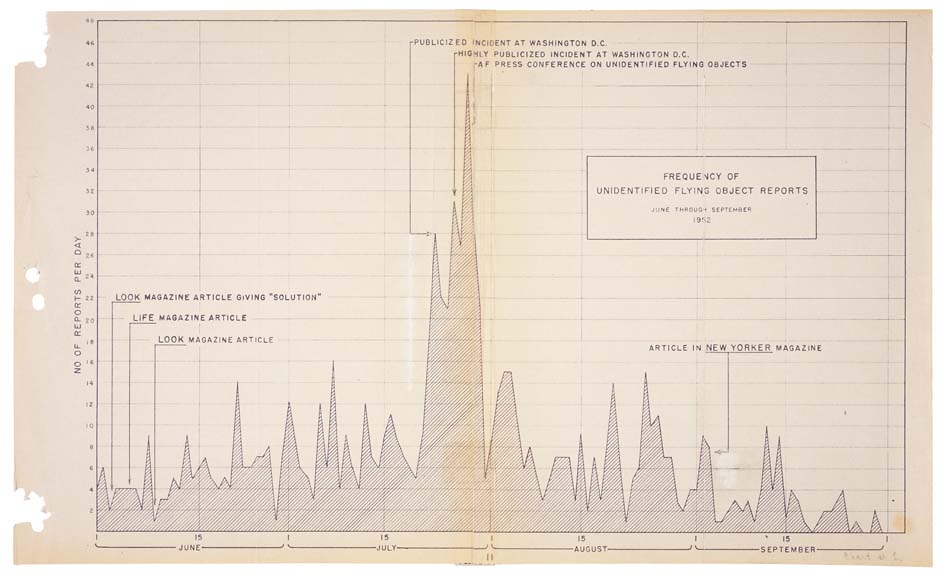
    Air Force chart tracking UFO report frequency from June through September 1952. U.S. National Archives, NAID 595542; public domain.

    Open a Project Blue Book file and the first thing you are likely to encounter is paperwork: a witness description, a questionnaire, a map, a photograph, an investigator’s conclusion. That ordinary administrative record is what makes the collection worth reading. It lets us follow how a strange sight in the sky became a military case, and how the Air Force decided what to make of it.

    One name, several investigations

    Blue Book began in March 1952, following the Air Force’s earlier Projects Sign and Grudge. Its headquarters were at Wright-Patterson Air Force Base in Ohio. The often-quoted span of 1947–1969 refers to the wider body of reports inherited by the programme, rather than twenty-two years under the Blue Book name. The National Archives’ historical overview makes that chronology clear.

    The practical questions were rooted in defence. Could a reported object threaten American security? Could investigating it reveal technology useful to research and development? In a 1966 Air Force interview preserved by the National Archives, project leader Hector Quintanilla described those two goals. Watching the official films also reveals another part of the programme’s work: explaining its findings to an anxious and curious public.

    What survived in the files

    The case files contain observers’ accounts, correspondence, press cuttings and analyses of photographs or other evidence. Questionnaires recorded the time and place of a sighting and what the observer said they saw. A control sheet summarised the report and the Air Force’s explanation. Reading those layers together is more useful than lifting a dramatic sentence out of a witness statement. Our close reading of the Rendlesham Forest memo applies the same distinction to a British case, separating a signed account from the events its author personally witnessed.

    The collection also preserves a revealing chart of reports from June through September 1952. Its annotations mark magazine articles, publicity surrounding sightings over Washington and an Air Force press conference. It invites a question about how publicity and reporting interacted. The graph alone cannot establish what caused any individual sighting.

    The 701 unidentified reports

    A January 1985 Air Force fact sheet, reproduced on the National Archives’ Blue Book reference page, gives the familiar total: 12,618 reports across 1947–1969, with 701 classified as unidentified. That surviving category records an unresolved identification. Treating every entry in it as evidence of the same extraordinary cause would require information the number itself cannot supply.

    The Air Force’s stated conclusions were that the reports it evaluated had demonstrated no national-security threat, no technology beyond contemporary scientific knowledge, and no evidence that the unidentified sightings were extraterrestrial vehicles. Its decision to end the investigation drew on the University of Colorado study, the National Academy of Sciences review and its own investigative experience. Termination was announced on 17 December 1969.

    Read the record with its date attached

    Blue Book remains valuable because both the observations and the official judgements can be examined. A careful reading asks who witnessed an event, what was recorded at the time, what investigators checked, and how strongly their explanation follows from the available evidence.

    The 1985 fact sheet is itself a historical document. Its remarks about future Air Force policy or where witnesses should send reports belong to that period. Keeping dates, testimony and conclusions distinct is the simplest way to make this enormous UFO archive more useful, and considerably harder to misread.

    Sources and further reading

  • Dragonfly: How NASA Plans to Fly Across Saturn’s Moon Titan

    Dragonfly: How NASA Plans to Fly Across Saturn’s Moon Titan

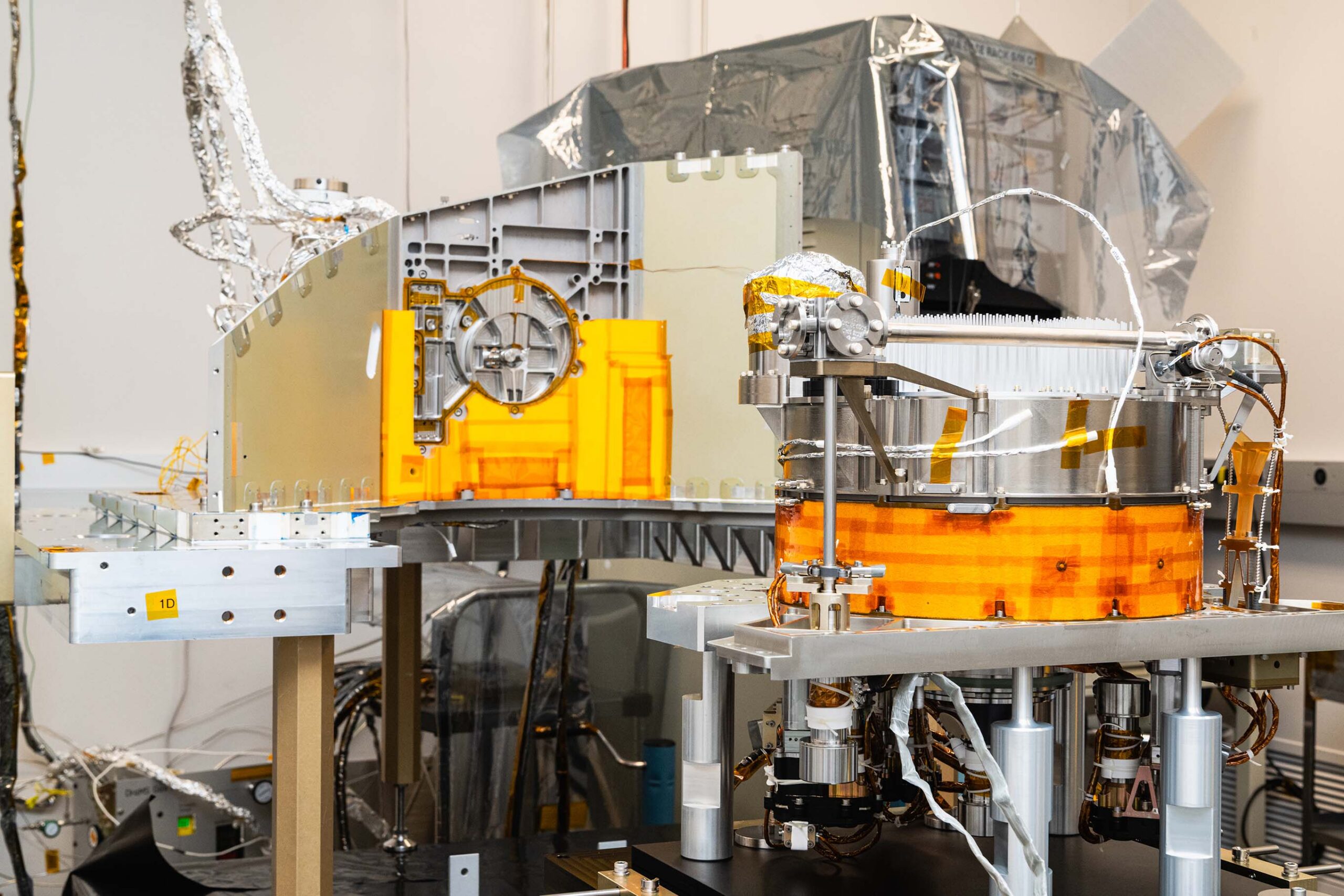
    Dragonfly’s mass spectrometer, left, and sample-delivery carousel, right, before integration at NASA’s Goddard Space Flight Center in March 2026. Photo: NASA/Mike Guinto. Image source.

    On Saturn’s largest moon, the atmosphere that hides the landscape also offers a way to explore it. NASA’s Dragonfly mission will use eight rotors to travel between scientific targets on Titan, carrying its laboratory from one landing site to the next.

    The mission is still being built. As of October 2026, NASA’s published schedule calls for launch no earlier than July 2028 and arrival in late 2034. The planned surface mission lasts about 3.3 years, giving Dragonfly time to investigate several kinds of terrain and compare their chemistry.

    Why flying makes sense on Titan

    Titan combines a dense atmosphere with weak gravity. Those conditions help a rotorcraft generate lift and make flight a practical way to cross terrain that could be difficult for wheels. Sand and rough ground still matter when choosing a landing site, but they do not have to block the entire route.

    Dragonfly will fly autonomously between locations. Its mobility is central to the science: a single patch of ground can tell only part of a moon’s story. Visiting different sites lets researchers compare what formed in different settings. For a contrasting approach, Europa Clipper will study an icy moon through repeated flybys rather than landing to collect surface samples. The Johns Hopkins Applied Physics Laboratory’s mission overview describes a vehicle equipped to photograph its surroundings, examine surface material and measure local conditions.

    The pace will be deliberate. NASA expects a flight roughly every one or two Titan days, with each of those days lasting about 16 Earth days. There will be substantial time on the ground between journeys.

    A laboratory that can change its address

    Drills will collect surface material for the onboard Dragonfly Mass Spectrometer, known as DraMS. This instrument is designed to identify chemical compounds in the samples. Other instruments will investigate elemental composition, weather and possible seismic activity, while cameras provide both broad landscape views and close-up detail.

    The hardware is already taking shape on Earth. In March 2026, the mission’s sample-delivery carousel was integrated with DraMS at NASA’s Goddard Space Flight Center. Photographs of that work show the machinery that will move samples into the instrument for analysis.

    Power is another reason the spacecraft needs a specialised design. Sunlight at Titan is limited, so Dragonfly will carry a radioisotope thermoelectric generator and a battery. Its spacecraft design also includes a heat shield and parachutes for arrival. After descending through the atmosphere, the rotorcraft is intended to separate from its protective shell and fly down to the surface.

    Looking at chemistry before biology

    Titan is particularly interesting because of its abundant carbon-containing chemistry. “Organic” molecules can form without life, and finding them is only the beginning of the investigation. Our habitability and biosignatures guide explains how to keep environmental clues separate from a life-detection claim. Dragonfly will examine how far that chemistry has developed and what the results reveal about potentially habitable environments.

    One important destination is Selk Crater. The impact that created it may have allowed liquid water and organic material to mix, leaving a frozen record of reactions worth studying. NASA’s science plan identifies the crater as a place to investigate processes that could help explain the chemical steps preceding life.

    Those questions give Dragonfly a clear purpose without promising a discovery of living organisms. Its contribution will come from detailed measurements, comparisons between sites and the ability to follow interesting terrain beyond a single landing spot. On Titan, the next useful sample may be a flight away.

    Sources

  • Why Europa Clipper Is Coming Back to Earth on Its Way to Jupiter

    Why Europa Clipper Is Coming Back to Earth on Its Way to Jupiter

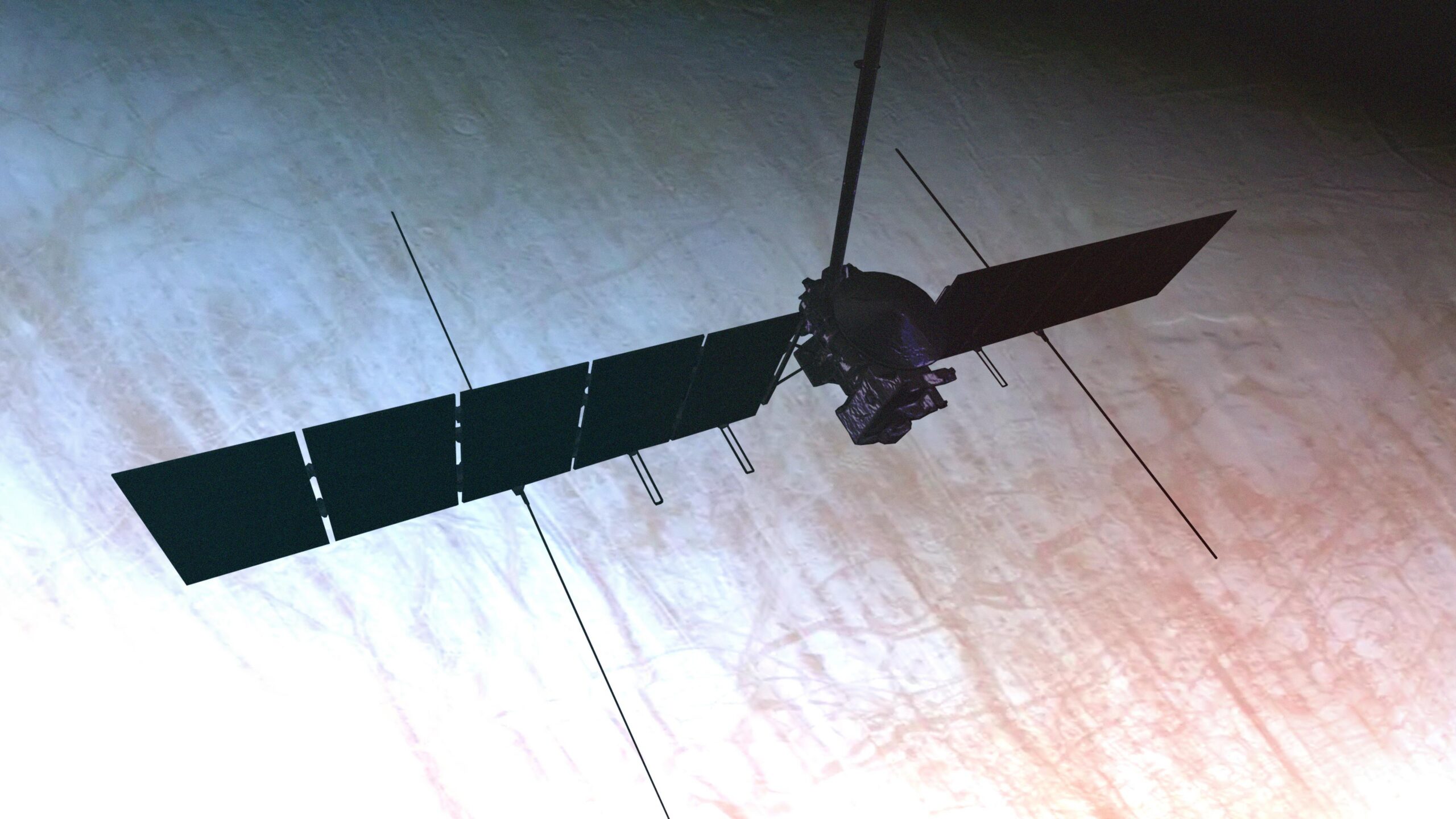
    Artist’s concept of Europa Clipper passing above Europa’s icy surface. Illustration: NASA/JPL-Caltech. Image source.

    A spacecraft headed for Jupiter has one more appointment close to home. In December 2026, Europa Clipper is due to swing past Earth, more than two years after its launch. The encounter will give it the extra energy needed for the long outward journey to the Jupiter system.

    That return is part of the route planned from the beginning. Europa Clipper launched on October 14, 2024, and passed Mars on March 1, 2025. Earth is the second stop in a carefully timed sequence of planetary flybys. The destination remains Jupiter, with arrival planned for April 2030 on NASA’s mission timeline.

    Why take the long way around?

    Launching a spacecraft into deep space means giving it enough energy to climb outward through the Sun’s gravitational field. More propellant adds mass, and carrying that extra mass creates further demands on the launch and propulsion systems. A useful planetary encounter can do some of the work.

    Clipper’s Mars flyby reshaped its orbit around the Sun and set up the coming Earth encounter. In fact, the spacecraft left Mars travelling more slowly relative to the Sun than it had approached. That makes the mission a good example of something the familiar “slingshot” description can hide: a gravity assist can reduce speed as well as increase it. What matters is the orbit the spacecraft needs next. NASA’s account of the Mars manoeuvre explains how the two encounters work together.

    Borrowing a little momentum

    Earth is moving around the Sun while Clipper approaches. During the flyby, Earth’s gravity bends the spacecraft’s path. With the right approach direction, that turn increases the spacecraft’s speed relative to the Sun and sends it onto a more energetic orbit.

    The energy comes from a tiny exchange with the planet’s orbital motion. Earth’s change is negligible; for a spacecraft, the gain can be substantial. The geometry and timing have to be right, which is why mission planners design these encounters years ahead. NASA’s gravity-assist primer describes the same principle behind earlier journeys by Voyager, Galileo and Cassini.

    The work waiting at Jupiter

    Reaching Jupiter is another major navigation challenge. Clipper is expected to brake into orbit with an engine burn lasting roughly six hours. Its first close encounter with Europa is planned for spring 2031, after further adjustments to its orbit.

    The spacecraft will orbit Jupiter and make 49 close flybys of Europa. Its nine science instruments will examine the moon from complementary angles, gathering information about the ice, surface materials and surrounding environment. That remote-flyby strategy differs from Dragonfly’s planned flights and surface sampling on Titan, another way of comparing potentially interesting environments across an outer-solar-system moon.

    Scientists have strong evidence that a saltwater ocean lies beneath Europa’s frozen exterior. Clipper’s science programme will investigate the thickness of the ice shell, the ocean’s properties and the ways material might move between them. Radar, cameras and measurements of magnetic fields can help turn that hidden world into something scientists can test and compare.

    The central question is whether Europa has conditions that could support life. Finding a potentially habitable environment would be important in its own right, but would not establish that anything lives there. Our guide to habitability and biosignatures explains the different evidence needed at each step. The December flyby is one practical step toward answering that much larger question.

    Sources

  • How to Spot the International Space Station From Your Backyard

    How to Spot the International Space Station From Your Backyard

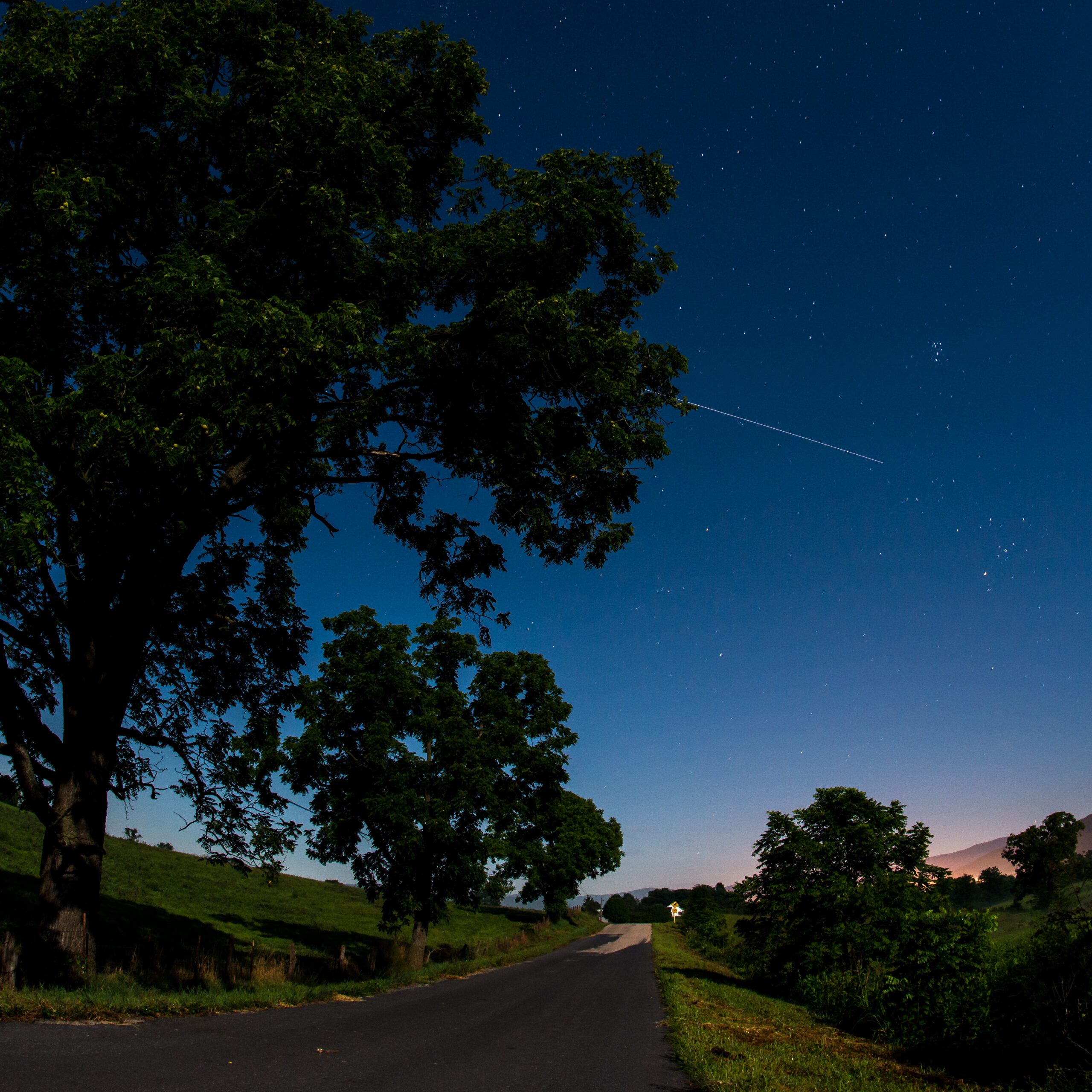
    The International Space Station leaves a trail in a 30-second exposure over Elkton, Virginia, on August 1, 2015. To the eye, it appears as a moving point. Photo: NASA/Bill Ingalls. Image source.

    A bright point appears above the horizon, moves steadily between the stars and fades from view. With the right timing, that small light can be the International Space Station, carrying people and experiments around Earth. You can watch a pass with your eyes alone.

    The useful first step is a prediction for where you will be standing. NASA’s Spot the Station page links to its official app and explains how to read a sighting. A pass visible from one city may be low, hidden or invisible from another.

    A five-minute plan before you step outside

    1. Confirm the place and clock. Check that the forecast uses your observing location, tonight’s date and the correct local time. A screenshot from another city or another night is not a prediction for your view.
    2. Choose a usable path. Read both compass directions and the maximum elevation. Pick a safe, accessible spot with a clear view along that path; a high pass is often easier around buildings.
    3. Be ready early. Set a reminder a few minutes before the listed start. Identify the starting direction before the pass begins, rather than searching your phone while the station moves.
    4. Watch the whole pass. Start with your eyes alone. Follow the light’s path and note whether its timing and direction agree with the forecast.
    5. Record the match. Write down what agreed, what differed and whether cloud or trees interrupted the view. Keep “probably the ISS” separate from a pass you matched convincingly.

    A practice forecast, decoded

    Suppose a forecast says “visible 4 minutes, maximum height 60°, appears W, disappears NE.” This is a made-up example, not a live prediction. You would begin looking west at the listed start time, expect the path to rise well above the horizon, and follow it toward the northeast. The maximum height describes the highest visible point; it does not mean the station first appears at 60°. Use the forecast’s actual appearance and disappearance elevations when choosing your view.

    Pick a pass before you go outside

    The free app is available for iOS and Android. According to NASA’s current FAQ, it shows the start time, duration, maximum height and directions in which the station will appear and disappear. Times use the local time zone of the selected location, including daylight-saving adjustments.

    Check those details before choosing your viewing spot. If the pass begins low in the west, a tall building on that side could hide its first moments. A higher pass gives you more room to work with when nearby roofs or trees obstruct the horizon.

    Arrive a few minutes early, confirm your direction and put the phone away once you know where to look. You can enable alerts if you want help remembering, but simply checking the upcoming sightings is enough to plan an evening outside.

    What the numbers mean

    Height in a sighting forecast means an angle above your horizon. Zero degrees is the horizon; 90 degrees is directly overhead. It is not the station’s altitude above Earth. The compass directions describe where to start looking and where the visible part of the pass should end.

    The ISS usually looks like a bright moving star. It does not show the regularly blinking navigation lights associated with an aircraft. At ordinary naked-eye viewing distances, you will see a point of light rather than individual solar panels or modules.

    Why it can vanish halfway across the sky

    The station shines by reflecting sunlight. Good sightings often occur around dawn or dusk, when the ground is dark enough for contrast while the spacecraft remains sunlit. An overhead orbital pass does not automatically produce a visible sighting.

    It can also move into Earth’s shadow while still high in your sky. NASA’s FAQ explains that entering or leaving shadow can shorten the visible portion of a pass. A fading light can therefore fit a perfectly ordinary orbital journey.

    ISS, another satellite, aircraft or meteor?

    Use several clues together. NASA/JPL’s satellite-spotting explanation describes the common light patterns below. None is a stand-alone identification test.

    • ISS: a bright point moving smoothly across the sky, without the regular flashing lights of an aircraft. A match to the predicted time and path is more useful than brightness alone.
    • Other satellites: also move against the stars and may brighten or fade. Seeing a satellite-like light does not identify which spacecraft it is.
    • Aircraft: commonly show a repeating flash pattern, sometimes with a red beacon. Distance, viewing angle and the recording can hide some lights, so the absence of a visible blink does not rule an aircraft out.
    • Meteors: produce a streak as material enters the atmosphere, rather than a sustained orbital pass. A lingering luminous trail may remain after the meteor itself. Our Orionid viewing guide explains that distinction and how to watch a shower.
    • Stars and planets: change position much more slowly over an observing session. Camera shake can make a stationary bright point seem to jump.

    A nearby object and a distant one can have similar apparent motion. Avoid estimating physical speed from how quickly a light crosses your phone screen. If the sighting still does not fit, preserve the uncertainty and work through our UAP video evidence checklist.

    Checking a light you have already seen

    Brightness alone is a weak identification. Other satellites also reflect sunlight, and NASA’s skywatching guide notes that some can brighten suddenly or fade as their illumination changes. Compare several details: the time, your location, the direction of travel and how long the light remained visible.

    For a useful record, note those details as soon as you can, along with a familiar landmark in the same direction. A short video can preserve timing, but a close-up dot without surrounding stars or landmarks often gives little sense of its path.

    A planned ISS pass is an enjoyable way to practise. Once the forecast and the moving light line up, the evening sky becomes a little easier to read. The observation needs no telescope, and the next opportunity may only require stepping outside.

    For a look at what the orbiting laboratory does, read our report on the research planned for the CRS-35 cargo mission. Its launch details are dated reporting; check current mission updates separately from a viewing forecast.

    Sources

  • Orionid Meteor Shower 2026: When to Look and What to Expect

    Orionid Meteor Shower 2026: When to Look and What to Expect

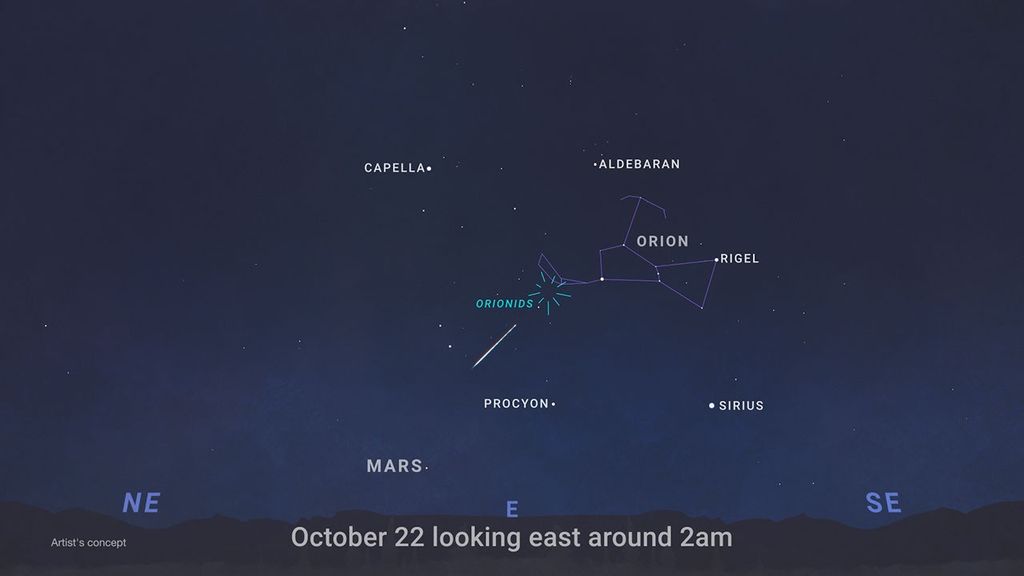
    NASA’s October 2026 Orionid sky chart. The shower’s apparent radiant is near Orion, but meteors can appear across the sky. Chart: NASA/JPL-Caltech. Image source.

    You do not have to wait for Halley’s Comet to return to see something it left behind. This October, Earth crosses one of its trails of debris, bringing the annual Orionid meteor shower. The best viewing requires a little planning this year: the Moon will brighten the sky through much of the night.

    NASA’s October skywatching guide places the peak on the night of October 21 into the morning of October 22, 2026. It recommends looking in the hours before dawn, after the Moon has set. Check moonset for your own location before setting an alarm; a single clock time will not work for every reader.

    The dates and the realistic expectations

    • Peak night: October 21–22, 2026.
    • Active period: October 2 to November 7.
    • Where: Both the Northern and Southern hemispheres.
    • What you need: A clear, dark sky and a comfortable place to watch.

    NASA’s Orionid reference page gives a typical dark-sky rate of about 10 to 20 meteors an hour. Treat that as a guide to the shower’s potential. Moonlight, clouds, nearby lighting and your view of the sky can all reduce the number you actually notice. A quiet ten minutes does not mean the shower is over.

    Why Halley’s Comet produces two showers

    As Halley travels around the Sun, it sheds dust and other small material. Earth encounters that debris on its own yearly journey. The particles enter our atmosphere at roughly 66 kilometres per second, producing the brief streaks we call meteors. A steadily moving point is a different kind of observation; our ISS spotting guide compares satellite, aircraft and meteor clues and explains how to check a predicted pass. Some Orionids leave a luminous trail that lingers after the initial flash.

    Halley’s debris also produces the Eta Aquarid shower in May. The comet itself last visited the inner solar system in 1986 and is expected back in 2061. The annual showers let us watch pieces of its history long before then.

    Give yourself a wide view

    The name Orionid comes from the shower’s radiant, the direction near Orion from which its paths appear to spread. You can see meteors across the sky, so there is no need to stare at that one point. Looking away from the radiant can reveal longer-looking streaks.

    NASA’s general observing advice makes meteor watching an easy activity to start without equipment. Your eyes cover far more sky than a telescope. A reclining chair or blanket helps you stay comfortable while looking upward; an open area lets you watch more of the sky at once.

    Choose a place you can safely and legally access, keep bright lights out of your view and give your eyes around half an hour to adjust. Bring another layer even if the evening feels mild. Checking the cloud forecast and local moonset beforehand is more useful than buying equipment for a single night.

    The Orionids remain active on either side of the peak. If October 21–22 is cloudy, another clear predawn session can still be worth trying. For this year’s main event, the simplest plan is a dark location, a patient watch and the Moon below the horizon.

    Sources

  • Colorado UAP Transcript Clarifies a January 2024 Sighting as Archive Entries Change

    Colorado UAP Transcript Clarifies a January 2024 Sighting as Archive Entries Change

    A Colorado police officer’s recorded UAP account now has a more precise place in the public record: January 2, 2024. The date appears in transcript LLE-UAP-D004, which accompanies a one-minute, 42-second video released through the Pentagon’s PURSUE archive.

    The document is part of a small but consequential set of archive revisions. The independent PURSUE Tracker reports that a September 24 catalogue update added three Colorado transcripts and changed video LLE-UAP-PR004’s title from October 2023 to January 2024.

    What the officer actually reported

    In the mirrored government transcript, the speaker describes an orb at an estimated 300 feet above the ground, says it had remained stationary for about fifteen minutes, and later says it is moving closer. The officer also says a radar check showed no aircraft in the area.

    Those details are the observer’s account. Our UAP video evidence checklist explains how to separate a witness’s estimates from measurements and preserve the context needed to test them. The released text supplies no radar plot or independent measurement establishing the object’s altitude. It also does not explain what radar source was checked, making the statement insufficient to rule out every ordinary aerial object.

    The document’s introduction is explicit about these limits. AARO says descriptive and estimated characteristics reflect the reporter’s interpretation at the time. It also explains that audio was removed, and the transcript redacted, to protect privacy and sensitive law-enforcement information.

    Why the catalogue history matters

    According to the tracker’s revision log, the same update added transcripts D002, D003 and D004, reassigned D001 to video PR001, and replaced the document served at D001’s address. The tracker says PR004’s incident-date field still carried October 2023 even after its title was corrected.

    The chronology comes from the tracker’s saved versions and monitoring, rather than a published government change notice. For this article, the government transcript was read through its mirror because the live government file was inaccessible. The earlier and later government-server versions were not independently compared.

    Researchers matching sightings to weather, aircraft or astronomical conditions need dependable dates and document pairings. The current transcript provides a useful date and a clearer account of what the officer said. It leaves the identification of the observed object unresolved.

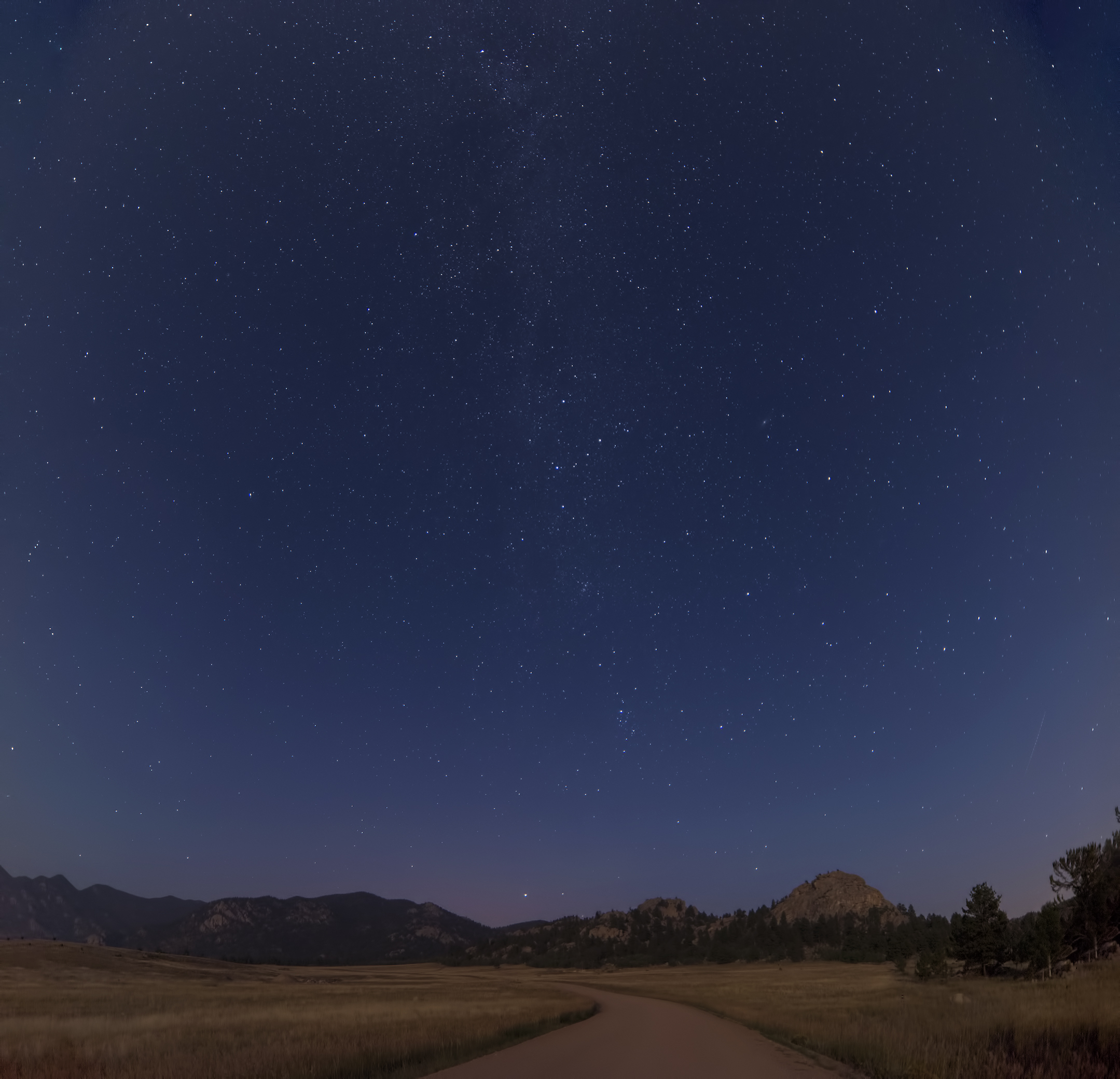
    Featured image: A Colorado night sky, photographed in 2015. Illustrative image; it does not show the reported sighting. Photo: Thomas Shellberg / Wikimedia Commons, CC0. Image displayed at reduced size; homepage thumbnails may be cropped. Image source. License.

  • Mystery Wire Reports Progress on AAWSAP Files, With No Release Date Yet

    Mystery Wire has reported a possible step forward in the long-running search for records from the Advanced Aerospace Weapon Systems Applications Program, better known as AAWSAP. Its October 7, 2026 episode, featuring Robert Bigelow, says the Defense Intelligence Agency has located previously missing program files.

    A follow-up report by KLAS journalist Ron Futrell, published October 9 and syndicated by AOL, describes a letter sent to Bigelow about compiling information for release. Futrell reports that no release date has been set and that preparing the material could take years.

    The development remains attributed to Mystery Wire and KLAS. The complete DIA correspondence and an inventory of the records have not been independently inspected for this article, so their wording, scope and completeness remain open questions.

    Why the archive matters

    The latest report follows an earlier account from George Knapp and Jeremy Corbell. In the publisher’s description of their September 25 WEAPONIZED episode, they said AAWSAP produced a much larger investigative archive than the program-related material already released publicly.

    That description attributed claims that thousands of pages had been delivered to DIA to Bigelow, James Lacatski and Colm Kelleher. It provides a record of what program participants say was handed over, while leaving the contents of that larger collection to be established through the documents themselves.

    In Futrell’s new report, Kelleher argues that fuller records could supply context missing from released UAP videos and data. The report also identifies witness privacy as a concern: people interviewed during investigations had supplied information on the understanding that their identities would be protected.

    The next useful evidence

    For researchers, an itemised inventory would be an important starting point. It could separate administrative paperwork, commissioned technical studies, case investigations and database material, and show whether the newly described collection overlaps with files already available.

    The full correspondence would also help establish exactly what stage the process has reached. Locating records, reviewing them for release and publishing readable copies each require separate evidence. A podcast announcement cannot show how much material ultimately reaches the public or how extensive its redactions will be.

    As of October 11, the accessible reporting supports a cautiously worded update about prospective records access. It supplies neither a verified release timetable nor new evidence establishing the nature or origin of any reported UAP.

  • German MPs Ask Who Handles UAP Reports as Government Reply Remains Pending

    German MPs Ask Who Handles UAP Reports as Government Reply Remains Pending

    Who receives a UAP report in Germany, and what happens to it next? A new parliamentary inquiry puts those practical questions to the federal government. The Bundestag’s October 5, 2026 notice confirms that members of the AfD parliamentary group are seeking clarification of responsibility for unidentified air and space contacts.

    The two-page inquiry, document 21/8323, was published on October 2 and signed in Berlin on September 30. It contains eleven questions covering reporting procedures, assessment, records and cooperation with other countries.

    Reporting channels and the records behind them

    The MPs ask which federal authorities receive and assess reports, what definitions they use, and whether military personnel, civilian pilots and air-traffic controllers have established reporting routes. They also request annual figures for the past ten years, where such data exist, and details of checks against aviation, satellite and weather information.

    Other questions concern interdepartmental working groups, exchanges with NATO, EU or bilateral partners, and whether relevant documents or databases are classified. On classification, the inquiry asks about the existence and level of protection of records rather than demanding their contents.

    A final question asks whether responsibilities and procedures exist for potentially non-human objects or signals originating beyond Earth. It raises a contingency; it reports no such detection.

    An older answer gets a new context

    The inquiry refers back to a June 12, 2008 government answer. Responding to a question about UFOs and extraterrestrials, parliamentary state secretary Peter Altmaier said the government had no knowledge of such sightings in Germany and consequently held no UFO-sighting files suitable for publication.

    International work has developed since then. NASA’s independent UAP study, whose final report appeared on September 14, 2023, examined available data, future collection and scientific methods. Its purpose was to improve how observations could be investigated, a useful context for questions about Germany’s own reporting arrangements.

    As of October 11, the Bundestag’s official procedure tracker still lists the inquiry as unanswered. The document therefore establishes what the MPs want to know. Any account of Germany’s current position will need to be checked against the government’s eventual reply.

    That reply could make a basic but important difference: showing observers and researchers which institutions handle unusual reports, what information they retain, and how those reports are evaluated.

    Featured image: The Reichstag building in Berlin, photographed in 2017. Photo: KK nationsonline / Wikimedia Commons, CC BY-SA 4.0. Image displayed at reduced size; homepage thumbnails may be cropped. Image source. License.

  • ALMA Finds a Rare Heavy Form of Methanol Around a Young Star

    ALMA Finds a Rare Heavy Form of Methanol Around a Young Star

    A rare version of a familiar molecule has appeared in the material around a young star. Astronomers using ALMA have detected fully deuterated methanol in interstellar space for the first time, adding a demanding new test for theories of how organic chemistry develops before planets form.

    The Max Planck Institute for Radio Astronomy announced the result on October 7, 2026. The molecule was identified around IRAS 4A2, a protostar in the Perseus molecular cloud roughly 1,000 light-years away. Arnaud Belloche led the study.

    A molecular record of the cold

    Ordinary methanol contains four hydrogen atoms. In the newly detected version, written CD3OD, all four are replaced by deuterium, a heavier isotope of hydrogen. These substitutions are useful because cold interstellar chemistry can produce distinctive patterns of deuterium enrichment.

    Methanol is also involved in making larger organic molecules. Laboratory work suggests that much of this chemistry takes place on icy dust grains before a star fully develops. Warming then releases molecules into surrounding gas, where telescopes can identify their characteristic spectral lines. The relative amounts of different methanol variants help researchers trace that earlier history.

    According to the institute, fully deuterated methanol is about a hundred times more abundant than available chemical models predict. That mismatch points to missing or inadequately represented chemistry in the models.

    A stronger test, with uncertainties attached

    The research paper, posted on October 5 and accepted by Astronomy & Astrophysics, also identifies a measurement complication. Estimates of ordinary methanol’s abundance may be too low. The authors suggest that emission from clumps, rather than one uniform region, could help explain some unusual isotope ratios. The molecular identification and the detailed interpretation of its abundance are separate parts of the result.

    The observations belong to COMPASS, an ALMA survey of 11 young, Sun-like stellar systems. NRAO’s overview describes more than 100 hours of telescope time and an initial set of seven papers. Comparing different birth environments and evolutionary stages should help distinguish chemistry inherited from cold clouds from changes made as stars grow.

    For astrobiology, the interest lies in the chemical material that emerging planets may receive. Methanol can form without biology, so this detection makes no claim of life around IRAS 4A2. It instead gives researchers a more detailed starting point for understanding which organic ingredients can exist long before a habitable world is possible.

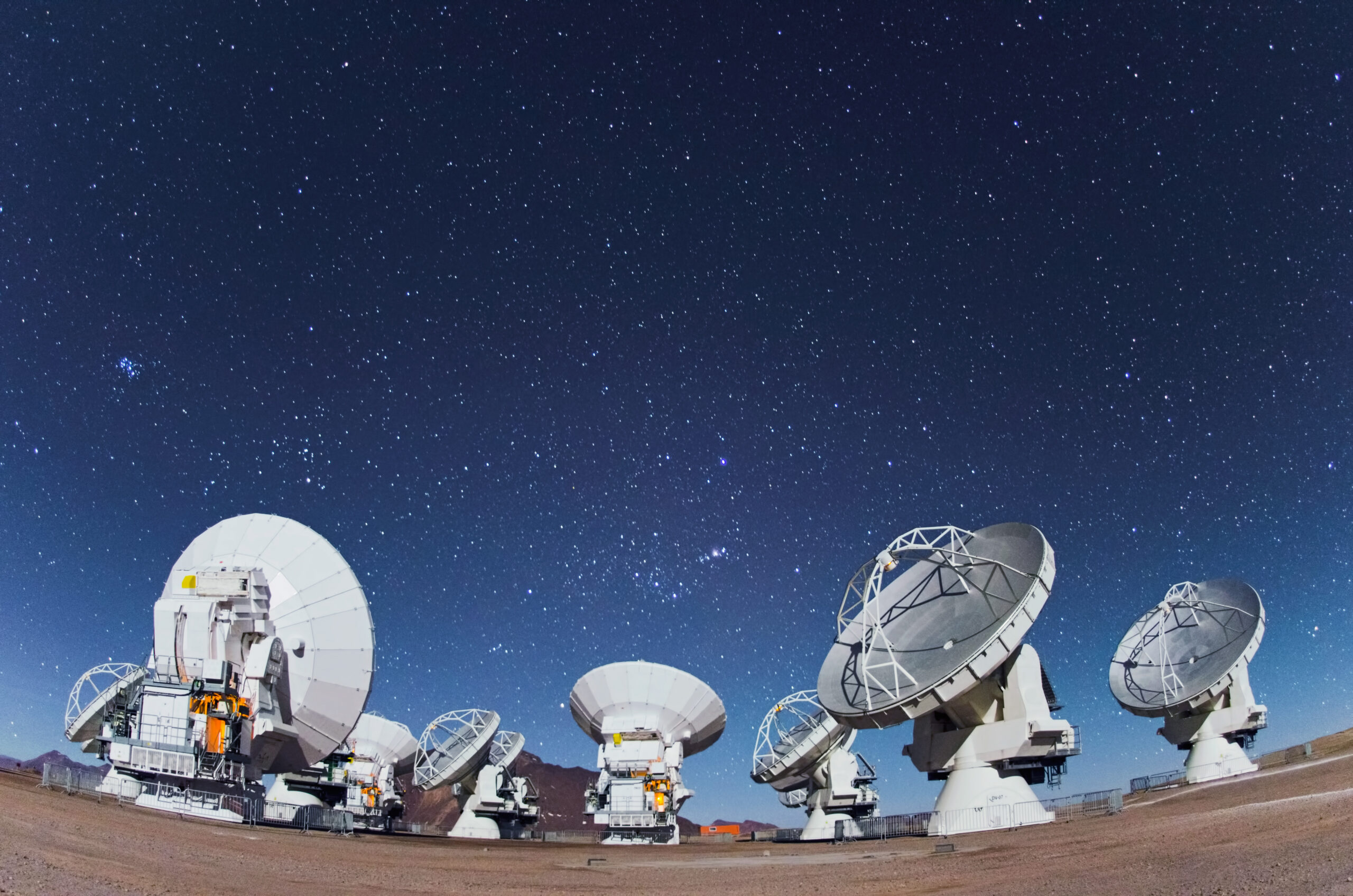
    Featured image: ALMA antennas on Chile’s Chajnantor plateau in an archival image released in June 2013. Image: ESO, CC BY 4.0. Image displayed at reduced size; homepage thumbnails may be cropped.