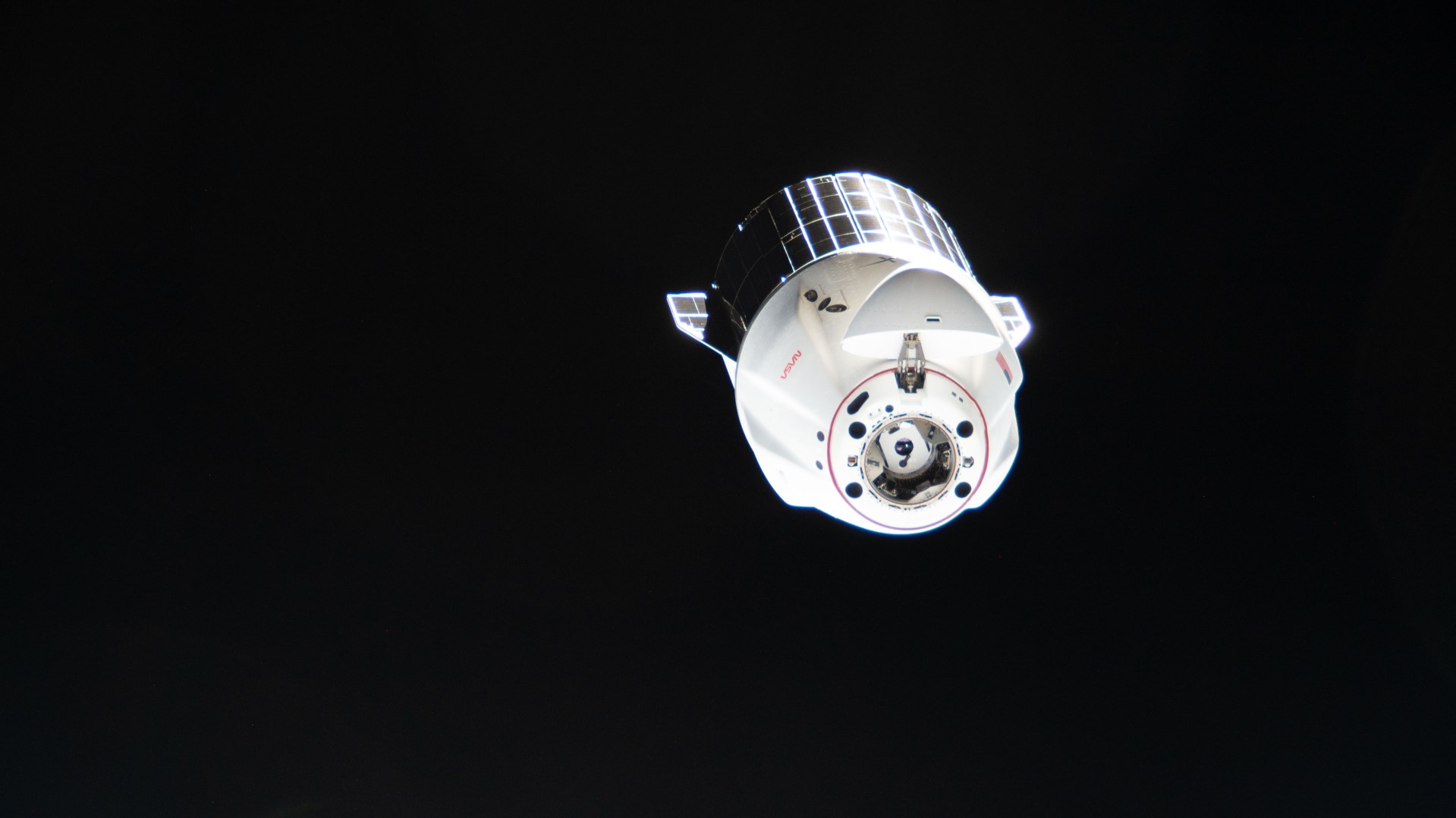
A small collection of brain-tissue models, a plant-disease experiment and a faster way to analyze biological samples are among the research heading to the International Space Station on SpaceX’s next cargo flight. NASA detailed the investigations on October 12, ahead of Dragon’s planned launch the following morning.
The 35th SpaceX commercial resupply mission is targeting October 13 at 6:33 a.m. EDT, or 10:33 UTC, from Cape Canaveral Space Force Station. The schedule remains subject to launch conditions and mission operations. Dragon is carrying more than 6,300 pounds of supplies, equipment and research.
The new science preview highlights four investigations from NASA’s Biological and Physical Sciences division. Together they address practical questions about maintaining healthy crews and reliable food production farther from Earth, where returning a sample to a laboratory will be much harder.
Small tissue models, carefully controlled comparisons
The AVATAR-Org1 investigation will send laboratory-grown human brain-tissue models to the station for five weeks. Researchers will compare them with matching tissue maintained on Earth, looking for cellular changes associated with the spaceflight experience.
NASA’s experiment description calls these models miBrains and says they contain seven primary cell types found in the human brain. The project will also test whether living brain tissue can be grown, monitored and studied reliably during flight. Establishing a workable research method is part of the objective.
The models offer a controlled way to examine cells, but findings will need careful interpretation before they can explain health effects in an astronaut. The immediate work concerns cellular responses and experimental methods. Any future treatment or protective measure would require further investigation.
Another cargo investigation, MINDS, uses brain organoids to study inflammation associated with neurodegenerative disease. NASA’s mission overview describes combinations of cells from multiple people intended to capture more patient diversity. MINDS and AVATAR-Org1 are separate experiments, with different questions and tissue-model approaches.
Keeping crops and crews healthy
The MVP-Plant-02 experiment tests whether a fungal disease develops more quickly or becomes more severe in microgravity. Investigators will compare molecular and structural changes in infected plants grown aboard the station with those grown on Earth.
That comparison matters for space agriculture. A dependable crop system would provide fresh food and dietary variety, while plants could contribute to air and water recycling. Disease resistance is one of the requirements such a system must meet. The experiment is testing a hypothesis about disease severity; its launch does not establish the result.
Meanwhile, the GEARS investigation returns for its fourth and final planned stay. Astronauts will repeatedly sample station surfaces to monitor antibiotic-resistant organisms. The study focuses on how bacteria survive in an enclosed microgravity environment and how crews might be protected during longer missions.
Tracking those organisms over time can provide information that a single sampling visit would miss. The goal is to understand and manage infection risks, with potential relevance to enclosed environments on Earth as well.
Getting answers without shipping samples home
The fourth investigation will test a compact microplate reader that reached the station earlier this year. ELISA MABL will assess its ability to perform assays that measure biological markers, including antibodies, antigens and proteins.
Analyzing samples on board could shorten the wait for results and reduce the need to preserve specimens until they can be returned. The demonstration will check both the reliability of the assay in microgravity and whether the reader produces data of the required quality.
For this flight, NASA is planning Dragon’s docking for October 15 and a return in mid-November. The cargo also includes the final pair of roll-out solar arrays for the station’s power augmentation. The research will begin another cycle of delivery, onboard work and analysis, turning an operational resupply mission into a set of tests for living and working deeper in space.
Image: Archive photograph of a Dragon cargo spacecraft departing the station on June 16, 2026, used by NASA in its CRS-35 launch advisory. Credit: NASA. Image source; usage information.
Leave a Reply