DARK FIRESORIGINS UNKNOWN

Author: Dark Fires

  • XRISM and Radio Telescopes Trace a Jet to 3C 120’s Hot Inner Flow

    XRISM and Radio Telescopes Trace a Jet to 3C 120’s Hot Inner Flow

    Coordinated X-ray and radio observations are clarifying how the galaxy 3C 120 launches a powerful jet while its central black hole feeds rapidly. Tohoku University’s October 20, 2026 announcement describes research published in The Astrophysical Journal Letters on October 19.

    The study combines XRISM spectroscopy with three radio-telescope networks. A broadened iron emission feature indicates that a relatively cool, thin accretion disk ends at about 20 gravitational radii. Inside that boundary, the researchers infer a hotter, thicker flow. Tracing the radio jet backward places its origin on a similarly compact scale.

    That geometry offers a plausible environment for magnetic fields to draw energy from the black hole’s rotation. The observations support this proposed connection; they do not directly show the entire magnetic engine or establish that every jet-producing black hole behaves identically.

    The measurement depends on reading light much more finely than an ordinary image allows. XRISM’s Resolve detector, developed through Japanese and U.S. collaboration, measures the tiny rise in temperature when an X-ray photon lands on a pixel. Operating extremely close to absolute zero makes those small energy deposits measurable. Each recorded energy contributes to a spectrum, rather than merely marking where a photon arrived. The spacecraft carries a second instrument, Xtend, which takes wider-field X-ray images; separate mirror assemblies focus light onto the two instruments.

    The mission’s scientific explanation describes why such spectra are useful near black holes. Different elements leave recognizable patterns at particular X-ray energies, and detailed observations can reveal how surrounding material moves. The black hole itself emits no escaping signal from inside its event horizon, so astronomers study the gas and plasma outside it. This makes the environment the accessible record of processes occurring close to an otherwise invisible object.

    Combining that record with radio structure is the advance in 3C 120: the instruments constrain different pieces of one system, allowing the proposed launching region to be tested against independent observations.

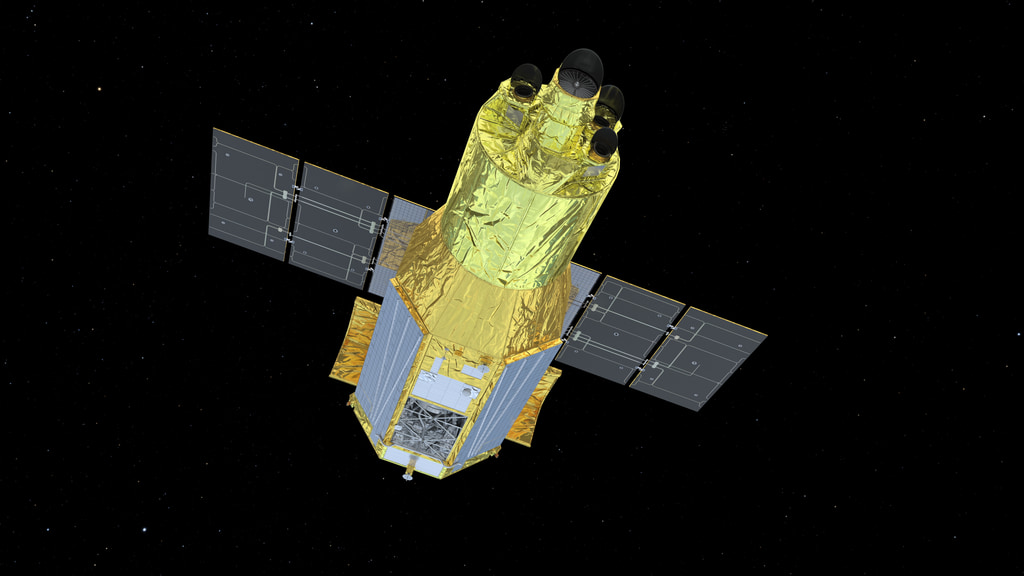
    Artist’s concept of XRISM, not an image of 3C 120. Credit: NASA’s Goddard Space Flight Center Conceptual Image Lab. Image usage terms.
  • Hubble’s Distorted Galaxy Images Help Prepare Roman’s Dark-Matter Survey

    Hubble’s Distorted Galaxy Images Help Prepare Roman’s Dark-Matter Survey

    A small arc near a bright spiral galaxy is helping astronomers prepare for much larger cosmic surveys. An October 22, 2026 Hubble release highlights a gravitational lens that will inform analysis of observations from the Nancy Grace Roman Space Telescope.

    The lens pairs a foreground elliptical galaxy roughly 4.5 billion light-years away with a background galaxy about eight billion light-years away. The more distant system appears twice: as a prominent curved image and a smaller, reversed counterpart. Researchers are using detailed Hubble examples to develop models for interpreting Roman’s larger fields.

    Gravitational lensing turns the geometry of spacetime into an astronomical measuring tool. A massive foreground object redirects light from something behind it. Depending on the alignment, a distant galaxy can appear stretched, amplified or repeated. Mapping these distortions helps reveal the distribution of matter, including material that emits no detectable light. A bright arc is therefore evidence about both the source and the mass lying along its light path.

    The complementary telescope designs explain the partnership. Hubble and Roman both use 2.4-meter primary mirrors, but their optical layouts differ. Roman’s shorter focal length supports a much wider field, while Hubble supplies tightly focused observations across ultraviolet, visible and near-infrared wavelengths. Roman’s Wide Field Instrument has a 288-megapixel detector array. Hubble’s Advanced Camera for Surveys has a much smaller field and a 16-megapixel array.

    For lensing research, the practical advantage is coverage. A wide survey can supply a broad population of candidate systems; detailed observations can then investigate individual examples. The two approaches address different questions, from how frequently particular arrangements occur to how mass is distributed within a selected lens. Neither a large camera nor a sharp image alone replaces the modeling needed to connect distorted light with an underlying mass distribution.

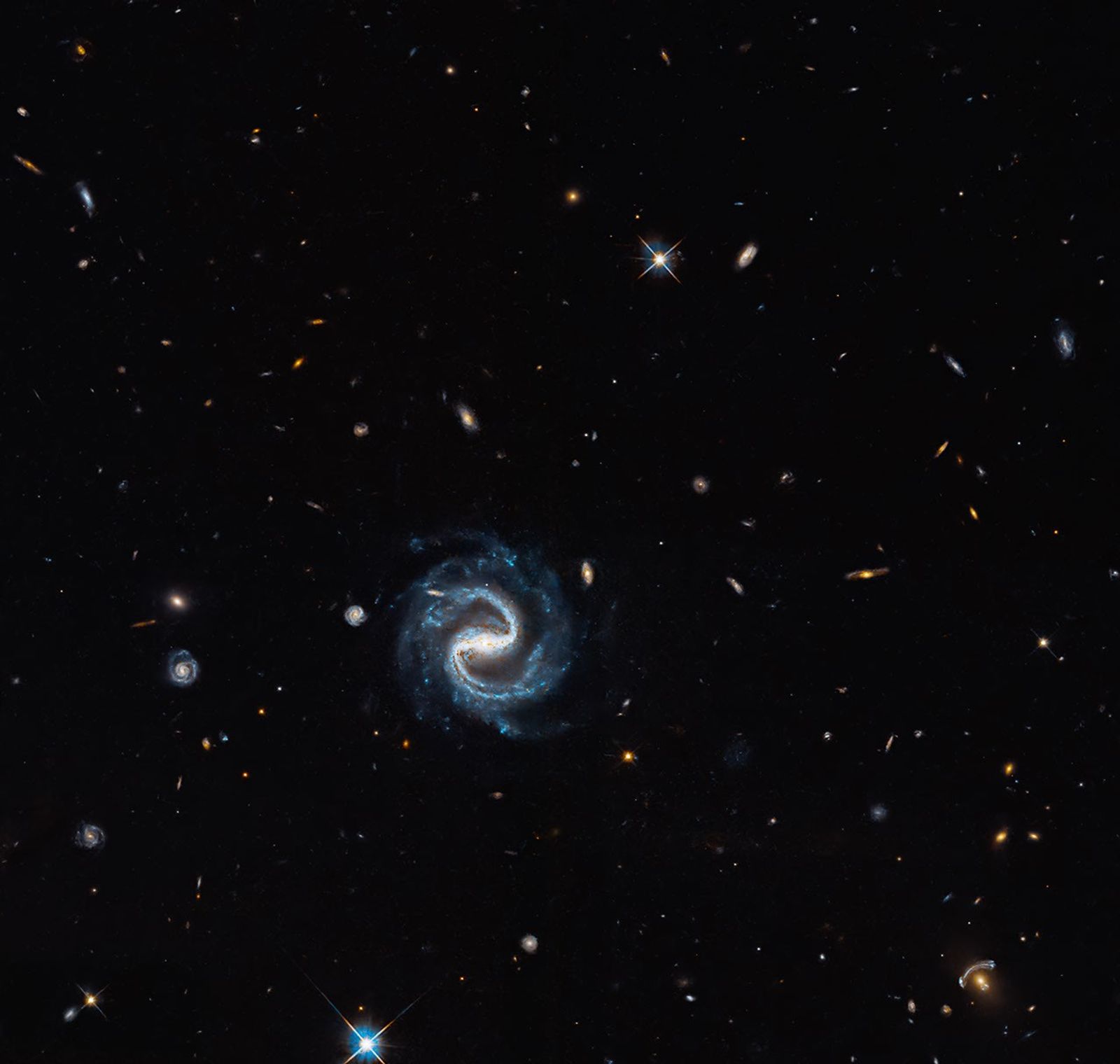
    In the new scene, the conspicuous spiral draws the eye, but the lensing target lies in the lower-right corner.

    Hubble’s field includes a gravitational lens at lower right. Credit: NASA, ESA, and X. Huang (University of San Francisco); Processing: Gladys Kober (NASA/Catholic University of America). Image usage terms.

  • A Thinner Rotor Airfoil Offers a Route to Longer Mars Helicopter Flights

    A Thinner Rotor Airfoil Offers a Route to Longer Mars Helicopter Flights

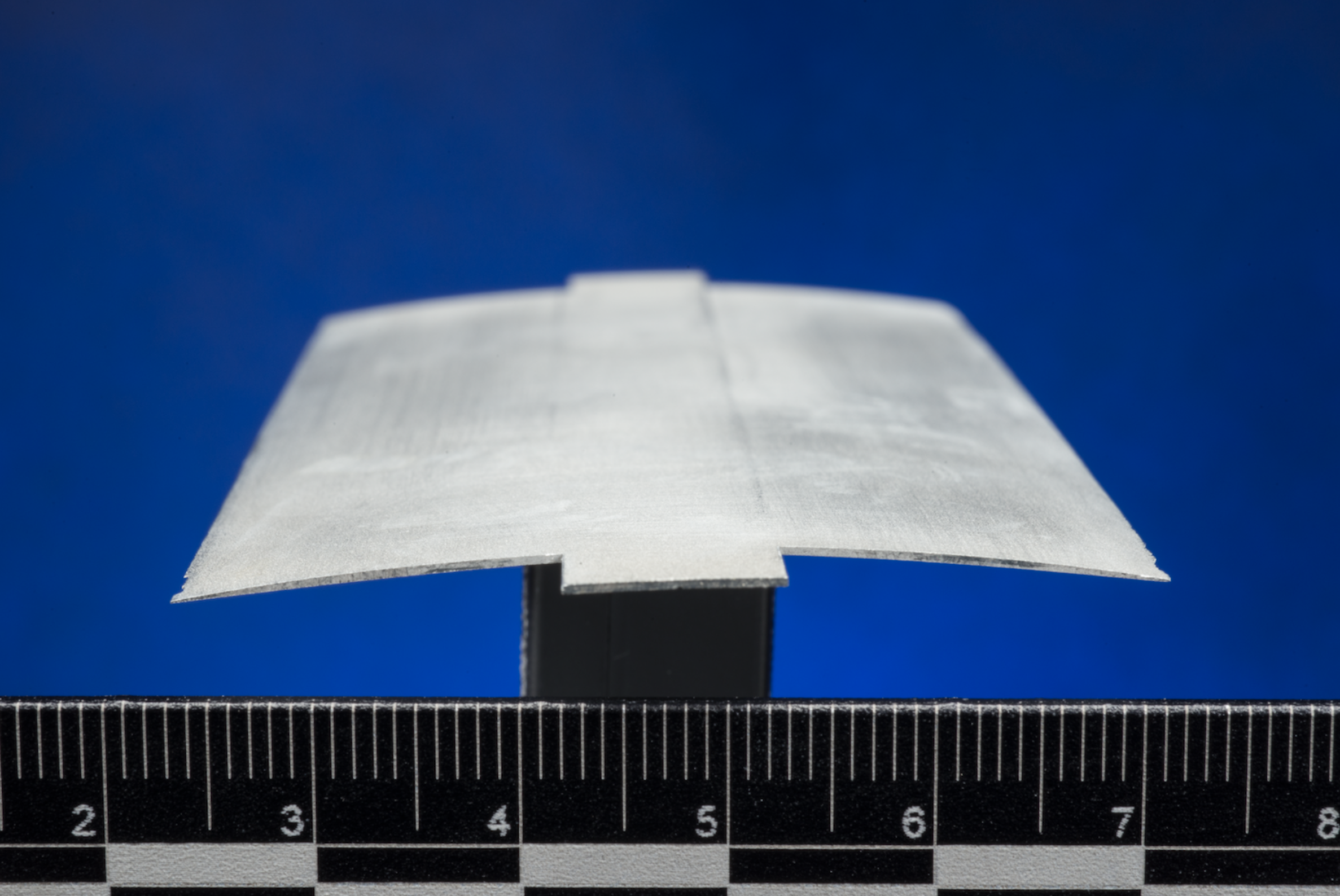
    A much thinner rotor-blade profile could help future helicopters travel farther across Mars. NASA highlighted the experimental roamx-0201 design on October 20, 2026. The research is aimed at aircraft beyond the planned SkyFall mission, rather than a confirmed change to its helicopters.

    The underlying study compares the new airfoil with CLF5605, the profile used by Ingenuity. Researchers combined two independent computational approaches with measurements in Tohoku University’s Mars Wind Tunnel. That comparison matters because aerodynamic behavior in this regime can respond strongly to small differences in geometry and experimental setup.

    At the conditions studied, including a Reynolds number of 20,000 and a Mach number of 0.60, roamx-0201 achieved roughly 19 to 43 percent better lift-to-drag ratios across the different methods. In practical terms, the new shape produced the required lift with less aerodynamic resistance.

    NASA describes a sharper, less rounded airfoil, using disturbed airflow near its leading edge to improve lift. The agency also cites a modeled possibility of single flights extending to 18.7 kilometers. That is a projection for future aircraft, not an achieved flight record.

    The simulations also indicated more favorable stall behavior and about 20 percent greater maximum lift. These are aerodynamic findings under specified conditions. A successful airfoil comparison does not establish the endurance, payload capacity or operating limits of a complete helicopter carrying out a scientific mission.

    The wider ROAMX program also includes equipment to evaluate complete rotors. A separate NASA technical report, released earlier in 2026, describes a vacuum-compatible hover test stand designed to measure performance under Martian aerodynamic conditions. That reusable apparatus supports experimental checks on future rotor designs.

    NASA says the technology is not yet ready for Mars. Continued testing will need to reconcile predictions with measured performance before a future mission can rely on the design. The result offers a promising route toward more capable aerial exploration, with development still ahead.

    A test model showing the thin roamx-0201 airfoil profile. Credit: NASA. Image source; usage guidelines.

  • Spark Experiments Reveal Chemical Structure Inside Prebiotic Organic Films

    Spark Experiments Reveal Chemical Structure Inside Prebiotic Organic Films

    A study published October 7, 2026, in Astrobiology maps chemical differences inside solid organic films produced by electrical-discharge experiments. Christian Jenewein and colleagues examine how these films develop hollow, cell-like structures, offering a closer look at the physical settings in which prebiotic chemistry could become compartmentalized.

    Electron microscopy and spectroscopy revealed that the material was chemically uneven. Different regions contained different mixtures of carbon-rich structures and products associated with hydrogen-cyanide chemistry. Hollow shapes appeared preferentially where the films met water. The authors connect this organization to local interactions among gas, liquid and solid material, rather than a uniform reaction throughout the apparatus. The authors also suggest that near-ultraviolet absorption could help shield fragile compounds.

    Astrobiology.com highlighted the paper on October 22. That is the date of the renewed coverage, not the original publication.

    From chemical ingredients to compartments

    The work follows a PNAS study published online in December 2024 and in a January 2025 issue. That research used glass reactors and electrical sparks to explore a plausible early-Earth gas mixture. With water present, silica helped produce organic films built from hydrogen-cyanide-derived material. Hollow microscopic structures grew from the films into the water. The researchers proposed that such enclosed spaces could act as tiny reaction chambers, bringing compartment formation into the same experimental setting as the production of prebiotic compounds.

    The wider experimental tradition has also shown why apparatus details matter. In a 2008 reanalysis of Stanley Miller’s preserved samples, a version that injected hot water mist into the spark chamber yielded a broader assortment of amino acids than the classic arrangement. That result concerned possible volcanic environments and chemical building blocks, rather than the creation of organisms.

    The new film study likewise reports non-biological structures, not living cells. Its value is in testing where chemistry becomes organized. Whether comparable compartments supported the further steps required for life on early Earth remains a separate question.

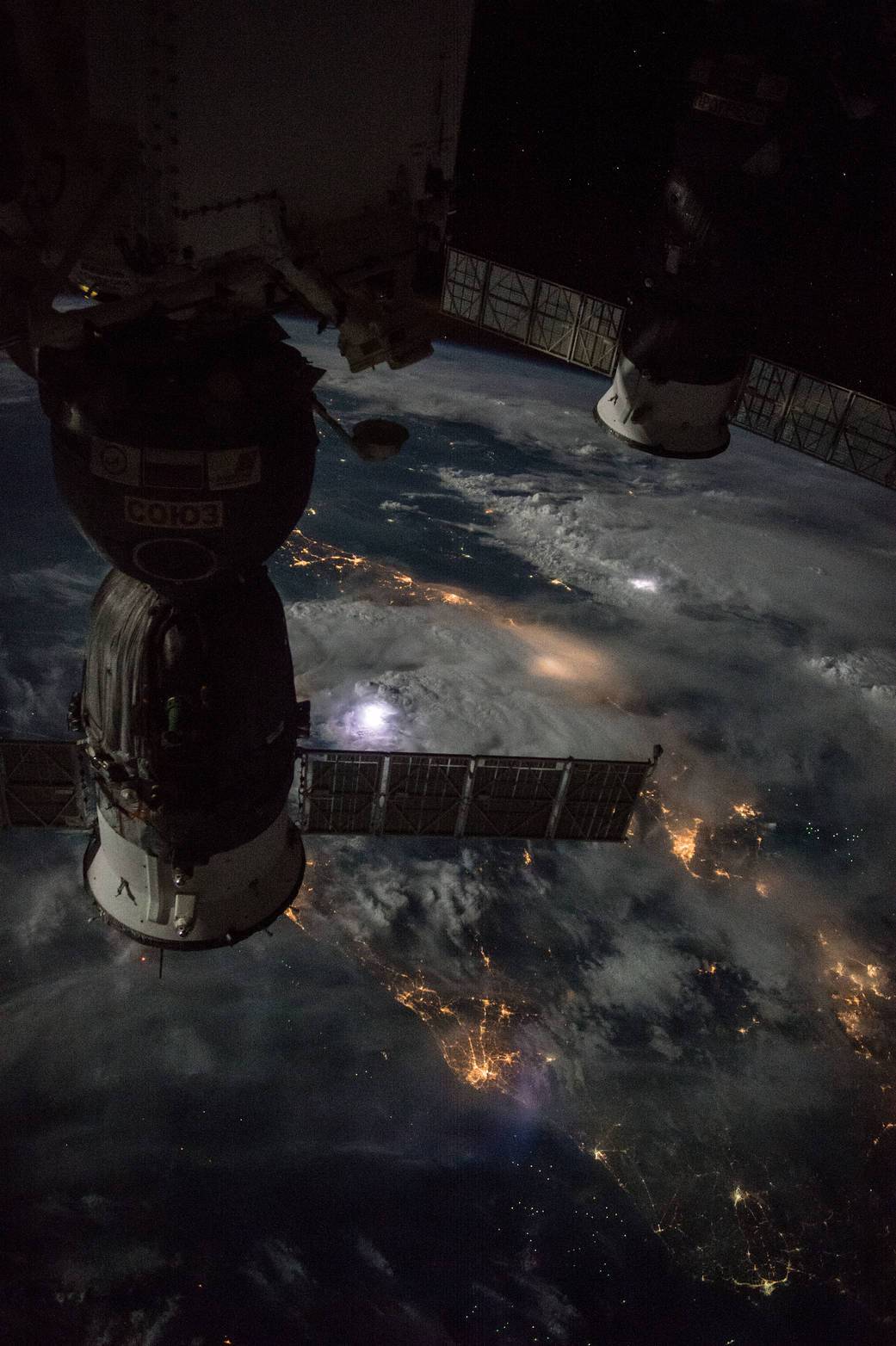
    Featured image: Lightning illuminates clouds beneath the International Space Station on September 18, 2016. This archival photograph illustrates natural electrical activity; it does not show the laboratory experiment. Credit: NASA. Image source. Usage terms.

  • NASA Advances the Power System for Its Planned Nuclear-Electric Mission to Mars

    NASA Advances the Power System for Its Planned Nuclear-Electric Mission to Mars

    NASA has identified a supplier for SR-1 Freedom, its planned nuclear-electric mission to Mars. An October 20, 2026 update names Sierra Lobo as the provider of the system that converts the reactor’s heat into electricity.

    The closed Brayton-cycle equipment will be integrated with a fission reactor being developed by Idaho National Laboratory. The work falls under an existing NASA Glenn contract. The announcement describes development responsibilities, rather than a completed or flight-tested module.

    Electric propulsion uses electrical energy to charge a gas propellant and accelerate it out of a thruster. Unlike the brief, forceful burn associated with a chemical rocket, an electric engine can deliver a small push over a much longer period. Sustained operation gradually changes the spacecraft’s speed.

    NASA’s explanation of the technology distinguishes the energy source from the propulsion hardware: solar arrays or a nuclear reactor can supply the electricity. SR-1 is intended to demonstrate the reactor-powered version beyond Earth orbit, testing an approach to future journeys through deep space.

    The mission overview lists a launch target of 2028 and arrival at Mars in 2029. Its planned encounter combines a Martian flyby with delivery of SkyFall, a payload of three helicopters descended from the Ingenuity design. Those dates remain targets for a future mission. Other objectives include demonstrating extended reactor performance and using existing technology and hardware where possible.

    The helicopters are intended to carry imagers and ground-penetrating radar, alongside measurements of temperature and wind. Combining those observations could reveal terrain, subsurface structure and the distribution of potential water ice. If ice is detected, the measurements could help establish its depth and extent.

    NASA’s latest update retains a late-2028 launch goal and says the reactor will remain inactive until the spacecraft has left Earth orbit. Interagency reviews and nuclear-safety work are part of the development process. The immediate milestone is building the power system that the wider mission depends on.

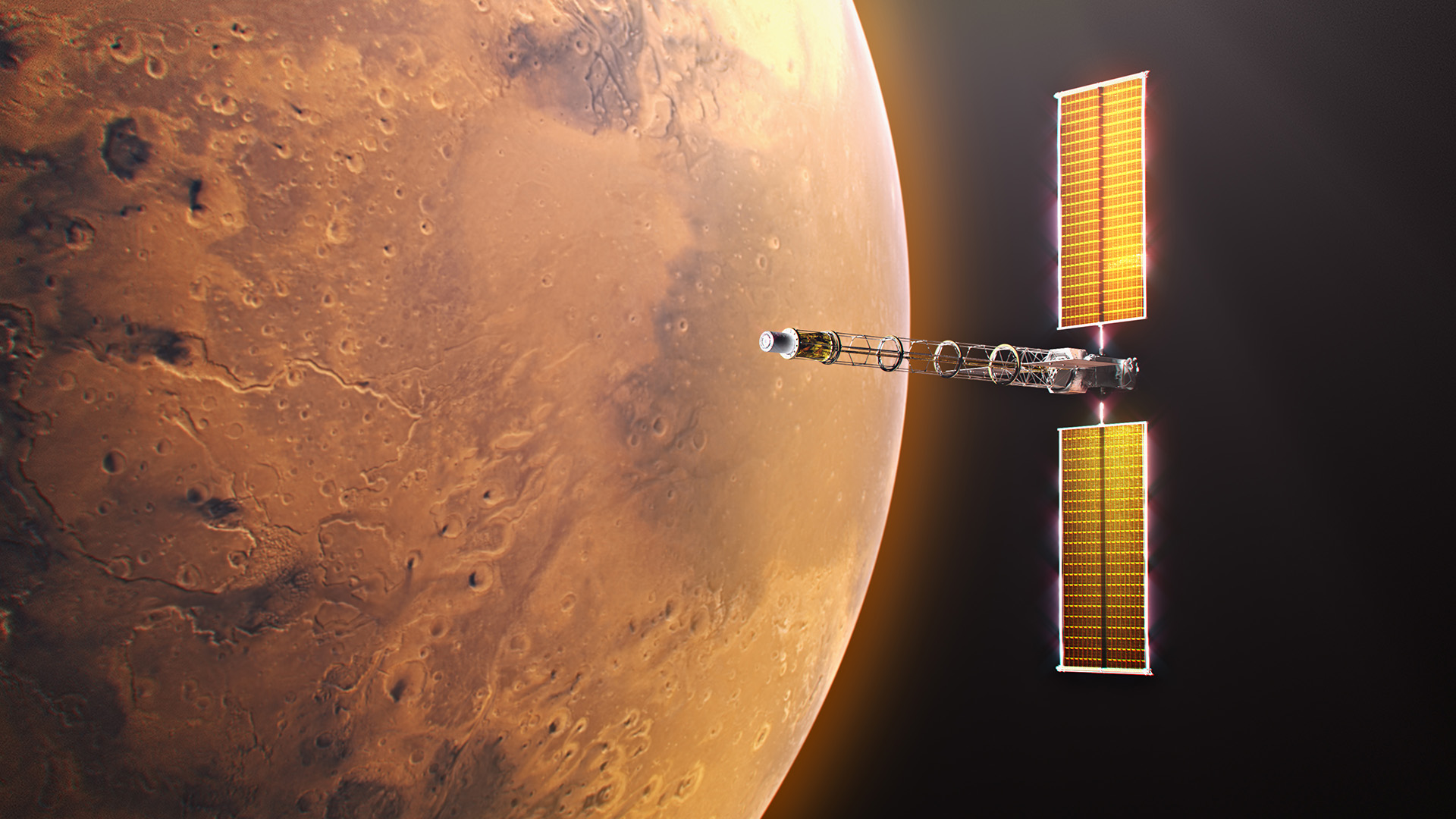
    Artist’s concept of SR-1 Freedom near Mars. The spacecraft remains in development. Credit: NASA/Alberto Bertolin. Image source; usage guidelines.

  • Germany Says It Has No Dedicated UAP Reporting Channels

    Germany Says It Has No Dedicated UAP Reporting Channels

    Germany’s federal government says it has no dedicated UAP reporting channels or interdepartmental working groups for assessing such events. Its answer dated October 16, 2026 also says no revision of existing procedures is currently planned. The official PDF is marked as a preliminary typeset version.

    The response follows an eleven-question inquiry from AfD MPs, published October 2. Their questions concern responsibility, terminology, reporting routes and records, rather than documenting a new encounter. They requested annual report totals for the preceding decade and asked whether observations are checked against aircraft, satellite and weather data. A further question addressed procedures for potentially non-human objects or signals from beyond Earth.

    The reply identifies ministries responsible for ordinary airspace and space surveillance. It describes sensor-data analysis and comparisons with orbital catalogues, while reporting no findings on UAP and no information answering the request for ten-year reporting figures. It acknowledges routine security discussions with international partners without detailing them. It also reports no special procedures for the contingency involving potentially non-human objects or signals from beyond Earth.

    Dark Fires previously covered the inquiry while a reply was pending. Readers can now compare the original questions with the government’s written answers, rather than relying on predictions about what officials might say.

    Why reporting methods matter

    NASA’s independent UAP study provides a useful scientific comparison. Its remit included identifying usable civilian datasets, improving future collection and assessing which analysis techniques could clarify observations. Its final report appeared in September 2023. The study’s published questions also explicitly addressed reporting protocols and air-traffic-management data, showing how investigation can begin with measurement standards without assuming an extraordinary explanation.

    The German reply should be read within that limited scope. An absence of dedicated reporting arrangements or available totals does not settle the cause of a particular sighting. Equally, unanswered questions about data handling do not establish concealed evidence of extraterrestrial technology.

    Featured image: The Reichstag building in Berlin in an archival 2014 photograph. Photo: Drrcs15 / Wikimedia Commons, CC BY-SA 3.0. Reduced-size copy; automated thumbnails may be cropped. The image and any cropped derivatives retain CC BY-SA 3.0. Image source. Usage terms.

  • Aurora Builds Two Enormous Dark-Matter Universes to Test Cosmic-Origin Clues

    Aurora Builds Two Enormous Dark-Matter Universes to Test Cosmic-Origin Clues

    Argonne National Laboratory has completed two cosmological simulations containing 13.4 trillion dark-matter particles apiece. Announced on October 19, 2026, the Aurora supercomputer runs follow structure across regions 28.6 billion light-years wide, providing test data for surveys including DESI and NASA’s SPHEREx.

    These gravity-only calculations omit gas and star-formation physics. Their particles represent the underlying dark-matter distribution rather than individual, experimentally detected dark-matter particles.

    The pair shares the same cosmology and an imposed primordial signal, but reverses the starting phases. Combining the runs reduces random variation. Researchers testing analysis methods will not know the injected signal’s strength in advance, allowing a blinded check of whether their pipelines recover it. This is a test environment, not a detection of new physics.

    Why build such an enormous rehearsal? The SPHEREx science team explains that inflation, the proposed burst of expansion near the universe’s beginning, should leave statistical traces in the later distribution of matter. Different physical mechanisms can produce different patterns. One target is primordial non-Gaussianity: departures from a simple bell-curve description of the original fluctuations. Measuring those departures could help distinguish models involving one driving field from models involving several.

    SPHEREx approaches that problem by measuring galaxy spectra and estimating redshifts, allowing their positions to be mapped in three dimensions. NASA’s mission overview describes a planned two-year survey of more than 450 million galaxies. The experiment links a vast present-day observational catalogue to questions about the universe’s earliest fractions of a second.

    DESI takes a complementary ground-based approach, obtaining optical spectra on the Mayall telescope at Kitt Peak. Its original five-year survey finished in April 2026 after observing more than 47 million galaxies and quasars; observations are continuing to expand the map.

    Synthetic skies expose biases by letting researchers compare recovered answers with constructed inputs. Precision alone is not enough; the analysis must be trustworthy.

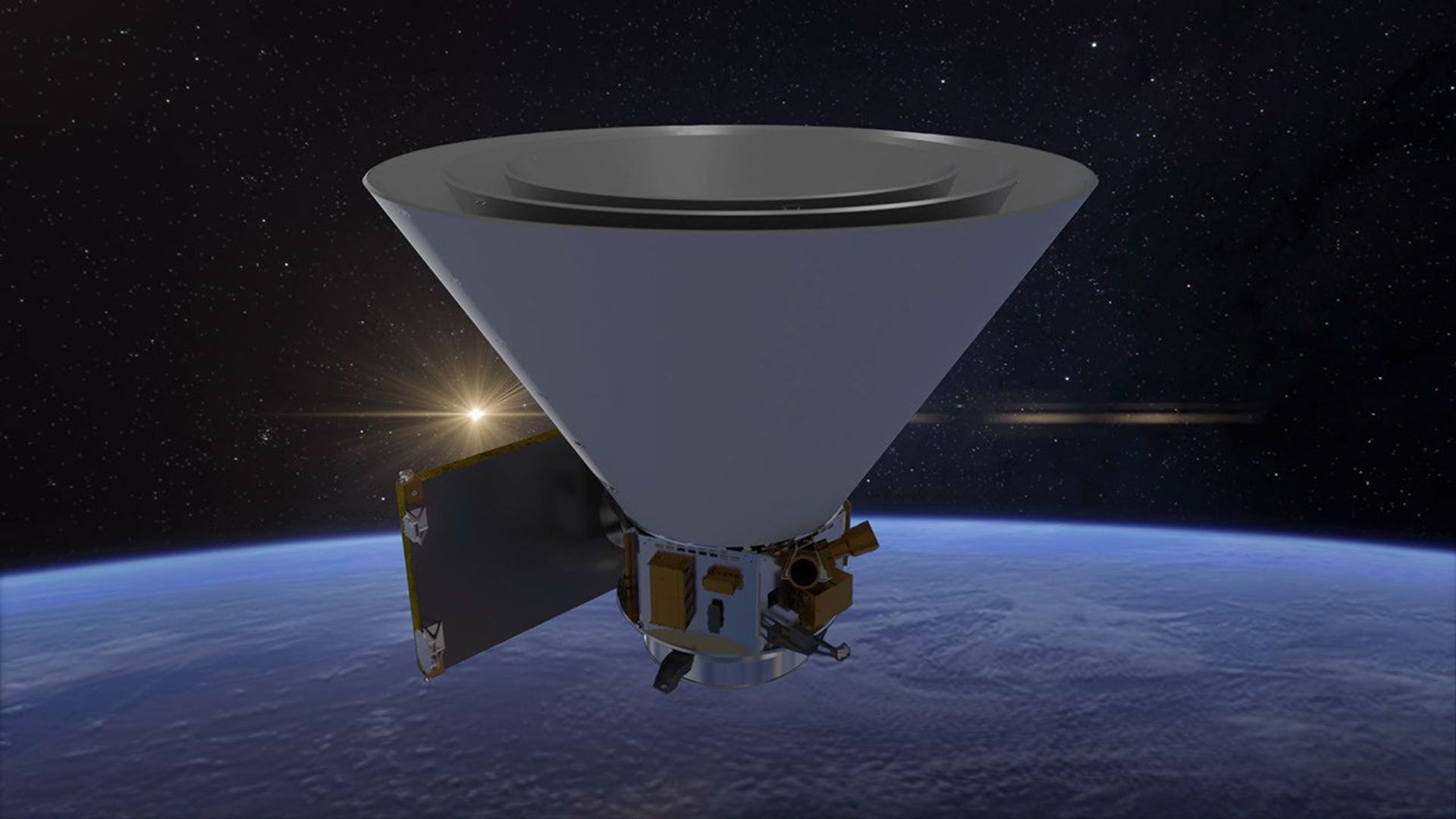
    Image: Artist’s concept of NASA’s SPHEREx observatory, one of the surveys the new simulations are intended to support. This is mission artwork, not an output of the Aurora simulations. Credit: NASA/JPL-Caltech. Image source. Usage policy.

  • Hubble Study Suggests Supernova Winds Can Hinder the Escape of Ionizing Light

    Hubble Study Suggests Supernova Winds Can Hinder the Escape of Ionizing Light

    Powerful stellar explosions may not always clear a path for the radiation that transformed the young universe. A study highlighted by the University of Michigan on October 21, 2026 instead suggests that some supernova-driven galactic winds can make it harder for ionizing light to escape its birthplace.

    The wider question concerns reionization, when energetic radiation stripped electrons from hydrogen spread through the universe. Young galaxies are important candidates for supplying that radiation. But producing photons is only part of the problem: they must also get through the gas and dust surrounding the stars. The university’s account explains that supernova explosions have often been invoked as a way to open those escape routes.

    The paper, published in Nature Astronomy on October 15, examined six otherwise similar local star-forming galaxies spanning different stages of a starburst. Hubble ultraviolet spectra allowed the team to compare escaping Lyman-continuum radiation, which can ionize hydrogen, with the properties of outflowing gas.

    Escape was strongest in the youngest systems, less than about three million years into the burst. These showed intense radiation and stellar winds, but not fast galactic-scale outflows. Older systems had faster galactic winds alongside stronger absorption and more dust. The authors argue that launching winds and loading them with material after supernovae begin can suppress photon escape during roughly the first ten million years.

    This is spectroscopy rather than a photograph of a cleared channel. NASA’s Cosmic Origins Spectrograph guide explains that the instrument separates ultraviolet light into its component wavelengths. Those spectra can reveal material’s composition, density and motion. Installed on Hubble in 2009, COS was designed to study faint ultraviolet sources that would otherwise be difficult to investigate.

    The sample is small, and nearby starbursts are proxies, not direct observations of reionization-era galaxies. The result does not establish that every supernova wind blocks radiation. It challenges a simple assumption about when escape should be easiest.

    Michigan’s researchers instead point toward feedback from very young stars as a promising mechanism to test further. If that timing holds in larger samples, models will need to capture what happens before the first explosions, not merely what the explosions sweep away.

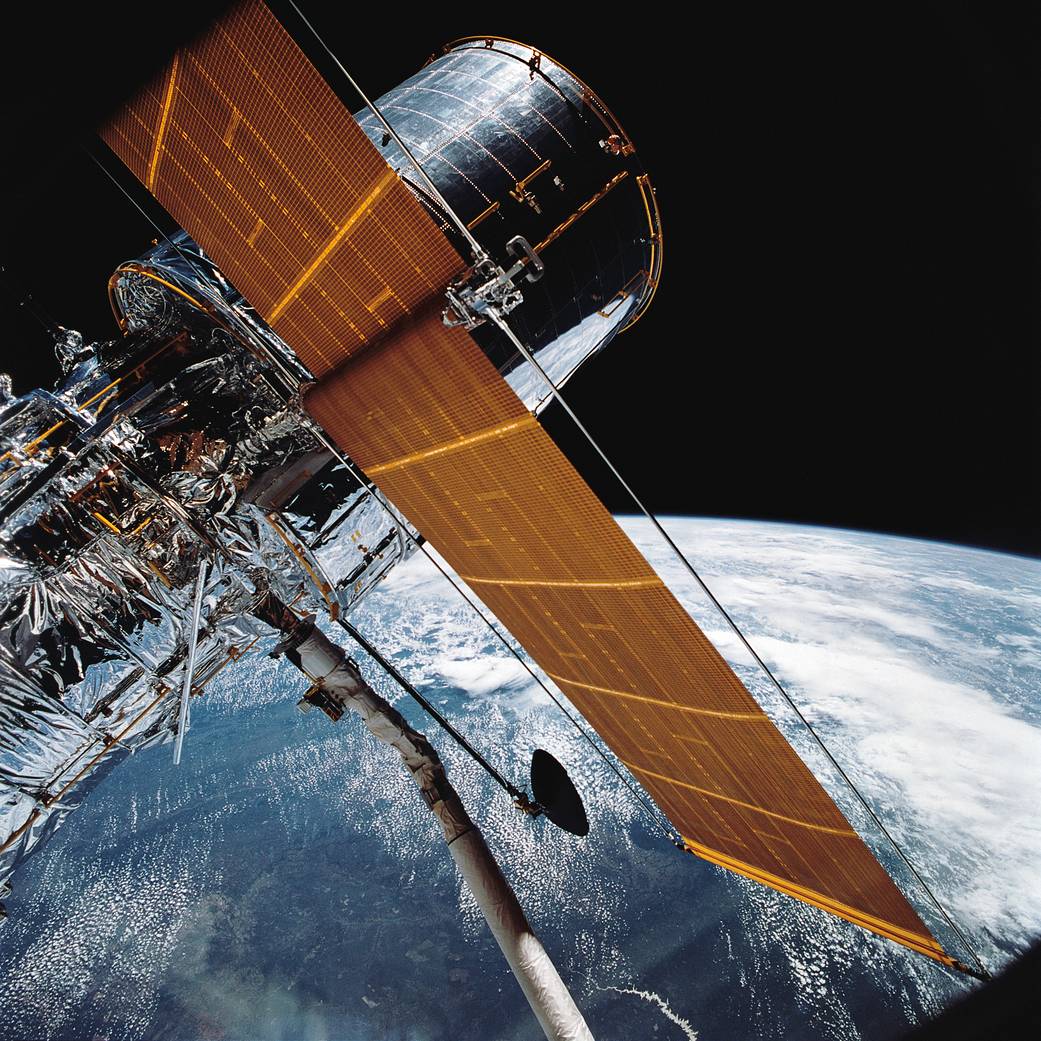
    Image: Hubble during deployment from Discovery on April 25, 1990. This archival photograph shows the observatory, not the galaxies in the new study. Credit: NASA. Image source. Usage policy.

  • Lunar Link Completes Major Tests as ESA Studies a New Moon Mission

    Lunar Link Completes Major Tests as ESA Studies a New Moon Mission

    Europe’s Lunar Link communications hardware has completed its final major integration and test campaign, ESA announced on October 20, 2026. Originally intended for the Gateway station’s HALO module, the equipment now needs a different route to lunar service after NASA paused Gateway work.

    ESA’s project update says the qualification and acceptance review is expected to finish by the end of 2026. A final software update also remains before controlled storage. Studies will examine whether the hardware could become an independent relay, with an added Earth-facing antenna and a suitable spacecraft platform.

    From individual antennas to a complete system

    The earlier testing history shows why this is a substantial engineering step. In March’s antenna report, ESA described vibration, acoustic and thermal-vacuum checks designed to reproduce launch stresses and space conditions. Each antenna is mounted on a deployable boom; engineers used a large balloon to support the hardware during a deployment rehearsal on Earth.

    At that stage, the antennas and the central electronics enclosure were still on separate paths through integration. The enclosure, known as the baybox, contains subsystems including the flight computer. Testing the connected system checks a different question from testing its individual parts: whether those components work together.

    Why lunar relays matter

    ESA’s separate Moonlight programme explains the communications problem around the lunar south pole. Terrain and the Moon’s curvature can block a direct connection with Earth. A satellite overhead can relay messages between surface users and distant ground stations, supporting operations where direct communication is unavailable.

    Moonlight is being developed as a dedicated communications and navigation service, with a planned five-satellite constellation. Its purpose includes helping landers and rovers establish their positions as well as carrying information. Such shared infrastructure could reduce the communications burden on individual exploration missions.

    The new Lunar Link studies will consider possible cooperation with Moonlight, along with spacecraft concepts, orbits and schedules. That is an option under examination, not an announced integration or launch. Completing hardware preserves a capability; deciding how to deploy it is the next programme-level question.

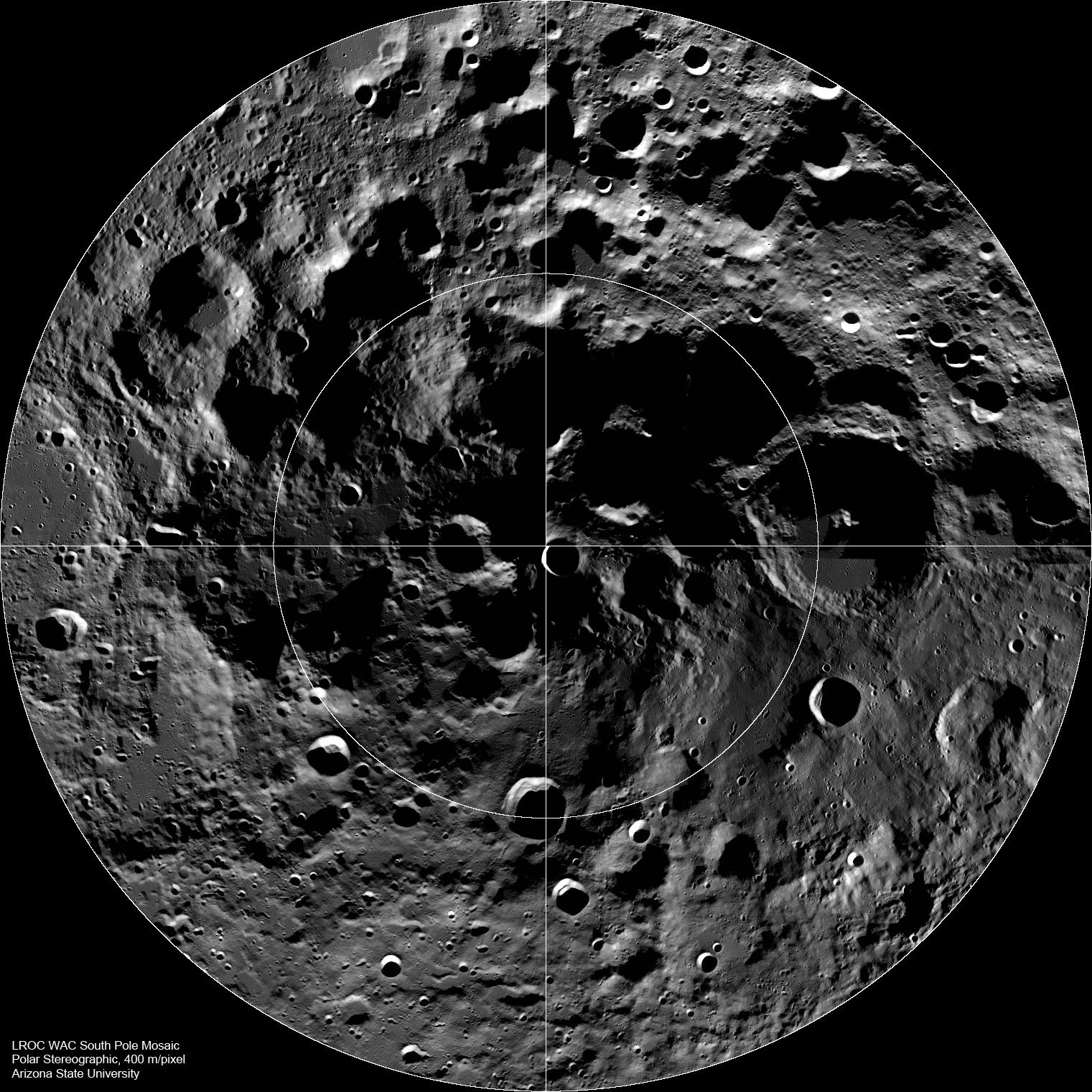
    Archival LROC mosaic of the lunar south-pole region, released in 2010. The terrain illustrates the setting for future lunar communications services; this is not an image of Lunar Link. Credit: NASA/GSFC/Arizona State University. Image source.

  • NASA’s CASALS Lidar Aims to Fill the Gaps in 3D Earth Mapping

    NASA’s CASALS Lidar Aims to Fill the Gaps in 3D Earth Mapping

    A NASA technology update published on October 21, 2026, describes progress toward a lidar instrument that could map continuous strips of terrain rather than widely separated tracks. Called CASALS, the system remains an airborne prototype, with more development required before a space-ready version can be built.

    The new update reports that flights in November 2024 collected useful scientific measurements. At roughly five kilometres altitude, the instrument achieved 22-centimetre horizontal resolution. The next planned campaign is ASCENT in summer 2027. Before pursuing a space version, researchers intend to widen the mapped strip and add onboard processing.

    Steering with colour instead of moving mirrors

    Lidar measures distance by timing the return of reflected laser light. NASA’s earlier explanation of the technology describes the central CASALS approach: rapidly change a laser’s wavelength so that light leaves the transmitter in different directions. A sequence of pulses then sweeps the landscape without requiring a separate beam for each direction.

    That design tackles a practical spacecraft constraint. An instrument’s mass, volume and power demands affect which missions can carry it. Reducing those requirements can be as important as increasing measurement precision, particularly for small spacecraft. The same development programme has considered uses beyond Earth mapping, including navigation and autonomous landings on other worlds. Those remain potential applications rather than demonstrated operational services.

    A broader instrument-development effort

    A 2024 Goddard account places the work in a wider effort combining efficient transmitters and receivers, wavelength steering, multispectral imaging and artificial intelligence. Researchers want future instruments to make some observing decisions without waiting for instructions from Earth. The intended Earth-science applications include ice and land topography and coastal change.

    The October update therefore offers a development milestone and a route forward, rather than the announcement of a new satellite mission. The distinction matters when reading impressive resolution figures: the reported measurements came from an aircraft, while performance and readiness in orbit still need to be established.

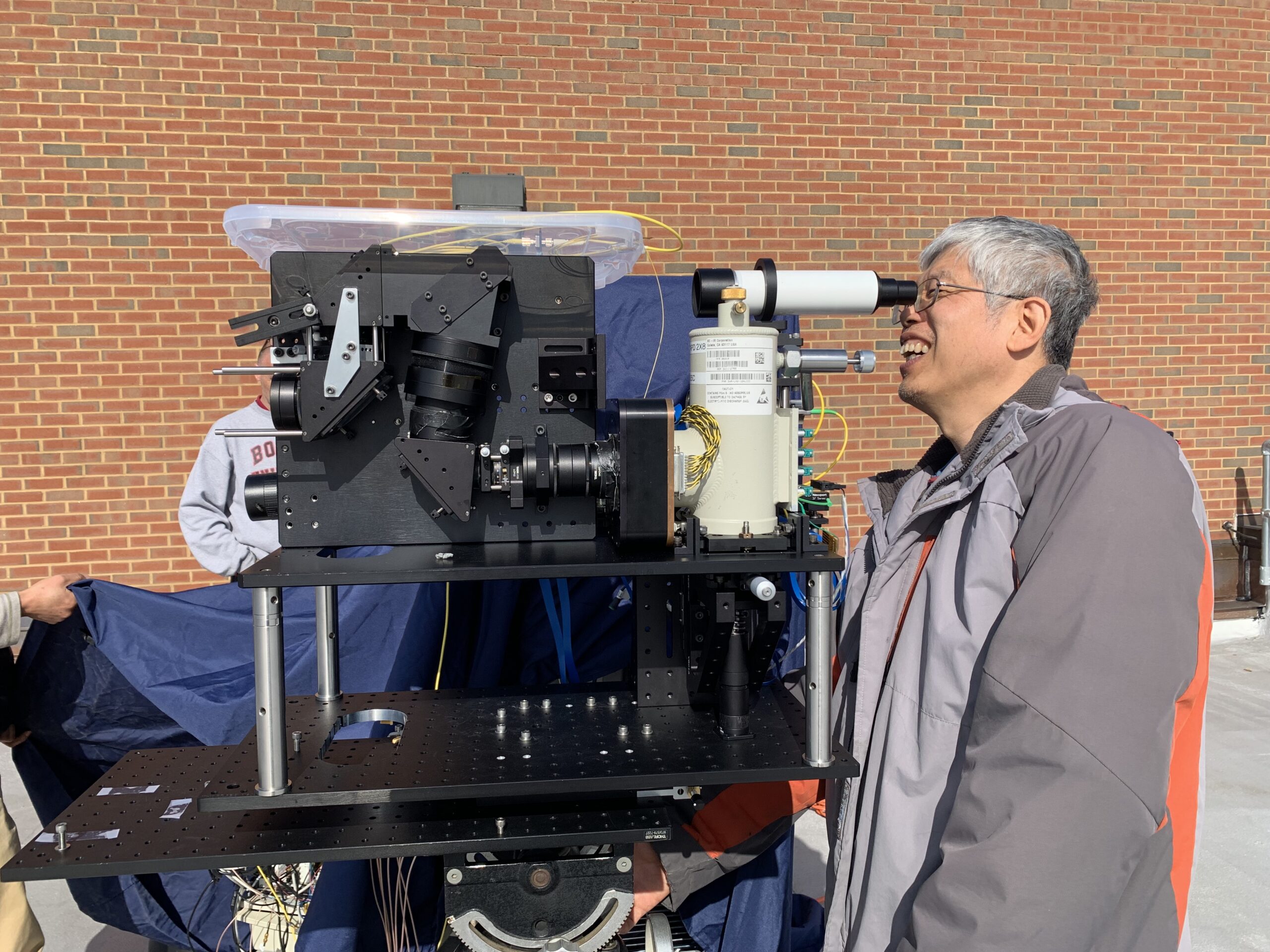
    Engineer Jeffrey Chen tests a lidar prototype at NASA Goddard. This archival photograph accompanied a November 2024 account of the CASALS team’s work. Credit: NASA. Image source.