DARK FIRESORIGINS UNKNOWN

Author: Dark Fires

  • UAP Coalition Sets October 24 Comment Deadline for Civilian Sensor Roadmap

    UAP Coalition Sets October 24 Comment Deadline for Civilian Sensor Roadmap

    The UAP Coalition is inviting final public comments on its civilian detection and data roadmap, with submissions open through October 24. Its September 23 announcement invited corrections, missing requirements and sequencing changes. No closing hour or time zone is specified in that notice.

    The roadmap separates present work from future ambitions. Characterizing detectable signatures and developing data-sharing frameworks are marked current; coordinated sensor deployment and construction of a data-integration prototype remain proposed. Both the field demonstration and integration initiative are listed as awaiting a charter.

    The proposed field test would run for weeks within a bounded area, using synchronized passive instruments. The integration concept would align observations by time and location and check them against aircraft, weather, satellite and other known sources. Participating groups would retain ownership of their raw data.

    Its latest dated public update, October 15, announces a progress record, not a detection or operational network.

    What useful sensor evidence requires

    The technical challenge has an independent reference point. NASA’s 2023 UAP independent study report identified weak calibration, missing sensor information, insufficient overlapping measurements and inadequate baseline data as obstacles to reliable analysis. It recommended observing with multiple well-calibrated sensors and recording the circumstances of each measurement.

    That accompanying information can include instrument sensitivity, timing, location, exposure settings and noise characteristics. Without it, an image may preserve an unusual appearance while leaving researchers unable to determine what the instrument actually measured. The NASA panel also emphasized studying known events with calibrated instruments, so ordinary objects and instrumental effects can be distinguished from genuinely unexplained signals.

    The report cautioned that artificial intelligence depends on well-characterized data and strong standards. Automated classification therefore cannot substitute for a sound measurement process. Applied to any future civilian network, that offers a practical test of progress: can independent researchers reconstruct observations, check errors and compare results? A larger collection of unexplained images alone would not meet that standard.

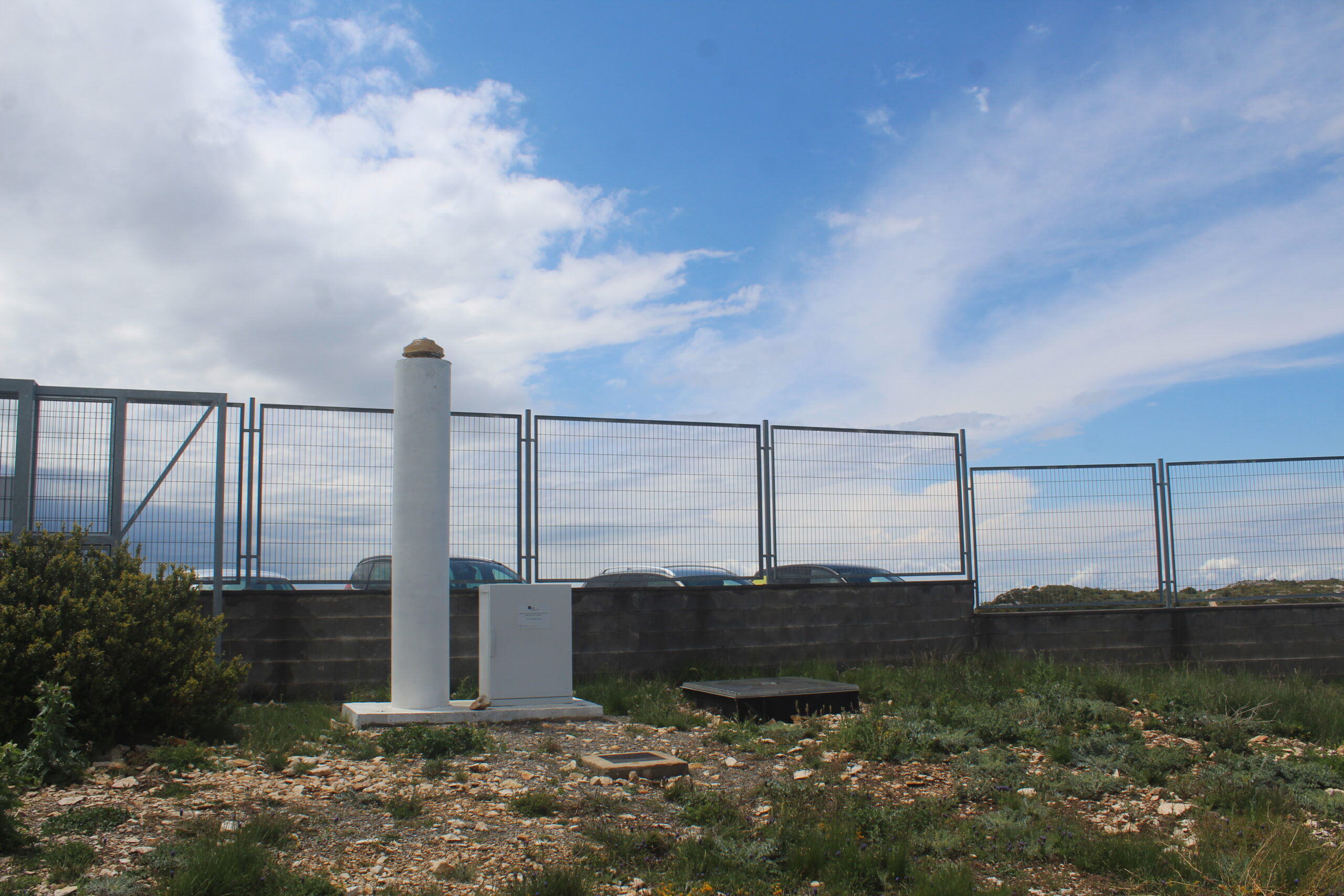
    Image: An all-sky camera at the Observatori Astronòmic del Montsec, photographed in May 2024. Contextual photograph, not a UAP Coalition deployment. Credit: Castellgalie / Wikimedia Commons, CC BY 4.0. Resized for display.

  • Newly Posted CIA Files Trace Larry Bryant’s Fight for UFO Records

    Newly Posted CIA Files Trace Larry Bryant’s Fight for UFO Records

    A newly posted CIA correspondence collection gives readers a closer look at UFO researcher Larry W. Bryant’s fight for access to government records. The Black Vault published the 170-page package on October 14, 2026. The CIA’s covering response is dated July 21, 2025, so the archive posting should not be mistaken for a new investigation.

    The released records, case F-2021-02420, include a dispute over a requested 1987 FAA meeting concerning the reported November 1986 Japan Airlines encounter over Alaska. In June 2009, the CIA reopened processing and granted Bryant news-media fee status for that request.

    The 2025 response lists seven partially released documents for one part of the request, plus one full and 21 partial releases for another. Additional material was withheld entirely. These are decisions about access to records, not findings identifying what the aircraft’s crew encountered.

    How the paperwork fits the longer record

    There is a useful historical comparison in Gerald K. Haines’s CIA-published history, covering 1947–1990. Haines describes a further review of agency UFO files ordered by Director James Woolsey in late 1993 after pressure for more disclosure. His study uses that review to examine the agency’s changing interest in the subject, from early Cold War security concerns to later, more limited attention.

    That institutional account also discusses efforts to conceal CIA involvement in the controversy. It is an agency historical interpretation, with its own scope and sources, rather than an independent resolution of every reported encounter.

    Reading the two records together requires keeping separate questions separate: what people reported, what the agency retained, how it searched, and what it released. A reopened request is a concrete procedural development. Establishing the nature of an aerial observation requires evidence about the observation itself.

    Featured image: Archival aerial photograph of CIA headquarters in Langley, Virginia, dated between 1980 and 2006. Carol M. Highsmith Archive, Library of Congress; public domain. Corrected and cropped version via Wikimedia Commons. Image source and rights.

  • Dragonfly Rehearses Its First Titan Landing on Flight-Like Computers

    Dragonfly Rehearses Its First Titan Landing on Flight-Like Computers

    Dragonfly has completed a real-time rehearsal of its first flight above Titan, using flight-like computers at Johns Hopkins Applied Physics Laboratory. NASA announced the milestone on October 23, 2026. The rotorcraft has not flown on Titan; the achievement is an integrated ground simulation.

    Flight software worked with simulated navigation-camera, inertial-sensor and lidar inputs to search for a safe landing area, turn back and descend. A camera emulator rendered scenes in real time, matching exposures of roughly 20 to 70 milliseconds. Engineers next plan tests on the actual flight system, additional flight profiles and deliberate faults to assess autonomous responses.

    That autonomy supports an unusual landing sequence. Dragonfly will enter Titan’s atmosphere inside a protective capsule, slow beneath parachutes, and then emerge from its backshell. Rather than remain attached all the way to touchdown, the rotorcraft will begin powered flight and use lidar to guide its approach to the surface.

    Titan’s dense atmosphere and weak gravity favor aerial exploration. A radioisotope power system will support operations far from the Sun, where solar illumination is limited. Flying between sites would let the mission cross terrain that could obstruct a wheeled rover.

    The mission overview lists launch no earlier than July 2028 and arrival in late 2034. Plans call for about 3.3 years of exploration, including dunes and Selk Crater. Those are future objectives; the current testing campaign is part of preparing the hardware and software to carry them out.

    The science program combines measurements taken on the ground and in flight. Instruments will examine surface chemistry, measure elemental composition, monitor weather and investigate seismic activity. Aerial photographs and atmospheric profiles will help place local samples in their wider geological setting and identify promising future landing areas.

    Selk Crater is particularly interesting because an ancient impact may have mixed liquid water with organic material. Studying the frozen remains could help researchers investigate chemical steps relevant to life’s origins. Successfully navigating between distinct locations is therefore central to the mission’s scientific value.

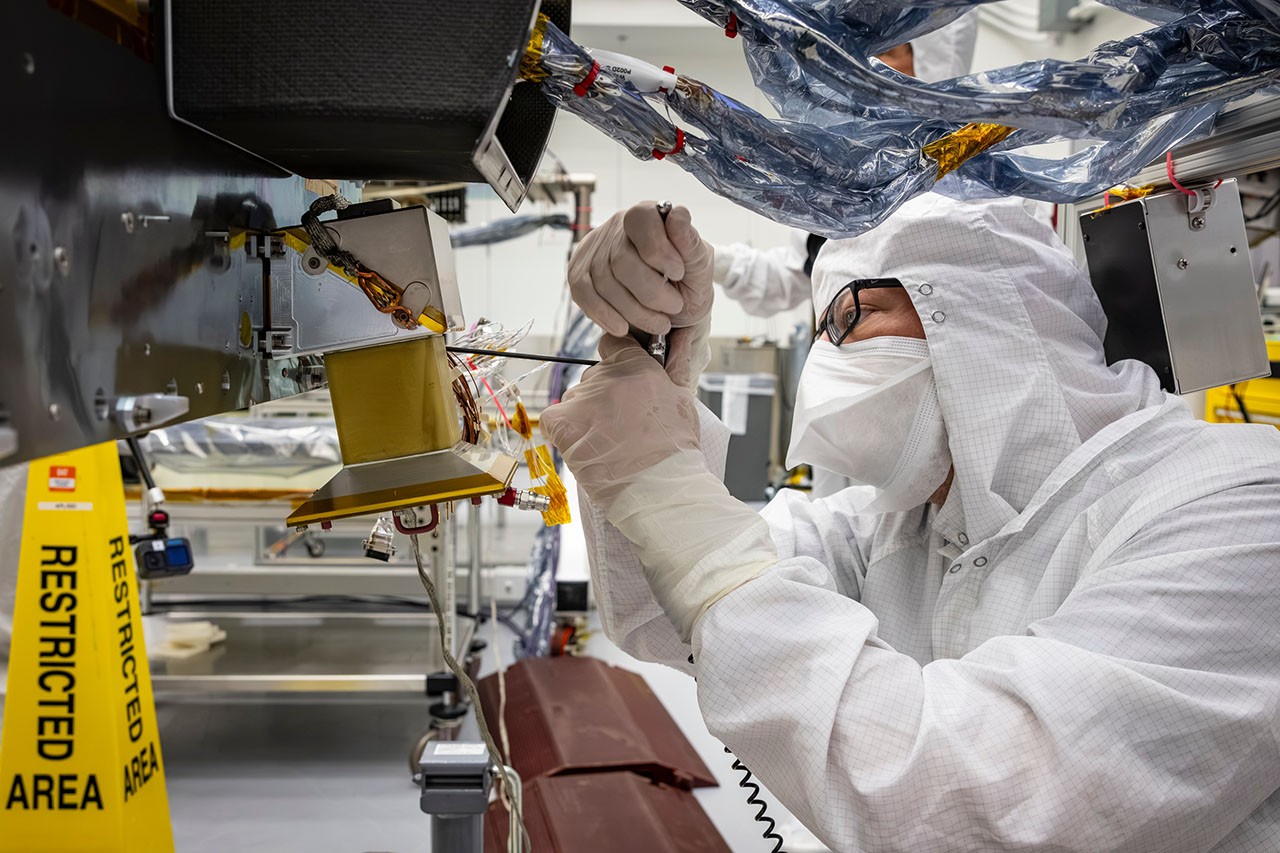
    A technician installs a Dragonfly navigation camera on August 19, 2026. Credit: NASA/Johns Hopkins APL/Ed Whitman. Image source; image usage terms.

  • Rubin’s Seagull Nebula Image Reveals the Work Behind a Wide-Sky Survey

    Rubin’s Seagull Nebula Image Reveals the Work Behind a Wide-Sky Survey

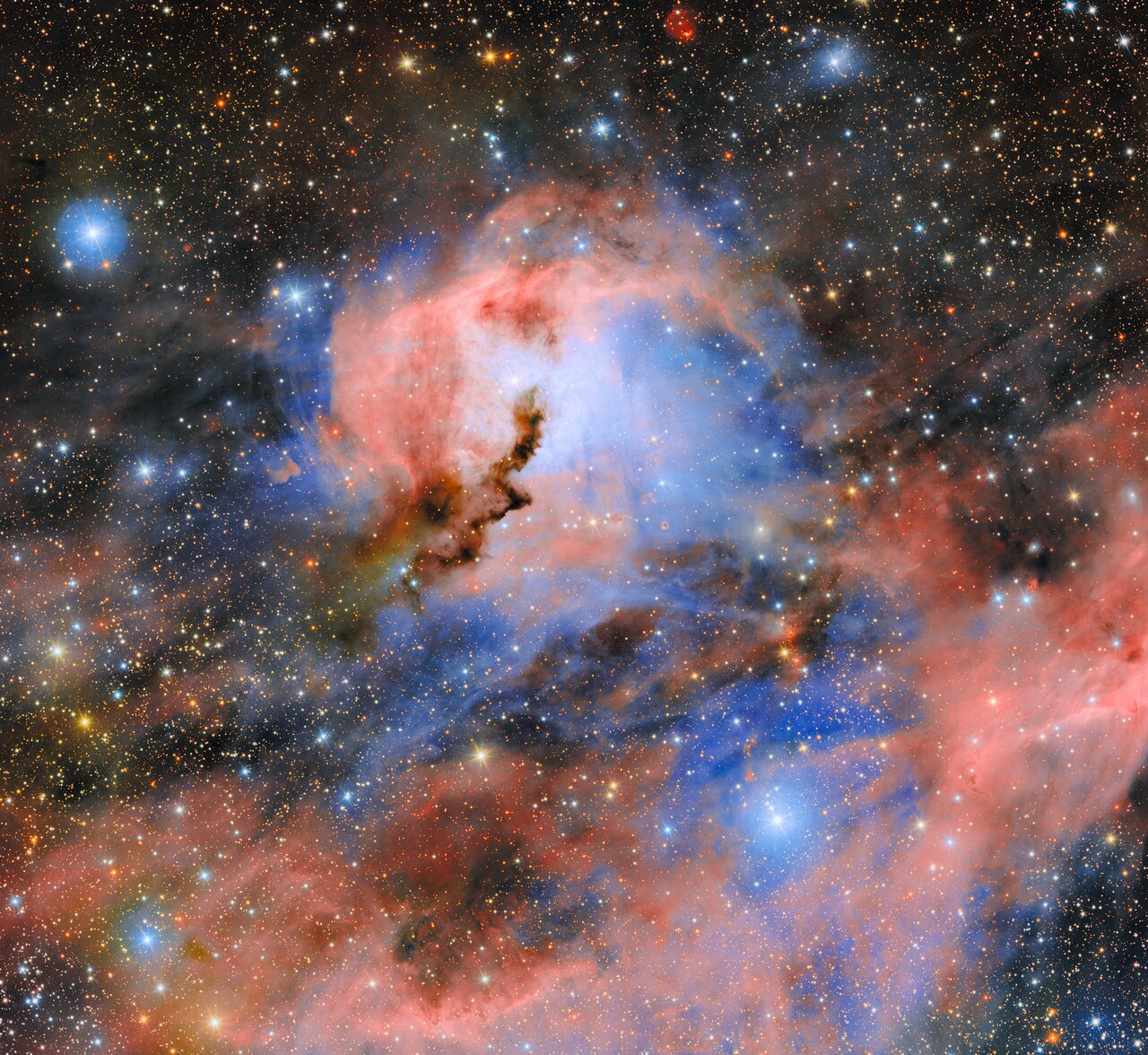
    Pink clouds, blue haze and a dark ridge fill a newly released view of the Seagull Nebula. Rubin Observatory released the image on October 22, 2026, using observations made by its Commissioning Camera, or ComCam, in late 2024.

    The scene shows the nebula’s head, about 3,700 light-years away. Ultraviolet light from young stars energizes hydrogen that appears pink; dust scattering starlight produces the blue glow. The image’s intricate structure also supplied a demanding test for the observatory’s image-processing software.

    ComCam has since left the telescope and now supports testing in a summit clean room. The release therefore celebrates an earlier engineering contribution, rather than announcing a fresh observation by Rubin’s main survey camera.

    Rubin’s account of its completed commissioning tests explains why that rehearsal mattered. Engineers checked how the telescope’s active optics maintained the shapes and positions of three large mirrors while pointing around the sky. They tested image quality through six filters and moved observations from Chile to the U.S. data facility at SLAC. The processing pipelines had to work as part of the same chain. Together, these steps tested much more than a camera: they exercised an observing system whose optical, mechanical, networking and computing components must cooperate reliably during repeated observations.

    That repetition is central to the Legacy Survey of Space and Time, which Rubin says began in June 2026. Its ten-year program targets four broad areas: dark matter and dark energy, the Solar System’s population, the structure of the Milky Way, and objects that change in the sky. The observatory expects roughly ten terabytes of data per night. Researchers will work with the growing record through the Rubin Science Platform, connecting individual images to a much larger archive of positions, brightnesses and changes over time. The Seagull image offers a vivid glimpse of the preparation behind that effort.

    The Seagull Nebula in late-2024 ComCam observations, released in October 2026. Credit: NSF–DOE Vera C. Rubin Observatory/NOIRLab/SLAC/AURA. Image Processing: T.A. Rector (University of Alaska Anchorage/NSF NOIRLab), D. de Martin & M. Zamani (NSF NOIRLab). CC BY 4.0. Image source · CC BY 4.0 license.

  • Slow Freezing and Thawing Assembles Cell-Sized Compartments That Make Protein

    Slow Freezing and Thawing Assembles Cell-Sized Compartments That Make Protein

    Slow freezing followed by slow thawing can gather diluted molecular ingredients into cell-sized compartments and activate protein production, researchers report in an October 16, 2026 bioRxiv preprint. The study, highlighted by Astrobiology.com on October 23, has not been peer reviewed.

    Tatsuya Shinoda and colleagues observed membrane material and chemically different dissolved molecules concentrating together in liquid regions confined by ice. As the samples slowly thawed, giant vesicles formed and enclosed the concentrated contents. The team also assembled a multicomponent protein-making mixture inside these compartments, obtaining activity from dilute preparations that showed little or none in bulk solution.

    The result connects concentration, enclosure and biochemical function in one environmental sequence. The proposed advantage is physical concentration, bringing dispersed ingredients into a shared compartment rather than merely cooling a reaction mixture. It does not demonstrate a self-reproducing organism or show that the first cells followed this particular route.

    A longer history of ice-assisted compartments

    Research first published online in November 2016 had already shown that freeze–thaw treatment could trap DNA inside giant lipid vesicles. In that experiment, ice formation damaged existing membranes, allowing DNA to enter; thawing helped the membranes reseal. Heating alone did not achieve the encapsulation. The study followed membrane shape, ice formation and DNA uptake to test that proposed mechanism.

    Those earlier experiments provide an important benchmark: enclosing genetic material was already achievable through temperature cycling. Any claim of a completely new connection between ice and protocells would overlook that record.

    The protein-making machinery also deserves context. A 2005 methods paper by developers of the PURE system describes a cell-free setup reconstructed from essential elements of the Escherichia coli translation system. Its controlled composition lets researchers adjust the mixture and investigate protein production without an intact cell. Using such prepared machinery is a powerful laboratory test of organization, but it does not explain how that machinery originally evolved from prebiotic ingredients.

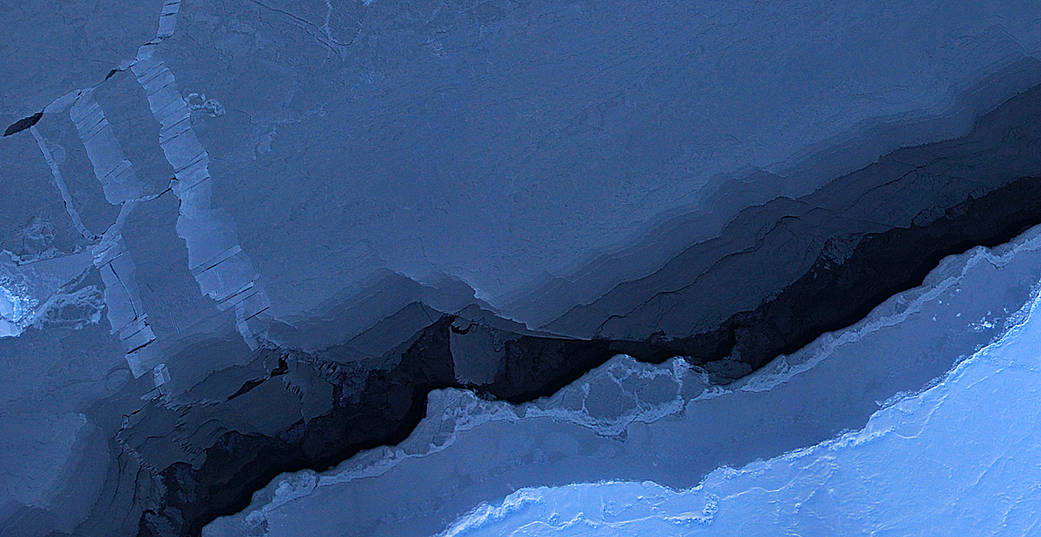
    Featured image: Sea ice and open water in the Beaufort Sea in a NASA aerial-photo mosaic published in 2013. Context image only, not the laboratory experiment. Credit: NASA / DMS. Image source. Usage terms.

  • Psyche Begins Sustained Electric Thrusting Toward Its Metal-Rich Asteroid Target

    Psyche Begins Sustained Electric Thrusting Toward Its Metal-Rich Asteroid Target

    NASA’s Psyche spacecraft has shifted into sustained propulsion on its journey to a metal-rich asteroid. JPL’s October 22, 2026 update says this phase began on September 28, keeping the mission aimed at a summer 2029 rendezvous.

    Its thrusters are expected to operate about 90 percent of the remaining cruise. Only one of its four thrusters operates at a time. Weekly communications and engineering work interrupt the thrusting. Power will gradually decrease as the spacecraft travels farther from the Sun.

    The propulsion system turns sunlight into a gentle, persistent push. Solar arrays supply electricity, while electromagnetic fields accelerate charged xenon atoms out of Hall thrusters. Expelling those ions changes the spacecraft’s motion without requiring the high, brief thrust associated with a chemical engine.

    JPL’s technical explanation describes why this approach suits a long interplanetary journey: efficient use of propellant allows thrusting to continue for years. The launch rocket provided the force needed to escape Earth; electric propulsion handles the slower process of reshaping the spacecraft’s route through deep space. Small accelerations accumulate over time.

    The new cruise phase follows a May 15, 2026 Mars gravity assist. In results released on July 17, NASA described how the encounter changed Psyche’s trajectory and provided an instrument rehearsal. The imager, magnetometer and gamma-ray and neutron spectrometer all gathered useful measurements.

    Mars offered a well-studied target against which scientists could check performance. The neutron instrument detected the expected increase near closest approach, although the spacecraft was too distant to measure Martian gamma rays. Its cameras also recorded the Martian moons, practicing the search for small companions around the eventual asteroid target. Those tests provide practical experience for the encounter ahead.

    At the asteroid, a planned two-year science campaign will investigate its composition and history. A possible exposed planetary building-block core remains a hypothesis to test, rather than an established identity.

    A Psyche-type Hall thruster operates during prelaunch testing at JPL. Credit: NASA/JPL-Caltech. Image source; image usage terms.

  • Amino Acids Can Enter Dense Ice, Opening a Possible Route Through Ocean Worlds

    Amino Acids Can Enter Dense Ice, Opening a Possible Route Through Ocean Worlds

    Amino acids can enter the dense forms of ice expected deep inside some ocean worlds, according to a study published in Science Advances on October 23, 2026. The result offers a possible way for organic ingredients to move through ice that would otherwise separate an ocean from the rocky interior beneath it.

    Jihua Hao and colleagues used a diamond-anvil cell to test glycine and alanine at elevated pressures and temperatures. Both entered ice VI and ice VII, with greater incorporation into ice VII. Their calculations suggest that amino acids can become part of the crystal structure as the ice grows, rather than being excluded completely into the surrounding liquid.

    The experiment establishes chemical compatibility, not transport across an actual moon. Whether moving ice supplies an ocean with useful ingredients remains a planetary-scale question. The work reports neither extraterrestrial organisms nor evidence that these amino acids were made by life.

    Why an ocean needs connections

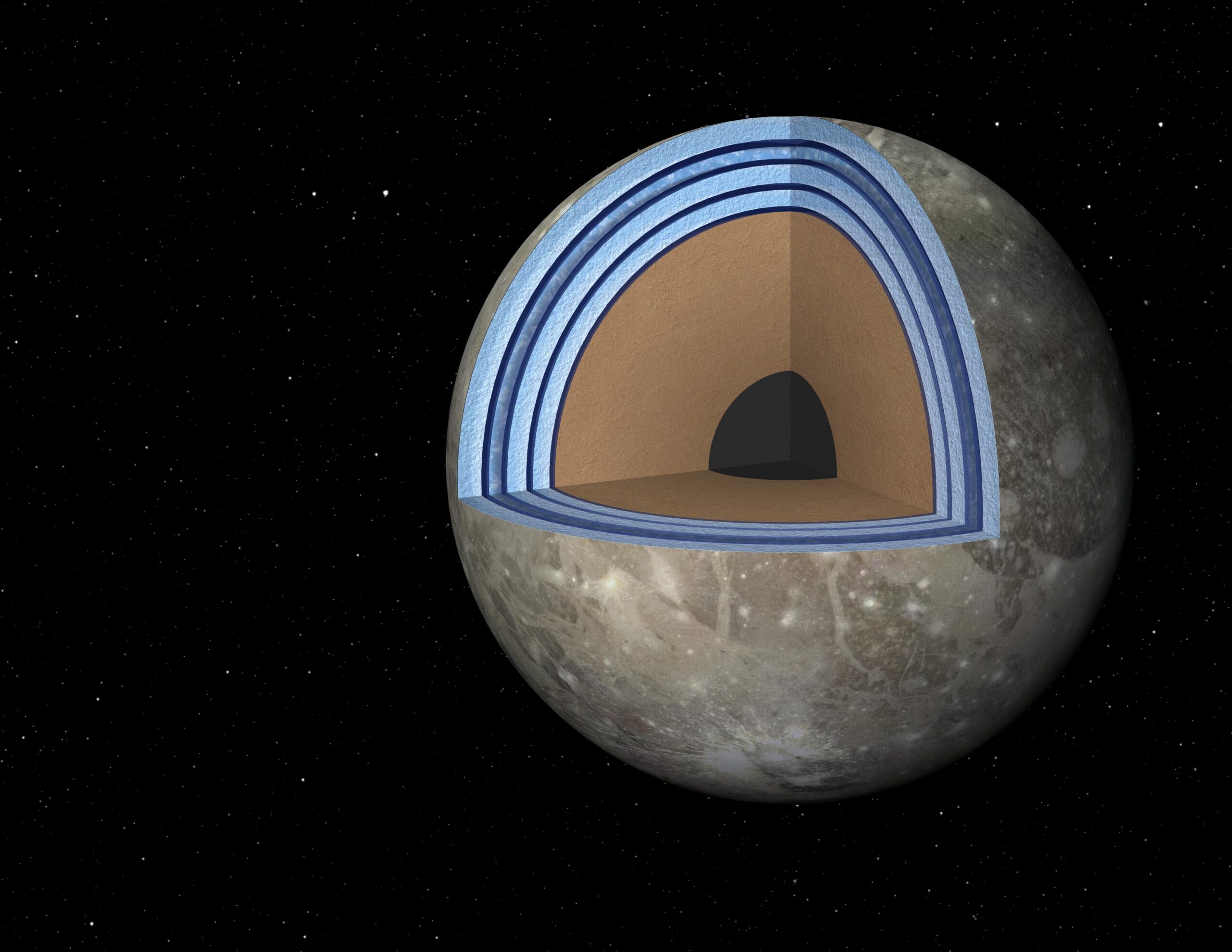
    An ocean’s internal structure has long mattered to habitability studies. NASA-funded modeling reported in May 2014 examined Ganymede, Jupiter’s largest moon. Instead of a single ocean trapped between two ice layers, that work proposed a stack of liquid and solid layers. Ordinary surface ice is relatively light, while deeper, high-pressure forms can be denser than water.

    Adding dissolved salts changed the model substantially. Sufficiently salty liquid could sink below the deepest ice and contact the rocky seafloor. Water-rock interaction matters because it creates opportunities for chemistry that isolated water would lack. The researchers described ice forming in an upper ocean layer and floating upward, while salts sank. Their modeled interior was therefore a dynamic arrangement, rather than a uniformly frozen barrier.

    That earlier study also warned that a moon might never reach the modeled stable configuration. Ganymede’s proposed layers remain a theoretical framework for interpreting its interior, not a directly photographed cross-section.

    Featured image: Artist’s concept of a layered Ganymede interior, published in 2014. This older model illustrates context, not the new experiment. Courtesy NASA/JPL-Caltech. Image source. Usage terms.

  • A Black Hole’s Inner Disk May Shield Its Outer Regions From Radiation

    A Black Hole’s Inner Disk May Shield Its Outer Regions From Radiation

    A black-hole system has offered an unexpected clue about how feeding disks change shape. A study published in Nature Astronomy on October 22, 2026 examines MAXI J0637-430 during the decline of its 2019 outburst.

    Near peak brightness, its optical and near-infrared spectrum showed relatively cool gas with strong hydrogen and helium emission lines. As the source faded, the spectrum instead became hotter-looking and nearly featureless. The authors interpret this reversal as evidence that a vertically extended inner disk initially blocked radiation from reaching the outer disk.

    The inferred shielding occurred at roughly one fifth of the Eddington luminosity, below the regime usually associated with such thickening. X-ray spectra support the interpretation, which could affect estimates of black-hole spin and interpretations of polarization. The geometry is inferred from light, rather than directly photographed.

    NASA’s explanation of black-hole anatomy helps separate the object from its luminous surroundings. Gas pulled from a companion star can collect in a rapidly rotating accretion disk, gradually moving inward. That material remains observable before crossing the event horizon. The horizon itself marks a boundary from which even light cannot escape. Consequently, a changing spectrum describes conditions outside the black hole, not radiation emerging from its interior. An isolated black hole that has exhausted nearby material may lack a bright disk altogether.

    The observations include spectroscopy from the Very Large Telescope’s X-shooter instrument. Its three separate arms divide incoming light into spectra covering ultraviolet, visible and near-infrared wavelengths. Each spectrum is arranged into shorter segments so a long wavelength range can fit on a detector. This approach records how brightness varies across many colors, rather than reducing a source to a single brightness measurement. The broad coverage also reduces the need to combine observations taken under different conditions. Comparing those detailed patterns is especially useful when several parts of a system contribute different kinds of light.

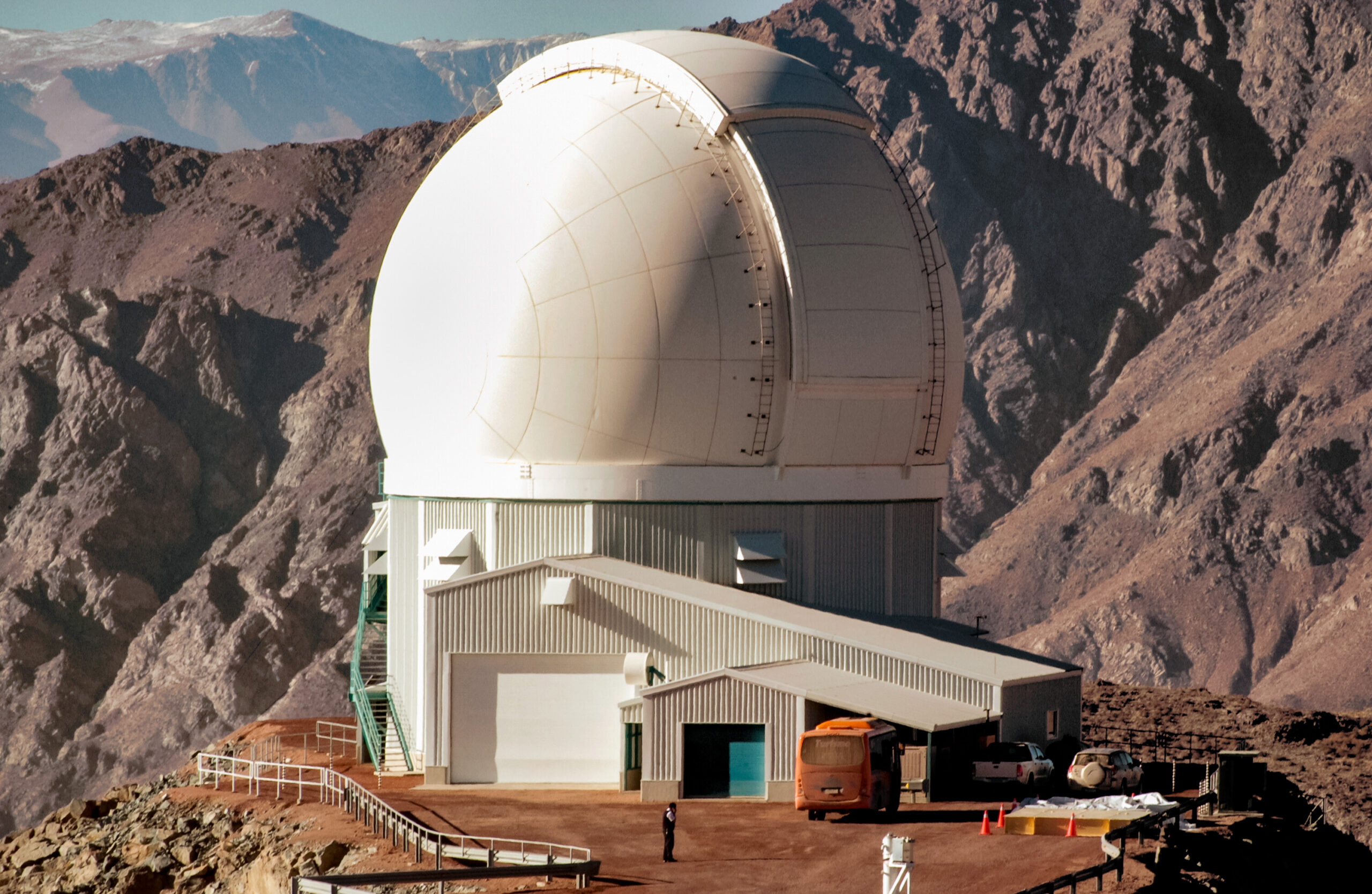
    The SOAR Telescope in Chile contributed optical spectroscopy to the study. Credit: CTIO/SOAR/NOIRLab/NSF/AURA/M. Paredes. Licensed under CC BY 4.0. Image source · CC BY 4.0 license.

  • NASA Revises Moon-Lander Routes and Details Artemis III’s Two Docking Tests

    NASA Revises Moon-Lander Routes and Details Artemis III’s Two Docking Tests

    NASA has outlined different routes to the Moon for its two commercial landers, alongside a detailed rehearsal in Earth orbit. The October 23, 2026 update retains a 2028 lunar-landing goal but replaces the previously shared rendezvous orbit with arrangements tailored to each provider.

    Under SpaceX’s revised plan, Starship would refuel in Earth orbit, dock with Orion there, and propel the joined spacecraft toward low lunar orbit. Orion requires modifications for that journey. Blue Origin would instead use three expendable transfer stages to send its Blue Moon lander toward an elliptical polar lunar orbit, deferring propellant transfer.

    Neither provider is assigned the first lunar landing: readiness will determine the order. Both must first conduct an uncrewed demonstration. These are development plans, with flight demonstrations and certification still ahead.

    A separate Artemis III mission outline describes the earlier test flight planned for 2027. Four astronauts would spend about 14 days in low Earth orbit, coordinating Orion with test versions of both landers launched on separate rockets. The mission is intended to reveal integration problems before crews depend on the vehicles near the Moon.

    Blue Moon would launch first, with Orion following after its condition is confirmed. Following docking, astronauts would enter the Blue Moon test vehicle for roughly two days to evaluate its cabin, controls and life-support functions. This tests the equipment together in space, rather than as isolated systems on the ground.

    Starship would launch later. Its docking test is expected to last up to two hours, and the crew would remain in Orion rather than enter Starship. Engineers would examine communications, software, controllability and docking behavior.

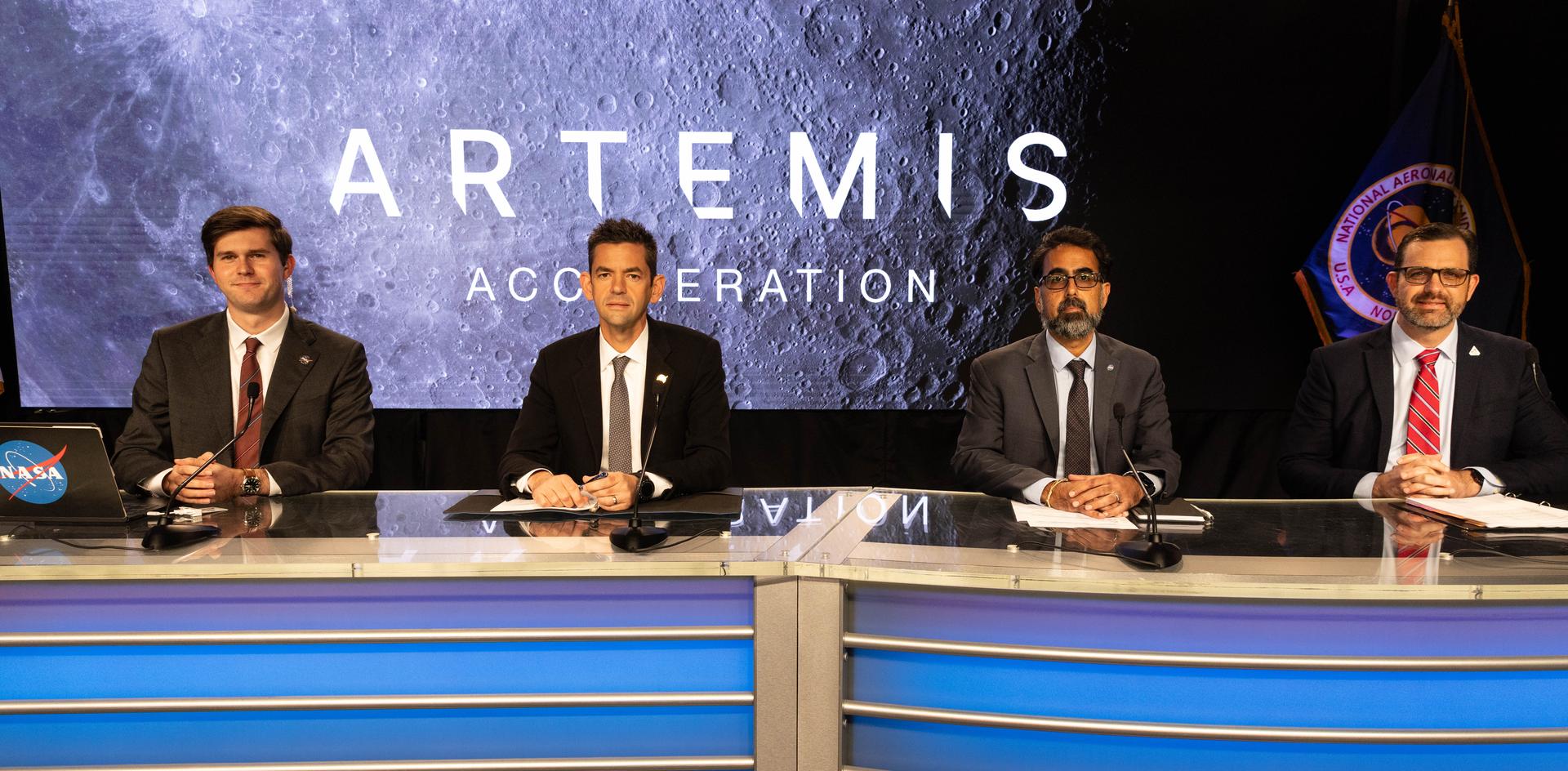
    Agency leaders presented the wider acceleration effort at Kennedy Space Center on October 23. The distinction between the two flights remains important: Artemis III is the Earth-orbit rehearsal, while Artemis IV is intended to make the program’s first crewed lunar landing.

    NASA leaders discuss Artemis plans at Kennedy Space Center on October 23, 2026. Credit: NASA/Cory S Huston. Image source; image usage terms.

  • Precise Stellar Ages Point to Two Stages in the Milky Way’s Settling

    Precise Stellar Ages Point to Two Stages in the Milky Way’s Settling

    The Milky Way’s flattened disc appears to preserve two different phases of its formation. Research highlighted by the Instituto de Astrofísica de Canarias on October 19, 2026 connects the heights of stellar populations above the galactic plane with increasingly precise estimates of their ages.

    The ChronoGal study, published in The Astrophysical Journal Letters, uses Gaia data for stellar samples in the Sun’s neighborhood. Its reconstruction finds a pronounced change around 10.85 billion years ago. Before that transition, the inferred scale height fell from more than 1.26 kiloparsecs to roughly 0.5 kiloparsecs in about two billion years. Younger populations show a much gentler decline, reaching around 0.1 kiloparsecs for the youngest stars. Scale height describes a population’s vertical distribution, rather than the full edge-to-edge thickness of the Galaxy.

    The interpretation favors an early gas disc that was initially turbulent and became calmer over time, allowing later stars to form in thinner layers. It does not imply that existing old stars simply sank together into today’s thin disc.

    The competing explanation discussed in the institution’s account starts with stars forming in a thin distribution and gradually being stirred away from the plane by gravitational encounters and galactic structures. Precise ages help distinguish this slow heating picture from a changing birth environment. The authors argue that the especially rapid early change favors the latter for the thick disc’s formation.

    The result draws on a mission whose observing phase has already ended. ESA announced Gaia’s final science observations in January 2025, after more than three trillion measurements of about two billion stars and other objects. Repeated observations mapped stellar positions, distances, motion and brightness, giving researchers the raw material for reconstructing the Galaxy’s past.

    This is a reconstruction, not a movie of the young Galaxy. The surviving local stellar populations let researchers test different histories by comparing where stars are today with when those stars formed.

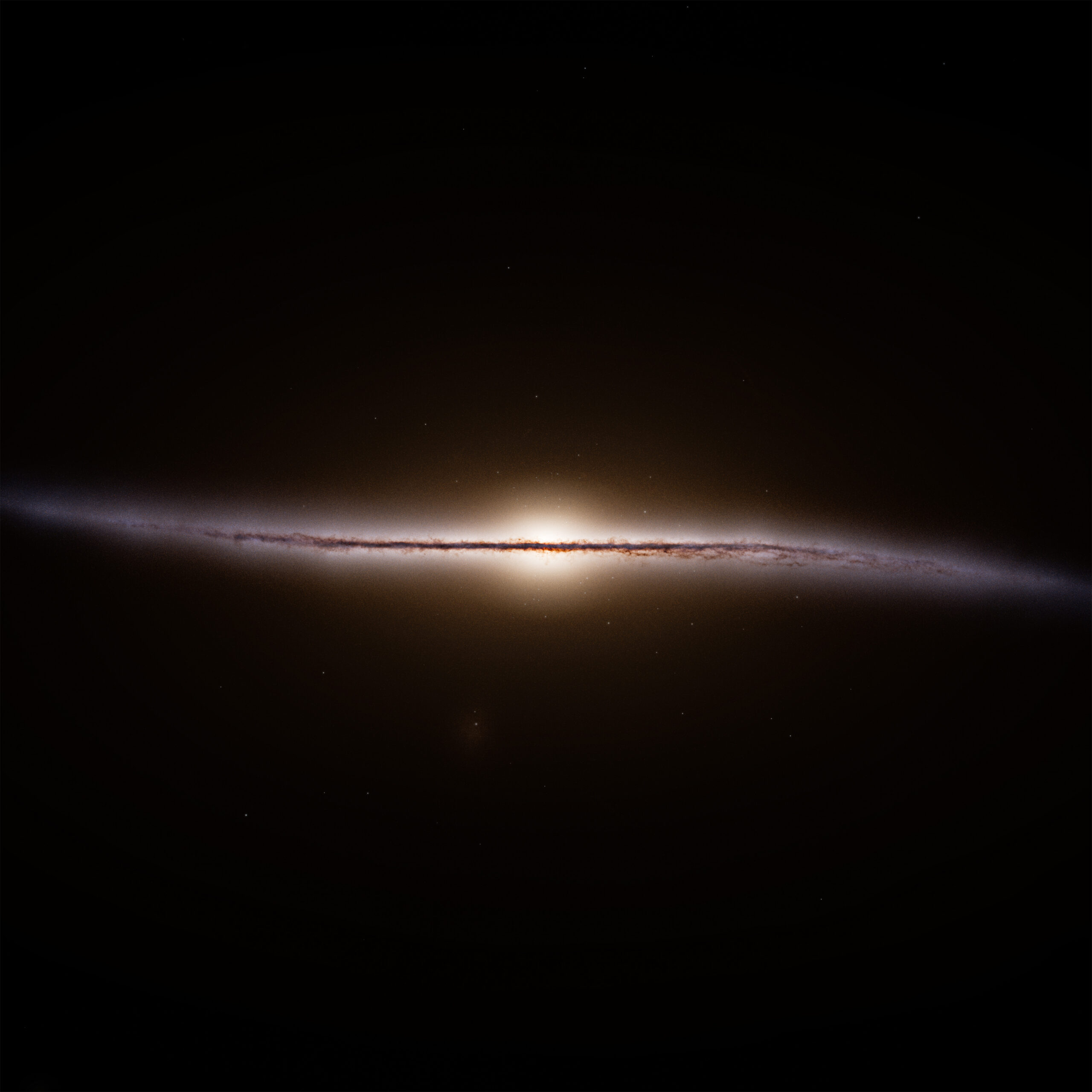
    The best Milky Way map, by Gaia (edge-on): an artist’s impression based on mission data, not an external photograph. Credit: ESA/Gaia/DPAC, Stefan Payne-Wardenaar. CC BY-SA 3.0 IGO; resized for display.