Europe’s Lunar Link communications hardware has completed its final major integration and test campaign, ESA announced on October 20, 2026. Originally intended for the Gateway station’s HALO module, the equipment now needs a different route to lunar service after NASA paused Gateway work.
ESA’s project update says the qualification and acceptance review is expected to finish by the end of 2026. A final software update also remains before controlled storage. Studies will examine whether the hardware could become an independent relay, with an added Earth-facing antenna and a suitable spacecraft platform.
From individual antennas to a complete system
The earlier testing history shows why this is a substantial engineering step. In March’s antenna report, ESA described vibration, acoustic and thermal-vacuum checks designed to reproduce launch stresses and space conditions. Each antenna is mounted on a deployable boom; engineers used a large balloon to support the hardware during a deployment rehearsal on Earth.
At that stage, the antennas and the central electronics enclosure were still on separate paths through integration. The enclosure, known as the baybox, contains subsystems including the flight computer. Testing the connected system checks a different question from testing its individual parts: whether those components work together.
Why lunar relays matter
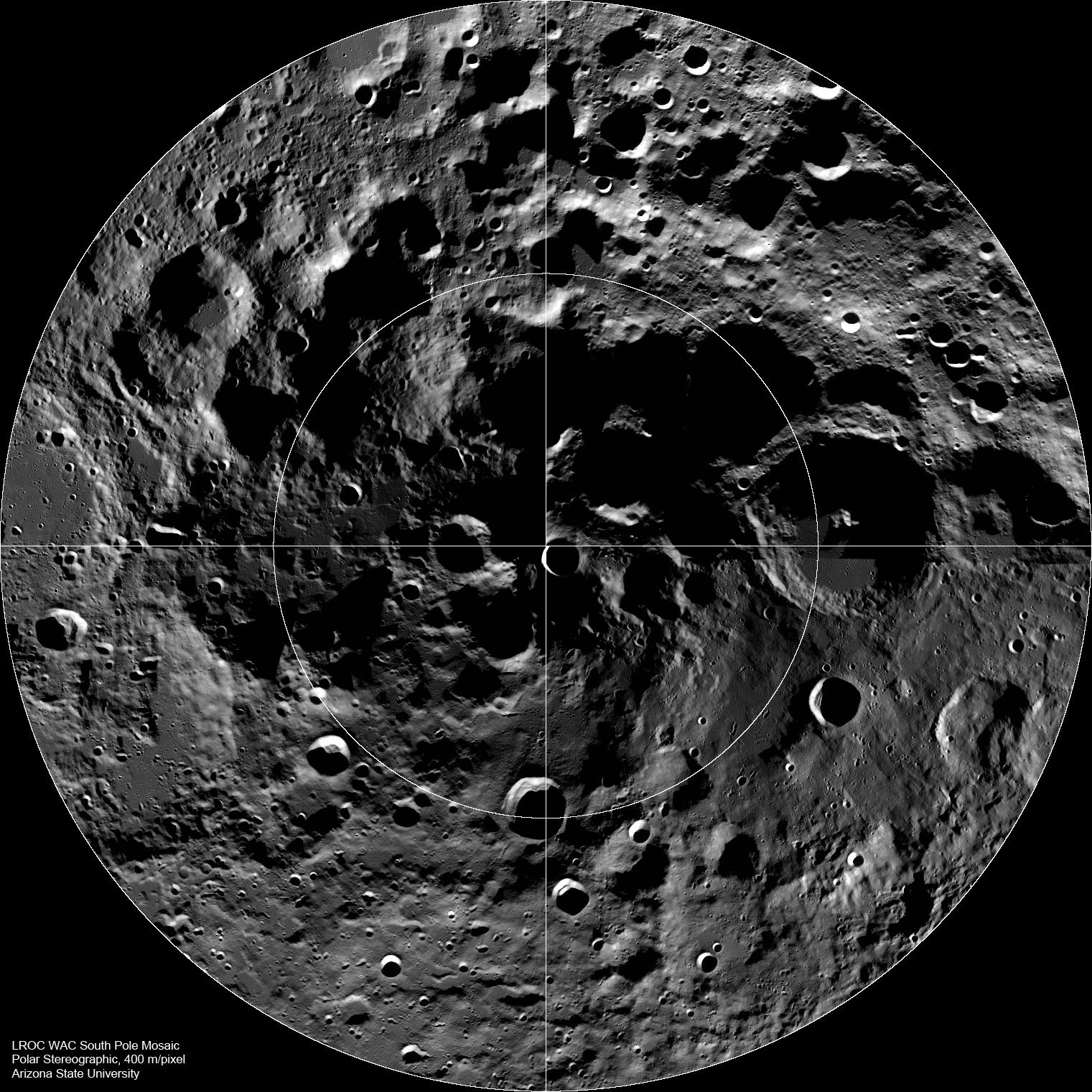
ESA’s separate Moonlight programme explains the communications problem around the lunar south pole. Terrain and the Moon’s curvature can block a direct connection with Earth. A satellite overhead can relay messages between surface users and distant ground stations, supporting operations where direct communication is unavailable.
Moonlight is being developed as a dedicated communications and navigation service, with a planned five-satellite constellation. Its purpose includes helping landers and rovers establish their positions as well as carrying information. Such shared infrastructure could reduce the communications burden on individual exploration missions.
The new Lunar Link studies will consider possible cooperation with Moonlight, along with spacecraft concepts, orbits and schedules. That is an option under examination, not an announced integration or launch. Completing hardware preserves a capability; deciding how to deploy it is the next programme-level question.
Archival LROC mosaic of the lunar south-pole region, released in 2010. The terrain illustrates the setting for future lunar communications services; this is not an image of Lunar Link. Credit: NASA/GSFC/Arizona State University. Image source.
Leave a Reply