DARK FIRESORIGINS UNKNOWN

Author: Dark Fires

  • Two Debris Rings Around a Dead Star Hint at Surviving Planetary Bodies

    Two Debris Rings Around a Dead Star Hint at Surviving Planetary Bodies

    A white dwarf’s debris is arranged in two distinct rings rather than the single gas disc astronomers usually find around such stars. The structure offers a new way to investigate what remains after a planetary system’s host star dies—but the bodies thought to maintain it have not been directly seen.

    The European Southern Observatory announced the result on October 27, 2026. The study of WD J1328−1450 appears in Nature Astronomy.

    Four peaks reveal a divided disc

    Researchers used the X-shooter instrument on ESO’s Very Large Telescope to examine the system’s light. According to the University of Warwick’s account, comparable systems normally produce two spectral peaks; this one produces four, indicating two concentric gas rings separated by a gap.

    Repeated observations between 2021 and 2023 showed that the arrangement persisted for more than two years. The discovery announcement is new; the observations are not images taken this week.

    The chemistry complicates the story

    The gas contains calcium, oxygen, magnesium and iron—elements familiar from rocky planetary material. But the inner ring is richer in magnesium than the outer ring.

    That contrast could reflect debris from separate parent bodies with different compositions. Another possibility is material from different layers of one body. The chemical difference alone does not settle which history occurred.

    An interpretation, not two photographed planets

    The team proposes that two surviving planetesimals interact with surrounding dust and replenish the gas. Their presence and sizes are inferred through models, not measured in direct pictures.

    The important result is the unexpectedly complex debris structure. It broadens the evidence for how planetary material can persist around a stellar remnant, without establishing a detailed prediction for Earth’s eventual fate.

    Featured image: artist’s impression of the proposed debris system, not a telescope photograph. Credit: ESO/L. Calçada; CC BY 4.0. Original artwork, resized for display.
  • Hera Separates Didymos and Dimorphos in Its First View of the Asteroid Pair

    Hera Separates Didymos and Dimorphos in Its First View of the Asteroid Pair

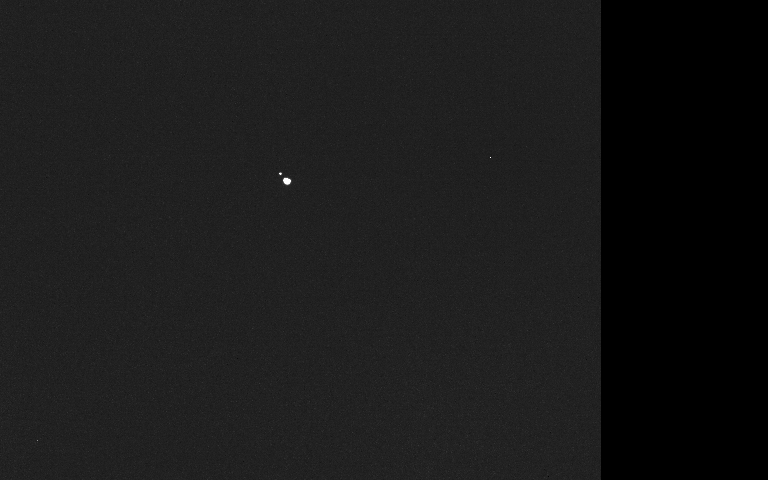
    ESA’s Hera spacecraft can now distinguish its two asteroid targets instead of seeing one point of light. In an October 27, 2026 update, the agency released the mission’s first image resolving Didymos and its smaller companion, Dimorphos, separately.

    Two points, not yet two detailed worlds

    The monochrome Asteroid Framing Camera observation was taken from about 1,280 kilometres away. Dimorphos occupies roughly one pixel: the milestone establishes separation, not a close-up view of its surface.

    The image follows braking manoeuvres that reduced Hera’s speed relative to the pair to about 20 metres per second. ESA says increasingly detailed views will follow as the spacecraft approaches, with detailed Dimorphos imagery planned for November 25.

    The unanswered questions after DART

    NASA’s DART struck Dimorphos on September 26, 2022, shortening its orbital period by roughly 33 minutes. Hera’s task is to investigate what happened to the asteroid itself.

    Did the impact excavate a crater or reshape the body? How do its mass, structure and composition explain the deflection? The first separated image does not answer those questions; it marks progress toward the close-range measurements needed to do so.

    Featured image: Hera’s actual camera view of the asteroid pair, released October 27, 2026. ©ESA; editorial use under ESA’s Standard Licence. This is an observation, not an artist’s impression.

  • Enceladus’s Bent Ice Records Ancient Heating—and an Ocean-Longevity Question

    Enceladus’s Bent Ice Records Ancient Heating—and an Ocean-Longevity Question

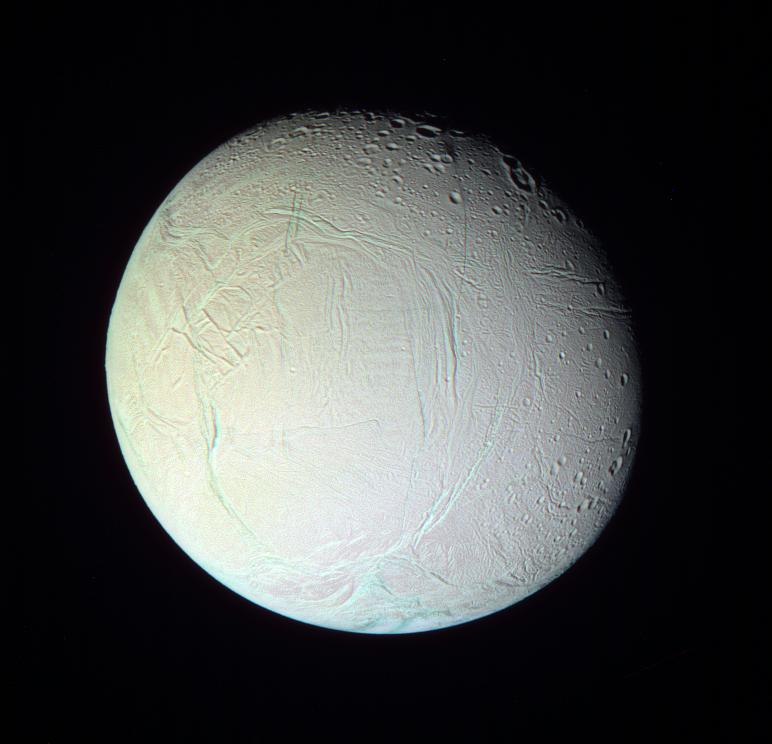
    Enceladus’s fractured surface may preserve clues to how long its hidden ocean has endured. A study by Chelsea Eakins, Francis Nimmo and Paul Schenk uses the bending of icy terrain to reconstruct earlier heating—not to claim a detection of life.

    The paper, posted on October 13, 2026, carries a journal reference to Icarus. Researchers modeled the ice shell’s response around ridges and troughs. Most inferred ancient heat fluxes fall near 125–200 milliwatts per square metre.

    A warmer past beyond the south pole

    The estimates suggest that regions outside today’s active south-polar terrain once experienced stronger heating, then cooled as their ice thickened. Similar peak heating across terrains of different ages is compatible with sustained tidal energy and a long-lived ocean.

    What the ice cannot settle

    The full study cautions that bending can preserve peak heat while obscuring colder intervals. Cyclic heating remains possible; local estimates are not global heat budgets, and crater-based ages carry uncertainty.

    The result strengthens a geological argument about ocean persistence, but does not establish uninterrupted habitability or the presence of organisms.

    Featured image: archival false-color Cassini observations from January 17, 2006, not a new 2026 photograph. Credit: NASA/JPL/Space Science Institute; used under JPL’s image-use policy.

  • UK Airprox Board Rates B777 Encounter High Risk but Leaves Object Unidentified

    UK Airprox Board Rates B777 Encounter High Risk but Leaves Object Unidentified

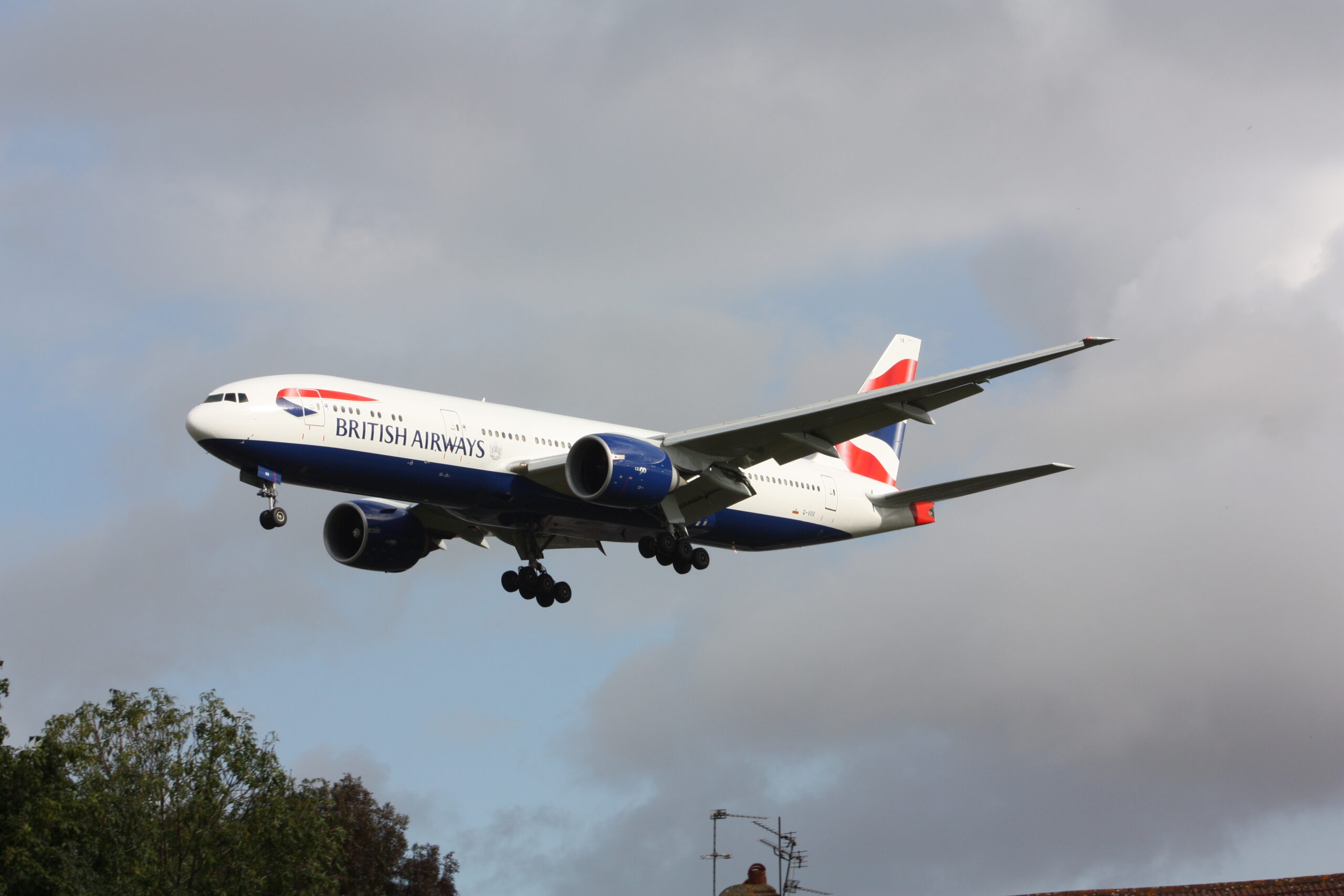
    Featured photo: archival Boeing 777 at Heathrow, 17 October 2014—not identified as the incident aircraft. The official record does not name an airline. MercerMJ / Wikimedia Commons, CC BY-SA 2.0; source photograph unaltered, resized for display.

    A Boeing 777 crew reported a silver object passing close above its right wing after departure from Heathrow. The UK Airprox Board assessed a serious collision risk—but did not establish what the object was.

    Case 2026127 concerns 24 June 2026 at 12:08 UTC, not a new October encounter. It appears in the board’s 16 September 2026 meeting summary.

    What the record establishes

    The aircraft was climbing through 5,800 feet northeast of Guildford. The pilot considered the reflective object likely to be a drone and estimated that it passed no more than 50 feet above the aircraft; horizontal separation was not reported. NATS found no associated radar contact.

    The board assigned Category A, judging that chance had contributed materially to avoiding a collision and/or that a definite collision risk existed. Separately, it classified the object as unknown.

    Risk is not identification

    The assessment supports taking the reported encounter seriously. It does not confirm a drone, unusual technology or an extraterrestrial explanation. Nor does the summary identify the airline. The separation is a reported estimate, not a radar-verified measurement.

    Primary source: UKAB September summary sheet (DOCX).

  • Pentagon’s Latest UAP Files Describe Agents’ Report of a Silent Black Triangle

    Pentagon’s Latest UAP Files Describe Agents’ Report of a Silent Black Triangle

    Federal agents’ account of a silent, dark triangular object is among the cases drawing attention in the Pentagon’s seventh UAP-file release. The reported encounter happened in June 2026 near a sensitive national-security site in the western United States. The files were released on October 23, not on the day of the sighting.

    Gizmodo revisited the case on October 26, bringing renewed attention to the earlier release.

    What the witnesses reportedly described

    According to EarthSky’s account of the documents, two federal agents were interviewed, with an additional account from another official at a separate observation post. They described a matte-black triangle roughly 13–15 feet wide that rose above a ridgeline, hovered for about 20 seconds and departed rapidly without audible engine or rotor noise.

    EarthSky reports that AARO considered further investigation warranted because the reported appearance and movement resembled other regional cases. That is a reason to investigate, not an identification of an extraterrestrial vehicle.

    CBS also reports an AARO debrief and an FBI statement concerning the encounter. Its report describes the accompanying images as illustrations.

    The evidence boundary

    Fox reports that speed was estimated by witnesses rather than measured with instruments.

    Readers should keep three questions separate: what observers said they saw, what an investigation can independently establish, and what caused the observation. Several outlets reporting the same released testimony corroborates the existence of that account; it does not independently measure the object’s performance. A dramatic description is not a calibrated velocity measurement, and an unresolved account does not by itself establish alien technology.

    How we checked this story

    Dark Fires crosschecked the reporting linked above. Our attempts to retrieve the official AARO PDF returned an access-denied response, including in the browser. We therefore do not claim to have independently authenticated the government PDFs or any third-party mirror copies.

    For readers’ reference, the official document links identified in the coverage are the AARO memorandum and FBI observation report. Direct access to those files was not verified for this article. The account above is attributed reporting, not a new technical finding by Dark Fires.

    Featured image: The Pentagon on May 15, 2023, photographed by U.S. Air Force Staff Sgt. John Wright / DoD. Public domain, via Wikimedia Commons. This archival context photograph does not show the reported object or encounter site.

  • NEO Surveyor’s Sunshade Completes Solar-Array Tests Ahead of Asteroid Search

    NEO Surveyor’s Sunshade Completes Solar-Array Tests Ahead of Asteroid Search

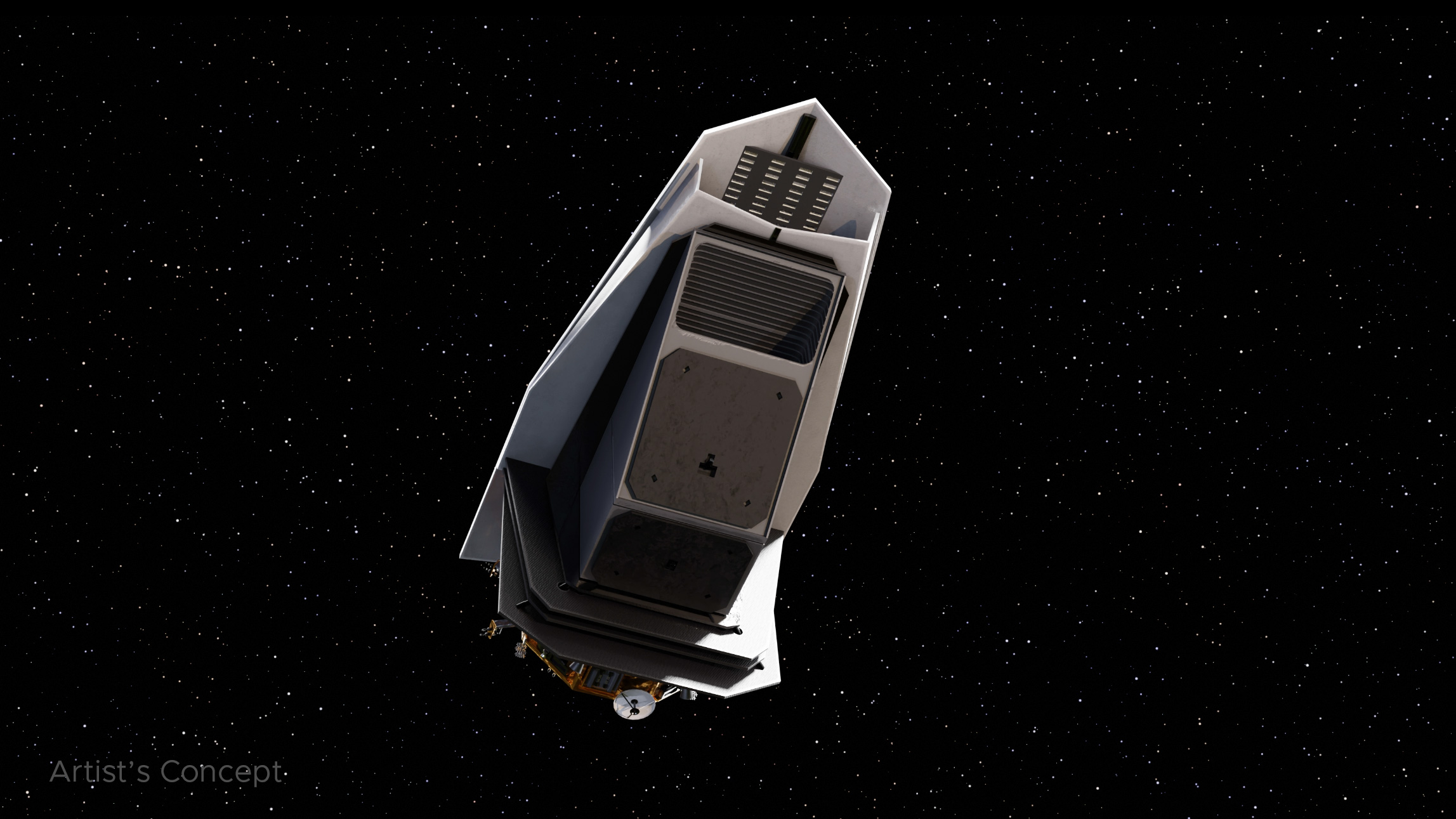
    NASA’s planned asteroid-hunting telescope has passed another component milestone: the solar array on NEO Surveyor’s sunshade has completed functional and performance testing. The structure has two jobs that must work together, supplying electricity while shielding a sensitive infrared telescope from sunlight.

    In its October 26, 2026 update, NASA describes work spread across several months. Solar cells were installed in January, environmental testing followed in March, and the assembly reached BAE Systems in Colorado in May. The accompanying inspection photographs were taken in July. The announcement date should not be mistaken for the date of every operation.

    A shield that also powers the spacecraft

    The sunshade stands about six metres tall. Its 864 interconnected solar cells can supply up to two kilowatts, charging the batteries that run the spacecraft. NASA says the team has also integrated Sun and temperature sensors.

    The telescope will measure infrared radiation from Sun-warmed asteroids and comets. Keeping direct sunlight out of its aperture is essential to that work.

    Looking where visible-light searches struggle

    NASA’s mission overview explains the advantage: a dark object can reflect little visible light yet still stand out through its infrared emission. NEO Surveyor is also intended to search regions near the Sun’s direction, where glare makes observations difficult, and regions ahead of and behind Earth in its orbit.

    Its purpose is to improve the inventory of near-Earth asteroids and comets and characterize potential hazards. The mission page currently lists launch as no earlier than September 2027. Completing tests on the sunshade does not establish that the entire spacecraft is ready to launch, and this update announces no newly discovered impact threat.

    Why the featured image is an illustration

    The NASA/JPL-Caltech concept shown above, released in August 2024, depicts the intended spacecraft in deep space, not a flight photograph. JPL describes its destination as the Sun–Earth L1 region, roughly a million miles from Earth. The dark instrument enclosure beneath the sunshade is designed to let heat escape so the telescope’s own warmth does not overwhelm the signals it seeks.

    Featured image: Artist’s concept of NEO Surveyor. Courtesy NASA/JPL-Caltech. Reused under JPL’s image-use policy.

  • LaserSETI Adds Its First Asian Observing Site to the Search for Optical Signals

    LaserSETI Adds Its First Asian Observing Site to the Search for Optical Signals

    Generated illustration

    LaserSETI has extended its search for brief optical signals into Asia. In an October 22, 2026 announcement, the SETI Institute and Royal Commission for AlUla said two stations at AlUla Manara in northwest Saudi Arabia are commissioned and collecting data.

    The installation happened on August 19, rather than on the announcement date. AlUla is the project’s fifth observing site worldwide, joining California, Hawai‘i, Arizona and Puerto Rico.

    Why another location matters

    A short flash can occur while a conventional telescope is looking elsewhere. LaserSETI uses wide-field cameras and diffraction gratings to watch broad areas of sky. Adding geographically separated stations expands coverage and lets researchers compare unusual events from different vantage points. AlUla’s protected dark skies provide another advantage for faint optical observations.

    How the optical search works

    The SETI Institute’s technical overview explains the distinction the instruments exploit: ordinary starlight spreads across many wavelengths, whereas a laser can concentrate its light in a narrow wavelength range. A grating separates incoming light by color, helping the cameras recognize that difference.

    Each detection device pairs two cameras rotated relative to one another. That arrangement helps reject false alarms, including detector events caused by cosmic rays. Broad coverage and checks on spurious signals are central to the experiment; a striking flash alone would not establish its origin.

    An observing milestone, with analysis ahead

    The new announcement reports operational instruments, not a detected extraterrestrial signal. The next phase centers on analyzing the observations. SETI Institute and RCU will operate and maintain the AlUla stations together over three years.

    Image note: the featured image is an AI-generated conceptual illustration of optical sky monitoring, not a photograph of AlUla Manara or its instruments.

  • Dark Fires Weekly: UAP Reporting Gaps, Sensor Plans and Swift’s Farewell | October 18–24, 2026

    Dark Fires Weekly: UAP Reporting Gaps, Sensor Plans and Swift’s Farewell | October 18–24, 2026

    Week in review: October 18–24, 2026. Our first weekly edition brings together three consequential stories from this week’s Dark Fires coverage: how governments receive UAP reports, how civilian researchers hope to improve their measurements, and the end of a long-running space observatory.

    Watch the weekly briefing

    78-second captioned animated briefing with synthetic narration and original background music. Original AI-authored illustrations and motion graphics; not actual sighting footage.

    Generated illustration

    1. Germany’s reply exposes a reporting gap

    Germany’s government says it has no dedicated UAP reporting channels or interdepartmental working groups for evaluating such events. The parliamentary reply is dated October 16; Dark Fires covered it on October 22. That distinction matters: this is a document examined during our coverage week, not an encounter that happened this week.

    The reply identifies responsibilities for ordinary airspace and space surveillance and says a revision of existing procedures is not currently planned. Its importance lies in the practical question of where a report goes and how it can be compared with other data. It does not determine the cause of any individual sighting, and missing reporting arrangements are not evidence of extraterrestrial technology. Read our full report.

    2. A civilian sensor roadmap reaches its comment deadline

    The UAP Coalition’s September 23 notice set October 24 as the final day for public comments on its detection and data roadmap, without specifying a closing hour or time zone. The roadmap distinguishes ongoing work on signatures and data-sharing frameworks from proposed coordinated deployments.

    The field demonstration remains marked “Awaiting charter.” Its proposed test would use synchronized passive sensors over a bounded area. The next meaningful milestone would be a documented deployment producing measurements others can assess—not merely a larger collection of unusual-looking images. The roadmap is a research proposal, not an announcement that an unexplained craft has been detected. Read our full report.

    3. Swift’s observing mission ends; re-entry is a separate event

    NASA’s Neil Gehrels Swift Observatory made its final observation on October 20. NASA announced the shutdown on October 23, after increased atmospheric drag left the spacecraft unable to maintain operations. The agency expected atmospheric re-entry in the following weeks; it did not announce that re-entry had already occurred.

    Swift’s contribution continues through its observations of rapidly changing cosmic events. NASA’s mission retrospective describes that scientific legacy. Ending operations and returning through the atmosphere are different milestones, and future updates should keep them separate. Read our full report.

    The week’s takeaway

    These stories share a basic reporting discipline: distinguish what a document establishes, what a project proposes, and what a spacecraft has actually done. Better evidence begins with preserving those boundaries.

    Video disclosure: The accompanying captioned animation includes synthetic stock-voice narration and original background music. It uses AI-authored programmatic illustrations and motion graphics, not sighting footage or reconstructions of recorded events. No illustration should be treated as evidence for a UAP encounter.

  • Swift Ends Its Science Mission as Atmospheric Drag Forces Shutdown

    Swift Ends Its Science Mission as Atmospheric Drag Forces Shutdown

    NASA’s Neil Gehrels Swift Observatory made its final science observation on October 20, 2026. The agency announced the mission’s end on October 23, explaining that atmospheric drag at its declining orbital altitude had made stable observations impossible.

    The distinction matters: the science mission has ended, but the spacecraft had not yet re-entered the atmosphere when NASA published its update. The agency expected re-entry within the following weeks, not on a confirmed date.

    Why observations stopped

    According to NASA’s mission update, recent solar activity increased the drag on Swift. A proposed servicing effort ended in August without attempting to raise its orbit. Swift subsequently resumed observations that had been paused to help preserve altitude for that effort.

    Those observations covered hundreds of targets, but the spacecraft continued descending. On October 20, at about 171 miles (275 kilometers), Swift could no longer compensate for the drag and entered safe mode. Operators at Penn State then commanded the observatory into its end-of-mission configuration ahead of re-entry.

    A rapid-response observatory leaves a long record

    Swift launched on November 20, 2004. Its defining capability was speed: detecting a gamma-ray burst, reporting its position and turning its telescopes toward the fading source in roughly a minute. That approach helped other observatories follow events that would otherwise disappear before detailed observations could begin.

    In its mission retrospective, NASA credits Swift with observing more than 2,000 gamma-ray bursts and contributing data to about 7,000 scientific papers. The archive remains available for research, so the end of new observations does not mean the end of discoveries from the mission.

    For now, the immediate milestones are separate: science operations have stopped; atmospheric re-entry is still expected. NASA says it is assessing ways for existing and future capabilities to help fill the rapid-response gap.

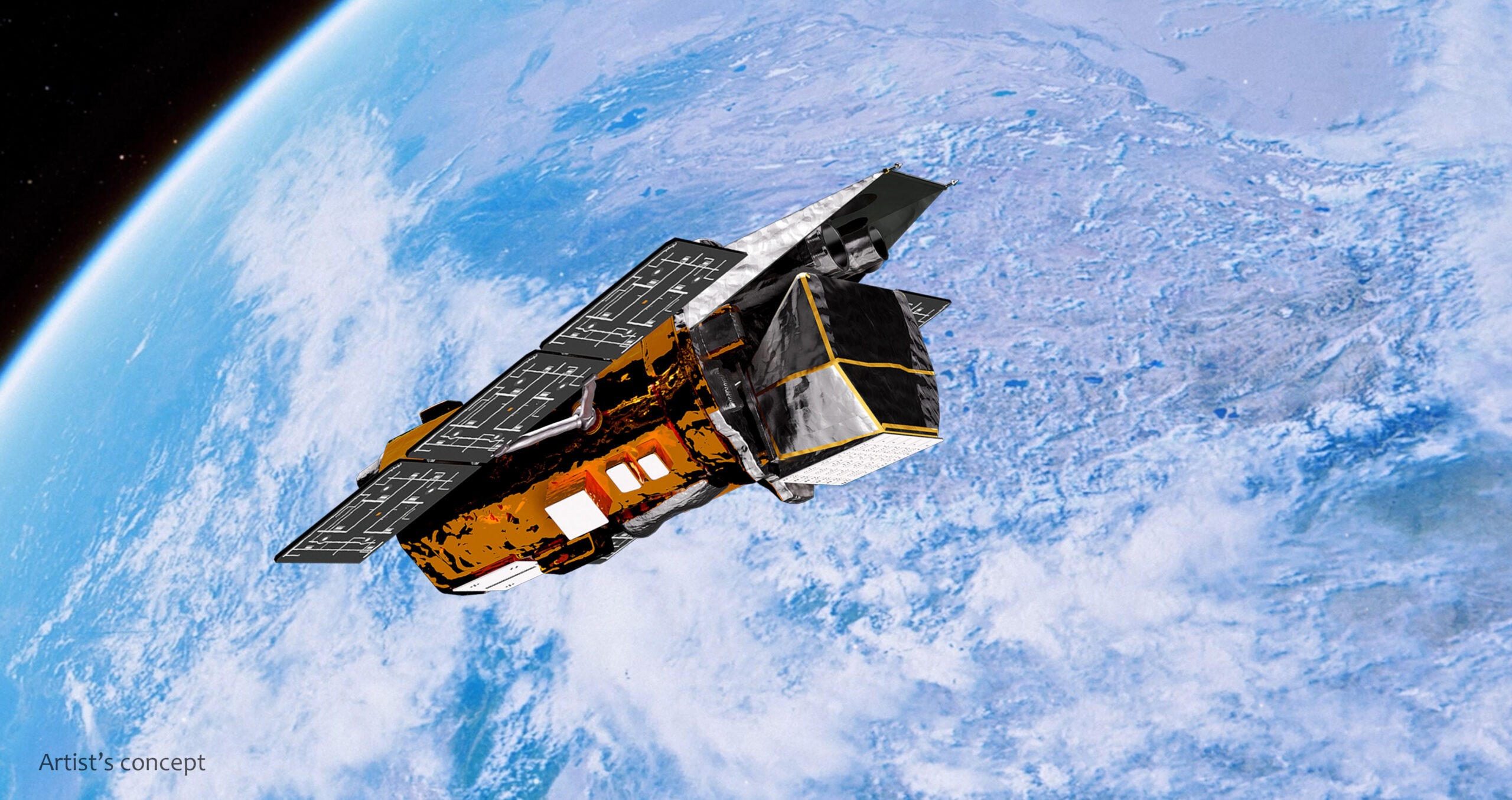
    Image: Artist’s concept of Swift above Earth, not a photograph of its final orbit or re-entry. Credit: NASA’s Goddard Space Flight Center Conceptual Image Lab. Image source.

  • Williamtown FOI Files Confirm July Drone Incursions, Leave Response Details Redacted

    Williamtown FOI Files Confirm July Drone Incursions, Leave Response Details Redacted

    An October 14, 2026 freedom-of-information decision has opened a limited window onto July drone activity at RAAF Base Williamtown. The release schedule lists five documents: three partly released and two withheld. Researcher Grant Lavac submitted the request.

    What the records show

    A July 14 email in the released files confirms multiple UAS (drone) incursions between July 11 and 13. Instructions to commanders are redacted. An aviation safety record describes a possible UAS incursion, but provides no substantive entries under several investigation and findings headings.

    Defence’s statement of reasons invokes national-security and agency-operations exemptions. It argues that disclosure could expose operational capabilities and threat-response methods. These are the department’s stated grounds, not an independent assessment of each deletion.

    The earlier public response

    In an August 10 ABC Newcastle interview, Defence Industry Minister Pat Conroy acknowledged UAS activity and said he had been advised that a NSW Police investigation was complete. He declined to specify whether operations had been disrupted or what defensive action had been taken, citing operational security. His comments did not disclose the investigation’s findings.

    Conroy said the government had changed regulations to permit Defence personnel to seize, disable or destroy drones, and was investing in detection and counter-drone capability. Those broader assurances did not establish which measures were used during the Williamtown incidents.

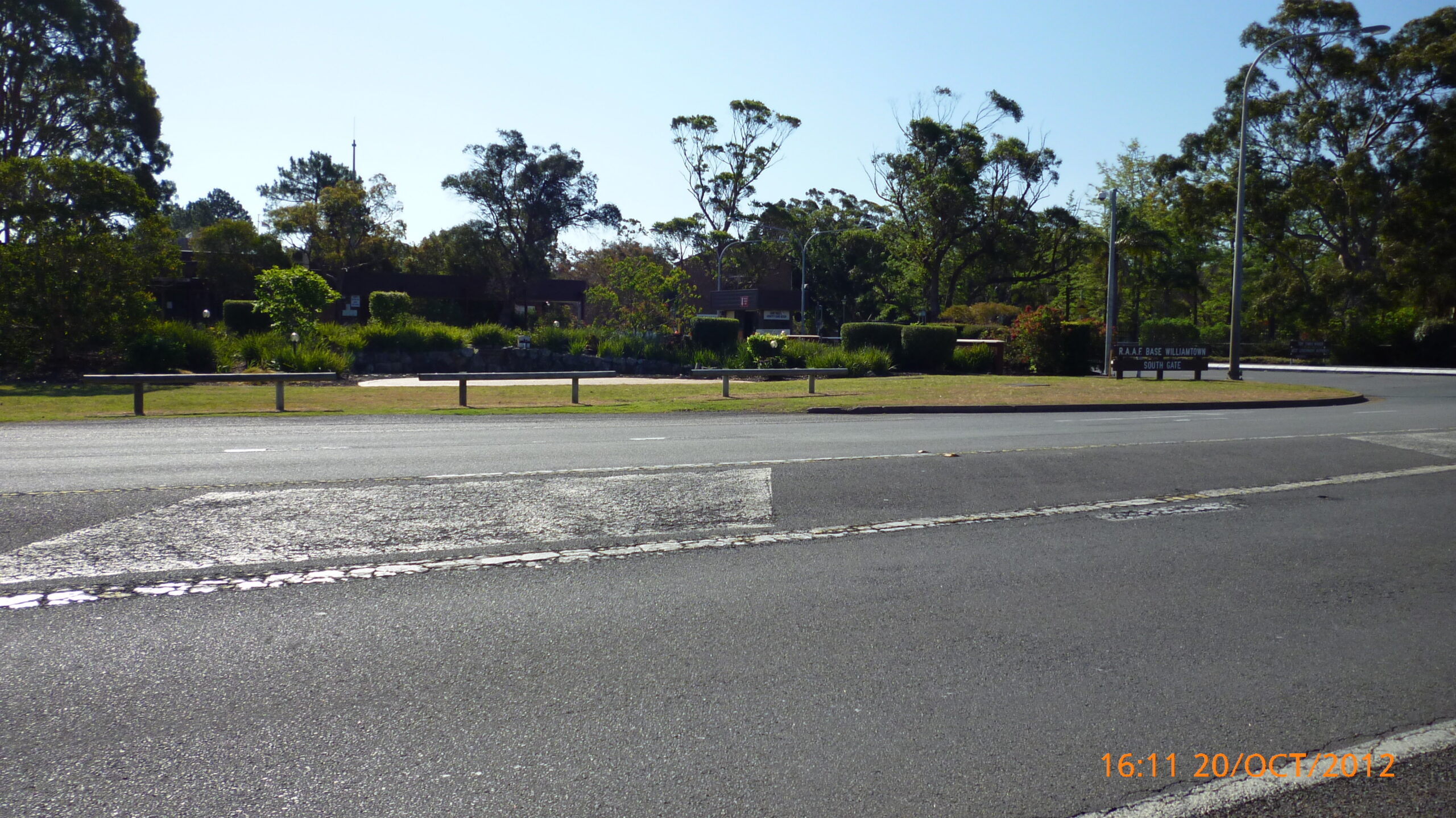
    Defence describes Williamtown as the Air Force’s principal fighter-pilot training base, housing training, surveillance and fighter squadrons. That operational role makes unauthorised activity an aviation-safety and base-security concern, regardless of wider UAP speculation.

    The released documents support reporting on drone incursions, not a finding of anomalous craft. Their gaps cannot establish who operated the aircraft or whether particular countermeasures succeeded.

    Image: RAAF Base Williamtown’s entrance in October 2012, shown for historical context, not the July 2026 activity. Photo: AussieLegend / Wikimedia Commons. Public-domain dedication.