DARK FIRESORIGINS UNKNOWN

Author: Dark Fires

  • The Lubbock Lights: Why the Photographs Never Settled the Case

    The Lubbock Lights: Why the Photographs Never Settled the Case

    Generated illustration

    The Lubbock Lights are often remembered as a single scene: a formation of bright points above Texas, witnessed by scientists and captured on film. The contemporary investigation presents a more complicated picture. There were repeated visual reports, photographs taken on a separate occasion, and an unresolved question about whether those photographs depicted what the best-known witnesses had seen.

    The strongest starting point is Project Grudge Status Report No. 2, dated December 31, 1951. Its Lubbock appendix describes four Texas Technological College professors observing a group of lights on the evening of August 25. The report places the first observed passage at about 9:20 p.m. Additional sightings followed.

    Two bodies of evidence

    The photographs came from college student Carl Hart Jr., who said he fetched his camera after seeing a formation and then photographed subsequent passes. The December report dates this episode to August 31. Because dating differs across accounts of the photographic sequence, the important chronology here is modest: the pictures followed the professors’ first observation, rather than documenting that same sighting.

    Investigators obtained four negatives from a reported sequence of five photographs. The remaining negative was said to have been lost or misplaced. The surviving pictures showed single or double V-shaped arrangements of lights, with individual points varying in brightness.

    The professors were cautious about connecting the images with their own experience. They had not observed a V-shaped formation, and they thought the lights they saw were too dim to photograph. The report did not treat either objection as decisive: formations varied, different witnesses could have seen different flights, and subjective brightness estimates could be mistaken. But it preserved their reservations.

    What the laboratory could establish

    The photographic laboratory examined the negatives under a comparator microscope. It reported that the images resulted from light reaching previously unexposed film, rather than retouching of the negatives. It also noted varying intensity, the absence of recorded background stars, and changes in the relative positions of the lights.

    These findings address particular questions about the pictures. They do not establish what emitted or reflected the light. A negative can be unretouched while its subject remains misidentified. Likewise, a bright spot without a known distance does not supply a physical diameter, altitude or speed. The report proposed further study of angular span and photographic density, showing that investigators understood there was still analytical work to do.

    Birds, and the problem of a private solution

    Birds reflecting city lighting were one hypothesis considered in Lubbock. Some residents reported seeing wing movements; the professors disputed the explanation for their observations. A wildlife official allowed that birds were possible while expressing reservations about the number and circumstances of the reported flights. The contemporary document records a debate, not a clean experimental identification.

    Former project leader Edward Ruppelt later revisited the episode in his 1956 book, The Report on Unidentified Flying Objects. He said a scientist had supplied a natural explanation for the professors’ lights, while withholding the person’s identity and decisive details. In that account he explicitly rejected birds for the explanation he accepted.

    That retrospective assurance has limited value for anyone trying to reproduce the result. Readers cannot examine an undisclosed method. It also should not be converted into a blanket explanation of every report and photograph collected under the Lubbock name.

    The case remains useful because it exposes the gap between a compelling image and a complete investigation. The photographs are evidence that light reached a camera in a particular arrangement. The larger story requires independently establishing what was photographed and whether it matches the separate eyewitness reports. The Air Force’s own paperwork kept those questions open.
    Sources

  • Why a Silent Sighting Does Not Prove Silent Propulsion

    Why a Silent Sighting Does Not Prove Silent Propulsion

    A bright object crosses the sky, but the witness hears nothing. That detail deserves to be recorded accurately. It cannot, by itself, establish that the object produces no sound or uses an unfamiliar propulsion system. Before interpreting silence, ask what sound could have reached that observer during the available listening window.

    Light and sound report different moments

    For ordinary terrestrial distances, light reaches a witness effectively immediately. Sound takes much longer. OpenStax’s treatment of sound speed gives about 343 metres per second in air at 20°C. Temperature changes that value, so it is an approximation rather than a universal atmospheric constant.

    Consider an illustrative source 3.43 kilometres away. Dividing distance by 343 gives a ten-second sound delay. At 10 kilometres, the same simplified calculation gives about 29 seconds. A clip ending five seconds after a distant flash does not cover either arrival time. These are example distances, not estimates for an unidentified object.

    Motion adds a further complication. Sound arriving now was emitted at an earlier position. If a source travels sideways at 200 metres per second during a ten-second interval, its position changes by two kilometres. That arithmetic does not calculate the complete sound path, but it shows why looking toward the current light and expecting its engine noise from exactly there can mislead.

    Distance reduces what reaches the microphone

    In an ideal free field, with spherical spreading and no absorption, doubling the distance spreads the same acoustic power over four times the area. The intensity falls to a quarter, corresponding to about six decibels. OpenStax explains this inverse-square model. Real aircraft are directional sources in a changing atmosphere, so the simple rule is a starting point rather than a complete prediction.

    A practical comparison needs background sound too. Traffic, wind at the microphone, nearby speech or machinery can conceal a distant signal. A quiet-looking video may have no audio track, edited audio, or recording settings that do not preserve faint ambient sounds. Ask for the original file and a description of the recording setup before treating the soundtrack as a calibrated measurement.

    Build a useful listening record

    For a future sighting, keep recording after the light disappears, if doing so is safe. Note whether you were outside, behind glass, wearing headphones or inside a moving vehicle. Write down nearby noise sources and whether any sound appeared later. Preserve the original soundtrack even when it seems uninteresting.

    For an existing report, separate three statements: the witness did not notice a sound; the recording contains no recognizable sound; and a suitable instrument measured an upper limit on sound level. These statements have different evidential strength. Only the third begins to support a quantitative comparison, and it still requires the instrument’s frequency response, noise floor and geometry.

    Atmospheric conditions also matter. NOAA’s explanation of thunder propagation describes how temperature structure changes the paths of sound. A weather observation at ground level alone cannot reconstruct every layer between a distant source and a listener.

    What silence can establish

    A well-documented absence of an expected sound can help test a specific aircraft hypothesis when distance, operating conditions, propagation and detection limits are constrained. Without those inputs, the responsible conclusion is narrower: no sound was detected under the reported conditions. Keep that observation in the case file without turning it into a measurement of propulsion.

    Sources and further reading

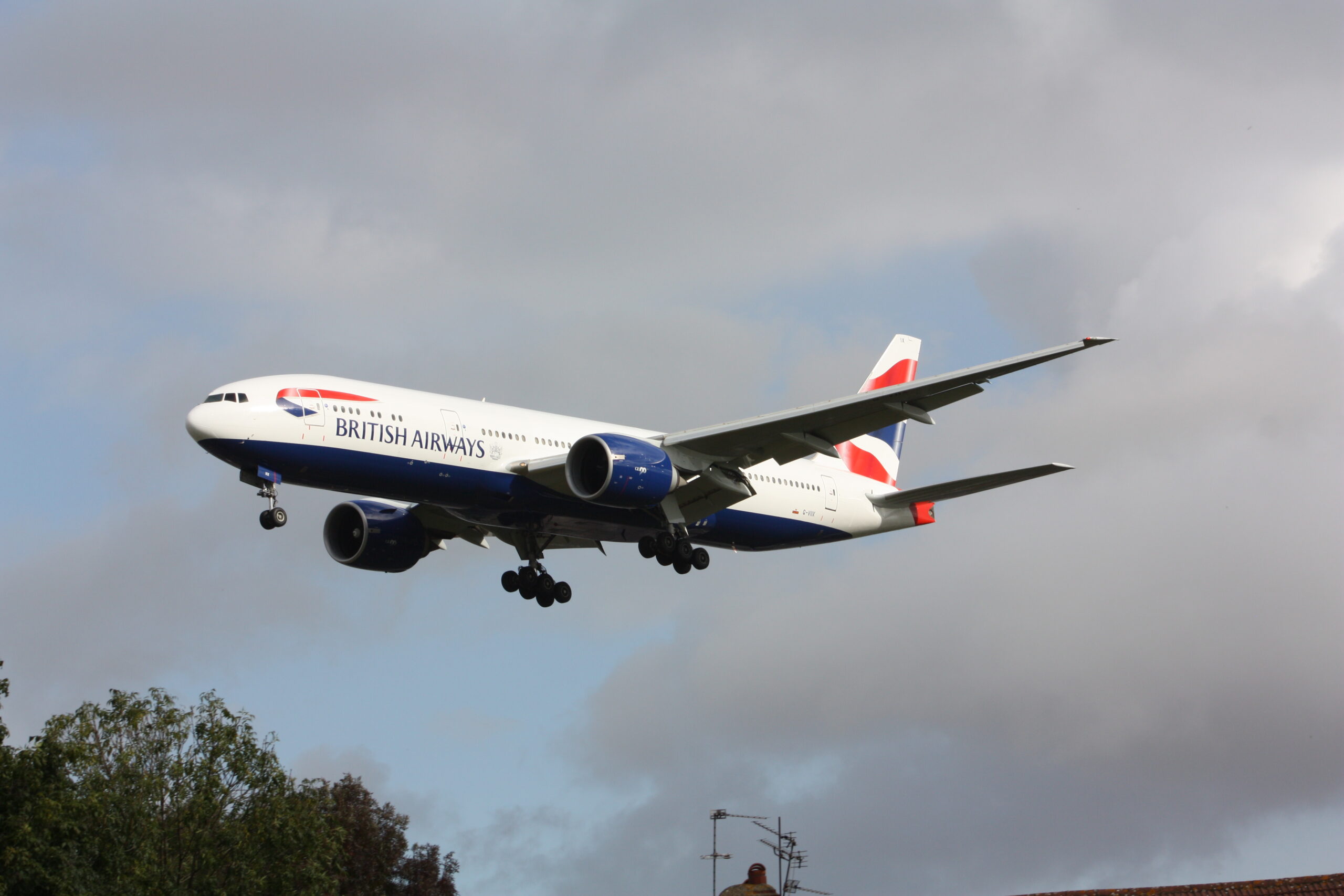
    Featured photograph: Boeing 777 approaching London Heathrow, 17 October 2014. Credit: MercerMJ / Wikimedia Commons, CC BY-SA 2.0. Contextual aircraft photograph; not a UAP sighting. WordPress display sizing/cropping.

  • Kenneth Arnold’s 1947 Sighting: What His Original Report Actually Said

    Kenneth Arnold’s 1947 Sighting: What His Original Report Actually Said

    Generated illustration

    On June 24, 1947, Kenneth Arnold was flying across Washington when he saw a succession of bright flashes near Mount Rainier. His account would become a defining document of the flying-saucer era. Read today, the original statement is valuable for something more specific: it shows a witness trying to turn a brief visual experience into a description, a route and a speed estimate.

    Arnold’s written account preserved in the Army Air Forces investigation puts the encounter during a flight from Chehalis toward Yakima. He had diverted to search around Mount Rainier for a missing Marine transport. He described clear conditions and nine objects traveling generally southward, with intermittent reflections that first made him worry about another aircraft nearby.

    A sighting built from comparisons

    He initially thought he was seeing jets. The feature that drew his attention was his inability to identify tails. He compared the formation to a chain and described objects dipping or changing their orientation, alternately presenting a thin profile and a broader reflecting surface. His report also used saucer-like language. Reducing this document to a single familiar silhouette loses the changing views that he actually described.

    Arnold tried to make the observation measurable. He checked his instrument-panel clock as the formation appeared to pass mountain landmarks. He reported an elapsed interval of one minute and forty-two seconds and estimated the objects’ distance from him at twenty to twenty-five miles. He also compared their apparent size with a distant DC-4 and a small tool held up in front of him.

    Those details make the account unusually informative, but they do not turn every quantity into an independent measurement. Timing an angular passage is possible with a clock. Converting that passage into miles per hour requires knowing where the objects actually were. A mountain behind an object can establish a direction without establishing the object’s range.

    What the Army interviewer endorsed

    The Counter Intelligence Corps memorandum dated July 16, 1947 records an interview on July 12. Its author, Frank M. Brown, expressed a favorable opinion of Arnold’s sincerity and noted that distances between geographical features were broadly consistent with aeronautical charts. Brown treated the account seriously rather than simply dismissing its author.

    The memorandum nevertheless contains an obvious chronological error, referring to a July 25 sighting even though it was written earlier in July. Arnold’s statement gives June 24. This small inconsistency is a useful reminder that official records can preserve mistakes as well as evidence. A document’s letterhead cannot resolve every question about its contents.

    Brown’s assessment was principally an assessment of a witness and the plausibility of his description. Checking the map could support Arnold’s account of the terrain. It could not independently locate the reported objects in three-dimensional space or certify their physical dimensions.

    Why the original remains worth reading

    Arnold described observing through an open window as well as through the aircraft glazing, addressing one proposed source of reflections. He also said he wished he had carried a movie camera. The surviving evidence is consequently a detailed human report, accompanied by a drawing, rather than a photographic or radar track.

    The historical importance of the episode does not depend on assigning a final identity to the objects. It rests partly on how quickly an unexpected observation became a public question about unfamiliar aircraft. The original record preserves both Arnold’s confidence and the assumptions behind his estimates. Keeping those together gives the case more substance than either an unquestioning retelling or a dismissal based only on how strange it sounds.

    Sources

  • A $100,000 UAP Study Puts Contact Claims to a Testable Standard

    A $100,000 UAP Study Puts Contact Claims to a Testable Standard

    A proposed field experiment will examine one of the most disputed ideas in UAP discussion: whether deliberate mental practices have any measurable relationship with unusual events in the sky. The Institute of Noetic Sciences announced the $100,000 award on November 5, 2026. This is funding for a test, with results still ahead, rather than evidence that the claimed relationship exists.

    According to the IONS announcement, Peter Skafish leads the winning team, with Brian Lord as co-principal investigator. Experienced practitioners will use meditation and intention at a remote southwestern U.S. location. Researchers plan to compare reported experiences with physiological measurements and instrument records of the sky and surroundings. The announcement promises preregistered methods, openly shared de-identified data, and publication of null findings on the same timetable as positive ones. Work is expected to start in December, continue for a year, and produce results in 2028.

    The crucial distinction: experiences and events

    A careful experiment has to distinguish at least two questions. Do participants report different experiences during the practice? Do independently recorded physical events also change? Either can be investigated, but the evidence needed for one does not automatically answer the other.

    A participant could sincerely describe an unusual experience even if cameras record nothing unusual. Conversely, a camera could record an unexpected light without establishing any connection to what participants were thinking. Treating those outcomes separately protects the study from turning every possible result into apparent confirmation.

    The most informative comparison would include observation periods selected before the experiment, rather than only memorable moments selected afterward. If lights appear during a session, researchers need to know how frequently comparable lights appear at the same location when no session is taking place. Weather, aircraft, satellites, animals, camera artifacts and observer expectations all become relevant alternative explanations.

    These are methodological questions for the eventual protocol. They should not be mistaken for a claim that the announced team has already adopted every control described here.

    What preregistration needs to accomplish

    Preregistration is useful when it fixes the important decisions before researchers inspect the outcome: what counts as an event, which measurements matter most, how observation windows are selected and which comparisons determine success. An announcement that methods will be preregistered is a starting commitment. The detailed document is what will allow outsiders to judge whether those decisions meaningfully constrain interpretation.

    Independent classification would strengthen the test. For example, people assessing recordings could be kept unaware of whether a clip came from a contact-practice period or a comparison period. That would reduce the opportunity for expectations to influence which ambiguous flashes receive attention. Clear records of equipment settings and clock synchronization would also help connect any testimony to the right instrument data.

    What a result could establish

    NASA’s UAP guidance emphasizes the difficulty of drawing conclusions from limited observations and states that there is no evidence establishing an extraterrestrial origin for UAP. That remains the appropriate evidential backdrop here.

    Even a statistically interesting difference would need replication and investigation of ordinary causes. A negative finding would apply to the practices, conditions and measurements actually tested, rather than settling every claim about consciousness. The strongest outcome would be a transparent experiment that other investigators can scrutinize and repeat. For readers following the project, the next meaningful milestone is the public protocol, not an expectation of contact.

    Sources

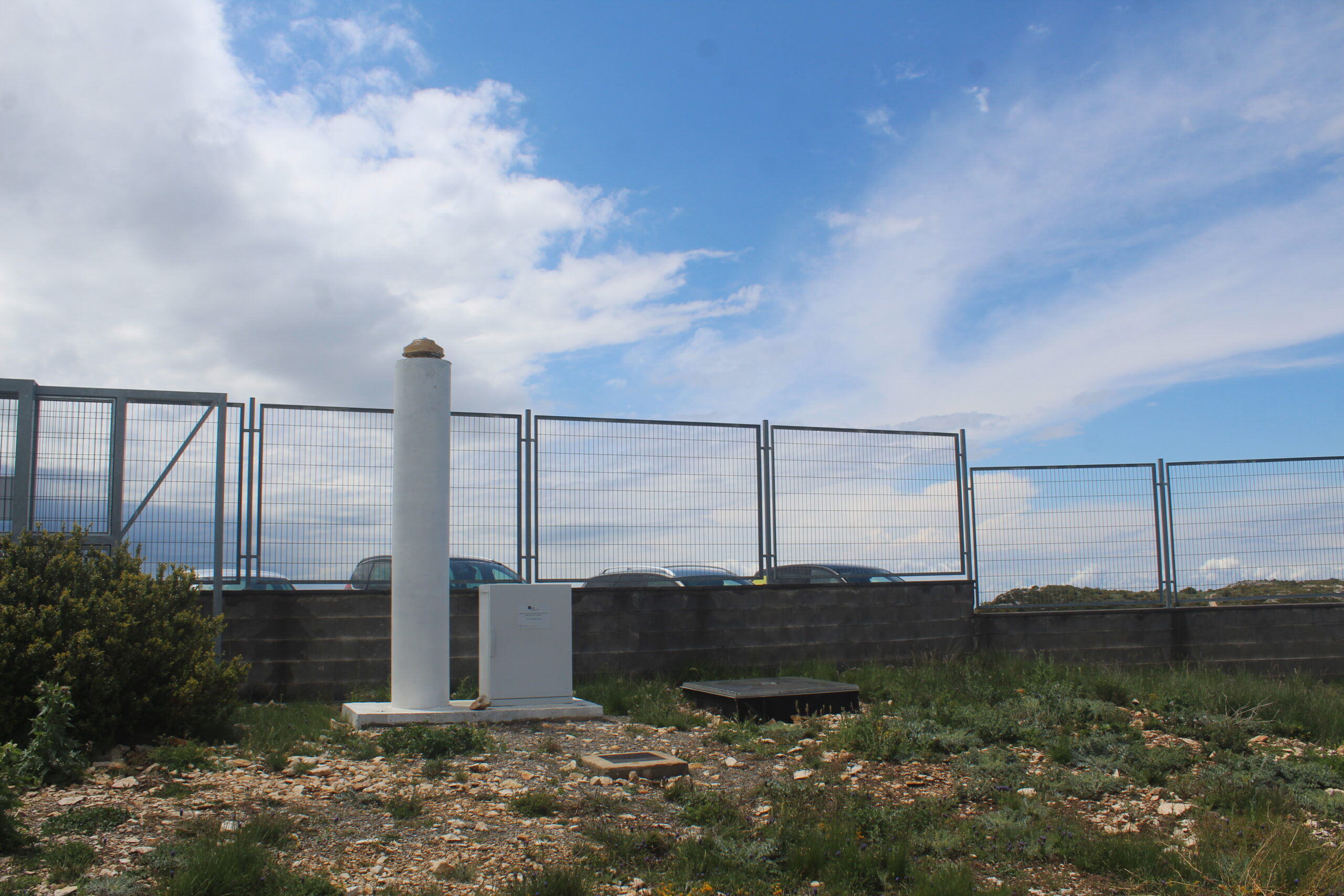
    Featured image: contextual photograph of an all-sky camera at Montsec, not equipment from the proposed IONS study. Credit: Castellgalie / Wikimedia Commons, CC BY 4.0. Resized for display.

  • John Glenn’s “Fireflies”: How a Spaceflight Mystery Became a Testable Observation

    John Glenn’s “Fireflies”: How a Spaceflight Mystery Became a Testable Observation

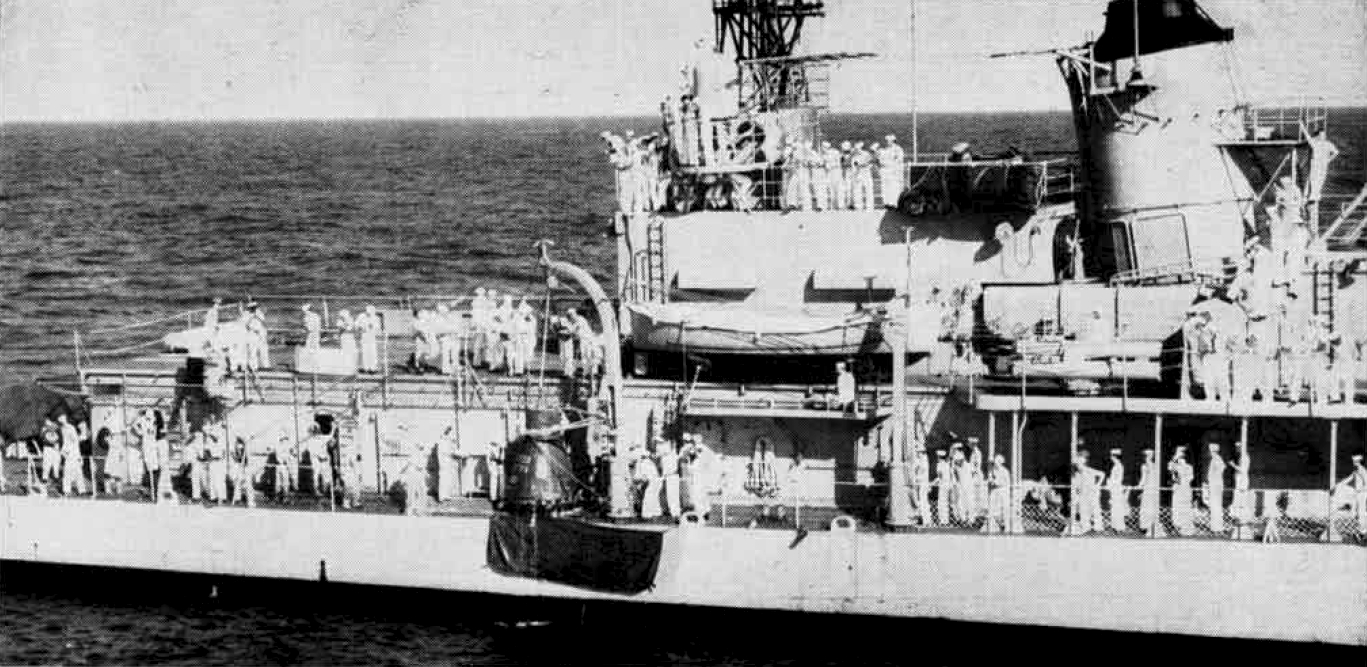
    Image: USS Noa recovers John Glenn’s Friendship 7 capsule in the Atlantic Ocean on 20 February 1962. Mission context photograph, not an image of the reported particles. Credit: U.S. Navy, Naval Aviation News, April 1962, p. 7; via Wikimedia Commons. Public domain: official U.S. Navy government photograph Image source.

    During his 20 February 1962 orbital flight, John Glenn observed bright particles outside Friendship 7. The episode is often remembered by its vivid nickname: “fireflies.” The name conveyed an appearance, not an identification of living creatures or visiting machines. A second Mercury mission supplied an unusually useful follow-up.

    From surprise to a working explanation

    NASA’s historical account describes the particles as ice traveling with Glenn’s spacecraft and illuminated near orbital sunrise. That is a retrospective identification, not necessarily what an observer could immediately conclude from the view through a capsule window. NASA’s Friendship 7 history provides the mission setting and distinguishes the phenomenon from the spacecraft’s separate operational difficulties.

    On 24 May 1962, Scott Carpenter flew Aurora 7. His published flight report describes similar snowflake-like particles. During the third orbital dawn he accidentally struck the hatch and saw a cloud pass the window. He then deliberately knocked on the hatch and other spacecraft surfaces, repeatedly producing particles. Carpenter thought they reflected sunlight rather than generated their own light. His account appears on printed page 72 of NASA’s Results of the Second U.S. Manned Orbital Space Flight.

    Why the follow-up matters

    The key development was not that an authority supplied a mundane label. It was that an astronaut could change something locally and observe a repeatable result. A cloud arriving after contact with the capsule is evidence of a nearby source. That is more informative than the evocative resemblance to insects.

    It is still important to state the scope correctly. Carpenter’s test did not chemically analyze every particle Glenn had seen months earlier. It provided a mechanism consistent with the earlier observations, while NASA’s later account identifies the familiar phenomenon as ice. That distinction allows the explanation to be strong without pretending that the two missions constituted a single controlled laboratory experiment.

    The incident also illustrates why “moving with the spacecraft” need not imply active pursuit. Material originating near a vehicle can initially share much of its motion. From an unfamiliar viewpoint, small nearby particles may appear to accompany the observer. Relative motion describes a relationship; by itself it does not establish a guidance system or an intention.

    A better model for investigating surprises

    There is no need to diminish Glenn’s observation to explain it. He noticed something real and reported it. Carpenter’s later observation added a way to investigate the source. The chain is useful precisely because it preserves both the initial uncertainty and the later evidence.

    For readers of historical UAP accounts, the lesson is practical. Look for descriptions of lighting, the observer’s platform, possible nearby material, and attempts to reproduce an effect. These details often carry more explanatory value than a striking nickname.

    The Mercury fireflies remain a memorable spaceflight mystery, but not an enduring demonstration of an unknown vehicle. Their history shows how a puzzling observation can become better understood when the next observer has an opportunity to test a specific explanation.

  • Jimmy Carter’s UFO Report: What the 1973 Form Can and Cannot Establish

    Jimmy Carter’s UFO Report: What the 1973 Form Can and Cannot Establish

    Image: Jimmy Carter’s official portrait, 31 January 1977. His UFO report was filed in 1973, before his presidency. Credit: The White House / Library of Congress, via Wikimedia Commons. Public domain, official U.S. federal government photograph Image source.

    Jimmy Carter’s UFO report is a genuine archival document, but its existence does not establish an extraterrestrial explanation. The handwritten form offers something more precise: a named witness’s account, recorded years after an observation, with estimates and limitations that can still be inspected.

    Read the form before the legend

    The National Archives reproduces Carter’s International UFO Bureau report and identifies it as a record filed while he was governor of Georgia. The form is dated 18 September 1973. Carter entered October 1969 as the observation date and Leary, Georgia, as the location. He estimated an observation lasting ten to twelve minutes and described a bright, changing appearance. He indicated that no optical instrument was used and that he heard no sound. The two-page scan is the primary source for those statements.

    The distinction between the date written on a retrospective report and a securely established event date is important. This article preserves the date Carter supplied on the form; it does not treat the entry as independent verification of the precise night. Any proposed astronomical identification must first explain the chronology it uses.

    An archive is not an endorsement

    The National Archives guide to presidential-library UAP records directs readers to Carter material alongside many other types of correspondence and records. Archival custody establishes where a document is preserved. It does not mean the archive has certified the witness’s interpretation or endorsed every statement in the file.

    This is an especially useful distinction when the witness later became president. Public office makes the report historically notable. It does not turn an unaided visual estimate into a calibrated measurement. Nor should a famous witness be dismissed simply because the account is inconvenient for one side of an argument. The appropriate standard is the same: identify what was observed, what was inferred and what can be checked.

    What would a stronger explanation require?

    A proposed identification would need a reliable time and location, the direction of observation, duration, relevant sky conditions and a comparison with possible sources. If a hypothesis depends on selecting one disputed date over another, that dependency belongs in the explanation, not in a footnote that readers are unlikely to notice.

    The report also should not be made to claim more than its author recorded. An object described as bright, apparently changing color or seeming to approach is not automatically a structured machine. Perceived changes require assessment; they are not direct measurements of propulsion, composition or intent.

    There is a difference between taking a witness seriously and adopting the most dramatic interpretation of the account. Careful reading honors the witness by retaining uncertainty, rather than replacing it with a conclusion that makes a stronger headline.

    Carter’s form remains an accessible example of how UFO history can be studied without choosing between ridicule and sensationalism. It documents that he reported an unusual sight. On its own, it does not identify the cause. That modest conclusion is both historically meaningful and faithful to the evidence.

  • J002E3: How an Unknown Object in 2002 Pointed Back to Apollo 12

    J002E3: How an Unknown Object in 2002 Pointed Back to Apollo 12

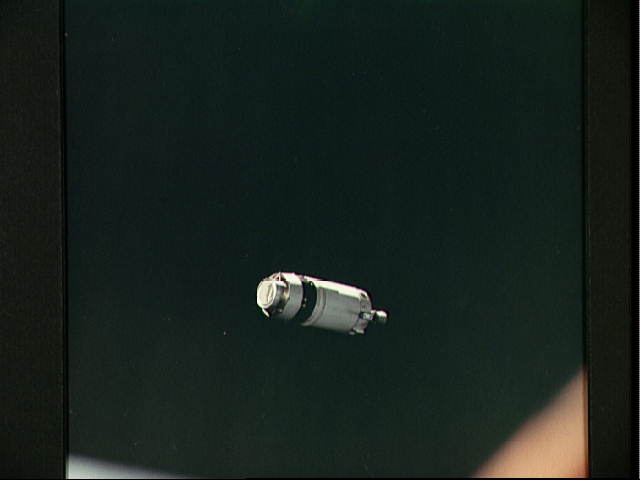
    An S-IVB stage photographed from Apollo 8, NASA image AS08-16-2584. Illustrates the hardware type; it is not a photograph of J002E3. Credit: NASA, photograph AS08-16-2584. Image source.

    On 3 September 2002, amateur astronomer Bill Yeung discovered a faint moving object designated J002E3. It was not a classic close-encounter report. It was an astronomical detection whose identity was initially uncertain. That makes it a useful comparison for UAP research: the investigation produced increasingly specific evidence rather than relying on a striking appearance.

    An unexpected orbit

    In an 11 September 2002 notice, NASA’s Center for Near-Earth Object Studies described an object apparently orbiting Earth that could not be matched to a recent launch. Its motion and brightness suggested artificial hardware. The leading candidate was a Saturn V third stage, particularly the one associated with Apollo 12, launched on 14 November 1969. Backward orbital analysis suggested the object had returned from a Sun-centered orbit. This was an initial identification based on several clues, not recovery of a serial number. Read the initial CNEOS analysis.

    By 20 September, JPL reported more than one hundred positional measurements from over a dozen amateur astronomers. Refined calculations supported capture into Earth orbit in April 2002. Researchers also reported a surface signature consistent with white paint rather than typical asteroid material. JPL still described Apollo 12 hardware as the most likely identification and discussed less likely alternatives. Read JPL’s follow-up announcement.

    Why several kinds of evidence matter

    An orbit constrains where an object could have been. Brightness, combined with assumptions about reflectivity, helps constrain its size. Surface measurements add another comparison. No single clue has to carry the entire explanation when independent observations can be tested against the same candidate.

    That is stronger reasoning than identifying an object solely because it resembles a familiar shape. It also makes the explanation vulnerable to useful criticism. If a proposed rocket stage could not occupy the measured orbit, or its surface properties were incompatible, the identification would need revision. A hypothesis gains value when it can fail a test.

    Do not freeze the first announcement

    The two September notices also show why dates belong beside scientific estimates. Early trajectory calculations carried larger uncertainties. The later JPL account substantially reduced the estimated short-term impact chances as additional observations arrived. Quoting an early probability as though it remained the final assessment would misrepresent the investigation.

    The same discipline applies to identification language. “Most likely” should not quietly become “proved beyond any doubt” in a retelling. Conversely, the existence of a residual uncertainty does not make every alternative equally plausible. Competing explanations must account for the measurements that favor the leading candidate.

    J002E3 is not evidence that all unfamiliar aerial observations are space debris. Its relevance is methodological. A genuine unknown can become understandable through repeated observation, transparent calculations and comparison with historical launch records.

    In this case, the intriguing possibility was not a visitor from another civilization but a piece of humanity’s own lunar exploration returning to notice decades later. The investigation became more interesting as the evidence narrowed the possibilities, rather than less.

  • Hera Reveals Didymos Terrain Beyond DART’s Last View

    Hera Reveals Didymos Terrain Beyond DART’s Last View

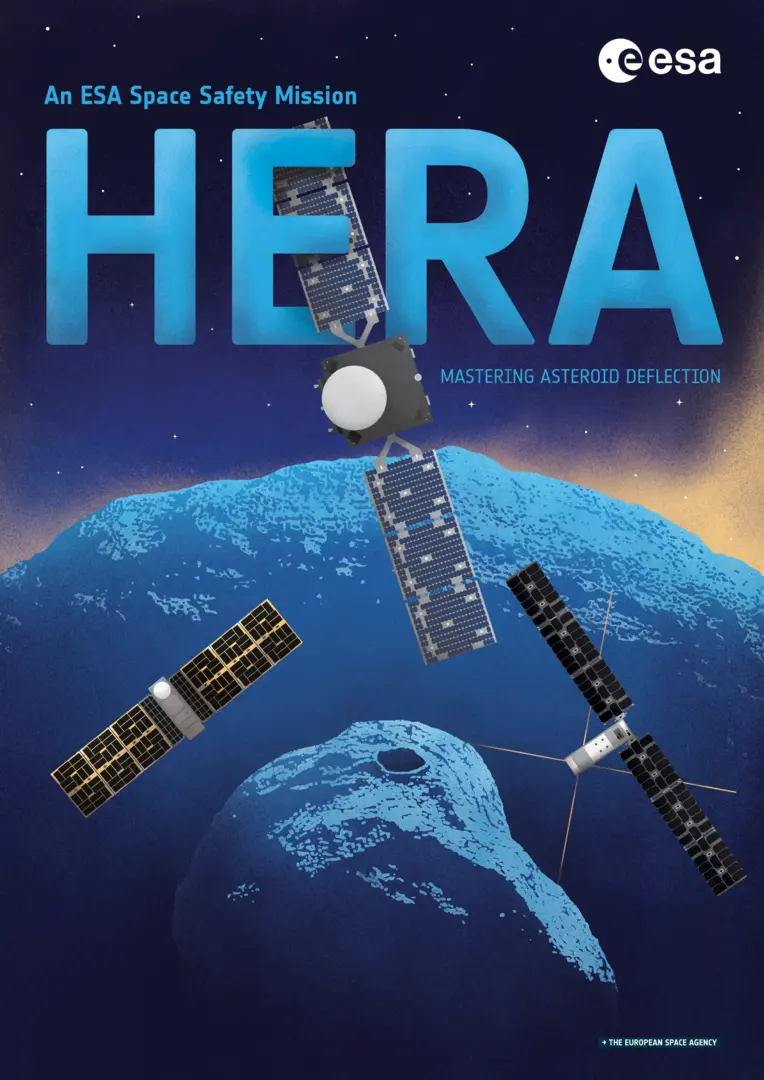
    Hera mission artwork, released in March 2026. This illustration is not the newly released asteroid photograph. Credit: ©ESA; acknowledgement: Science Office. Image source.

    Hera’s latest asteroid portrait moves the mission beyond identifying two separate points of light. Released by ESA on 5 November 2026, the close-up reveals a different face of Didymos from the one seen by NASA’s DART spacecraft before its 2022 impact on the smaller asteroid, Dimorphos.

    Didymos shows an equatorial ridge along with boulders, craters and possible grooves or ridges. Dimorphos is mostly in shadow. The view therefore offers more immediate detail about the larger body than about DART’s impact site.

    Scientists are considering whether some visible features might involve material thrown from Dimorphos onto its neighbour. That remains a hypothesis to investigate, not a result established by the photograph. ESA’s close-up announcement says more detailed images of both bodies will be unveiled on 25 November.

    A survey, not a single snapshot

    The Hera-JAPAN team’s 2 November operations plan explains how the spacecraft is intended to build a fuller picture. Its early survey uses three imagers: the Asteroid Framing Camera, a hyperspectral instrument and a thermal infrared camera. Together, their planned observations address the bodies’ shapes, motions and physical characteristics.

    The plan describes an initial rectangular observing trajectory, followed by a closer, bowtie-shaped phase. Rather than relying on one favourable viewing angle, the mission is designed to accumulate observations under different conditions. Later stages include deploying the Juventas and Milani CubeSats to investigate internal structure and surface composition.

    These remain planned operations with a schedule that can evolve. The Japanese team explicitly identifies its detailed programme as a plan and notes that the most ambitious close-flyby phase is still being refined. Treating those dates as completed milestones would overstate what has been reported.

    Why the larger asteroid matters

    The new view is useful precisely because the system contains two interacting bodies. Looking only at the object that was struck would risk missing changes elsewhere. If material travelled between them, the surrounding terrain could provide another record of the impact and its aftermath.

    Interpreting that record requires care. A surface feature can be real without its origin being obvious. Shadows can emphasise relief, and a previously unseen side of an asteroid need not represent newly created terrain. Repeated mapping is the route from an intriguing shape to a defensible explanation.

    For readers following the earlier images that first separated Didymos and Dimorphos, this is a distinct step forward: visible landscape rather than simple identification. The strongest takeaway is the arrival of questions that can now be tested against local observations. The mission’s scientific value will emerge from those comparisons, not from assigning a cause to every feature in its first close-up.

  • McDivitt’s Gemini IV Sighting: The Witness Account and the Photograph Are Different Evidence

    McDivitt’s Gemini IV Sighting: The Witness Account and the Photograph Are Different Evidence

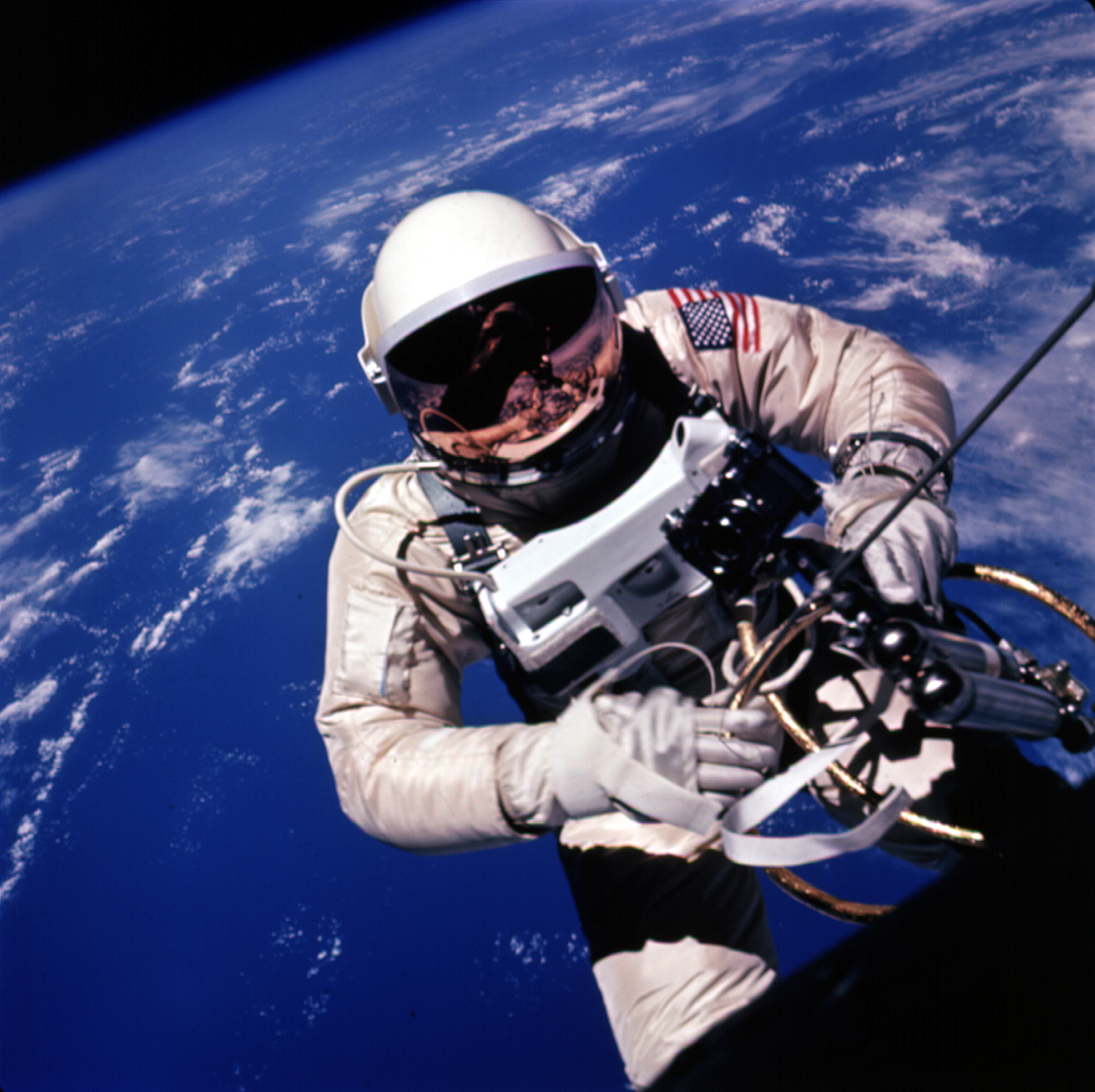
    Image: Ed White during his 3 June 1965 spacewalk, photographed by James McDivitt. Mission context only; this is not the reported unidentified object. Credit: NASA / James McDivitt, photograph S65-30431. Public domain, NASA U.S. government photograph Image source.

    James McDivitt’s observation of an unfamiliar object during Gemini IV has often been retold as an astronaut’s encounter with an alien craft. His own later account is considerably more cautious. It also raises a separate question: did the photographs associated with the story actually show what he had seen?

    The mission and the recollection

    Gemini IV launched on 3 June 1965 and returned on 7 June. McDivitt commanded the flight with Edward White, whose spacewalk became the mission’s best-known event. The contemporary NASA mission report establishes the flight’s operational context. The sighting should be examined within that setting, rather than detached from the spacecraft and its activities.

    In a NASA oral-history interview recorded on 29 June 1999, McDivitt recalled a white, can-like object with a projecting feature. He said he could not determine its size or distance. He tried to photograph it, but later found nothing in his pictures that recorded the object. He considered material from the spacecraft, such as ice or Mylar, a likely explanation. He also said images later associated with the story appeared to show reflections from window hardware. These are McDivitt’s retrospective statements, not independent measurements of the object. Read the interview, transcript pages 12-45 through 12-47.

    Two claims that need separate checks

    The first claim is that an astronaut saw something he did not immediately identify. The second is that a particular photograph depicts that same thing. Even if the first claim is accepted, the second does not follow automatically. It needs its own chain of evidence: frame identification, timing, camera orientation and confirmation from the photographer.

    This distinction matters whenever a compelling image becomes attached to an eyewitness narrative. The picture may be authentic as a photograph while being incorrectly described. Authenticity answers whether an image is genuine; attribution answers what it shows. Confusing the two can turn an ordinary photographic artifact into apparent corroboration.

    Why size and distance matter

    A familiar shape can be recognized without a reliable estimate of scale. A small object close to a window and a much larger one farther away may occupy similar angles in the observer’s view. If distance is unknown, claims about physical dimensions and extraordinary motion remain uncertain too.

    McDivitt’s explicit acknowledgment of this limitation is valuable testimony. It should not be edited out merely because he was an experienced pilot and astronaut. Expertise can improve an observation without supplying information the viewing conditions did not provide.

    The date of the interview matters as well. A 1999 recollection cannot silently replace every contemporary record of a 1965 flight. It can, however, establish how the witness later described his experience and what he thought about imagery attributed to it.

    The most defensible conclusion is narrower than the legend: McDivitt reported an unfamiliar object, later favored an ordinary spacecraft-related origin, and did not endorse a successful photograph of that object. Preserving those distinctions makes the historical account more informative, not less interesting.

  • Prometheus Tests a New Combustion Chamber and Simpler Restarts

    Prometheus Tests a New Combustion Chamber and Simpler Restarts

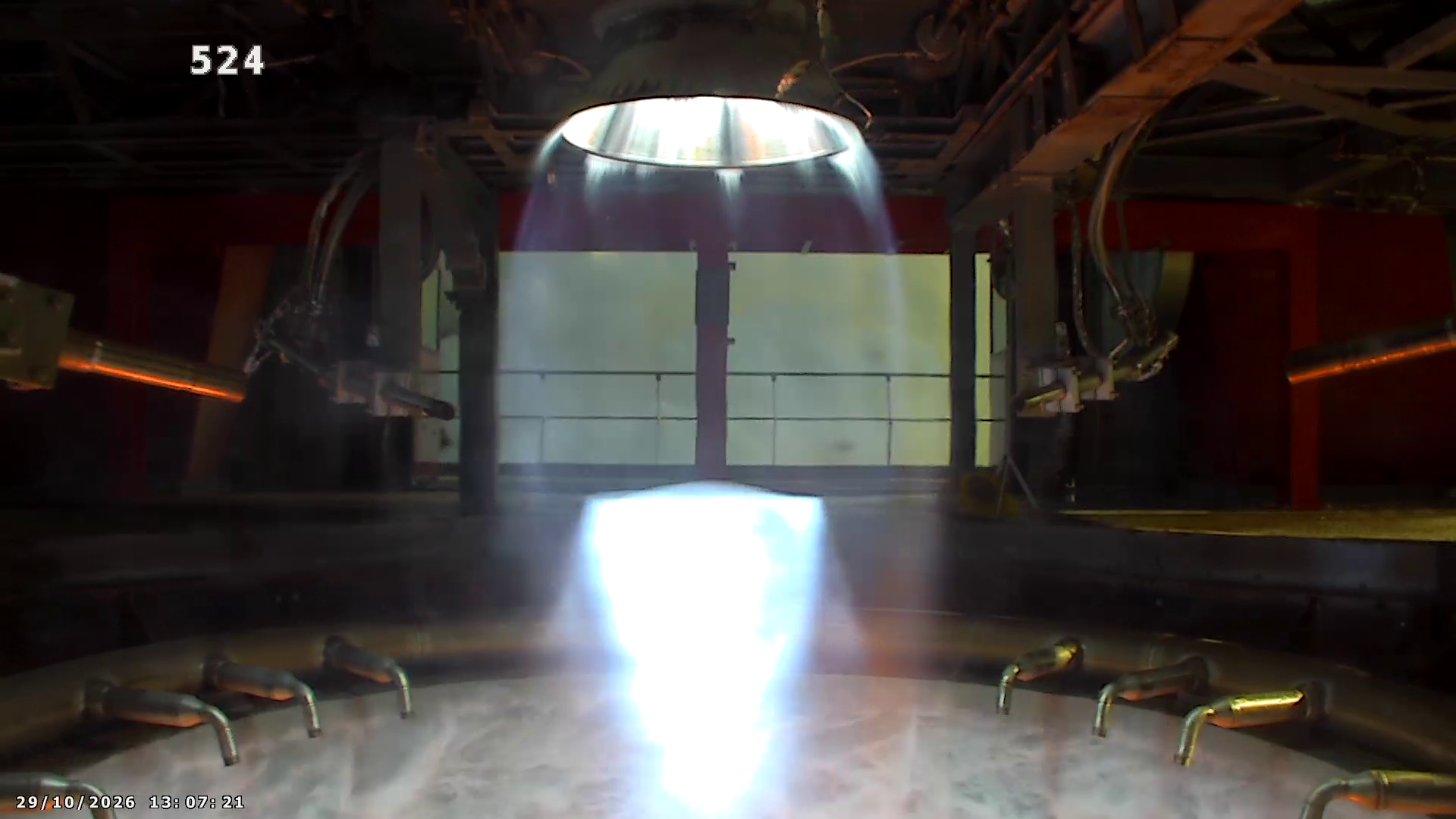
    Prometheus fires at the upgraded P5 test bench during the campaign reported by ESA on 6 November 2026. Image: ©ESA, DLR. Image source.

    Europe’s Prometheus rocket engine has passed a new ground-test milestone involving both its manufacture and its ability to restart. In a 6 November 2026 update, ESA reported several hot-fire tests conducted on 29 October at the P5 test bench in Lampoldshausen, Germany.

    The engine used a combustion chamber produced with cold gas spray, which bonds rapidly moving metal powder to a component’s surface. It also restarted repeatedly using pressure at the engine inlets rather than a high-pressure starter system. ESA described that restart demonstration as a European first for this engine class.

    The test facility was part of the experiment. P5, owned by ESA and operated by DLR, has been adapted to supply liquid methane alongside liquid oxygen. It can also be switched back to support hydrogen-fuelled engines. ESA says the next Prometheus campaign will address the improved Mark 2 version, beginning at ArianeGroup’s Vernon centre in France. The agency’s test report identifies these as ground demonstrations, not a launch or landing.

    Reusability starts inside the engine

    Prometheus is being developed for reusable stages, including the Themis demonstrator. ESA’s programme overview describes an electronic control system intended to vary thrust from 30 to 110 percent and adjust the fuel-to-oxidiser ratio. Early hot-firing work began in Vernon in 2022.

    Methane is part of that design choice. ESA notes that it is easier to handle thermally than liquid hydrogen and avoids the soot-related problems associated with kerosene in reusable engines. Additive manufacturing is another strand of the programme, intended to shorten production and reduce cost. Those are development goals, not evidence that an operational launch price has already fallen.

    The Themis project supplies the larger vehicle context. Its design combines propulsion with landing legs, aerodynamic stabilisers, tanks, avionics and flight-control software. Returning a stage requires these elements to work together, so an engine test establishes only part of the eventual case for reuse.

    What the milestone tells us

    The useful distinction in this announcement is between proving a component and proving a transportation system. A successful firing can reveal whether an engine starts and runs under the tested conditions. It cannot, by itself, establish the turnaround time of a recovered stage or the economics of flying it again.

    Even so, manufacturing and restart capability are sensible things to test together. Reuse has limited economic value if engines remain difficult to build, inspect or operate. The October campaign provides evidence on two practical engineering questions while expanding the ground infrastructure available for further work. The next campaigns will show how those results carry into the evolving design.