A distant boat seems to hang above the water. A shoreline stretches into unfamiliar towers. A bright object near the horizon changes shape while staying in roughly the same direction. Optical mirages belong on the list of explanations to test, especially when the line of sight crosses a long stretch of sea or strongly heated ground.
A mirage is a physical optical effect that can be photographed. It is not evidence that a witness imagined the scene. The World Meteorological Organization’s International Cloud Atlas describes displaced, inverted, enlarged and multiple images produced as light curves through air layers with different refractive indices.
The air between object and observer matters
Temperature differences change air density and its optical properties. Across a sufficiently strong vertical gradient, the path of a light ray bends rather than following the straight line a viewer intuitively assumes. The direction from which that ray enters the eye determines the apparent position of the image.
The familiar watery patch on a hot road is an inferior mirage: an image appears below the original source. Superior mirages can occur with colder air near the surface and warmer air above, placing images higher than their usual positions. The Hong Kong Observatory’s illustrated explanation shows both arrangements and explains why an elevated image can be upright or inverted.
More complex layering can produce Fata Morgana displays with changing distortions. These terms describe optical configurations, not a catch-all diagnosis for every strange horizon photograph. An ordinary weather forecast mentioning an inversion does not demonstrate the exact light path in a particular sighting.
Work through a hypothetical coastal image
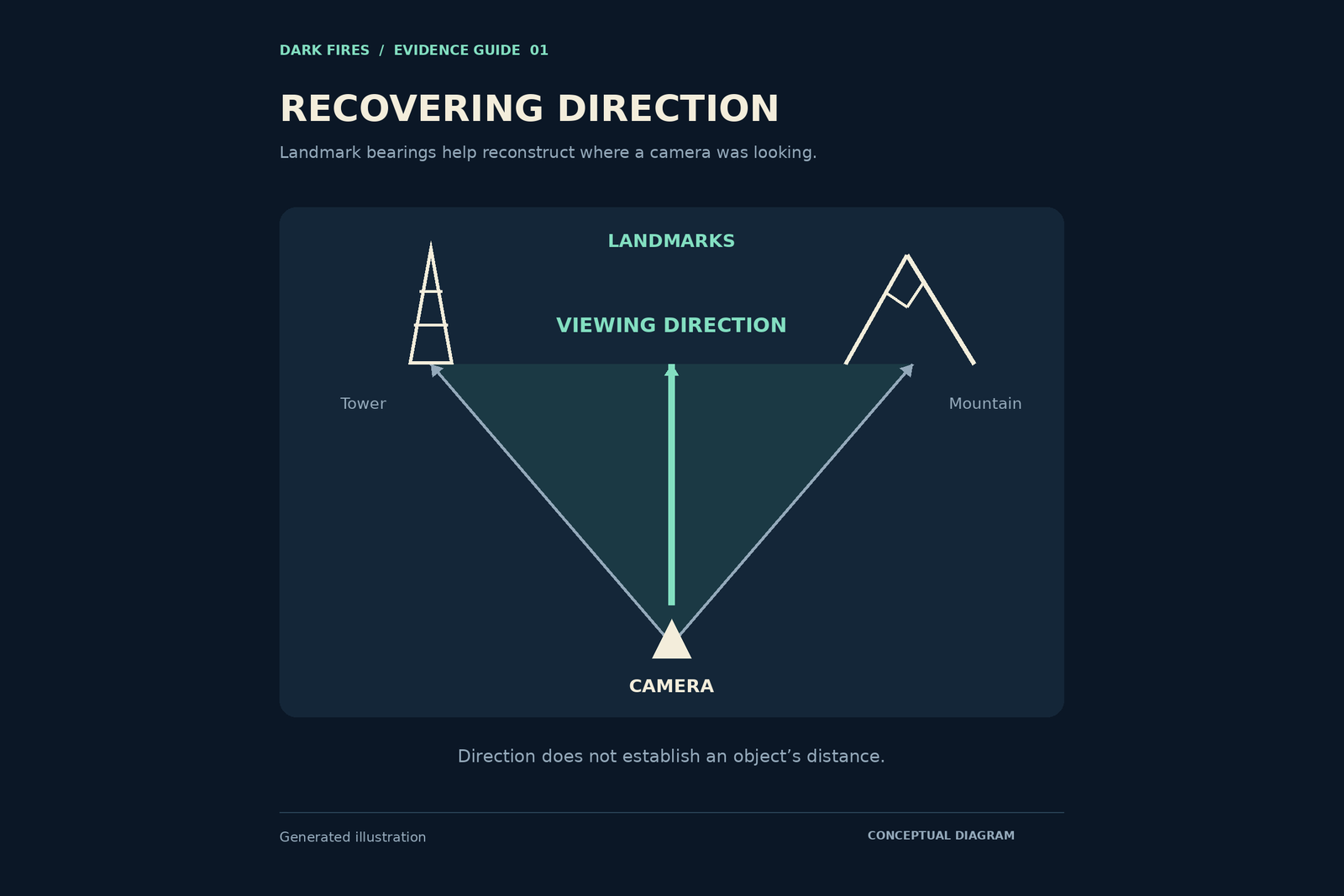
Suppose a photograph shows a dark, flattened shape apparently separated from the sea by a narrow bright band. Begin by identifying the true viewing direction and the height of the camera above the water. Then preserve a wider image containing the shoreline, horizon and neighboring objects. The apparent gap alone does not establish that the object is airborne.
Next, ask whether a vessel, island or distant coastal structure lies in that direction. Compare its outline and position across the full sequence rather than selecting one dramatic frame. If nearby known structures also stretch vertically or appear duplicated at similar elevations, that is useful support for a shared optical disturbance.
Now consider a competing explanation. A real boat may simply be partly hidden by haze or a low-contrast horizon. An overexposed image may erase the boundary between water and sky. Those possibilities should be checked alongside refraction. Calling every floating appearance a superior mirage would repeat the same mistake as calling every unfamiliar outline a craft.
Record the conditions that can test the idea
- Keep the uncropped sequence, including frames before and after the unusual shape.
- Record observer location, viewing direction, approximate camera height and the visible horizon.
- Look for independent photographs from nearby positions or different heights.
- Find relevant temperature profiles and surface conditions, while noting how far and how long before the sighting they were measured.
- Identify candidate background objects using maps, coastlines or other independently documented positions.
A temperature reading at one height cannot establish a vertical gradient. Even a nearby atmospheric sounding may miss a shallow layer over the actual water path. Treat missing environmental measurements as a limit on confidence, rather than filling them in from the photograph.
Keep the conclusion proportional
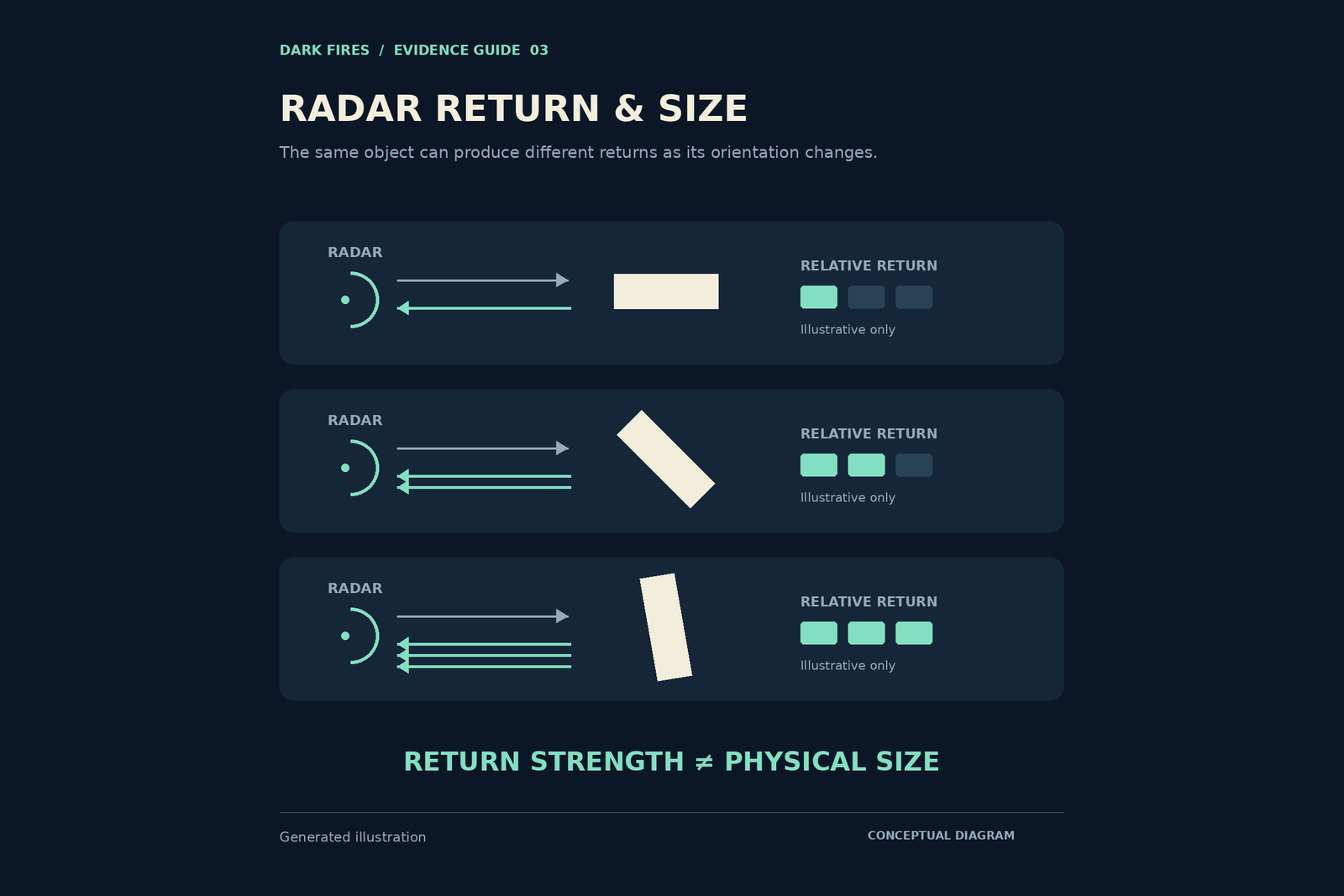
Optical mirages concern visible light; a radar propagation explanation requires its own evidence. Neither automatically verifies the other. For a well-supported identification, connect a plausible source object, the viewing geometry and compatible atmospheric conditions. Where only the appearance is suggestive, describe the image as consistent with a mirage and state what remains untested.
Sources and further reading
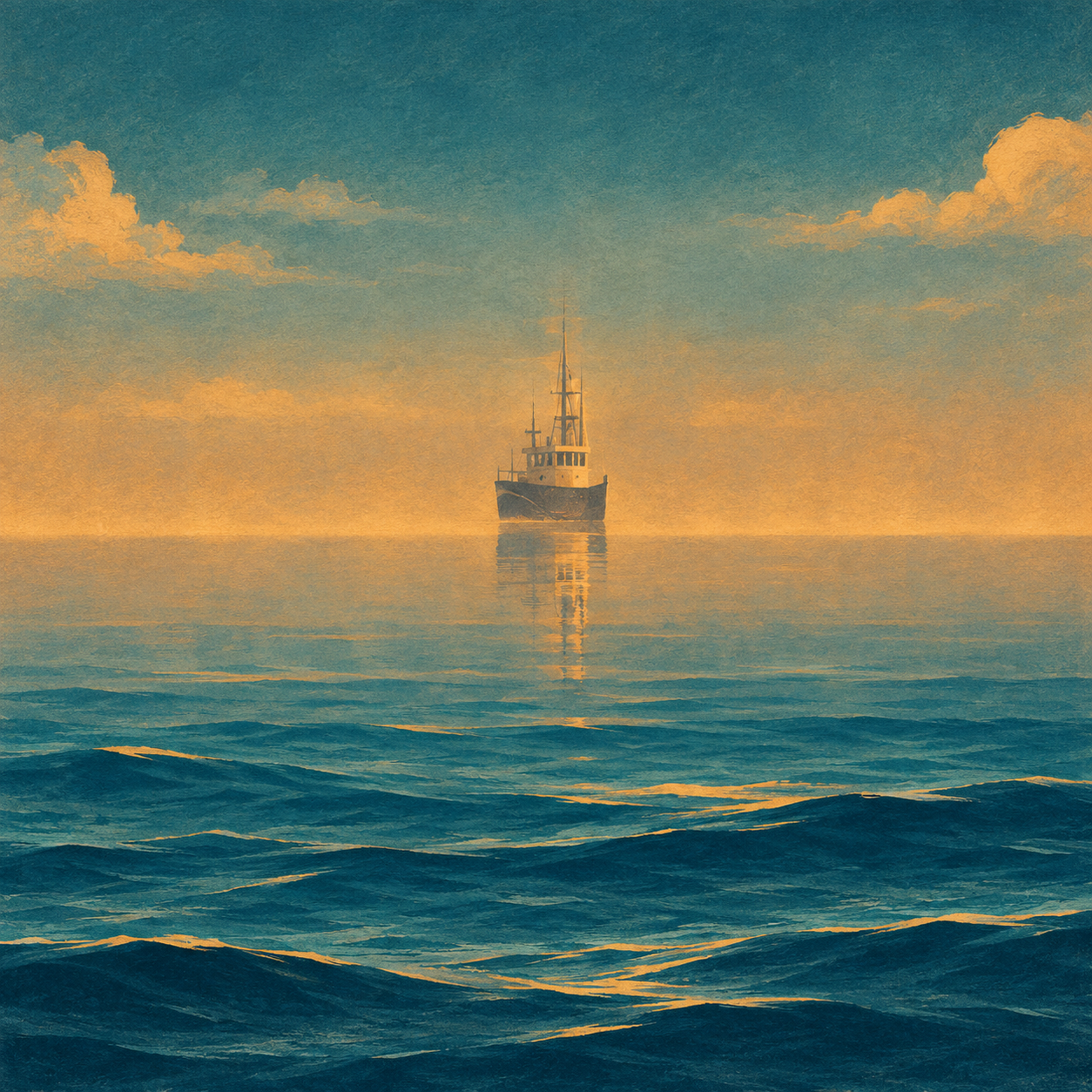
Generated illustration
The featured seascape is conceptual editorial imagery, not a documentary photograph or a technical ray diagram.