DARK FIRESORIGINS UNKNOWN

Author: Dark Fires

  • TOI-2535 b’s Vanishing Transits Reveal an Orbit That Will Not Sit Still

    TOI-2535 b’s Vanishing Transits Reveal an Orbit That Will Not Sit Still

    A planet can disappear from a telescope’s transit record without going anywhere extraordinary. TOI-2535 b has provided a particularly striking example: over seven years, its crossings of its star grew shorter and shallower before no longer being visible from Earth.

    The study posted on November 9, 2026, and published in The Astrophysical Journal Letters, identifies it as the first confirmed planet around a single star whose transits have been directly observed to disappear. That wording describes a change in viewing geometry, not the destruction or disappearance of a world.

    Reading the changing silhouette

    According to UCLA’s November 9 announcement, TOI-2535 b is a hot Jupiter roughly 1,000 light-years away, completing an orbit in about 8.25 days. TESS recorded the system between April 2019 and March 2026. As well as changing shape, the transits occurred up to six hours early or late compared with a regular timetable.

    Those two kinds of change provide different information. Timing variations show that a simple repeating clock does not fully describe the orbit. Changes in duration and depth reveal that the planet’s path across the visible stellar disk is shifting. By the end of the sequence, that path no longer crossed the star from our vantage point.

    TESS’s mission overview explains the underlying method: planets are found through temporary reductions in stellar brightness. A transit survey therefore sees only systems aligned appropriately with the observer. A planet outside that alignment can remain physically present while making no detectable silhouette.

    A neighboring planet is inferred

    The researchers combined changes in transit timing and duration with radial-velocity measurements from the NEID instrument. Their modeling points to another nearby planet whose orbital plane is tilted relative to TOI-2535 b’s. The gravitational interaction makes the orbital planes precess, rather like the changing orientation of a spinning top.

    The paper describes the perturber as probably at least Saturn’s mass and likely in a mean-motion resonance with the known planet. Those are model-based constraints on an unseen companion. They should not be read as a direct image, a precisely measured mass or a uniquely established orbital solution.

    UCLA reports an estimated return to transits in roughly 30–50 years. That is a prediction based on the proposed dynamics, not an observation already in hand. Further measurements can refine both the system architecture and its future behavior.

    Why this is more than a disappearing act

    The system presents a useful challenge for planet-formation research. Hot Jupiters must be explained in the context of how giant planets form and arrive close to their stars. A neighboring giant capable of strongly disturbing the orbit adds another constraint to that history.

    More immediately, the observations demonstrate why long baselines matter. A short survey could have cataloged an ordinary transiting planet. Repeated visits revealed that the alignment itself was temporary. The record preserves orbital evolution on a human timescale, and shows how a missing signal can become evidence when the measurements leading up to its disappearance are available.

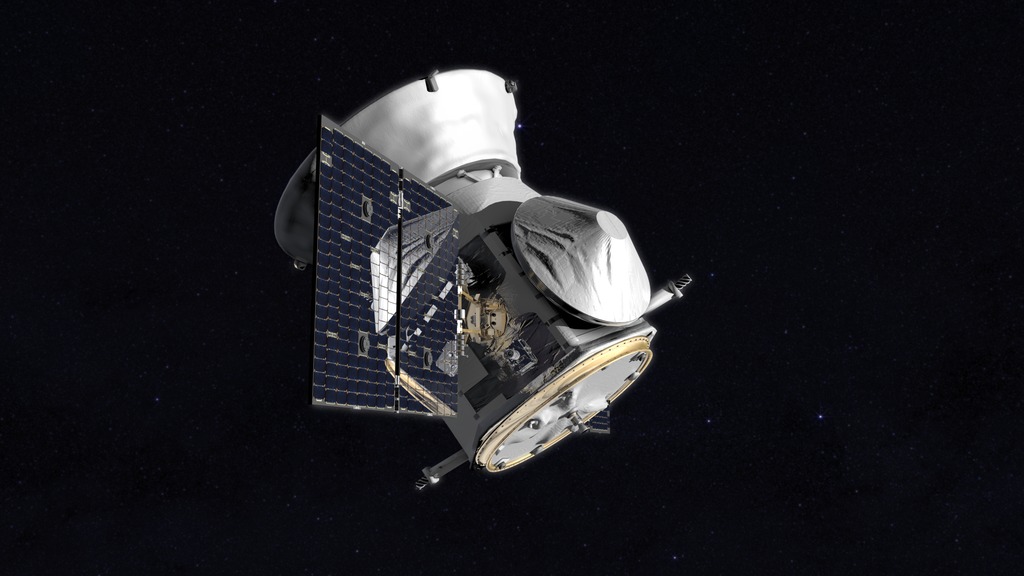
    Artist concept of TESS, which recorded TOI-2535 b’s changing transits. Credit: NASA’s Goddard Space Flight Center Conceptual Image Lab. This is not an image of the planet. Image source.

  • An Unusual Isotope Ratio Is the Beginning of a Materials Investigation

    An Unusual Isotope Ratio Is the Beginning of a Materials Investigation

    A fragment presented as recovered UAP material may come with a laboratory number that looks unusually precise: an isotope ratio. That measurement can be scientifically valuable. Interpreting it requires several separate questions, beginning with what was measured and ending with whether the tested fragment has a documented connection to the reported encounter.

    Earth does not have one fixed isotope recipe

    Isotopes are forms of the same element with different neutron counts. Their relative abundances can record physical and chemical processes. Comparing a sample with a familiar reference value is therefore useful, but a difference from that value does not automatically place the sample outside terrestrial experience.

    The US Geological Survey’s compilation of isotope-ratio variation describes naturally occurring ranges for 20 elements, including changes produced by physical and chemical fractionation rather than radioactive decay. A meaningful anomaly must be compared with appropriate materials and processes, not simply with one rounded number from a periodic table.

    The comparison also has to match the claim. An unusual ratio in a single microscopic inclusion is different from an unusual bulk composition across an entire fragment. Either result might deserve investigation, but neither should silently substitute for the other when a laboratory report becomes a headline.

    Precision needs a trustworthy reference

    NIST’s isotopic reference-materials program explains why laboratories must separate genuine natural signatures from measurement bias. Reference materials and corrections for instrumental effects help make results comparable. A long string of decimal places is not a substitute for that work.

    For a publicly assessable UAP-material claim, readers should look for the measured ratio, its uncertainty, the reference standard, preparation methods and results from control samples. Repeat measurements should test whether the finding survives another preparation or instrument. Independent testing is especially valuable when the second laboratory receives enough documentation to reproduce the analysis without being steered toward a preferred conclusion.

    The sample can change after arrival

    A 2018 study of the Martian meteorite Tissint followed how exposure to terrestrial conditions changed hydrogen-isotope measurements and water contents. The researchers emphasized the difficulty of separating original signals from contamination and the importance of sampling interiors. This was a meteorite study, not a UAP investigation, but it demonstrates why storage and exposure history belong in the evidence package.

    The practical questions are straightforward: Who collected the fragment? From exactly where? Was surrounding soil retained for comparison? Was the material washed, cut, heated or handled with adhesives? Which part was sent to each laboratory? A clear chain of custody cannot guarantee an interpretation, but missing steps can prevent a convincing chemical result from establishing the fragment’s history.

    Finally, extraterrestrial material and extraterrestrial technology are different claims. Meteorites already provide natural examples of material from beyond Earth. Even a strong extraterrestrial-origin finding would still leave manufacture, function and any connection to a reported craft to be demonstrated separately. The best materials investigation builds those conclusions one at a time, with measurements that other researchers can check.

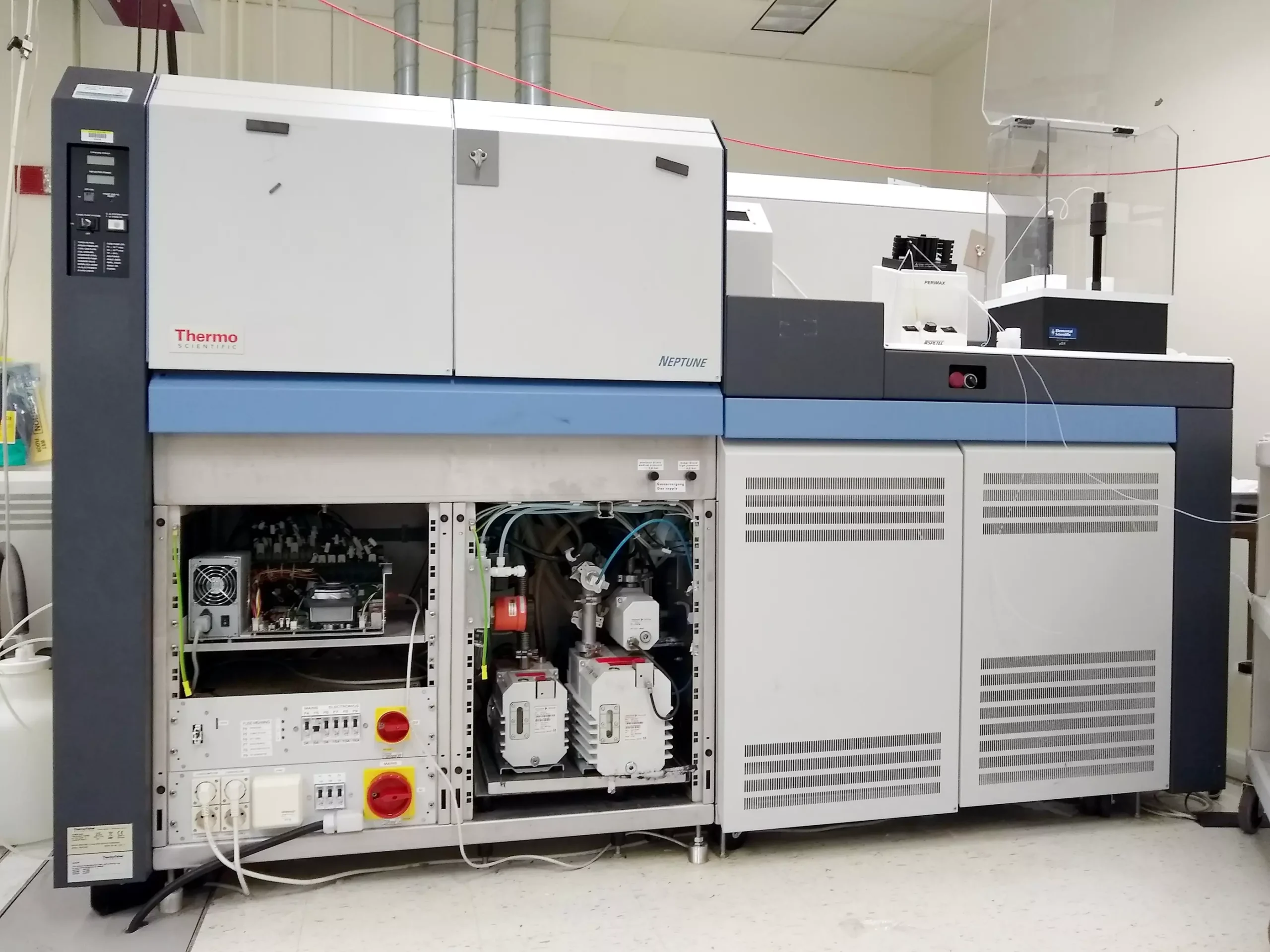
    Featured image: A multicollector inductively coupled plasma mass spectrometer. Credit: Lane Sander / NIST. Image source.

  • The Lords’ 1979 UFO Debate: A Public Argument Without a New Inquiry

    The Lords’ 1979 UFO Debate: A Public Argument Without a New Inquiry

    On January 18, 1979, UFOs occupied the House of Lords for an evening of unusually wide-ranging argument. The Earl of Clancarty wanted governments to pool information and study the subject. Other peers challenged the evidence, the proposed expenditure or the assumptions behind the word UFO. The official Hansard transcript preserves the disagreements and an important ending: the motion was withdrawn.

    That ending prevents a familiar historical shortcut. Parliament debated UFOs, but this debate did not amount to the House approving an extraterrestrial explanation or launching the study Clancarty wanted. Political attention, acceptance of evidence and an operative government decision are three different things.

    What was being requested

    Clancarty opened by declaring that he had written books about UFOs. He called for an “intra-governmental” study and moved for papers. He also suggested a parliamentary group that could meet periodically. His speech assembled sightings and arguments for greater openness, but its presence in Hansard establishes what he told the chamber, not the independent accuracy of every story he cited.

    The distinction matters when a later article quotes an impressive claim beneath an official Parliament heading. Hansard is a primary record of the speech. To establish the underlying incident, readers must still follow the speaker’s source back to its witnesses, documents and measurements.

    The Earl of Cork and Orrery pressed one of the evening’s clearest questions: what does it mean to deny an unidentified flying object? In reply, Lord Trefgarne clarified that he accepted the existence of unidentified observations while disputing extraordinary interpretations. The exchange exposed a problem that can otherwise pass unnoticed. A disagreement over causes can look like a disagreement over whether anyone saw anything at all.

    The government’s answer and the final line

    Replying for the government, Lord Strabolgi said the Ministry of Defence examined reports for defence interest and had found nothing in them that established alien spacecraft. He rejected a new publicly funded study. He also defended the confidentiality of files containing correspondence, invoking the record-access rules then in force. These were the government’s stated positions on that date, not findings from a new investigation conducted during the debate.

    Clancarty thanked participants and asked leave to withdraw his motion. Hansard records that it was withdrawn. Readers looking for an order to release files, a vote establishing a research office or a collective finding about visitation will not find one in that outcome.

    The transcript remains valuable because it lets the public inspect both advocacy and the official response in the same record. Its questions are practical: what should be collected, who should assess it, what could justify spending, and what information should become public? Those issues can be debated without treating a chamber’s willingness to hear claims as scientific corroboration.

    For historical research, the safest citation identifies the speaker, the date and the proposition being supported. That preserves the debate’s real contribution: a visible contest over evidence and responsibility, with an outcome readers can check for themselves.

    Contains Parliamentary information licensed under the Open Parliament Licence v3.0.

    The Palace of Westminster, photographed in 2005. Photo: Joseolgon / Wikimedia Commons, CC BY-SA 4.0. Cropped to fit.

  • ALMA Finds a Heated Gas Trail Beside LMC P3’s Gamma-Ray Engine

    ALMA Finds a Heated Gas Trail Beside LMC P3’s Gamma-Ray Engine

    A narrow trail of molecular gas in the Large Magellanic Cloud is giving astronomers a new way to investigate one of the sky’s most powerful gamma-ray binaries. The important clue is not simply that the gas is present. It is unusually warm compared with nearby material, and its shape points back toward the binary system LMC P3.

    The study was highlighted by Nagoya University on October 30, 2026. Its research preprint appeared on August 31 and was accepted for The Astrophysical Journal Letters. Those dates matter: this is a recent research result, not a newly observed explosion on November 11.

    A familiar source with an uncertain engine

    LMC P3 already had an unusual reputation. NASA’s 2016 discovery account described the first gamma-ray binary found beyond the Milky Way, identified through repeating changes in its high-energy output. A massive star and a compact stellar remnant orbit together, with their interactions producing radiation across several parts of the spectrum.

    The remaining question is how that power is generated. One explanation involves a pulsar, a rapidly rotating neutron star whose particle wind collides with the companion’s wind. Another involves material accumulating around the compact object and feeding jets. A system operating through that second mechanism is called a microquasar.

    The cooler gas records an energetic encounter

    The team used ALMA to measure carbon monoxide emission around the system. The study reports a prominent, one-sided structure approximately eight parsecs long and one parsec wide, equivalent to about 26 by three light-years. A weaker candidate feature has a somewhat different orientation.

    Measurements and modeling put the main structure’s gas temperature at roughly 33–60 kelvin, compared with about 15 kelvin in a nearby cloud. Although all of those temperatures are extremely cold by everyday standards, the difference is substantial for interstellar molecular gas. The authors found no radiative heating source sufficient to account for the warm feature and interpret it as gas shocked by a microquasar jet.

    This distinction prevents a misleading picture. ALMA is tracing relatively cool surrounding material shaped and heated by an energetic outflow. The molecular structure is evidence of the jet’s interaction with its environment, rather than a close-up photograph of the central engine itself.

    What the result establishes

    The alignment, temperature contrast and comparison with simulations together strengthen the accretion-and-jet explanation. They also suggest that submillimeter observations could help identify other microquasars through the marks they leave in nearby clouds.

    The compact object’s identity remains a separate issue. Nagoya’s account discusses why the high power favors a black-hole interpretation, but it still allows a neutron star. The evidence supports a physical mechanism more directly than it settles that classification.

    That makes LMC P3 a useful example of astronomical inference across wavelengths: gamma rays reveal an exceptionally energetic source, while much lower-energy radio emission supplies a record of what its surroundings have experienced. The strongest conclusion comes from connecting those measurements without treating either one as a complete answer.

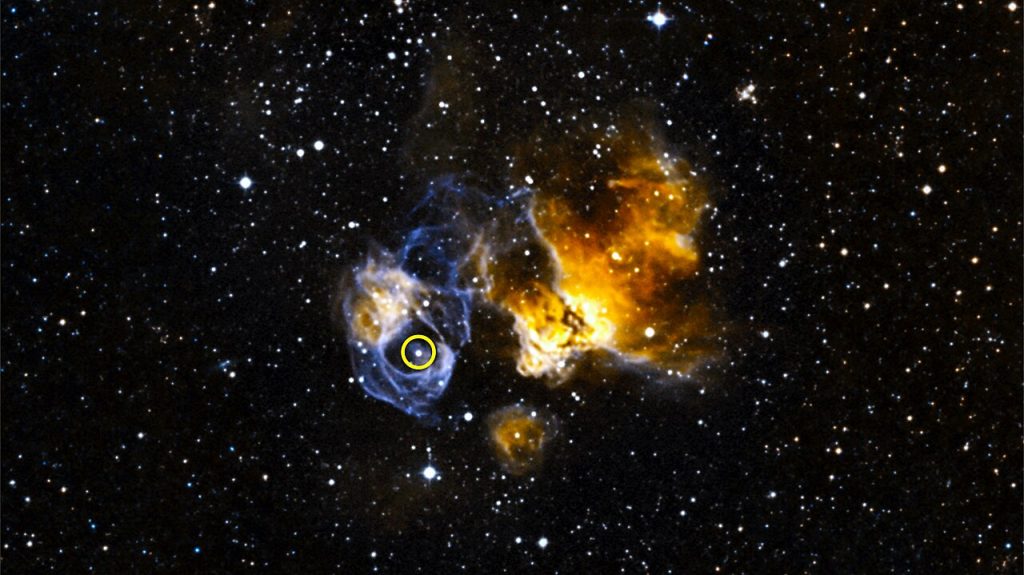
    LMC P3 is marked within the DEM L241 supernova remnant. Credit: Chandra X-ray Observatory Center/NASA’s Goddard Space Flight Center. Public domain. Image source.

  • Reading a UFO Records Search That Comes Back Empty

    Reading a UFO Records Search That Comes Back Empty

    A government letter saying that no responsive records were found can become a decisive-looking exhibit in a UFO dispute. One reader treats it as proof that an alleged program never existed. Another treats it as proof that its files were hidden. The letter alone usually supports a narrower conclusion: a particular agency search did not locate records responsive to a particular request.

    Start with the request, not the headline

    The Justice Department’s FOIA guidance explains that agencies process their own records. There is no single office searching the whole federal government. Within a large department, different components may maintain different collections. A response from one component therefore needs to be read with the identity of that component in view.

    The wording of the request is equally important. A search for a program’s alleged nickname may be quite different from a search for correspondence between named officials during a specified period. This is particularly relevant to UFO research, where later public terminology may differ from the words used in contemporary records.

    Before drawing a conclusion, place the original request beside the response. Check the date range, named offices, requested record types and any later agreement narrowing the scope. If the request asked only for emails, an empty result cannot by itself settle whether paper memoranda, contract records or another category of files exist.

    Different answers carry different meanings

    A no-records determination should not be casually described as a withholding. A withholding means information has been withheld under a stated legal basis; a response declining to confirm or deny existence is another distinct kind of determination. DOJ’s reference guide discusses disclosure exemptions, search scope and these different response situations.

    Those distinctions matter even when all three outcomes leave a researcher without the desired document. Reporting them accurately lets readers understand whether the obstacle is a search result, a disclosure restriction or a refusal to answer the existence question. None independently authenticates the underlying UFO allegation.

    Ask what made the search reasonable

    DOJ’s FOIA processing training describes the standard for a search designed to uncover relevant documents. It identifies useful details such as the custodians consulted, search terms and kinds of records examined. These details make a search assessable rather than merely reassuring.

    For a hypothetical UAP request, a documented search across the offices likely to hold the relevant correspondence provides stronger negative evidence than an unexplained search of one index. Conversely, finding a reference number or named recipient in another released document may provide a concrete reason to question the original search. That is a testable lead, rather than an assumption of concealment.

    The DOJ reference guide says an adverse determination that records do not exist or cannot be located can be appealed. Readers should follow the instructions and deadline in their actual agency response, since procedures matter. A useful appeal identifies the missing search step or overlooked lead as specifically as possible.

    The strongest published account preserves both the request and the full reply. It describes exactly what was searched, what was found and what remains uncertain. An empty search can change an investigation’s direction without becoming a universal verdict on the story being investigated.

    Generated illustration

    The featured artwork is a generic illustration of archival research, not a photograph of the records discussed.

  • The NSA’s 1980 UFO Lawsuit: What the Court Protected

    The NSA’s 1980 UFO Lawsuit: What the Court Protected

    A federal judge’s November 18, 1980 decision kept National Security Agency UFO-related records out of public reach. That fact has an obvious place in the history of UFO secrecy. Understanding what the decision actually decided requires a second step: identifying the records and the reasons the court accepted for protecting them.

    The memorandum and order in Citizens Against UFO Secrecy v. NSA, Civil Action No. 80-1562, is available as a scanned primary document. The NSA also maintains an official catalog entry for it. The order granted the agency’s motion for summary judgment and dismissed the case.

    The intelligence category matters

    The court said the bulk of the withheld material consisted of communications-intelligence reports. Four other documents were treated separately. This is a consequential distinction: a report produced from intercepted communications may contain a mention of an unidentified object without being an American scientific investigation of that object.

    The accompanying public affidavit by NSA official Eugene F. Yeates describes communications intelligence as information derived from intercepting foreign communications. It says that only four NSA records at issue fell outside that category. The affidavit explains the agency’s position in litigation; it should be read as the defendant’s sworn account, rather than as an independent audit of every underlying report.

    The court reviewed that public affidavit and a separate, detailed, 21-page classified affidavit in camera, meaning outside public view. For the communications-intelligence material, the judge accepted protection under FOIA Exemption 3 and the relevant NSA statute. The decision stated that release could seriously harm the agency’s work and United States security.

    A ruling about disclosure

    That finding answers a legal disclosure question. It does not identify an aerial object, validate a witness’s interpretation, or establish that the protected information described an extraordinary technology. The sensitivity of an intelligence record can arise from how information was collected, which communications were accessible, or what an adversary could infer about those capabilities.

    Nor does the ruling allow readers to conclude that all withheld information was trivial. Public readers did not have the classified affidavit available to test the government’s detailed argument. That asymmetry is part of the historical record and a legitimate reason to care about later declassification. It leaves a limit on public knowledge, not permission to fill the gap with a preferred explanation.

    The Justice Department’s 1982 FOIA litigation report records the subsequent path: judgment for the NSA in 1980, affirmation in 1981, and denial of Supreme Court review in 1982. It lists the case under exemptions 1, 3, 5 and 6.

    For anyone tracing this episode, the useful sequence is the request, the affidavits, the order and later releases. The UFO subject heading tells us why researchers wanted the files. The documents’ intelligence origins help explain why the government resisted disclosure. Neither heading substitutes for examining what the records actually say.

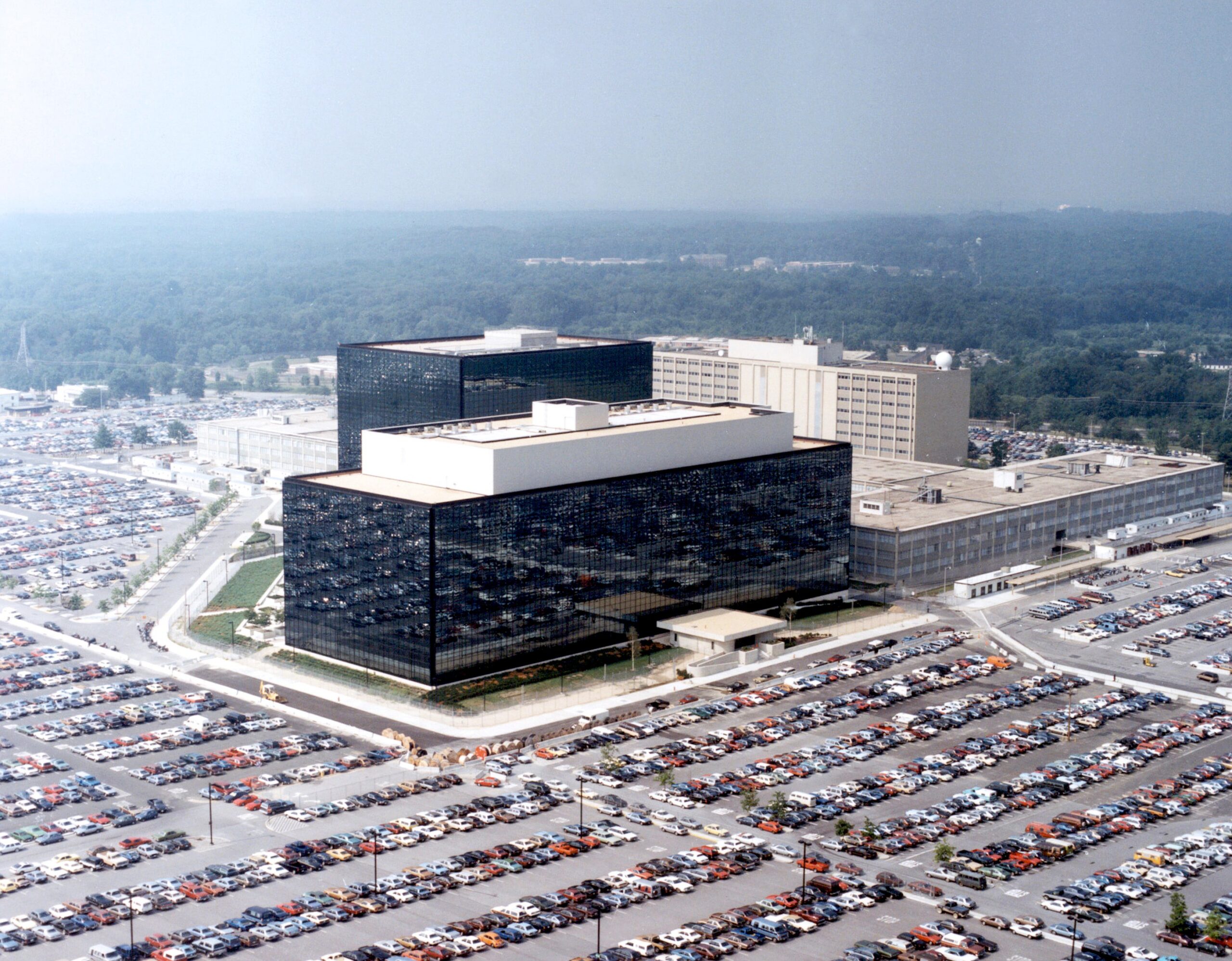
    NSA headquarters at Fort Meade in a later photograph, not an image from the 1980 litigation. Credit: National Security Agency, public domain, via Wikimedia Commons.

  • NASA’s 1977 UFO Decision: The Evidence Frosch Said He Would Examine

    NASA’s 1977 UFO Decision: The Evidence Frosch Said He Would Examine

    On December 21, 1977, NASA Administrator Robert A. Frosch answered a question that still sounds familiar: what useful scientific work could a space agency do about UFO reports? His answer declined a new research program, but also described evidence NASA would be willing to examine. Reading those two decisions together gives a more accurate account than either a blanket dismissal or a promise of an investigation.

    The clearest short primary record is NASA Information Sheet 78-1, preserved in a released-document copy hosted by The Black Vault. It was prepared by NASA Headquarters’ Public Services Branch to answer inquiries sent to the White House and the agency. The sheet is a historical policy document, not a newly announced position.

    Two requests, two answers

    According to the sheet, White House science adviser Frank Press wrote to Frosch in July 1977 suggesting that NASA answer UFO-related mail and consider an active research effort. Handling correspondence and conducting scientific research were separate assignments. Frosch accepted the continuing public-response role while arguing that a research program lacked a workable starting point.

    The agency reproduced his reasoning: there was no tangible material available for thorough laboratory analysis, and NASA had not identified a sound investigative procedure for the proposed effort. He therefore proposed neither establishing research in the area nor convening a symposium. This was a judgment about the evidence and research design then available.

    The same letter explicitly kept laboratory analysis on the table. If credible sources supplied a new piece of genuine physical evidence, Frosch said a NASA laboratory could analyze an otherwise unexplained organic or inorganic sample and report its findings. He also cautioned against reading the decision as an institutional conclusion about the phenomena themselves.

    What that offer would require

    A sample changes the questions an investigation can ask. Composition, structure and contamination can be measured repeatedly, and other laboratories can compare results. Yet the link between a specimen and a reported event remains a separate evidentiary problem. An unusual material without a documented collection history cannot, by itself, establish the origin of something seen in the sky.

    Frosch’s offer also should not be enlarged into a commitment to test every object anyone submitted. The document specified credible sources and bona fide physical evidence. Those qualifications matter because a laboratory result may identify a material while leaving the accompanying story untested.

    NASA’s biography of Frosch places his term from June 21, 1977, to January 20, 1981. The 1977 exchange belongs within that administration and its available evidence. Quoting it as if it governed every later NASA decision would erase its date and context.

    The enduring value of this record is its explicit test for further work. It invites readers to ask what could actually be measured, who could check it independently, and how the evidence connects to the claim. Those questions make a historical refusal more informative than a simple yes-or-no verdict about UFOs.

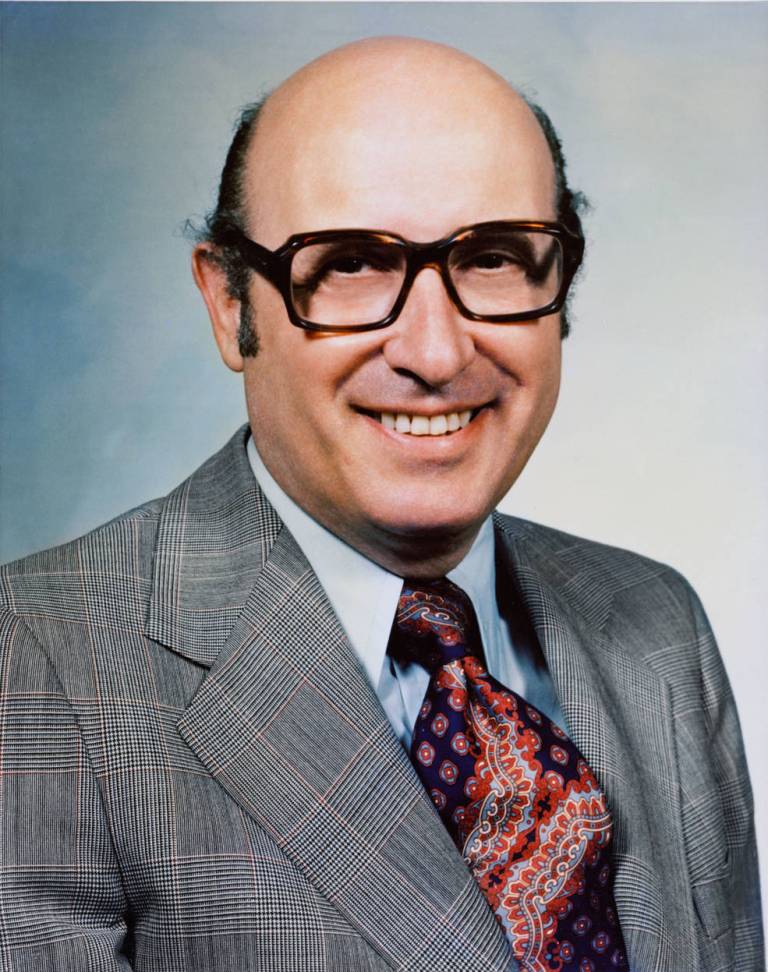
    NASA Administrator Robert A. Frosch. Credit: NASA, public domain.

  • Trindade Island, 1958: How a Navy Photograph Became an Argument

    Trindade Island, 1958: How a Navy Photograph Became an Argument

    On January 16, 1958, photographer Almiro Baraúna reportedly photographed an unusual object near Brazil’s Trindade Island while aboard the naval vessel Almirante Saldanha. The resulting images became famous partly because of their setting: a civilian photographer, a naval ship and a remote scientific outpost seemed to offer a stronger foundation than an anonymous picture.

    But the existence of a military connection is only the beginning of the historical question. Which observations did officials personally verify? What did they receive from others? And did possessing or circulating photographs mean accepting their interpretation?

    The archive behind the claim

    The Brazilian Navy’s archival catalog lists an end-of-assignment report from the Trindade Oceanographic Post covering November 1, 1957, through January 16, 1958. The item’s reference is RJDPHDM POIT-AM-G-REL. Its description explicitly mentions possible reports of unidentified flying objects.

    That is a useful, concrete archival reference. It establishes that relevant material belongs to an identifiable naval collection. The catalog description alone, however, does not authenticate a flying object in a photograph. Nor can it substitute for reading the report and determining which statements came from direct observers.

    This distinction prevents a common shortcut. An official repository may preserve eyewitness claims, correspondence, photographs and skeptical assessments together. The repository’s authority concerns custody and description, not automatic confirmation of everything in the folder.

    A skeptical naval attaché

    A second primary source complicates the picture. U.S. Naval Attaché report 39-58, dated March 11, 1958, survives in the Project Blue Book material. It recounts the publication of photographs in Brazilian newspapers and records the attaché’s difficulty obtaining a satisfactory account.

    Captain M. Sunderland’s comments were strongly skeptical. He considered a publicity hoax more likely than a suppressed authentic sighting, questioned the photographs’ appearance and expressed frustration with the investigation. His discussion included differences between the sharp landscape and the hazier object, as well as questions about the motion implied by published descriptions.

    Those observations deserve scrutiny, but the report also contains national stereotypes and a sarcastic remark about Martians. Its official format should not conceal its mixture of inquiry, opinion and ridicule. A skeptical intelligence report is not automatically a controlled photographic experiment any more than a photograph supplied by a navy is automatically an authenticated spacecraft.

    Trindade therefore offers more than a famous silhouette. It shows how the same military association can be used to imply certainty in opposite directions. A careful history identifies the photographer’s claim, the Navy’s surviving records and the attaché’s objections separately. The documents establish an internationally discussed photographic controversy, not a settled demonstration of an extraordinary vehicle.

    Generated illustration

    The featured artwork evokes an island photographic investigation. It does not reproduce Baraúna’s photographs or depict a verified sighting.

  • Father Gill’s 1959 Boianai Report: Reading the Witness Before the Legend

    Father Gill’s 1959 Boianai Report: Reading the Witness Before the Legend

    The best-known detail in Father William Gill’s UFO account is remarkably human: he said he waved, and figures above him appeared to wave back. The episode belongs to a series of observations at Boianai, in what was then the Territory of Papua and New Guinea, during June 1959. Its documentary history is more informative than the familiar shorthand of a missionary meeting visitors from space.

    Gill prepared a report dated July 14, 1959, copies of which survive in Australian government files. Its introduction identifies the principal observation dates as June 21, 26 and 27. It also contains a caution that later summaries can miss: Gill distinguished his observational record from opinions in personal letters written during the excitement.

    What Gill actually claimed

    His account for June 27 places the larger object’s first appearance at about 6 p.m. Gill described seeing four apparently human figures on its upper surface, with other lights visible elsewhere in the sky. He wrote that some figures appeared to bend or move their arms as if working on something.

    The apparent exchange of gestures followed. Gill said he raised an arm and a figure responded. Another observer waved both arms, and Gill reported further apparent responses. These are claims recorded by the principal witness. The surviving report does not turn the perceived figures, their distance or the meaning of their movements into independently measured facts.

    Gill’s qualification about his earlier letters is especially important. It gives readers a way to separate three things often combined in retellings: what he thought he saw, what he inferred from it, and the confidence he later attached to those inferences. His willingness to preserve those distinctions is part of the historical record.

    The Air Force’s narrower answer

    The Australian Directorate of Air Force Intelligence addressed the case in a February 22, 1960 letter to the Victorian Flying Saucer Research Society. It stated that an officer had investigated Gill’s report and submitted findings to the appropriate authorities.

    The reply did not claim a conclusive solution. It said the directorate did not believe the observations involved manned space vehicles and suggested that at least three lights were planets, naming Jupiter, Saturn and Mars. It proposed refraction, changing relative positions and unsettled tropical weather as possible contributors to impressions of movement and size.

    That is a more limited statement than saying every reported feature was conclusively identified. Equally, an incomplete explanation is not positive evidence of visitors. The proposed planetary identifications and Gill’s account need to be compared at the level of individual observations, rather than treated as mutually exclusive slogans.

    Boianai’s lasting interest lies in this unusually vivid witness record and the restrained uncertainty of the official reply. Reading both preserves the puzzle without converting a reported exchange of waves into established contact.

    Generated illustration

    The featured artwork represents documentary research and a tropical setting, not a verified view of Boianai or a reconstruction of the alleged encounter.

  • Portage County’s 1966 UFO Chase: The Disagreement Behind the Headline

    Portage County’s 1966 UFO Chase: The Disagreement Behind the Headline

    Before dawn on April 17, 1966, a police pursuit began in Portage County, Ohio, and eventually reached Pennsylvania. Its participants were not chasing a speeding driver. Deputies Dale Spaur and Wilbur Neff reported following a brilliant aerial object that initially appeared above trees near Route 224. The enduring controversy concerns both their account and how investigators decided what it meant.

    A particularly useful source is investigator William Weitzel’s May 4, 1966 letter to William T. Powers, preserved in transcription. Weitzel was collecting evidence for the National Investigations Committee on Aerial Phenomena, or NICAP. His letter describes interviews, locations and communications rather than presenting only a polished version of the chase.

    A pursuit reconstructed from testimony

    According to Weitzel, the deputies had stopped to inspect an apparently abandoned vehicle when they saw the light. Spaur described something round, intensely bright and apparently close enough to illuminate the ground. They returned to their cruiser, radioed their observations and followed it after receiving instructions from the dispatcher.

    The letter also exposes weaknesses in the surviving record. Police stations misunderstood which road the cruiser was using, complicating efforts to position other observers. Weitzel said neither Ravenna nor Salem had logged detailed accounts of the pursuit. Some information therefore depended on later recollections, although he reported obtaining signed statements and copying another station’s log.

    These distinctions matter. A witness’s estimate of altitude or size is not an instrument measurement, and several observers sharing radio traffic are not equivalent to wholly independent observations. Yet the contemporary correspondence offers substantially more evidence than a story reconstructed decades afterward.

    Why the explanation became another controversy

    Project Blue Book’s explanation involved a satellite and Venus. But Powers’s letter to Spaur and Neff shows that disagreement existed close to the investigation itself. Powers, an assistant to astronomer and Air Force consultant J. Allen Hynek, wrote that he had initially considered Venus as an explanation for a later portion of the sighting.

    He then said further information had changed his assessment. In particular, he understood that witnesses had distinguished the reported object from Venus and the Moon. Powers called for additional investigation and described the limitations of hurried telephone interviews. His letter is evidence of a contemporary challenge to the explanation, not a scientific identification of the object.

    NICAP official Richard Hall’s account adds the involvement of other officers and describes the dispute with Blue Book chief Hector Quintanilla. Hall wrote from an organization actively contesting the Air Force’s handling, so that perspective belongs alongside his narrative.

    Portage County remains valuable as a historical case because the disagreement can be traced through people collecting and evaluating testimony at the time. The documents preserve a difficult observational problem. They do not establish an extraterrestrial craft, but neither should the institutional argument be flattened into a claim that everybody accepted the same explanation.

    Generated illustration

    The featured artwork evokes a historical investigation; it is not a sighting photograph or a reconstruction of what the witnesses saw.