DARK FIRESORIGINS UNKNOWN

Author: Dark Fires

  • LOFAR’s Deep Radio Field Separates Black-Hole Jets From Blended Galaxies

    LOFAR’s Deep Radio Field Separates Black-Hole Jets From Blended Galaxies

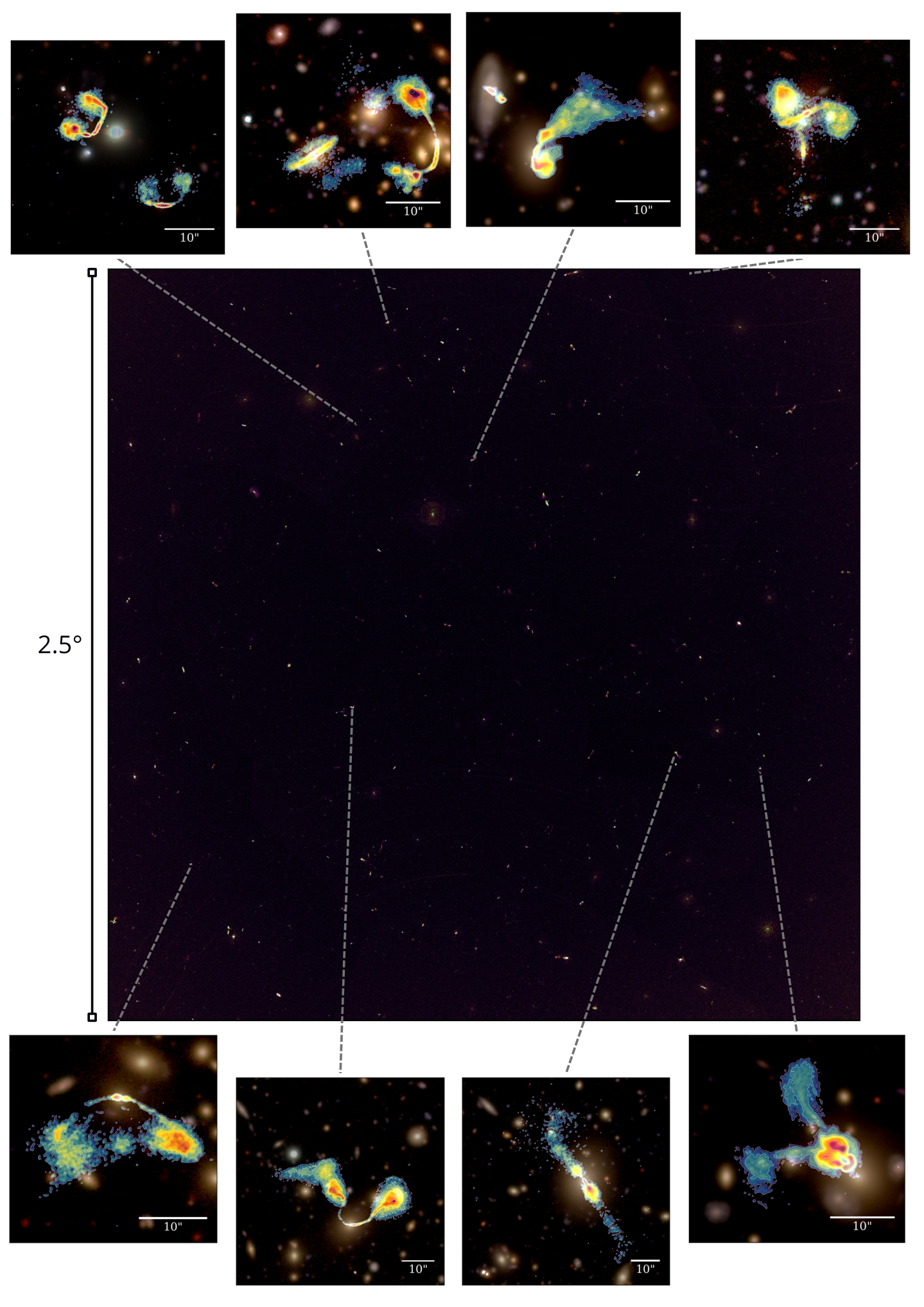
    A new LOFAR image turns a crowded patch of radio sky into a much more useful map of galaxies and their activity. Announced on November 5, 2026, the work combines deep observations with enough angular resolution to separate structures that previously blurred together.

    The research paper, posted November 4, describes 200 hours of observations between 115 and 168 megahertz across a field measuring 2.5 degrees on each side. Combining the new images with earlier, lower-resolution observations produced a catalog of 62,916 unique radio sources. The field is called ELAIS-N1.

    What the extra detail reveals

    A radio-bright patch can contain several different things: a compact galactic nucleus, an extended jet powered by an accreting black hole, or emission associated with star formation. Those possibilities matter because they describe different physical processes. A blurred source can also conceal more than one galaxy.

    According to the Netherlands Research School for Astronomy’s announcement, the new view is about 20 times sharper than the previous most sensitive LOFAR image of this region. Its eight-billion-pixel image required processing roughly 400 terabytes of observations. Improvements in calibration and data reduction made that calculation practical, reducing computational costs by more than an order of magnitude in recent years.

    The image is therefore an advance in measurement as well as presentation. Recognizing a jet’s shape allows researchers to investigate how it interacts with surrounding material. Distinguishing the host galaxy from a nearby source helps connect radio emission to measurements at other wavelengths.

    Why several resolutions still matter

    The paper reports a central resolution of roughly a third of an arcsecond. Yet the final catalog deliberately combines resolutions. Spreading faint emission across many small image elements can make an extended structure harder to detect, even while compact details become easier to separate. The sharpest image is not automatically the best image for every question.

    The team has released the data for wider use. Matching these radio sources with optical, infrared and X-ray observations can help establish distances and physical properties. The institutional announcement says the results have been accepted by Astronomy & Astrophysics.

    For readers, the useful distinction is between detecting more objects and understanding what produces their light. This project advances both, but its lasting value will come from the classifications and comparisons built on the map, rather than the source count alone.

    Featured image: J. M. G. H. J. de Jong et al. (2026), Figure 2; LOFAR radio imaging with Subaru Hyper Suprime-Cam optical background. CC BY 4.0. Image source; license.
  • The CIA’s U-2 Explanation: A Documented Mechanism and a Retrospective UFO Estimate

    The CIA’s U-2 Explanation: A Documented Mechanism and a Retrospective UFO Estimate

    Secret reconnaissance flights are a documented part of UFO history. The harder question is how many reports they explain. Two CIA histories are frequently cited for an estimate exceeding half of the reports during parts of the late 1950s and 1960s, but the attribution and scope of that number deserve careful reading.

    In CIA’s Role in the Study of UFOs, 1947–90, historian Gerald K. Haines attributes the figure to later estimates by officials who worked on the U-2 and OXCART programs. His footnote points to the agency’s reconnaissance history and a July 1994 telephone interview with John Parongosky, who oversaw OXCART’s daily affairs.

    How a spy plane could become a strange light

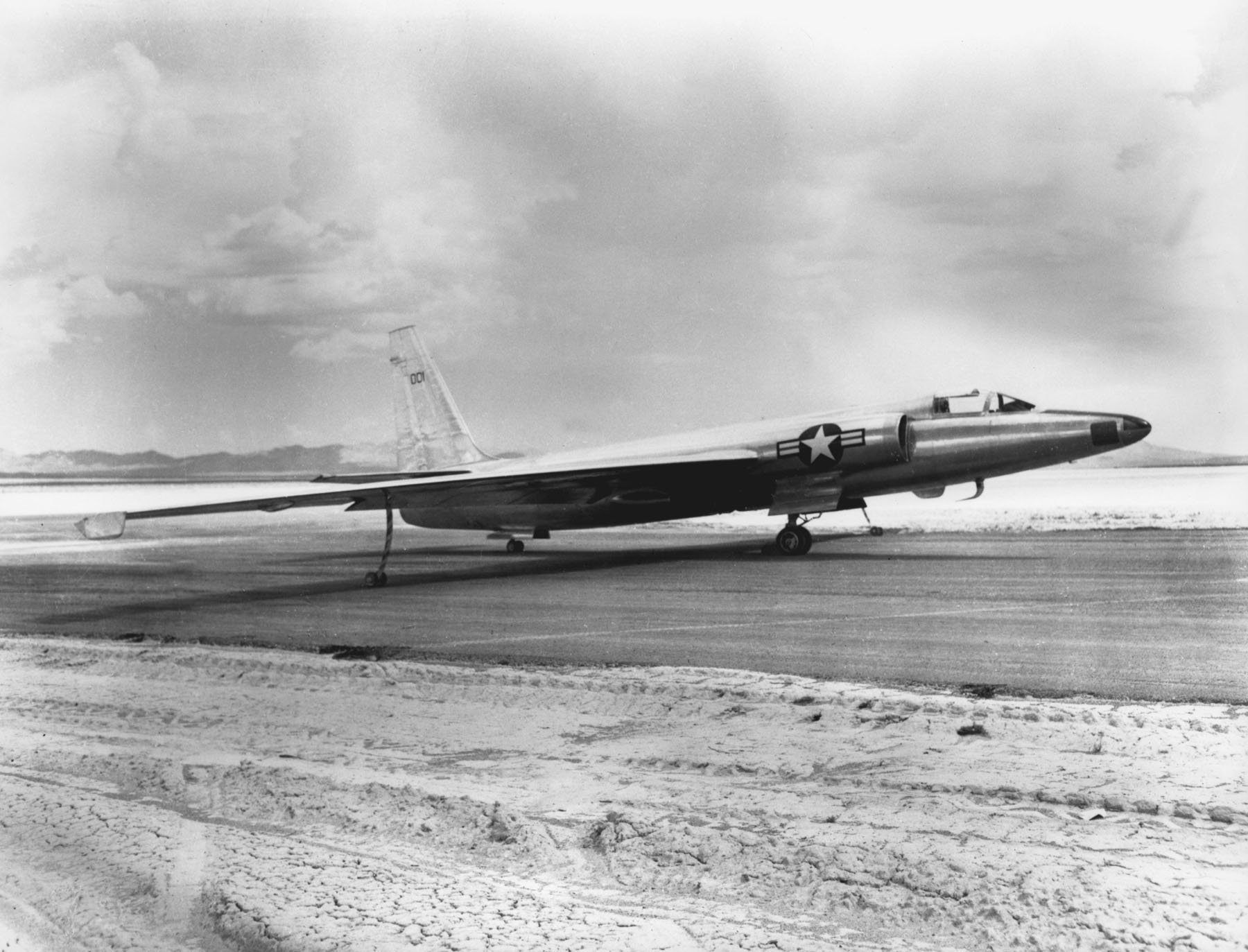
    The U-2 program history describes a straightforward viewing geometry. A high-flying aircraft could remain in sunlight after a lower airliner had entered darkness. Reflections from the U-2’s silver surfaces could then appear unusually bright to observers far below.

    The CIA’s program history also describes Blue Book investigators comparing reports with U-2 flight logs through CIA project staff. According to the account, this allowed identifications that could not be publicly explained without exposing the classified program.

    An estimate is not a case list

    These passages establish what the official histories say. They do not present an enumerated public table matching every report behind the percentage to an aircraft flight. Evaluating the numerical claim independently would require the relevant report population, dates, flight records and matching criteria.

    That distinction leaves room for both a real source of misidentification and uncertainty about its reported prevalence. A convincing mechanism for some observations cannot, by itself, supply the missing count.

    The aircraft names also need care. Haines’s passage uses a parenthetical association between OXCART and the SR-71, but the CIA’s own aircraft comparison distinguishes the CIA’s A-12 OXCART from the Air Force’s related SR-71 Blackbird. The U-2 is a separate reconnaissance aircraft. Treating the three names as interchangeable obscures which program and period a claim concerns.

    The records offer a concrete example of secrecy complicating public explanations of unusual sightings. They neither identify every unrelated UFO report nor authenticate broader allegations about hidden programs. Those claims still need their own evidence.

    Featured image: U.S. Air Force, via National Museum of the United States Air Force/Wikimedia Commons. Article 001, the first U-2. Public domain in the United States. Image source.

  • Blue Book’s Civilian Home Movies: Following the Film Before Interpreting the Light

    Blue Book’s Civilian Home Movies: Following the Film Before Interpreting the Light

    A UFO film in the National Archives can be both a genuine historical record and an unresolved visual puzzle. The civilian home movies preserved with Project Blue Book make that distinction especially clear: their presence documents material received for an Air Force investigation, not an official certification of what appears on screen.

    In an October 28, 2013 archival essay, Audrey Amidon described 18 home movies filmed around the United States between 1952 and 1967. The post presents six examples and identifies the digital source: high-definition scans of 16mm enlargements made from 8mm films.

    The copy history is part of the evidence

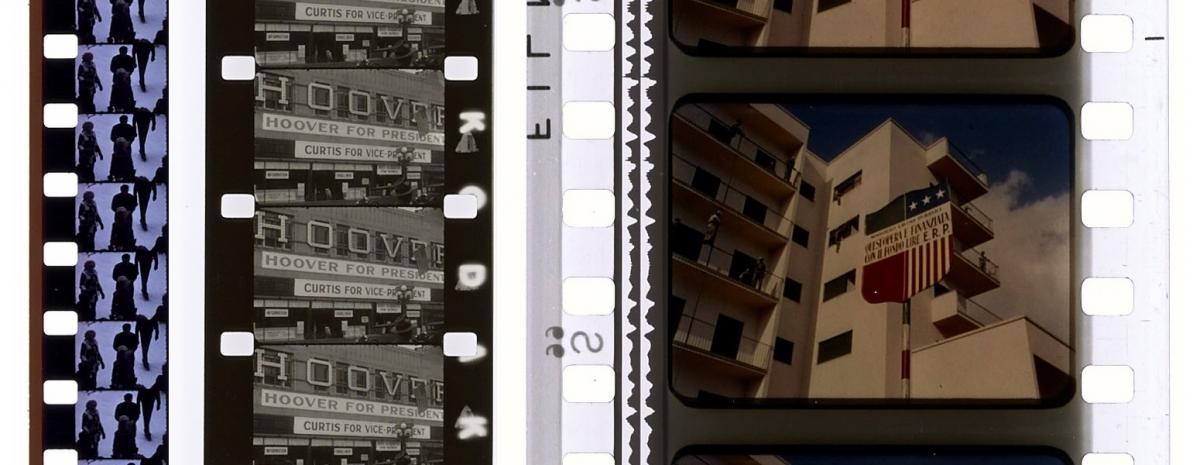
    NARA says the films presented in that post were not edited or altered. That statement belongs alongside the disclosed copying history. The online versions are scans of larger-gauge copies, rather than direct digital captures from the original camera film.

    An enlargement changes the carrier and scale of an image; it does not create detail the camera never recorded. Before measuring a bright spot, a researcher needs to ask which generation is available, whether the original survives, and what information exists about frame rate, exposure and the copying process. Apparent sharpness on a modern screen cannot answer those questions.

    NARA’s film-format guidance explains that gauge refers to film width and perforation type. It also recommends checking containers, leaders and related paperwork for identifying information. Those apparently mundane materials can connect a viewing copy to the circumstances recorded in an investigation.

    Custody, interpretation and reuse

    The Blue Book essay explains why civilian footage belongs in a federal archive: material acquired for an agency’s essential work becomes a record of that agency’s activities. This establishes a reason for preservation. It does not resolve an object’s distance, size or identity.

    Copyright is a separate question again. NARA’s use policy warns that privately created material in its holdings may carry restrictions. Federal custody alone does not turn a citizen’s movie into a government-created public-domain work.

    A careful viewing therefore starts with the catalog identifier, follows the available copy history and reads the associated report before offering a physical explanation. That approach preserves the films’ historical value while keeping claims proportional to their contents. The archive supplies a traceable starting point; the interpretation still has to be demonstrated.

    Featured image: National Archives and Records Administration, motion-picture preservation guidance. Public domain/CC0 1.0 for NARA-created works. Format comparison, not a Blue Book film frame. Image source.

  • The UN’s 1978 UFO Decision: What the Assembly Actually Agreed

    The UN’s 1978 UFO Decision: What the Assembly Actually Agreed

    Generated illustration

    A United Nations document with a title about establishing a UFO research agency can easily be mistaken for proof that such an agency was created. General Assembly Decision 33/426 is a useful example of why the operative text matters more than the heading.

    Read the date and the decision

    The Assembly adopted the decision at its 87th plenary meeting on December 18, 1978. The official collected decisions, A/33/45, print it under the heading proposing an agency or department to undertake, coordinate and disseminate research on unidentified flying objects and related phenomena.

    The text recorded the Assembly’s acknowledgment of Grenada’s statements and draft resolutions during its thirty-second and thirty-third sessions. It invited interested member states to coordinate relevant scientific research nationally and report observations, research and evaluations to the Secretary-General.

    It also requested that Grenada’s statements and relevant documents be sent to the Committee on the Peaceful Uses of Outer Space for consideration in 1979. Grenada could present its views to that committee, whose deliberations would be included in a report to the Assembly.

    A research invitation has a narrower meaning

    Those provisions describe coordination and further consideration. They do not themselves constitute an operational international UFO investigation bureau, identify a recovered object or certify an extraterrestrial explanation. The UN Digital Library catalogue preserves the formal document identity as A/DEC/33/426, allowing readers to distinguish it from later summaries and advocacy proposals.

    That distinction does not make the episode trivial. A small state put a controversial scientific question into a major diplomatic forum, and the Assembly agreed to a procedure for handling it. The documentary result is evidence of that institutional action.

    How to check claims built around the document

    Begin with the verbs. Inviting states to undertake research assigns a different role from establishing a permanent body with personnel and a budget. Requesting consideration by an existing committee also differs from adopting that committee’s eventual findings.

    Next, distinguish the proposal under discussion from the language ultimately adopted. An agenda heading can preserve an ambitious objective even when the agreed action is limited. Quoting the heading alone loses that distinction.

    Finally, keep the scientific and diplomatic questions separate. Governments can agree that a subject merits attention without agreeing what causes the reported observations. A formal decision demonstrates a policy response; evaluating a sighting still requires its own evidence.

    The 1978 record rewards close reading. Its significance lies in the precise opportunity for research and reporting that the Assembly endorsed, not in a larger institution or scientific conclusion supplied by later retellings.

  • Britain’s UFO Desk Closure: What Changed in November 2009

    Britain’s UFO Desk Closure: What Changed in November 2009

    Generated illustration

    When Britain’s Ministry of Defence closed its UFO desk in November 2009, it changed the route by which public sightings entered government files. Understanding that administrative break is essential before comparing the official record on either side of the closure.

    The reporting channel ended

    The National Archives’ June 2013 release commentary describes the final period. The public hotline was cancelled, the last desk officer was reassigned, and letters informed the Home Office and Civil Aviation Authority that the Ministry no longer wanted UFO reports forwarded by police or the CAA.

    Historian David Clarke’s commentary records 643 sightings received during 2009 up to the closure. He describes a workload dominated by reports that could not receive detailed investigation, including many accounts consistent with sky lanterns. That is his assessment of the released material, not a documented individual identification for every entry.

    The desk was smaller than its reputation

    An earlier National Archives release drew attention to the desk officer’s job description. Duties included policy briefings, investigations, Freedom of Information requests and responses to journalists and UFO researchers. The description characterized a relatively junior post and explained that some investigations consisted of internet research.

    That record helps readers calibrate what an official file signifies. Receipt by the Ministry demonstrates that a report entered its correspondence system. It does not, by itself, demonstrate an extensive technical inquiry, multiple corroborating sensors or a finding about the object’s origin.

    What the surviving lists can answer

    The Ministry’s published annual sighting summaries cover 1997 through 2009 and list dates, times, locations and brief descriptions. They are a useful starting point for locating an account, but a short entry cannot substitute for the underlying correspondence or an investigator’s reasoning.

    A careful comparison would ask whether several entries describe one event, whether a time was supplied or estimated, and whether later clarification survives elsewhere. The number of submissions measures reporting activity through that channel, not a census of unusual physical objects.

    An important boundary in the archive

    Closing a mailbox can produce a sharp change in recorded numbers without a corresponding change in the sky. The reverse is also true: increased publicity can bring more reports into an unchanged system. Neither possibility should be assumed to explain a particular rise or decline without checking the collection process.

    The 2009 closure is consequently useful history for anyone working with modern UAP statistics. Before interpreting a trend, identify who accepted reports, what they retained and when that procedure changed. The administrative history is part of the evidence.

  • The 1968 UFO Symposium: Where Hynek and Sagan Met on Better Evidence

    The 1968 UFO Symposium: Where Hynek and Sagan Met on Better Evidence

    Generated illustration

    On July 29, 1968, six scientists appeared before the U.S. House Committee on Science and Astronautics to discuss UFOs. The session is sometimes remembered as a clash of believers and skeptics. Its printed record contains a more useful argument about what evidence an investigation should collect.

    A hearing without a predetermined finding

    The official congressional volume identifies the event as a symposium. In his opening remarks, Representative J. Edward Roush said the committee was there to hear scientific assessments, not to adopt a position in advance. The six speakers included astronomers J. Allen Hynek and Carl Sagan, atmospheric physicist James McDonald, sociologist Robert Hall, and engineers James Harder and Robert Baker.

    That setting matters. A statement printed in the proceedings remains the speaker’s statement. Its inclusion does not make it a finding endorsed by Congress, and the volume also contains written submissions distinct from the day’s spoken presentations.

    Hynek’s problem was obtaining usable data

    In his testimony, Hynek explicitly spoke as a scientist and private citizen rather than as an Air Force representative. He argued that some reports deserved sustained investigation while acknowledging serious weaknesses: anecdotal accounts, inadequate follow-up, little quantitative information and a lack of decisive physical evidence.

    His case was therefore more demanding than simply collecting impressive stories. To investigate a potentially important phenomenon, researchers would need resources, technical expertise and a setting in which studying it did not itself invite dismissal.

    Sagan separated possibility from proof

    Sagan’s statement did not declare interstellar travel physically impossible. He distinguished that theoretical possibility from evidence that visitors had reached Earth. He also warned that strong emotional commitments could influence interpretation in either direction.

    The closing discussion exposed practical common ground. Sagan raised the possibility of retaining otherwise discarded surveillance-radar information, and Hynek supported examining uncorrelated targets. A participant, Mr. Boone, challenged the suggestion that changing the processing would be straightforward: targets still had to be evaluated, and software and workload constraints mattered.

    A proposal is not a detection

    The exchange is valuable precisely because it did not settle what UFOs were. It showed that scientists with different expectations could discuss a measurable research change and face questions about its cost and feasibility.

    For modern readers, the lesson is to preserve those distinctions. Advocating better collection does not authenticate an extraordinary interpretation. Skepticism about existing reports does not require refusing improved measurements. The symposium’s strongest contribution was making those positions discussable in the same room.

  • Project Second Storey: Canada’s UFO Committee and the Form That Never Took Hold

    Project Second Storey: Canada’s UFO Committee and the Form That Never Took Hold

    Generated illustration

    Canada’s early UFO history includes a committee whose most revealing contribution was administrative: an attempt to get different government offices to record sightings in a consistent way. Project Second Storey illustrates how an investigation can be limited before anyone starts comparing explanations.

    A committee with a specific role

    The Canadian government’s June 2025 Sky Canada report traces Second Storey to the Defence Research Board in 1952. Astronomer Peter Millman chaired the committee, which included military intelligence and other federal representatives. Its subject was flying-saucer reports reaching the armed services.

    According to that retrospective, the committee did not itself investigate individual sightings. It developed a standardized reporting form, but the form never achieved broad adoption. Across six meetings between 1952 and 1954, the committee reached a negative assessment of the subject’s security and scientific value and recommended that military investigations end.

    Second Storey should also be distinguished from Project Magnet, the Department of Transport effort associated with engineer Wilbert Smith. Separate sponsors and purposes matter when interpreting documents: a statement in one project’s files does not automatically represent the conclusions of the other.

    Why a reporting form matters

    A common form offers more than tidy filing. If one office records a sighting’s clock time while another records only “evening,” the two accounts cannot support the same astronomical checks. If direction, duration and observer location are missing, a later analyst may be unable to reconstruct even a simple line of sight.

    That is a methodological lesson, rather than evidence that Second Storey overlooked a particular extraordinary object. Poorly standardized reporting can make ordinary events harder to identify and genuinely unusual events harder to evaluate. Neither outcome determines what a witness actually saw.

    Read the assessment alongside the collection method

    The historical conclusion deserves attribution to the committee and its circumstances. A recommendation about military resources is not equivalent to a controlled survey of everything occurring over Canada. Equally, weaknesses in reporting do not establish that the committee’s conclusion was wrong.

    Readers can use the Sky Canada report’s source notes to follow the documentary trail. Its reference for the sighting form identifies a reprint in Project Magnet material at the University of Ottawa Archives, file X30-3, box 1126.1. That cross-reference is a useful reminder that records may survive outside the folder suggested by a project’s name.

    Second Storey’s lasting value is therefore practical: before asking whether a database contains an unexplained pattern, establish whether its entries were collected in a way that makes comparison possible.

  • Avrocar: What the Military’s Flying-Saucer Tests Actually Achieved

    Avrocar: What the Military’s Flying-Saucer Tests Actually Achieved

    The United States military really did test a disc-shaped aircraft. That fact is more useful when paired with the less spectacular record of what the Avrocar could do: hover close to the ground, struggle with stability, and fall far short of its designers’ ambitions.

    The National Archives’ account of the project describes a proposed vertical-takeoff aircraft that was initially supposed to reach Mach 4. The thinking was practical as well as ambitious. Conventional runways were vulnerable to attack, so an aircraft that could rise vertically might operate from less exposed facilities.

    A test program, not a finished capability

    Avro Canada’s VZ-9AV used a circular airframe and a central fan system. Surviving motion pictures document construction, changes to the controls, and flight tests from February 1958 through June 1961. They are especially valuable because they show development as a sequence of problems and attempted fixes, rather than presenting an isolated photograph of an unusual machine.

    According to the Archives’ summary, modifications improved stability, but the vehicle remained limited to a hover of about three feet and speeds no greater than 35 miles per hour. Dust and debris drawn into the air intake restricted operating time. The final film includes a terrain course intended to test whether the aircraft could serve as a low-flying transport.

    Those results were a long way from a supersonic aircraft. The Pentagon ended the program in late 1961. A prototype’s unusual outline therefore should not be confused with evidence that its advertised performance was ever achieved.

    What the archive establishes

    The Archives’ UAP moving-image guide lists the Avrocar progress and development films alongside other historical records. Their inclusion is a way to locate relevant material, not an official finding that any particular unexplained sighting was an Avrocar.

    The release chronology also matters. The Archives says some related schematic and report records were declassified in fall 2012, while the films had been available for longer. A later release date is not the date of a new test or a newly discovered working vehicle.

    Avrocar is a useful corrective in both directions. A flying-saucer shape was not confined to fiction, but neither did building one confer extraordinary flight performance. Connecting it to a reported sighting would still require matching dates, locations, documented operations and observed behavior. The hardware record supplies context; it does not supply those missing links.

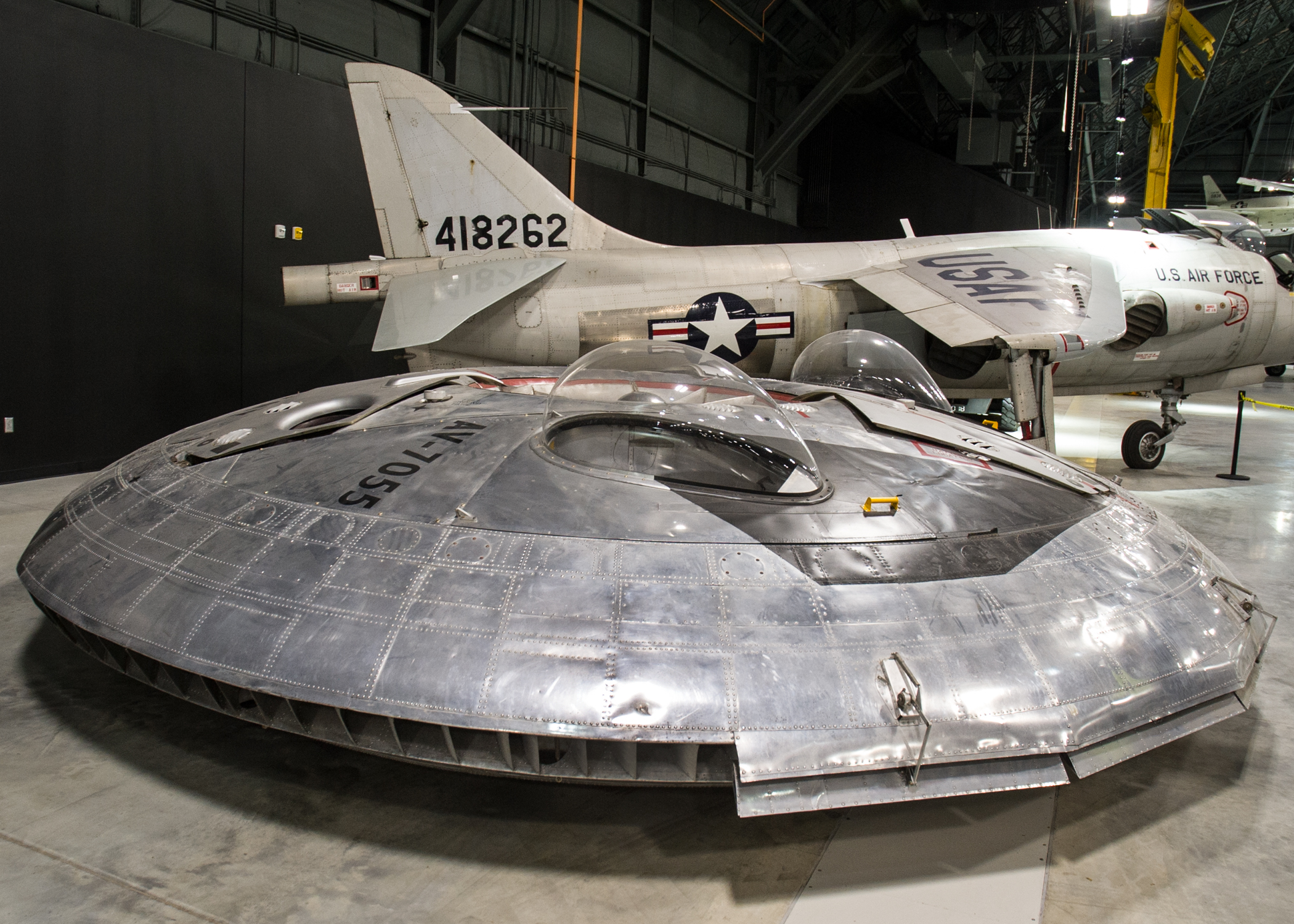
    Featured image: Ken LaRock/U.S. Air Force, via Wikimedia Commons, licensed CC BY-SA 4.0. Museum photograph taken May 11, 2016; not a flight-test image.

  • Dark Fires Weekly: UAP Evidence Check, Swift’s Return and a Route to Mars | November 1–7, 2026

    Dark Fires Weekly: UAP Evidence Check, Swift’s Return and a Route to Mars | November 1–7, 2026

    Week in review: November 1–7, 2026. A UAP evidence check leads this edition, followed by three developments verified against NASA’s own reporting: Swift’s atmospheric re-entry, ESCAPADE’s Earth-flyby plan, and Hubble’s investigation of missing oxygen in dwarf galaxies.

    Original animated illustrations, synthetic narration and original music. Not actual sighting footage.

    The animated video uses original generated illustrations, synthetic narration and an original music bed. It contains no actual sighting footage.

    UAP first: an evidence checkpoint

    We did not establish a new primary-source UAP finding released during November 1–7 for this edition. That is a limit of this roundup, not a claim that no records or reports changed. We have omitted material we could not independently verify rather than turn recirculated claims into fresh news.

    For context, NASA’s UAP research framework focuses on the data available, how to collect better data, and how to bring scientific methods to observations that remain unidentified. Its independent study is older background, not a November 2026 announcement. An unidentified observation alone does not establish an extraterrestrial origin. Read NASA’s UAP study resource and report.

    Swift re-enters after almost 22 years

    NASA updated its Swift mission notice on November 4, 2026, confirming that the Neil Gehrels Swift Observatory re-entered Earth’s atmosphere that day. The agency cited U.S. Space Force confirmation at 7:39 a.m. EST over Indonesia’s North Sumatra region.

    Launched in 2004 for an initial two-year mission, Swift became a long-serving observatory for gamma-ray bursts and other transient cosmic events. NASA said most of the spacecraft was expected to burn up, while some components might have survived. The report confirms re-entry; it does not identify recovered debris. NASA’s November 2 notice, updated November 4.

    ESCAPADE’s unusual route to Mars

    In a November 2, 2026 mission update, NASA scheduled powered Earth flybys for its twin ESCAPADE spacecraft on November 7 and November 9. Each maneuver combines Earth’s gravity with an approximately nine-minute engine burn to send a spacecraft toward Mars.

    NASA described a planned ten-month cruise and arrivals in September 2027. At Mars, the mission is intended to investigate how solar wind interacts with the planet and contributes to atmospheric loss. The linked update is a plan: this edition does not treat the scheduled dates as confirmation that either or both flybys have been completed. Read NASA’s ESCAPADE flyby announcement.

    Hubble follows the missing oxygen

    NASA’s November 2, 2026 account of a study published that day in The Astrophysical Journal describes observations of 37 nearby dwarf galaxies. The researchers found that these galaxies retain much less of the oxygen produced by their stars than expected.

    The team’s interpretation points to outflows powered by massive stars and supernovae removing oxygen more effectively than current models predict. The work used archival Hubble observations alongside other telescope data. It is a study of chemical enrichment and galaxy evolution, not a detection of life. Read NASA’s Hubble research summary and its paper link.

    How this edition was made

    Dates above distinguish the publication or update from the event being described. The video’s diagrams are illustrative and not to scale. Narration uses the free Kokoro standard voice engine; the quiet instrumental score was composed and synthesized for this edition without third-party recordings.

  • The Hottel Memo’s Unverified Claim: Reading the FBI’s 1950 Saucer Record

    The Hottel Memo’s Unverified Claim: Reading the FBI’s 1950 Saucer Record

    A government document can be authentic while the story it records remains unverified. The March 22, 1950 memorandum associated with FBI official Guy Hottel is a particularly clear example. Its historical importance lies partly in the extraordinary claim it preserves, and partly in how easily a filed report can be mistaken for an official finding.

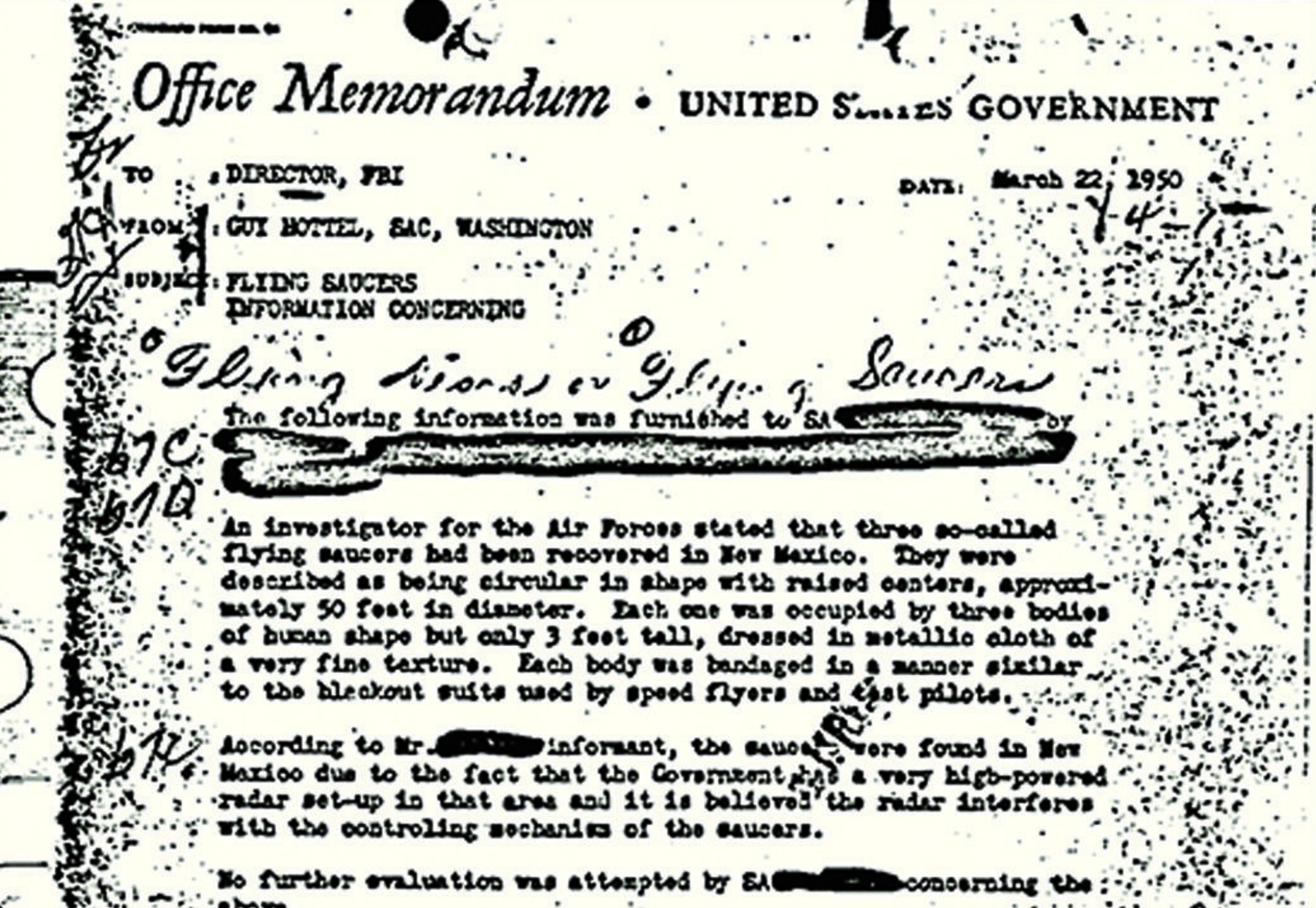
    The FBI’s March 25, 2013 explanation identifies Hottel as the head of its Washington field office. His memo relayed a story passed through another person concerning an Air Force investigator and alleged recovered saucers in New Mexico. The account included small human-shaped occupants and a suggested connection to powerful radar. The FBI says it did not investigate the claim.

    What the document actually records

    The Bureau provides an image of the historical memorandum, allowing readers to examine the record rather than relying on a modern headline. Its existence establishes that the allegation entered FBI files. Establishing the alleged recovery would require additional evidence, such as identifiable recovery records, examination reports, or independently corroborated testimony.

    The FBI also cautions against presenting the memo as a new Roswell disclosure. It dates from nearly three years after the July 1947 Roswell events and was publicly released in the late 1970s. The Bureau’s 2013 account says attention surged after its online Vault launched in 2011. A change in how easily a document can be found is different from a newly documented event.

    The Bureau’s role was changing

    An earlier FBI historical account, published April 6, 2010, describes the institutional background. In July 1947, the Bureau agreed to assist Army Air Forces Intelligence with flying-disc investigations. By July 1950, its policy was to forward such information to the Air Force rather than investigate or evaluate it itself. That history helps explain why UFO-related material appears in FBI holdings without every item representing a completed Bureau inquiry.

    Reading the memo carefully means following the chain of attribution. Who wrote the document? Who supplied the story? Who supposedly observed the underlying event? Each transfer creates a separate question about access, accuracy, and corroboration. An official recipient does not remove those questions merely by recording the information.

    The same discipline applies to a proposed debunking. The FBI’s explanation says its files do not verify the theory that this memo repeated a contemporary hoax. That leaves a narrower, defensible conclusion: the document records an uninvestigated allegation. It should not be promoted into proof of recovered alien bodies, or used to claim that the Bureau established a particular hoax explanation.

    For historical UAP research, the Hottel memo remains a useful lesson in reading administrative records. Preserve the document’s date, identify its information sources, and keep its evidential limits attached whenever the claim is repeated.

    Featured image: excerpt of the March 22, 1950 Guy Hottel memorandum. Credit: Federal Bureau of Investigation, public-domain federal record. FBI image source.