Before dawn on April 17, 1966, a police pursuit began in Portage County, Ohio, and eventually reached Pennsylvania. Its participants were not chasing a speeding driver. Deputies Dale Spaur and Wilbur Neff reported following a brilliant aerial object that initially appeared above trees near Route 224. The enduring controversy concerns both their account and how investigators decided what it meant.
A particularly useful source is investigator William Weitzel’s May 4, 1966 letter to William T. Powers, preserved in transcription. Weitzel was collecting evidence for the National Investigations Committee on Aerial Phenomena, or NICAP. His letter describes interviews, locations and communications rather than presenting only a polished version of the chase.
A pursuit reconstructed from testimony
According to Weitzel, the deputies had stopped to inspect an apparently abandoned vehicle when they saw the light. Spaur described something round, intensely bright and apparently close enough to illuminate the ground. They returned to their cruiser, radioed their observations and followed it after receiving instructions from the dispatcher.
The letter also exposes weaknesses in the surviving record. Police stations misunderstood which road the cruiser was using, complicating efforts to position other observers. Weitzel said neither Ravenna nor Salem had logged detailed accounts of the pursuit. Some information therefore depended on later recollections, although he reported obtaining signed statements and copying another station’s log.
These distinctions matter. A witness’s estimate of altitude or size is not an instrument measurement, and several observers sharing radio traffic are not equivalent to wholly independent observations. Yet the contemporary correspondence offers substantially more evidence than a story reconstructed decades afterward.
Why the explanation became another controversy
Project Blue Book’s explanation involved a satellite and Venus. But Powers’s letter to Spaur and Neff shows that disagreement existed close to the investigation itself. Powers, an assistant to astronomer and Air Force consultant J. Allen Hynek, wrote that he had initially considered Venus as an explanation for a later portion of the sighting.
He then said further information had changed his assessment. In particular, he understood that witnesses had distinguished the reported object from Venus and the Moon. Powers called for additional investigation and described the limitations of hurried telephone interviews. His letter is evidence of a contemporary challenge to the explanation, not a scientific identification of the object.
NICAP official Richard Hall’s account adds the involvement of other officers and describes the dispute with Blue Book chief Hector Quintanilla. Hall wrote from an organization actively contesting the Air Force’s handling, so that perspective belongs alongside his narrative.
Portage County remains valuable as a historical case because the disagreement can be traced through people collecting and evaluating testimony at the time. The documents preserve a difficult observational problem. They do not establish an extraterrestrial craft, but neither should the institutional argument be flattened into a claim that everybody accepted the same explanation.
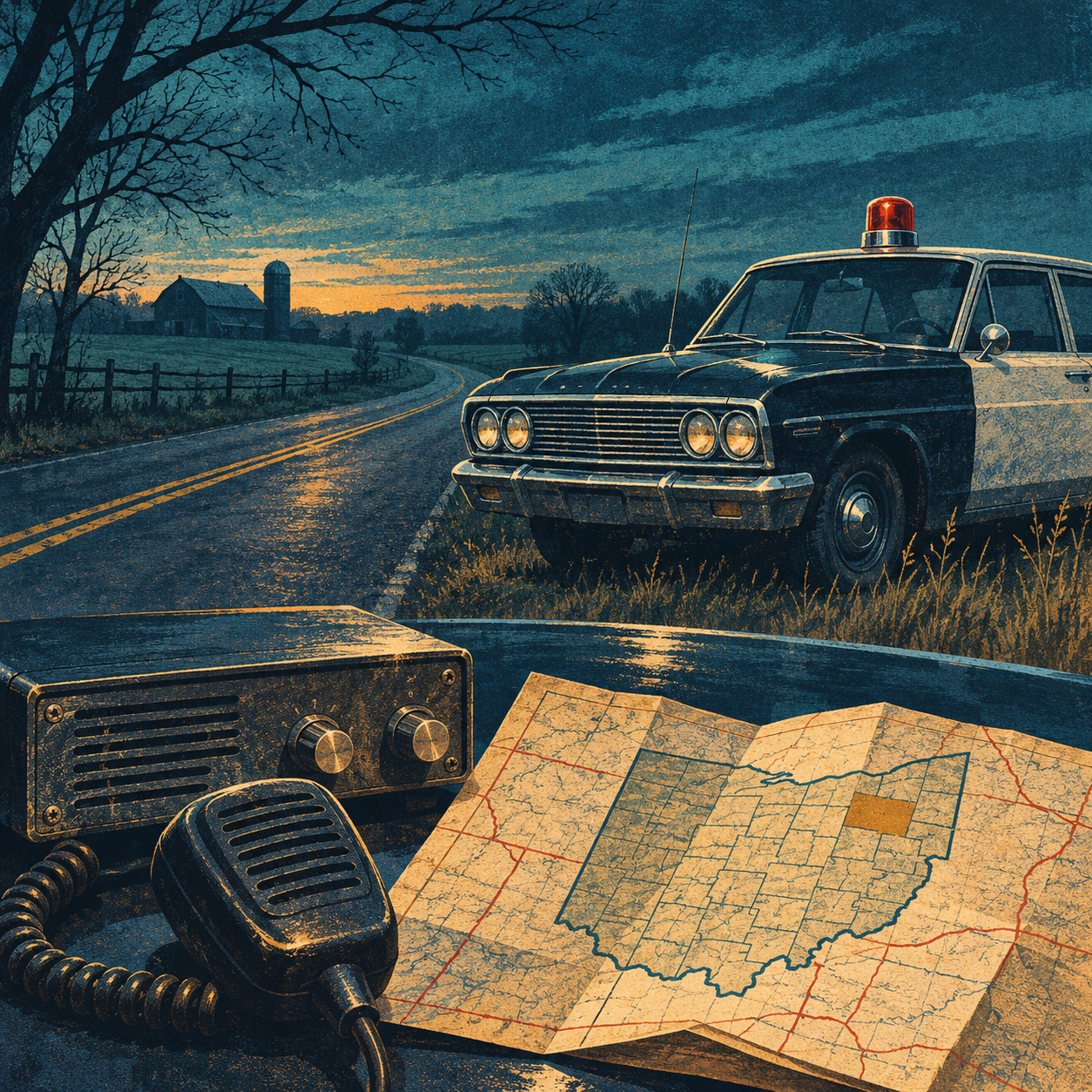
Generated illustration
The featured artwork evokes a historical investigation; it is not a sighting photograph or a reconstruction of what the witnesses saw.
Leave a Reply