A fragment presented as recovered UAP material may come with a laboratory number that looks unusually precise: an isotope ratio. That measurement can be scientifically valuable. Interpreting it requires several separate questions, beginning with what was measured and ending with whether the tested fragment has a documented connection to the reported encounter.
Earth does not have one fixed isotope recipe
Isotopes are forms of the same element with different neutron counts. Their relative abundances can record physical and chemical processes. Comparing a sample with a familiar reference value is therefore useful, but a difference from that value does not automatically place the sample outside terrestrial experience.
The US Geological Survey’s compilation of isotope-ratio variation describes naturally occurring ranges for 20 elements, including changes produced by physical and chemical fractionation rather than radioactive decay. A meaningful anomaly must be compared with appropriate materials and processes, not simply with one rounded number from a periodic table.
The comparison also has to match the claim. An unusual ratio in a single microscopic inclusion is different from an unusual bulk composition across an entire fragment. Either result might deserve investigation, but neither should silently substitute for the other when a laboratory report becomes a headline.
Precision needs a trustworthy reference
NIST’s isotopic reference-materials program explains why laboratories must separate genuine natural signatures from measurement bias. Reference materials and corrections for instrumental effects help make results comparable. A long string of decimal places is not a substitute for that work.
For a publicly assessable UAP-material claim, readers should look for the measured ratio, its uncertainty, the reference standard, preparation methods and results from control samples. Repeat measurements should test whether the finding survives another preparation or instrument. Independent testing is especially valuable when the second laboratory receives enough documentation to reproduce the analysis without being steered toward a preferred conclusion.
The sample can change after arrival
A 2018 study of the Martian meteorite Tissint followed how exposure to terrestrial conditions changed hydrogen-isotope measurements and water contents. The researchers emphasized the difficulty of separating original signals from contamination and the importance of sampling interiors. This was a meteorite study, not a UAP investigation, but it demonstrates why storage and exposure history belong in the evidence package.
The practical questions are straightforward: Who collected the fragment? From exactly where? Was surrounding soil retained for comparison? Was the material washed, cut, heated or handled with adhesives? Which part was sent to each laboratory? A clear chain of custody cannot guarantee an interpretation, but missing steps can prevent a convincing chemical result from establishing the fragment’s history.
Finally, extraterrestrial material and extraterrestrial technology are different claims. Meteorites already provide natural examples of material from beyond Earth. Even a strong extraterrestrial-origin finding would still leave manufacture, function and any connection to a reported craft to be demonstrated separately. The best materials investigation builds those conclusions one at a time, with measurements that other researchers can check.
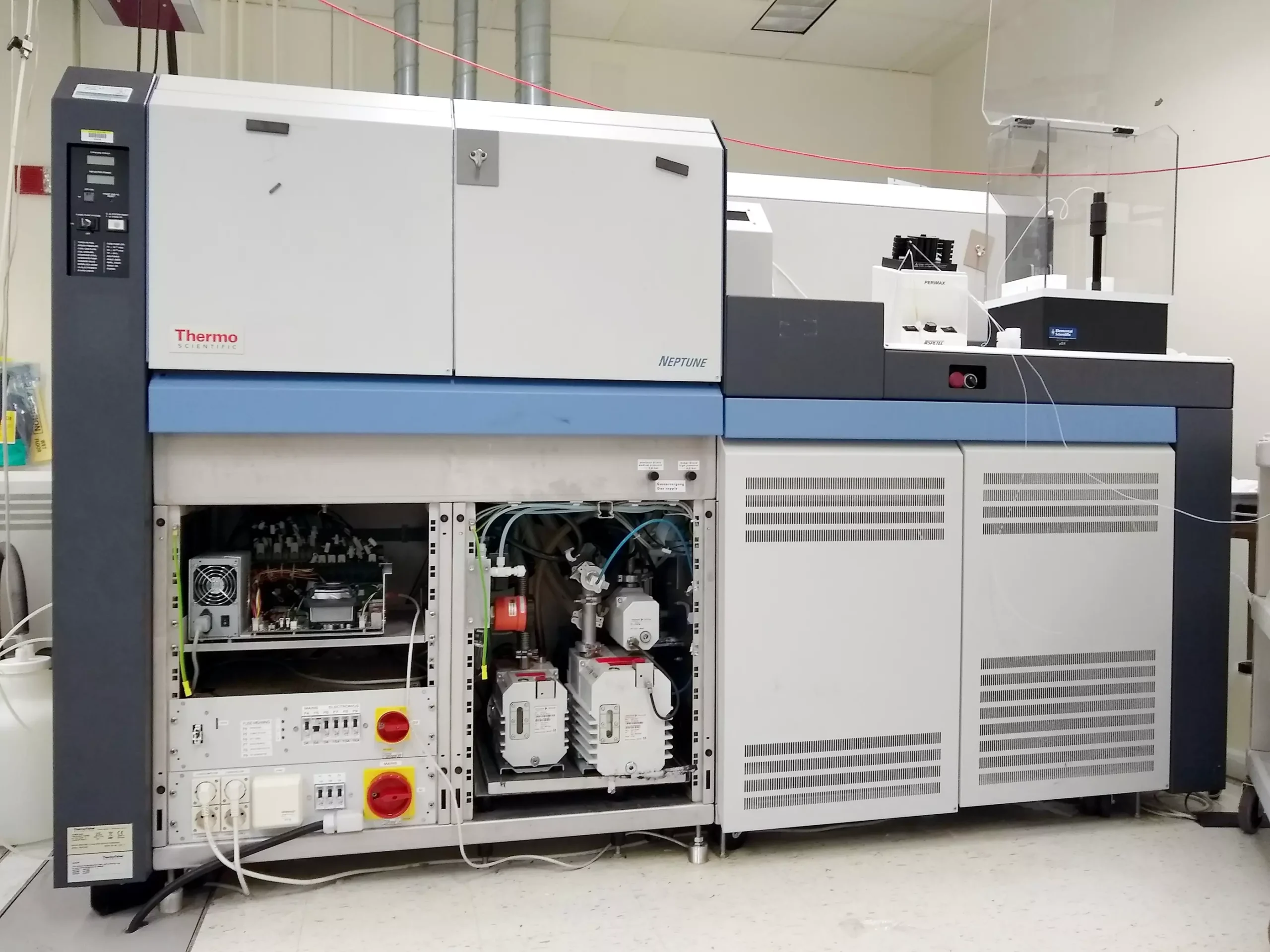
Featured image: A multicollector inductively coupled plasma mass spectrometer. Credit: Lane Sander / NIST. Image source.
Leave a Reply