A federal judge’s November 18, 1980 decision kept National Security Agency UFO-related records out of public reach. That fact has an obvious place in the history of UFO secrecy. Understanding what the decision actually decided requires a second step: identifying the records and the reasons the court accepted for protecting them.
The memorandum and order in Citizens Against UFO Secrecy v. NSA, Civil Action No. 80-1562, is available as a scanned primary document. The NSA also maintains an official catalog entry for it. The order granted the agency’s motion for summary judgment and dismissed the case.
The intelligence category matters
The court said the bulk of the withheld material consisted of communications-intelligence reports. Four other documents were treated separately. This is a consequential distinction: a report produced from intercepted communications may contain a mention of an unidentified object without being an American scientific investigation of that object.
The accompanying public affidavit by NSA official Eugene F. Yeates describes communications intelligence as information derived from intercepting foreign communications. It says that only four NSA records at issue fell outside that category. The affidavit explains the agency’s position in litigation; it should be read as the defendant’s sworn account, rather than as an independent audit of every underlying report.
The court reviewed that public affidavit and a separate, detailed, 21-page classified affidavit in camera, meaning outside public view. For the communications-intelligence material, the judge accepted protection under FOIA Exemption 3 and the relevant NSA statute. The decision stated that release could seriously harm the agency’s work and United States security.
A ruling about disclosure
That finding answers a legal disclosure question. It does not identify an aerial object, validate a witness’s interpretation, or establish that the protected information described an extraordinary technology. The sensitivity of an intelligence record can arise from how information was collected, which communications were accessible, or what an adversary could infer about those capabilities.
Nor does the ruling allow readers to conclude that all withheld information was trivial. Public readers did not have the classified affidavit available to test the government’s detailed argument. That asymmetry is part of the historical record and a legitimate reason to care about later declassification. It leaves a limit on public knowledge, not permission to fill the gap with a preferred explanation.
The Justice Department’s 1982 FOIA litigation report records the subsequent path: judgment for the NSA in 1980, affirmation in 1981, and denial of Supreme Court review in 1982. It lists the case under exemptions 1, 3, 5 and 6.
For anyone tracing this episode, the useful sequence is the request, the affidavits, the order and later releases. The UFO subject heading tells us why researchers wanted the files. The documents’ intelligence origins help explain why the government resisted disclosure. Neither heading substitutes for examining what the records actually say.
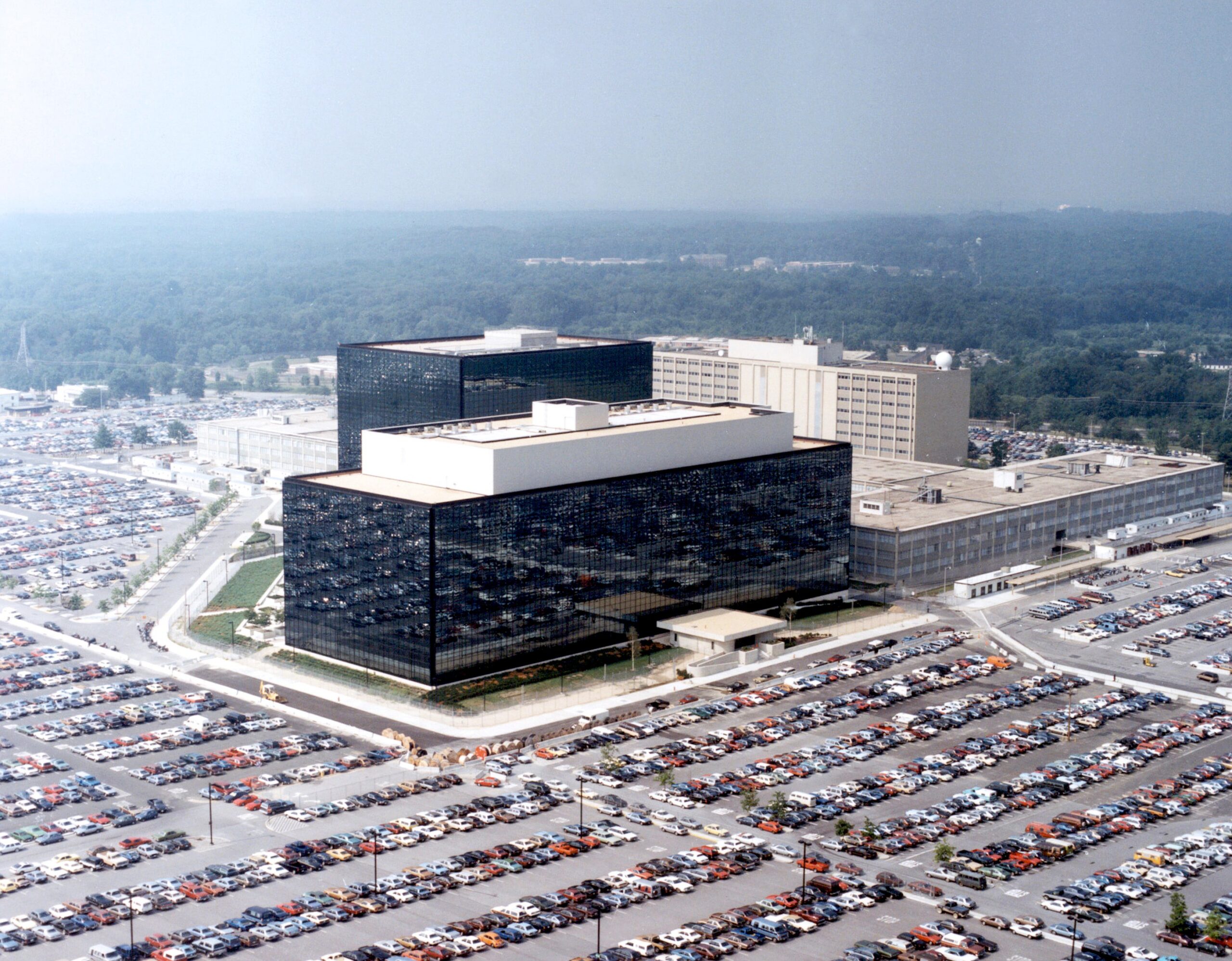
NSA headquarters at Fort Meade in a later photograph, not an image from the 1980 litigation. Credit: National Security Agency, public domain, via Wikimedia Commons.
Leave a Reply