DARK FIRESORIGINS UNKNOWN

Author: Dark Fires

  • A Calibration Certificate Is Not a Complete Uncertainty Budget

    A Calibration Certificate Is Not a Complete Uncertainty Budget

    Calling a camera or sensor “calibrated” is a starting point, not a guarantee that every later measurement answers the question being asked.

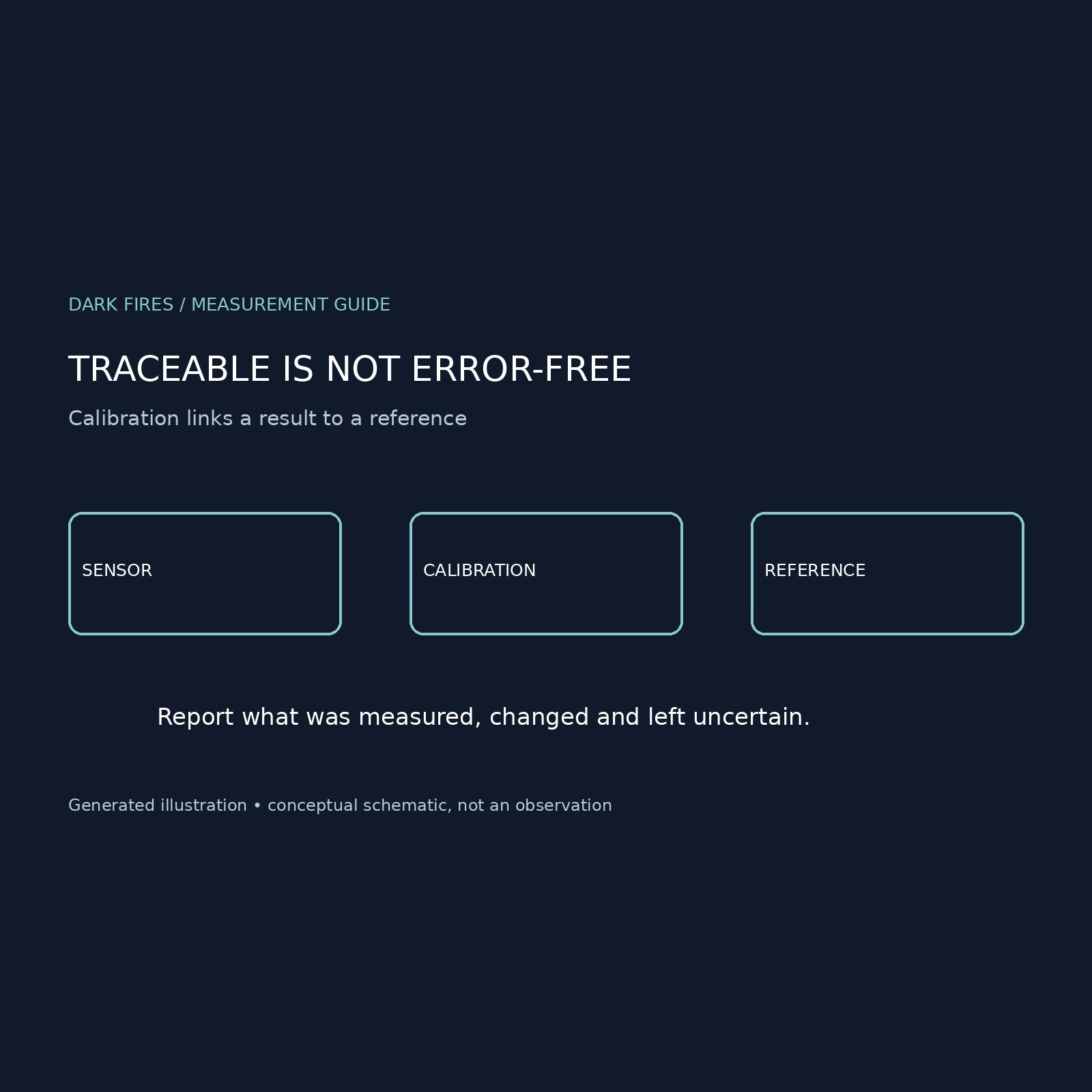
    NIST defines metrological traceability as a property of a measurement result: the result connects to a reference through a documented chain of calibrations, with each step contributing uncertainty. Its policy also emphasizes that traceability alone does not guarantee fitness for purpose. The uncertainty must be small enough for the intended task.

    That distinction matters when a UAP analysis converts pixels into angles, or angles into an estimated distance or speed. Our methodological inference is that calibration must cover the quantities actually used in the calculation. A well-characterized clock, for example, does not by itself establish an unknown object’s range.

    A useful report should state what was calibrated, against which reference, under what conditions, and how remaining uncertainties affect the result. Missing information should remain visible rather than being replaced by an impressive-looking decimal.

    This is not an argument that instrument data are worthless. It is how readers can separate a reproducible measurement claim from confidence expressed without the supporting chain.

    Primary source: NIST metrological traceability policy.

    Featured image: Generated illustration. Conceptual schematic, not an observation.
  • London’s 1993–94 UFO Reports and the Advertising Airship

    London’s 1993–94 UFO Reports and the Advertising Airship

    A wave of sightings can have an ordinary cause even when witnesses supply vivid descriptions and drawings.

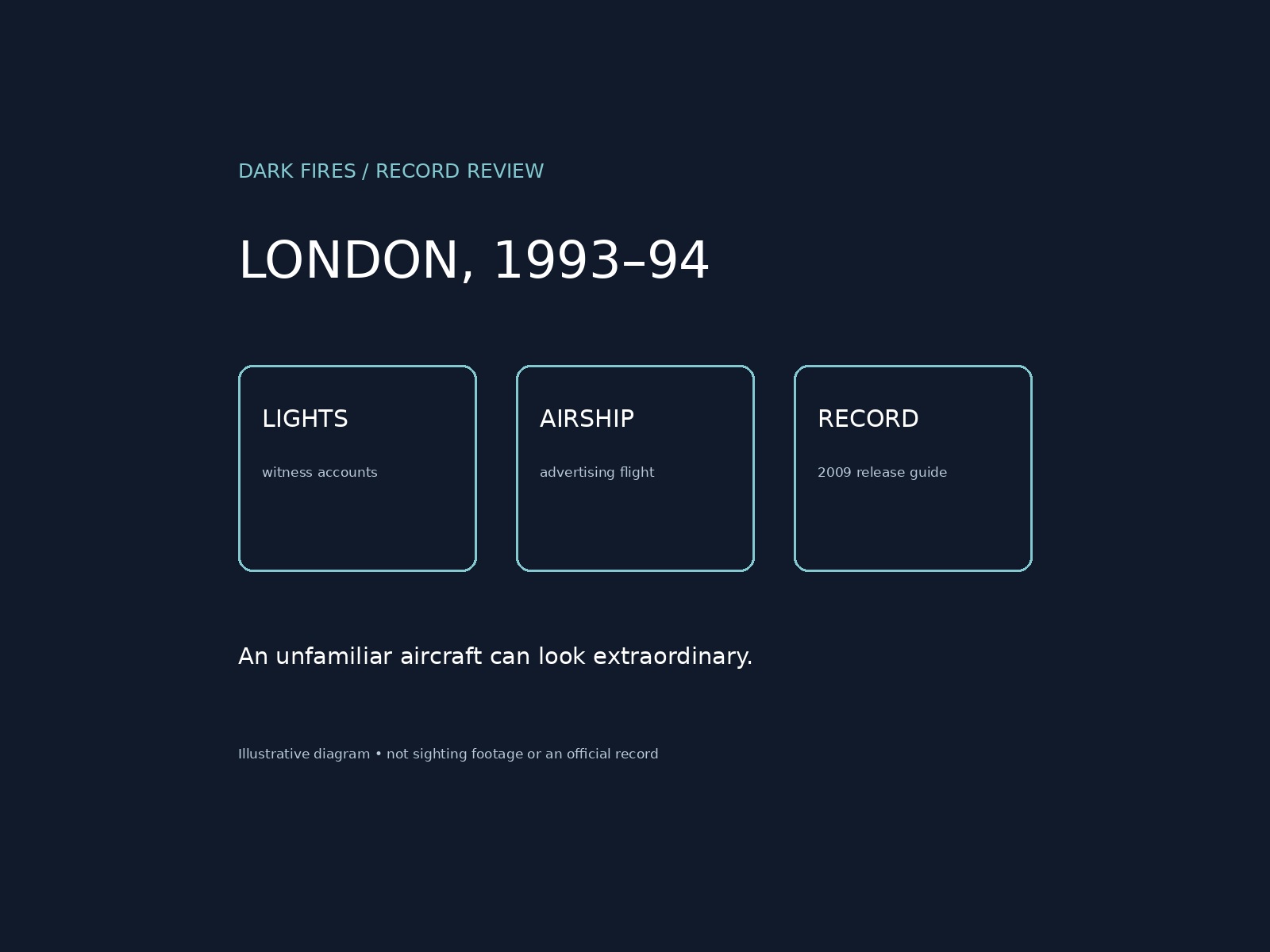
    The UK National Archives’ guide to its August 2009 UFO-file release identifies dozens of reports over London in 1993–94 of an illuminated oval object. The archive attributes them to a Virgin airship promoting the launch of the Ford Mondeo. It notes that some accounts included sketches and that several witnesses rejected the airship explanation.

    The guide directs readers to Ministry of Defence files DEFE 24/1963, DEFE 24/1959 and DEFE 24/1960. This article reviews the archive’s release guide, not a new examination of every original witness file. The sightings occurred in the 1990s; the cited guide appeared in 2009.

    Its value for UAP analysis is the separation between an experience and an identification. A witness can accurately report an unusual illuminated object without recognizing its advertising role. A cluster of reports may reflect multiple people encountering the same ordinary aircraft, not multiple independent indications of extraordinary technology.

    That lesson does not identify unrelated sightings. It shows why investigators should compare reports with known local operations before treating witness numbers or resistance to an explanation as evidence of an exotic origin.

    Featured image: original Dark Fires illustrative diagram, not an image of the actual airship or a witness’s view.

  • Polarization Adds Information, Not an Automatic UAP Identification

    Polarization Adds Information, Not an Automatic UAP Identification

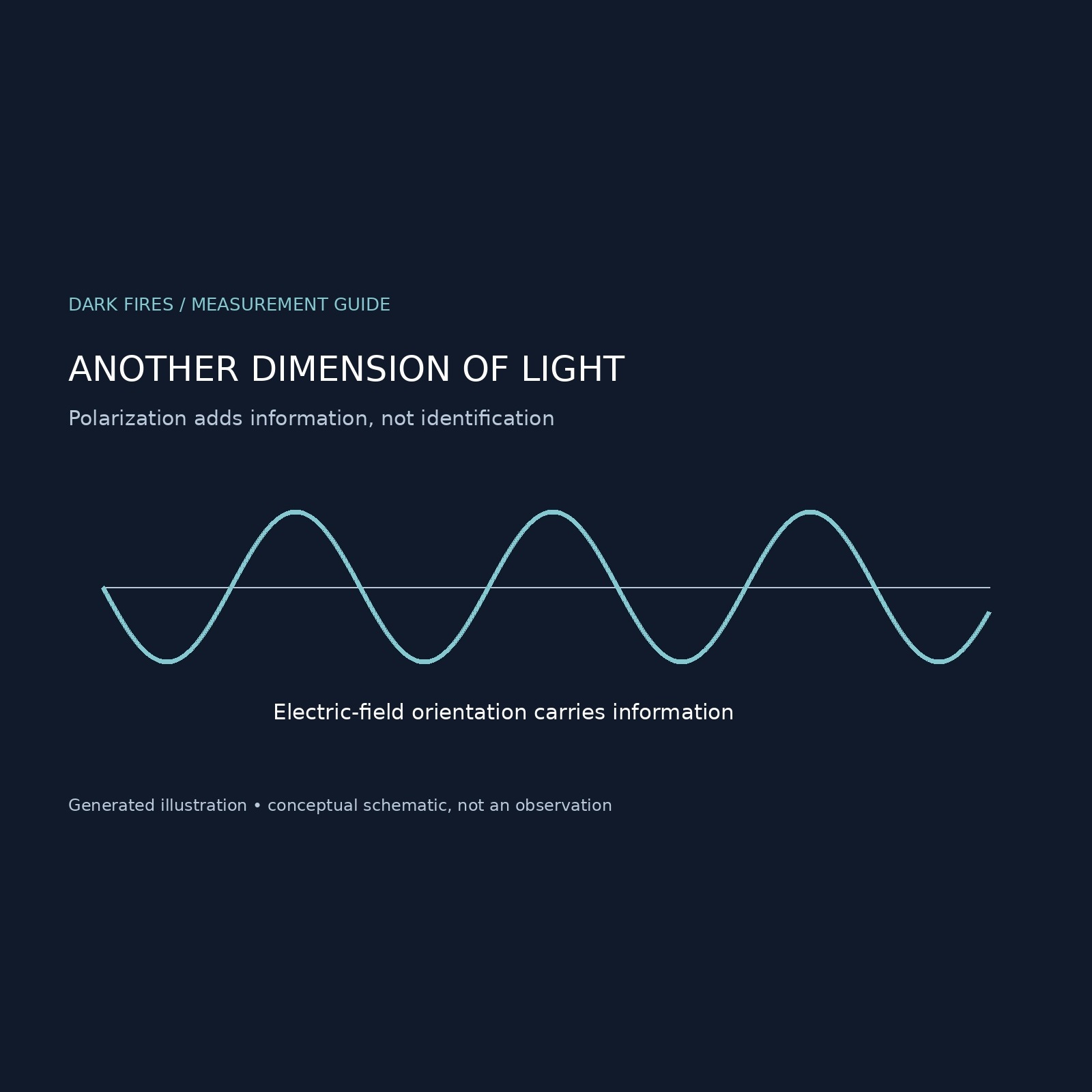
    Brightness and color are not the only measurable properties of light. Polarization describes the orientation behavior of its electric field and can preserve information about the light’s source and interactions along the way.

    NIST’s optical-polarization program explains that ordinary intensity measurements often discard this information. Polarimetric measurements can help distinguish scattering mechanisms, including contributions from rough surfaces, particles and a material’s interior.

    But polarization is not inherently exotic. NASA’s atmospheric-science teaching material explains that sunlight becomes partly polarized through Rayleigh scattering by air molecules. The viewing geometry affects that polarization. Even a clear sky supplies a strong ordinary example.

    For UAP observation, the useful question is consequently not whether polarized light exists, but whether measured polarization helps discriminate competing explanations. This is an application of established optics, not a claim that NIST or NASA has identified a specific UAP with it.

    Useful comparisons require the wavelength, viewing geometry, instrument response and measurement uncertainty. An unexplained polarization reading without those controls remains an incomplete measurement, not a signature of advanced technology.

    Primary sources: NIST optical polarization metrology; NASA Rayleigh scattering teaching material.

    Featured image: Generated illustration. Conceptual schematic, not an observation.
  • Nuremberg, 1561: What the Surviving Broadsheet Actually Establishes

    Nuremberg, 1561: What the Surviving Broadsheet Actually Establishes

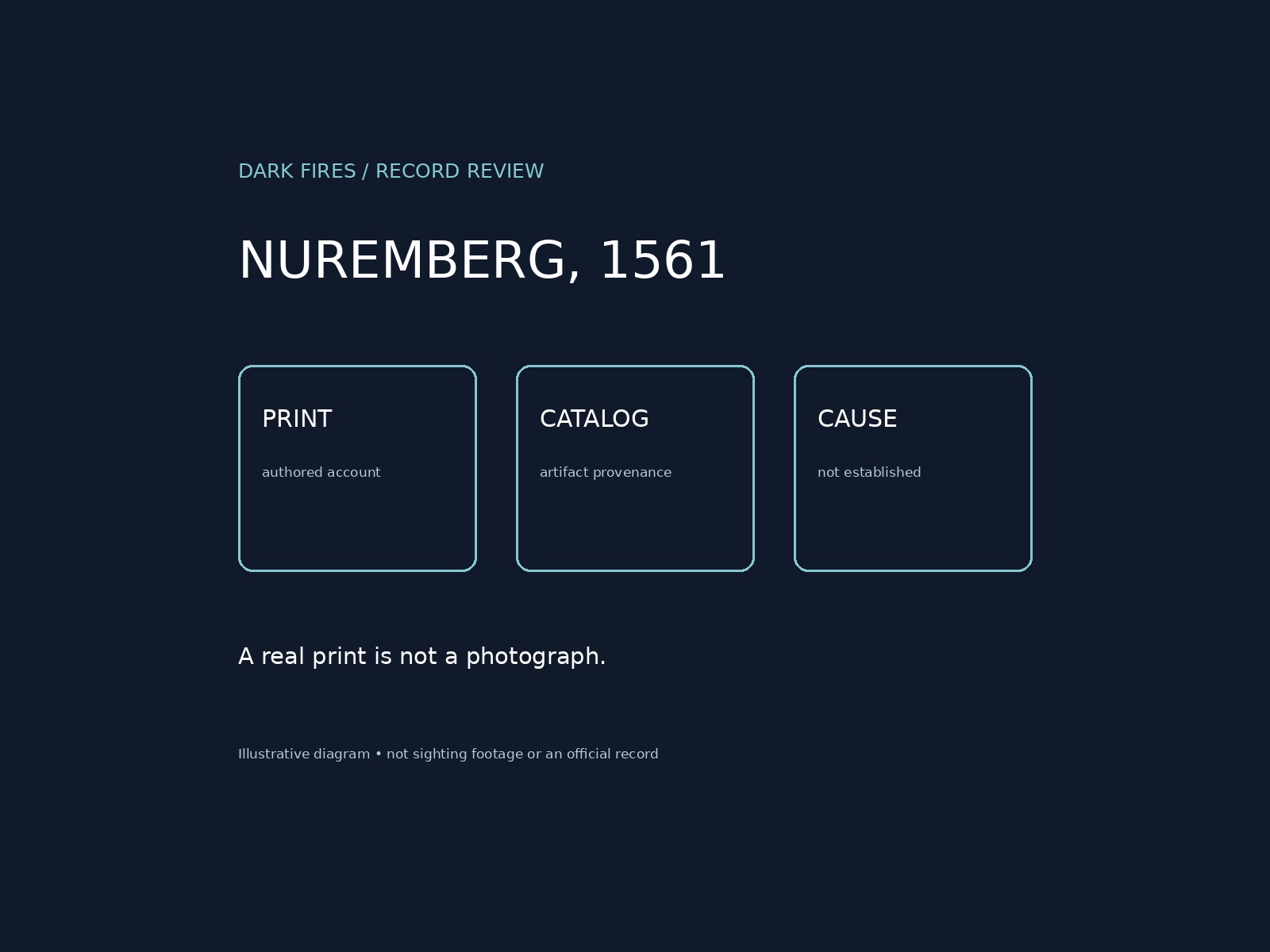
    The famous Nuremberg sky scene is a genuine historical print. That does not make it a verified record of an aerial battle between spacecraft.

    Zentralbibliothek Zürich preserves a copy attributed to Hans Glaser, printed in Nuremberg in 1561. Its catalogue identifies the subject as the celestial appearance of April 14, 1561, and describes a colored woodcut with letterpress text. The sheet measures 26.2 by 38 centimeters and comes from Johann Jakob Wick’s collection.

    The digitized image shows a sun above the town, numerous colored circles, cross-like and elongated forms, and a dark pointed shape. These are features of the illustration, not instrument measurements of objects. The accompanying historical text and the picture must be interpreted as an authored report rather than treated as independent witnesses to each other.

    The distinction matters when this image circulates as supposed photographic-style proof of an ancient UFO encounter. The library establishes the artifact’s identity and provenance; it does not identify an extraterrestrial cause. A proposed natural explanation would also require evidence beyond resemblance to a shape in the print.

    Readers can examine the original themselves. That is firmer ground than a modern reconstruction presented without its source.

    Featured image: original Dark Fires illustrative diagram, not the historical woodcut. The linked catalogue contains the original.

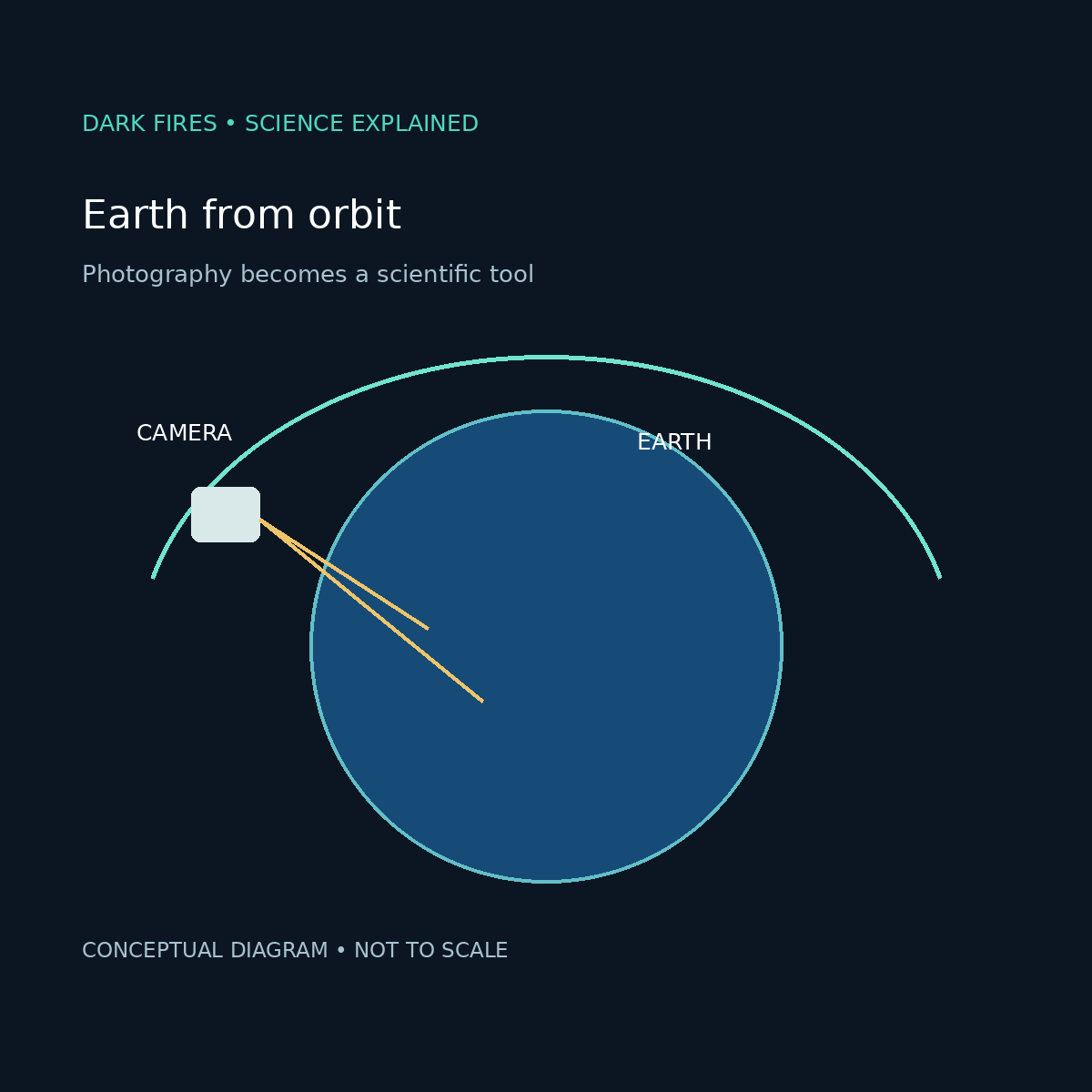
  • Gemini XII at 60: Earth photographs helped make the case for Landsat

    Gemini XII at 60: Earth photographs helped make the case for Landsat

    Sixty years after Gemini XII, one part of its legacy points toward Earth rather than the Moon. In a November 13, 2026 historical feature, NASA revisited how astronaut photography helped build the case for dedicated Earth-observing satellites.

    James Lovell and Buzz Aldrin flew the final Gemini mission from November 11 to 15, 1966. Their November 14 photograph of the Red Sea and Nile valley is an example of the orbital views scientists could use to study the planet’s surface. The mission also tested rendezvous and spacewalking procedures needed for lunar exploration.

    From striking view to scientific instrument

    NASA identifies US Geological Survey director William Pecora as a leading advocate. In 1969, he credited the demonstrated usefulness of Mercury and Gemini photography with helping inspire the Earth Resources Observation Satellite program in 1966. That initiative helped pave the way for Landsat.

    This is a historical connection, not a claim that one photograph created an entire satellite program. Its significance is the change in purpose: photographs from orbit could become evidence for studying land, water and environmental change, rather than simply records of an astronaut’s journey.

    Source: NASA History Office, November 13, 2026.

    Generated illustration. Original Dark Fires explanatory diagram, not a Gemini photograph; not to scale.

  • Falcon Lake, 1967: Physical Evidence and the Question of Provenance

    Falcon Lake, 1967: Physical Evidence and the Question of Provenance

    Physical evidence can make a UFO case more testable without making its explanation certain. The Falcon Lake incident illustrates why a sample’s collection history matters as much as an unusual laboratory result.

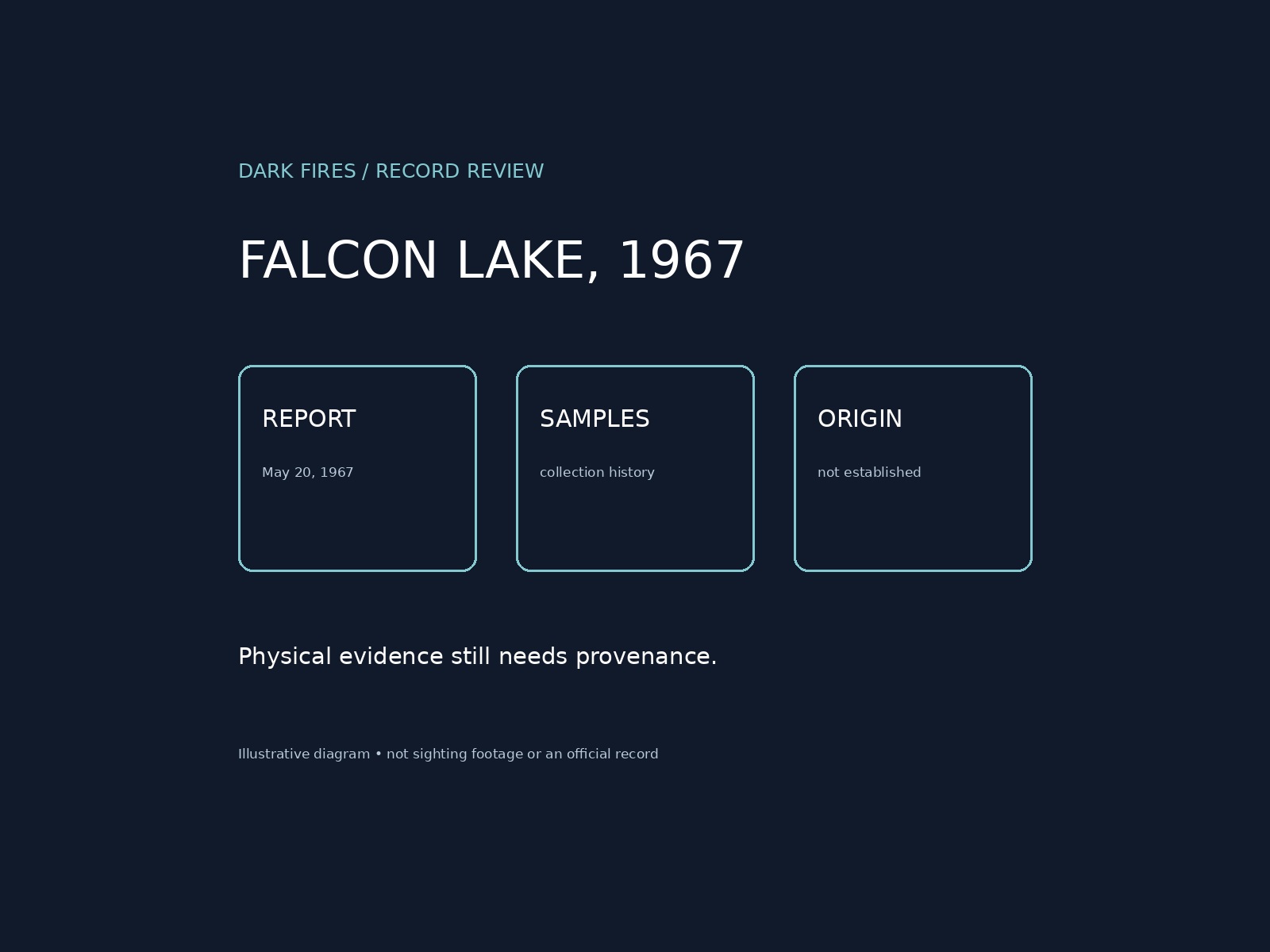
    Stefan Michalak reported an encounter while prospecting near Falcon Lake, Manitoba, on May 20, 1967. Library and Archives Canada’s first podcast on the case, published May 15, 2019, places his account alongside discussion of the surviving government records. The program includes family recollection, researchers’ interpretations and readings from documents. Those are valuable but distinct kinds of evidence.

    A report is not independent corroboration

    Researcher Chris Rutkowski explained in that first episode that he lacked solid, exactly corroborative reports from other witnesses, despite later claims about similar objects. Medical observations and an encounter account therefore should not be collapsed into one proposition. Evidence that a person was injured does not by itself identify the mechanism responsible.

    What happened to the samples?

    In the second LAC episode, published May 29, 2019, researcher Palmiro Campagna described a small patch with radium-like activity and questioned the provenance of a separately circulated sample. He also discussed material removed before investigators examined the location.

    Rutkowski separately described silver pieces found in 1968, a year after the reported encounter. He said analyses found silver with a sticky coating and radioactive ore attached. That later discovery is not interchangeable with a sample collected under controlled conditions immediately after the 1967 event.

    The archive’s narration summarizes the investigation as leaving the contamination’s origin undetermined. Its guests do not provide proof of extraterrestrial manufacture. Their discussion shows why “radioactive material was reported” and “a spacecraft deposited it” are different claims.

    A useful reconstruction would attach a date, exact location, collector, transfer record and laboratory result to every sample. Without that chain, a genuine measurement can still have an uncertain connection to the reported event. Falcon Lake remains worth studying as a documented investigation; uncertainty is not a substitute for either a demonstrated hoax or a demonstrated craft.

    Featured image: original Dark Fires illustrative diagram, not a photograph of the encounter or its evidence.

  • Radar Multipath: When One Object Can Produce More Than One Detection

    Radar Multipath: When One Object Can Produce More Than One Detection

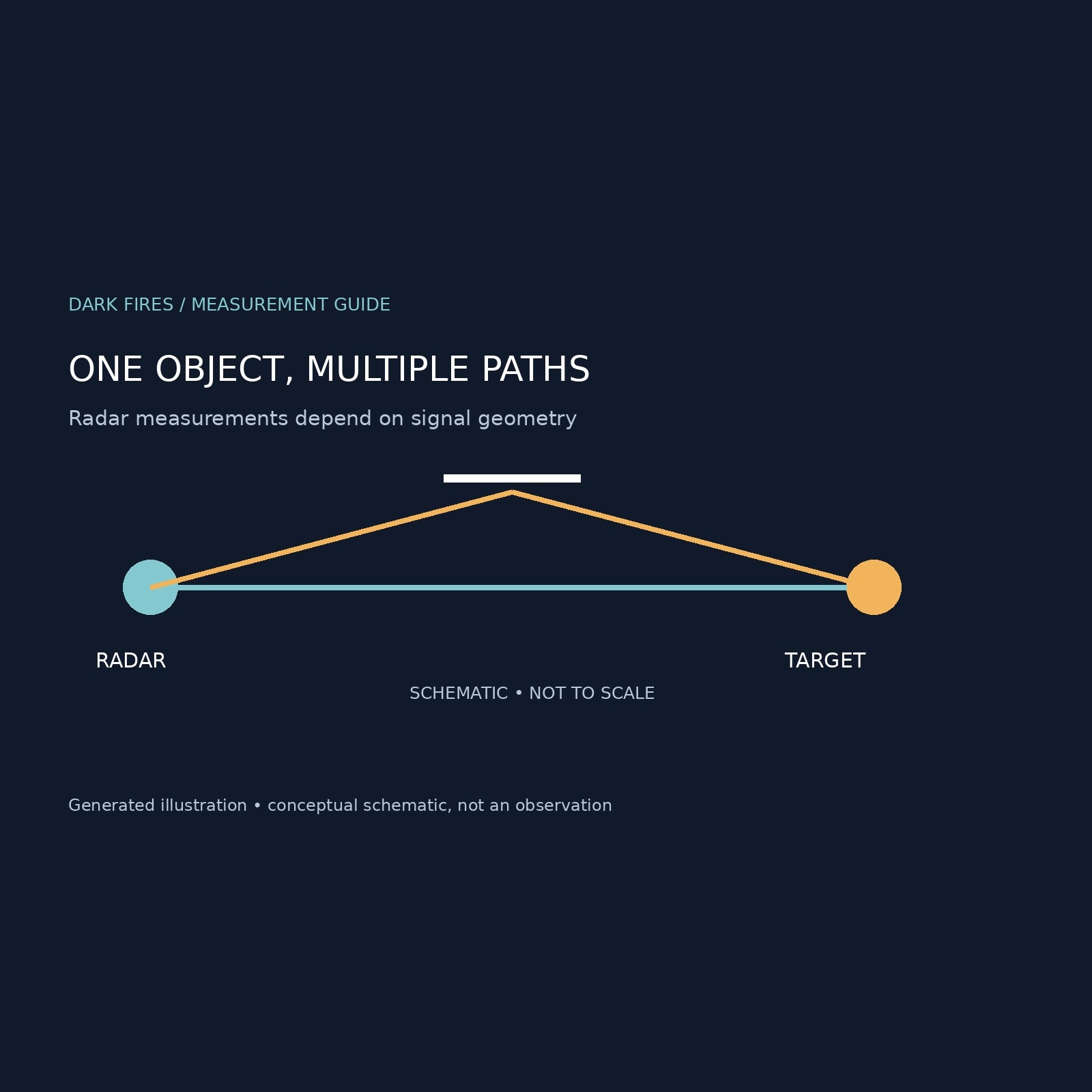
    A radar return is a measurement of a signal’s journey, not a photograph of an object. If that journey includes an extra reflection, the displayed detection can appear somewhere the physical target is not.

    MathWorks’ radar-engineering demonstration models this effect with a vehicle and a roadside barrier. In one two-bounce path, the echo arrives from the target’s direction but travels farther than the direct return, creating an apparent target at a greater range. In another, the echo arrives from the reflecting surface’s direction. A three-bounce path produces a mirror-like ghost beyond the barrier.

    The example is an automotive simulation, not an analysis of a military UAP encounter. Its relevance is methodological: counting radar detections is not automatically equivalent to counting physical objects. The geometry of nearby reflectors and the sensor’s processing matter.

    A credible UAP analysis would therefore need the radar configuration, environmental geometry and original measurements before invoking or excluding multipath. Showing that ghosts are possible neither proves a particular return was false nor establishes an extraordinary craft. It identifies a testable alternative.

    Primary source: MathWorks radar multipath demonstration

    Featured image: Generated illustration. Conceptual schematic, not an observation.
  • West Wales, 1977: Why a Suspected Hoax Does Not Resolve an Entire UFO Wave

    West Wales, 1977: Why a Suspected Hoax Does Not Resolve an Entire UFO Wave

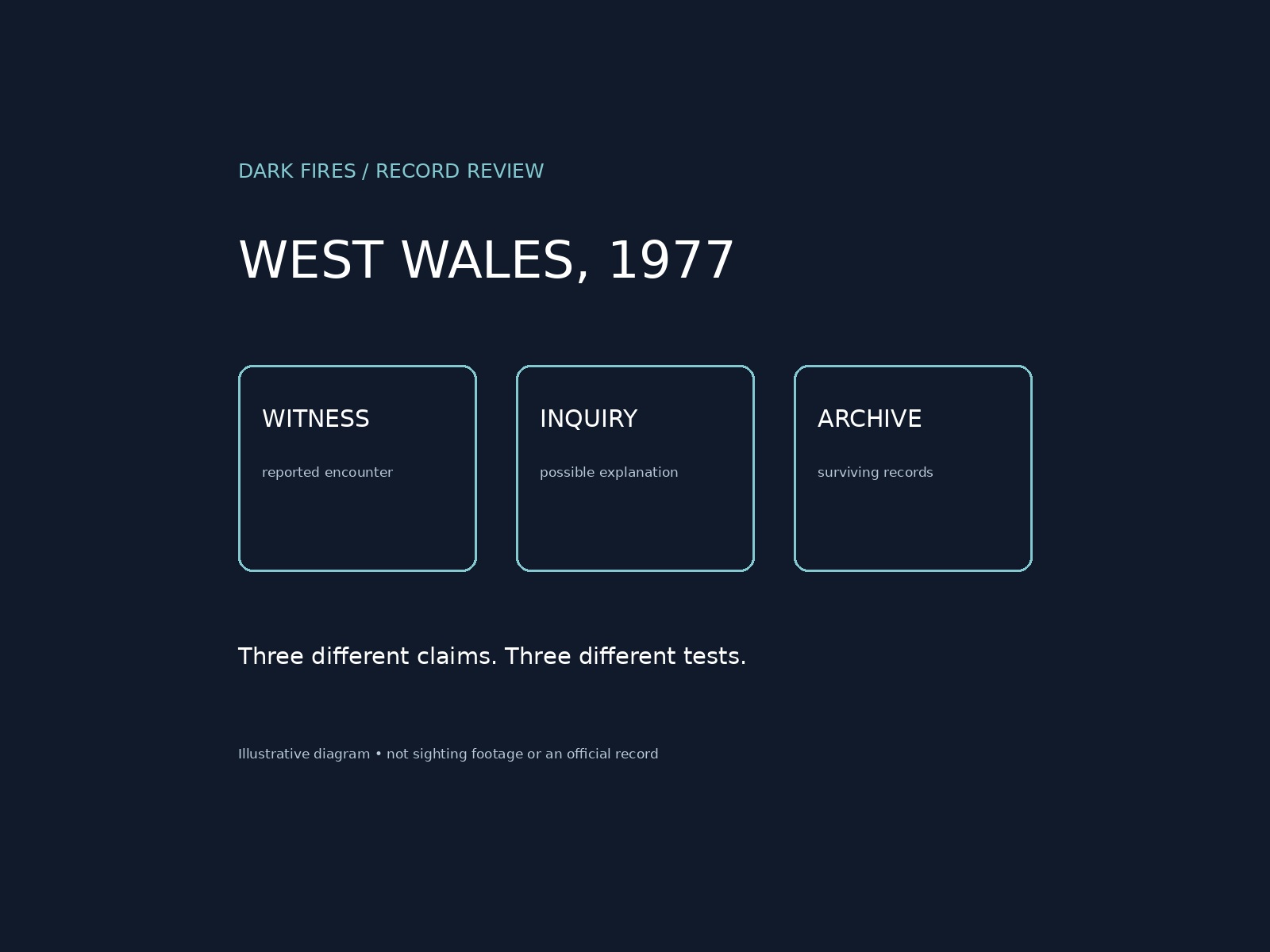
    A UFO wave is not a single observation. West Wales in 1977 provides a useful test of that distinction: a possible explanation for reports of silver-suited figures is not automatically an explanation for every light or object reported in the region.

    This is a historical record review, not a newly released case. In its July 2012 release commentary, The National Archives described papers concerning Pembrokeshire sightings in 1977–78. Historian David Clarke recounted a hotel proprietor’s report, passed through MP Nicholas Edwards, and an RAF interview and follow-up inquiries.

    What the inquiry suggested

    According to that archival commentary, RAF police suspected someone had borrowed a firefighting suit from a local display and walked around at night. Its appearance offered a possible explanation for some humanoid reports. The commentary explicitly did not describe the entire regional wave as solved.

    The evidential boundary matters in both directions. An official inquiry shows that a report received attention; it does not verify the reported visitors. A suspected practical joke supplies a hypothesis, not proof that every witness encountered the same person. Treating a collection of reports as one event erases the differences investigators need to test.

    Missing records are a separate issue

    A Dyfed-Powys Police response disclosed on October 10, 2022 said it held no information responsive to a request for Broad Haven’s 1977 UFO reports because its records did not extend that far back. That is a statement about retention, not a finding that nothing happened or nobody reported anything.

    Meanwhile, a 2015 parliamentary answer directed researchers seeking files on the 1977 West Wales sightings to The National Archives. Different institutions can therefore yield different answers without contradicting one another: they preserve different record sets.

    A careful reconstruction should keep individual dates, witnesses and locations separate, then attach each explanation to the report it actually addresses. Neither an unresolved remainder nor a plausible hoax elsewhere establishes what a particular witness saw. The durable lesson of the Welsh files is methodological: compare claims at the scale the evidence can support.

    Featured image: original illustrative diagram by Dark Fires; not an archival document or a reconstruction of a sighting.

  • Dark Fires Weekly: UAP Evidence, Roman Alignment and Mars-Bound Twins | November 8–14, 2026

    Dark Fires Weekly: UAP Evidence, Roman Alignment and Mars-Bound Twins | November 8–14, 2026

    This week’s briefing follows a simple distinction: a record, a measurement and an interpretation are not interchangeable. We lead with two reviews from our UAP coverage, then turn to fresh engineering progress at NASA. The UAP documents below are historical or earlier research, not newly released discoveries this week.

    77-second weekly briefing. Original AI-authored animated illustrations, not actual sighting footage; synthetic Kokoro narration and original background music.

    UAP: a fast crossing is not a measured speed

    Our research review examined an August 28, 2026 preprint by Jacob Haqq-Misra and Ravi Kopparapu. Across 112 PURSUE videos, the authors found that the released information does not supply the full combination of range, observer motion, viewing geometry and camera scale needed to determine physical velocity. This constrains what can be inferred; it does not identify every object or prove anomalous motion impossible. The paper is submitted to a journal, not presented here as a settled official finding.

    Primary source: the version-two preprint and submission history.

    KONA BLUE: distinguish a proposal from an operational program

    AARO’s 2024 historical account describes KONA BLUE as a prospective special-access proposal at the Department of Homeland Security that was never established as an operational program. The distinction matters: planning to investigate alleged recovered material is not evidence that such material was received. This is a review of the documented proposal and AARO’s conclusions, not a new recovery claim.

    Primary source: AARO’s History and Origin of KONA BLUE.

    Roman’s instruments reach precise alignment

    In a November 13 update, NASA reported a key instrument-alignment milestone for the Nancy Grace Roman Space Telescope. Aligning the observatory’s components helps prepare it for precise pointing and future science. It is an engineering achievement, not the detection of a new planet.

    Primary source: NASA’s November 13 mission update.

    ESCAPADE leaves Earth flybys behind

    NASA announced November 9 that both ESCAPADE spacecraft had completed powered Earth flybys. Their closest approaches occurred November 7 and November 9. Combining gravity with engine burns set the twins on a course toward Mars; arrival is targeted for September 2027. The maneuver is complete, while arrival and the science campaign remain future objectives.

    Primary source: NASA’s flyby report.

    Edition: November 8–14, 2026. All video diagrams are explanatory, not to scale, and are not official mission imagery or simulated evidence. Featured image: Generated illustration.

  • Why a Sky Survey Must Measure What It Misses

    Why a Sky Survey Must Measure What It Misses

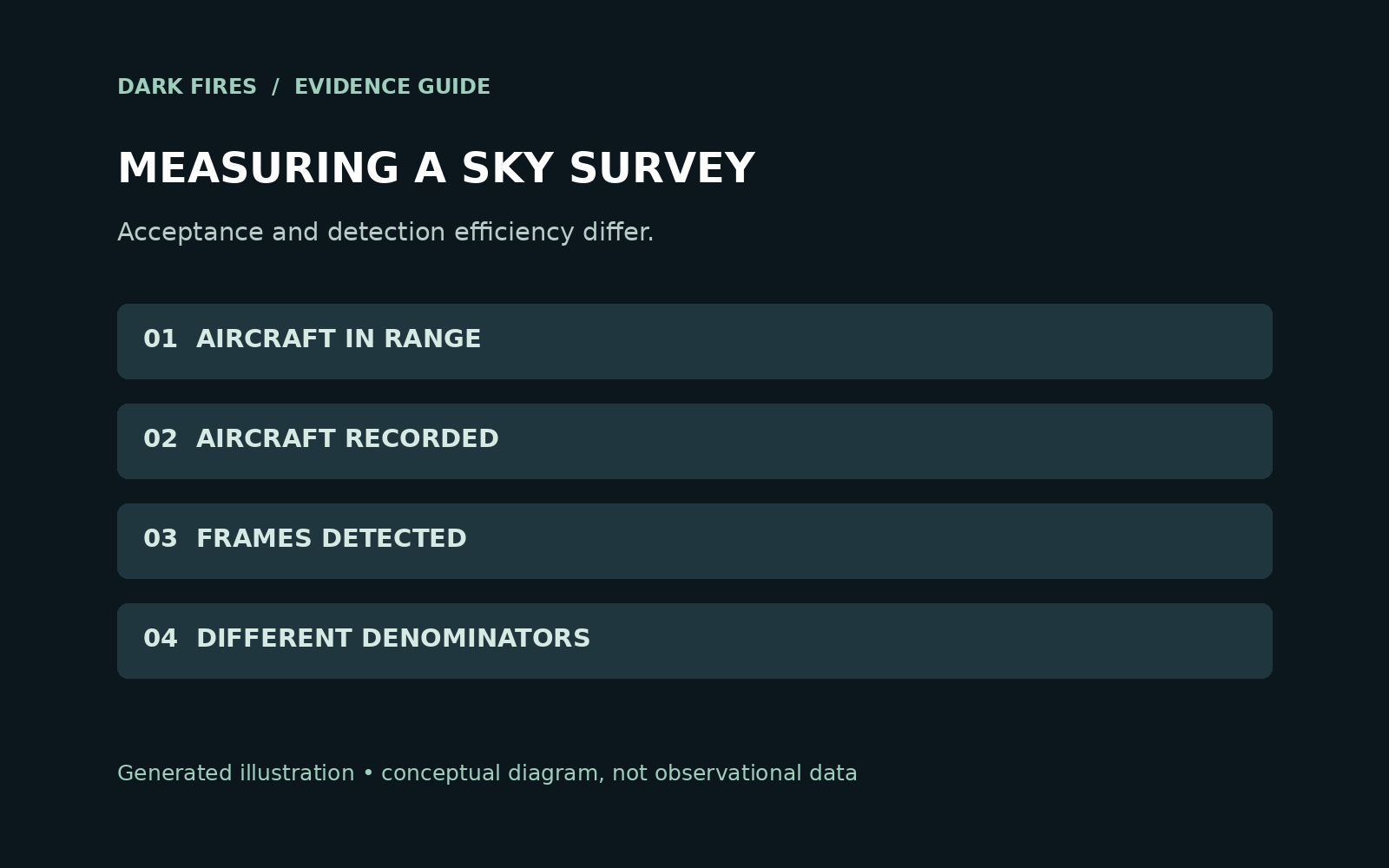
    An automated sky survey cannot be judged only by the objects it flags. It must also measure how often ordinary, independently known objects pass through without becoming usable detections.

    A Galileo Project commissioning study published January 28, 2025, offers a concrete example. Its eight-camera infrared array used aircraft position broadcasts to help benchmark performance during five months of operation.

    The researchers reported 41 percent acceptance for ADS-B-equipped aircraft: the fraction of in-range aircraft within an effective camera field of view that were recorded. Separately, mean frame-by-frame aircraft detection efficiency was 36 percent: the fraction of recorded aircraft in individual frames successfully detected by the processing system. These percentages describe different stages and different denominators. They are not interchangeable measures of accuracy.

    Weather, distance and aircraft size affected detection efficiency. Consequently, an apparent absence in a survey can reflect observing conditions or processing limitations rather than an empty sky.

    The lesson for UAP research is to publish the detection pipeline’s limitations alongside its unusual results. Ask what was observable, what was recorded and what the software recognized. An anomaly count without those distinctions is difficult to interpret.

    This commissioning result characterizes a particular instrument and period. It does not establish the performance of every sky survey or identify an extraterrestrial object.

    Primary source: Commissioning an All-Sky Infrared Camera Array for Detection of Airborne Objects.

    Generated illustration

    Original Dark Fires conceptual diagram, not observational data or a reconstruction of a sighting.