DARK FIRESORIGINS UNKNOWN

Author: Dark Fires

  • Why Contrails Stop, Spread and Glow After the Aircraft Has Gone

    Why Contrails Stop, Spread and Glow After the Aircraft Has Gone

    A bright line across the sky can change long after the aircraft that made it has disappeared. It can widen, break into separate pieces or turn orange near sunset. Those changes make contrails useful subjects for careful observation, but poor evidence for an extraordinary aircraft maneuver on their own.

    This is an evergreen guide to interpreting aircraft condensation trails, not a report of a new UAP incident. The first distinction is between the aircraft and the cloud it leaves behind. They no longer have to occupy the same place or follow the same motion.

    The air at flight altitude sets the conditions

    The Federal Aviation Administration explains that contrails consist of ice crystals formed when aircraft exhaust mixes with sufficiently cold, humid air. Conditions at cruising altitude can differ sharply from conditions on the ground. A dry afternoon at your location therefore does not rule out a persistent trail far above it.

    A trail can appear to start or stop when an aircraft crosses a boundary between air masses. The visible gap does not, by itself, show that a pilot switched a special system on or off. It records where the atmosphere supported a visible cloud.

    A line becomes a cloud

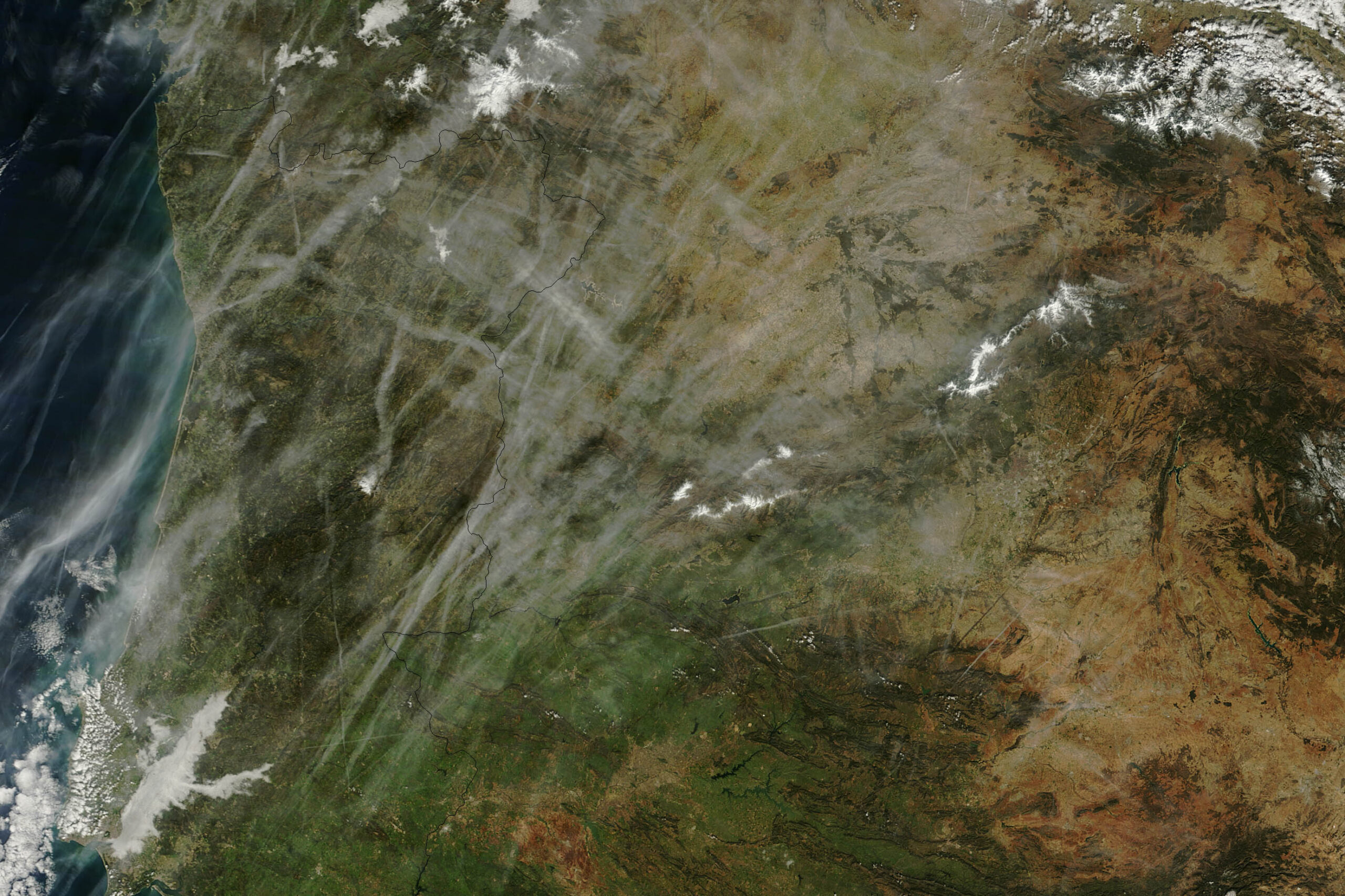
    The National Weather Service discussion of clouds and contrails shows how winds aloft can spread a trail into a broader cloud layer. The aircraft moves on while the ice remains subject to wind and turbulence. An old trail may consequently sit far from the route displayed on a current flight map.

    NASA documented this process in a Terra satellite view of Portugal and Spain acquired on February 15, 2013. The archival image illustrates how numerous flight paths can leave an overlapping cloud pattern. It is not imagery of a present-day event.

    Color and perspective need their own checks

    The FAA notes that illumination can give contrails red, orange, yellow or gray appearances as the Sun changes position. A glowing trail is not automatically burning debris. A photograph also collapses depth: two lines that cross in an image need not intersect at the same altitude.

    For a useful record, save the original images and note the location, time zone, viewing direction, Sun position and elapsed time between frames. Include a wide view with a fixed landmark. Describe separately what the leading point did and how the trail changed. If no leading object was seen, say so.

    These checks do not identify every unusual streak. Rockets, meteors and ordinary clouds require different tests. They do prevent a common mistake: treating the changing shape of a wind-driven cloud as a direct measurement of a vehicle.

    Featured image: NASA/Jeff Schmaltz, LANCE/EOSDIS MODIS Rapid Response; February 15, 2013. Archival satellite image and source.

  • The Condon Report: What Was Submitted on 31 October 1968?

    The Condon Report: What Was Submitted on 31 October 1968?

    Generated illustration

    On 31 October 1968, the University of Colorado transmitted the final report of its Scientific Study of Unidentified Flying Objects to Air Force Secretary Harold Brown. Directed by physicist Edward U. Condon, the project became known through its leader’s surname. Its conclusions would help shape the Air Force’s decision to end Project Blue Book the following year.

    The dated submission letter is a useful anchor. It separates completion of the university’s contracted study from the later public discussion and administrative decisions. Treating all of these as one event can obscure who decided what, and when.

    What the study contained

    The University of Colorado’s own retrospective describes 59 sighting case studies spanning 1947 to 1968. Its categories included older and newer reports, photographic evidence, radar-and-visual cases and astronaut observations. Thirty-seven scientists contributed chapters or portions of chapters.

    That range matters when reading a report commonly encountered through a few sentences of its conclusion. A photographic analysis asks different questions from an interview or a discussion of radar observations. A verdict on the overall value of a research programme does not replace the reasoning inside each case study.

    Condon’s central judgement

    In the report’s opening conclusions, Condon argued that the previous 21 years of UFO study had not added to scientific knowledge. He judged that a further extensive programme was unlikely to advance science sufficiently to justify it. The wording concerns the expected value of research as well as the evidence already available.

    Readers can examine that judgement without treating either official sponsorship or disagreement with the report as decisive. The relevant questions are whether individual analyses support their conclusions, how uncertainty was handled and whether the programme-level recommendation follows from the material reviewed.

    From study to closure

    The National Archives records that the Air Force terminated Project Blue Book on 17 December 1969. It identifies the Colorado study, the National Academy of Sciences’ review and the Air Force’s earlier experience among the bases for that decision.

    Closing a programme is an administrative outcome with evidential reasons behind it. It does not erase the original observations or remove the need to assess any genuinely new evidence on its merits.

    The Condon report remains worth reading as a substantial historical investigation and a consequential argument about scientific priorities. Starting with the submission letter, then comparing the conclusions with the case analyses, gives readers a firmer basis for judgement than either its reputation or a single frequently repeated quotation.

    Sources

  • The Meteor Is Gone, but the Trail Remains: Reading Persistent Sky Traces

    The Meteor Is Gone, but the Trail Remains: Reading Persistent Sky Traces

    Skywatching guide · Sources checked November 5, 2026, Chicago time. The NASA example below occurred in December 2018.

    A luminous streak disappears, yet a twisting shape remains in the sky. A video beginning at that later moment can look like footage of an object hovering or changing shape. One possibility worth checking is a meteor’s lingering trail, rather than continued flight by the original body.

    The trail and the moving object have different lifetimes

    The American Meteor Society’s fireball FAQ distinguishes glowing trains from particulate smoke trails. It describes trains as emission from ionized and excited air left after a meteor’s passage. Most fade quickly, but some persist for minutes and change shape under upper-atmospheric winds.

    The society separately describes smoke trails made from material shed during ablation. This distinction matters: a visible trace need not have one universal lighting mechanism, and appearance alone is not a reliable chemical analysis.

    A documented example, not a current sighting

    NASA’s December 20, 2018 account describes a fireball observed the previous evening from several western states. The moving fireball lasted roughly one second, while its persistent trace remained visible for minutes.

    For that particular event, NASA attributed the lingering visibility to sunlight reflecting from dust particles. Winds distorted the trace into a curving, corkscrew-like form. NASA’s use of the phrase persistent train in this account should not be taken to mean that every long-lived trace is produced by the same process.

    Reconstruct the sequence before naming the shape

    Our recommended first question is simple: did the witness see the beginning? A person who started filming after the flash may have recorded only the aftermath. That is not a defect in their testimony; it defines which part of the event the footage can establish.

    Preserve the original recording and write separate durations for the fast luminous passage and the lingering trace. Note whether the shape translated across the sky, broadened, faded or gradually deformed. Avoid collapsing those observations into one description such as an object that moved quickly and then stopped.

    Look for independent reports at the same time and in the appropriate region, including fireball records. An event listed somewhere on the same date is not enough. The timing, direction and observed sequence should fit before proposing a connection.

    A persistent trail is a hypothesis to test, not a universal explanation for strange clouds or lights. If no initial meteor was observed and no matching event can be established, say that the origin remains uncertain. The strongest report preserves the distinction between what moved, what remained and what the camera actually captured.

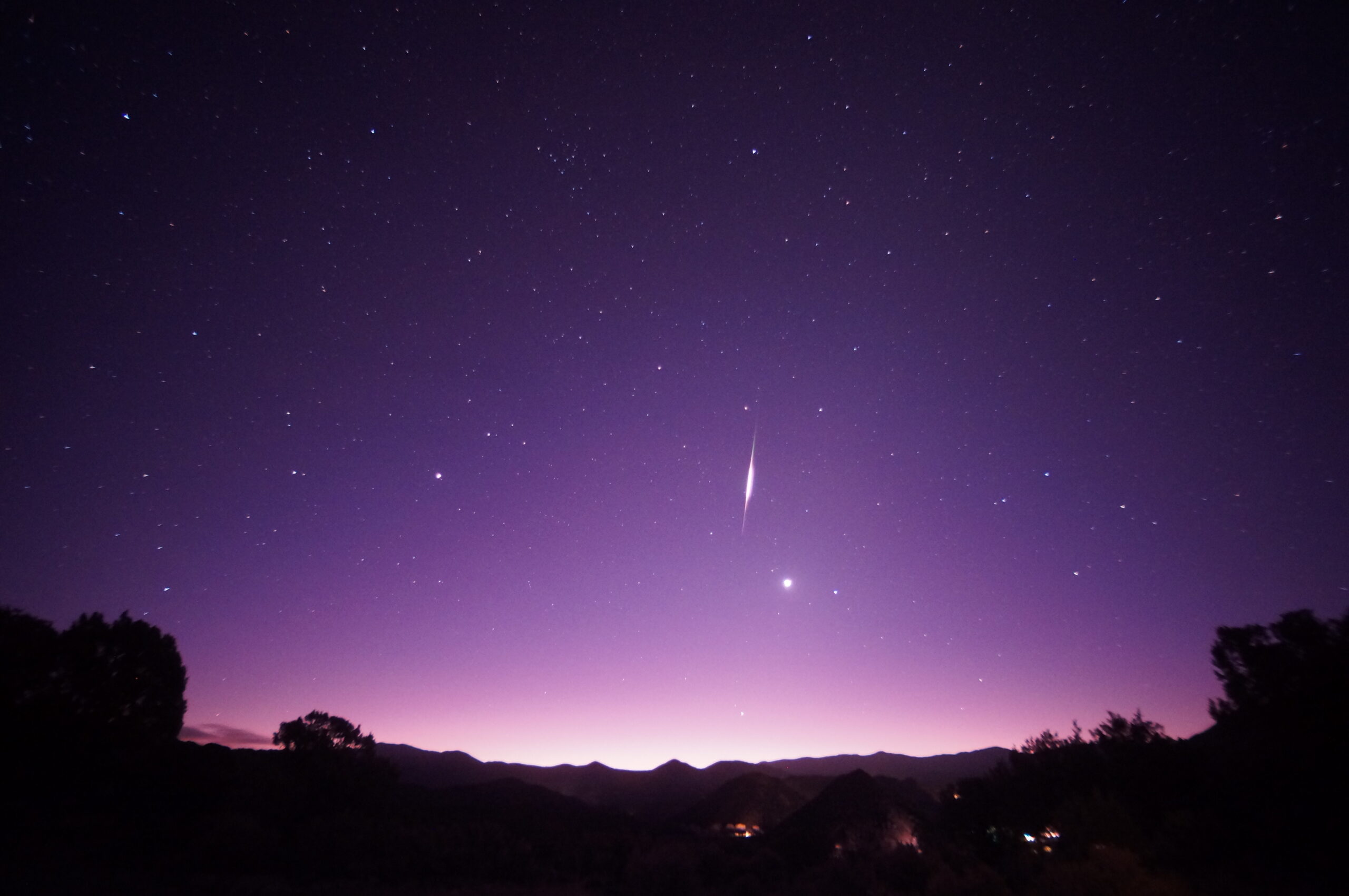
    Featured photograph: Crack of Dawn, Mike Lewinski, November 17, 2012, CC BY 2.0. Archival meteor and dispersing afterglow, not the December 2018 event discussed above.

  • Britain’s Flying Saucer Working Party: The Short Report Behind a Long Policy

    Britain’s Flying Saucer Working Party: The Short Report Behind a Long Policy

    Generated illustration

    Before Britain’s UFO desk became a familiar destination for public sighting reports, a small intelligence group examined the flying-saucer question in secrecy. Established in August 1950, the Flying Saucer Working Party produced its final report in June 1951. The document’s brevity contrasts with its importance to the history of British official thinking.

    The National Archives traces the initiative to Sir Henry Tizard, the Ministry of Defence’s chief scientific adviser. He considered the reports worth investigating. The group included intelligence representatives from the armed services and was chaired by G. L. Turney, head of scientific intelligence at the Admiralty.

    The investigation and its verdict

    The working party reviewed reports and questioned test pilots at the Royal Aircraft Establishment at Farnborough. Its six-page report attributed the sightings it considered to conventional causes, including mistaken identifications, optical effects and hoaxes. It recommended against further investigation unless material evidence became available.

    That recommendation is best read as an institutional judgement about the evidence and the value of further work. Its existence cannot independently demonstrate that every possible future sighting would have a conventional explanation. Conversely, its secrecy supplies no proof that the authors possessed evidence for an extraordinary vehicle.

    Churchill asks for an answer

    The subject returned to the highest political level on 28 July 1952. Winston Churchill asked what the flying-saucer reports meant and requested an assessment. The reply of 9 August referred back to the intelligence study undertaken in 1951. These dates and the correspondence’s archival reference, PREM 11/855, are independently recorded in a parliamentary answer of 14 October 1998.

    The exchange helps distinguish two questions often blurred in UFO histories: whether senior officials asked about a subject, and what evidence they actually received. A prime minister’s interest establishes attention, not a conclusion about the source of the sightings.

    Recovering a policy document

    According to the National Archives, a surviving copy of the working party’s report was found in Ministry of Defence records in 2001 and released the following year as DEFE 44/119. Other copies are also identified in the archive’s research guide.

    For readers, the useful next step is comparison. The terms of reference, witness material, final recommendations and later correspondence perform different functions. A concise policy document may compress disagreements or evidential detail that matter when judging a specific incident.

    The working party’s lasting interest lies in that relationship between investigation and policy. Its report shows how one official assessment became an answer officials could reuse, while its eventual release allows that answer to be examined in its historical setting.

    Sources

  • Hubble’s New Messier 30 View Shows Why Repeated Observations Matter

    Hubble’s New Messier 30 View Shows Why Repeated Observations Matter

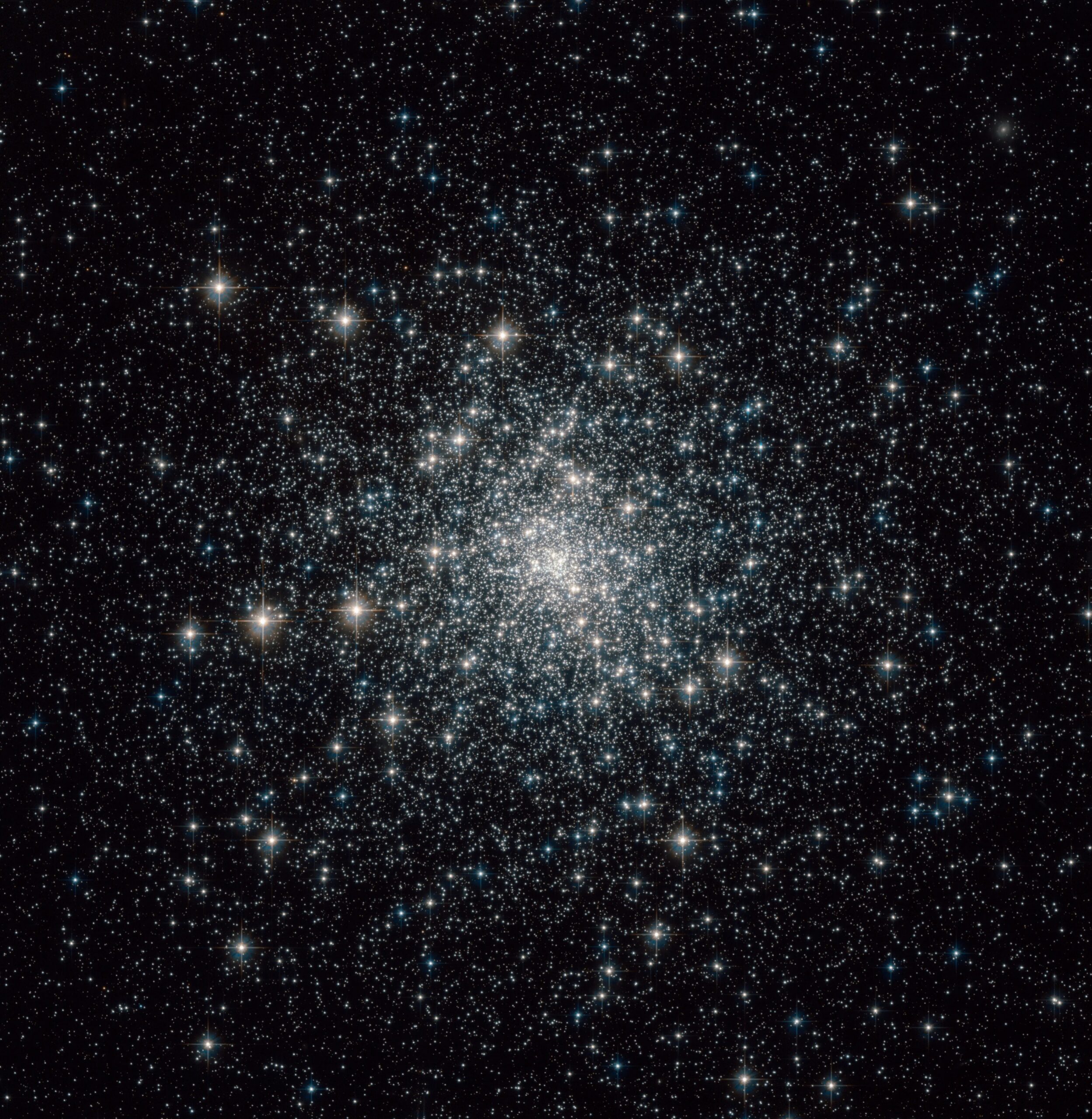
    A Hubble image highlighted by NASA on November 5, 2026, presents Messier 30 as more than a dense field of stars. The globular cluster, about 27,500 light-years away in Capricornus, offers a way to investigate both stellar evolution and the Milky Way’s history.

    NASA’s new image feature explains that the composite draws on three observing programs, combining ultraviolet, visible and near-infrared measurements. Earlier observations explored faint stars and multiple stellar populations; later work returned to measure how stars had moved over roughly 15 years.

    There is also a larger historical question. M30 travels around the galaxy in the opposite direction from the galaxy’s overall rotation. NASA describes this as a possible clue that the Milky Way acquired the cluster from elsewhere. The orbit supports investigation of that possibility; the image release does not claim to have conclusively reconstructed M30’s birthplace.

    The scientific value of coming back

    The archive record for program 16298, led by Mattia Libralato, makes the repeat-observation strategy concrete. Its proposal sought sufficiently deep second-epoch imaging for 44 clusters whose archive coverage was inadequate, following an original survey of 66 cluster cores.

    Matching observations taken years apart lets researchers measure proper motions, the apparent movement of stars across the sky. The proposal’s aim was to compare stars in different mass groups and investigate the clusters’ internal dynamics. It specifically identified the crowded, faint populations in cluster cores as a demanding observational problem. The archive lists the program as completed, but a completed observing program should not be confused with every scientific question having been answered.

    Old stars with complicated histories

    NASA’s M30 reference page describes another reason the cluster attracts attention: blue stragglers. Earlier Hubble work identified stars associated with close collisions and others in binary systems that acquire hydrogen from a companion. Such interactions help explain why an ancient population can include stars that appear unexpectedly youthful.

    Our reading of the new release is that Hubble’s longevity is itself a scientific resource. A sharp image records where stars appear now; a comparable image from years earlier supplies the reference needed to study change. The November 5 feature brings those observing campaigns together for public viewing, while the underlying research depends on carefully measured positions, colors and uncertainty rather than appearance alone.

    Featured image: earlier Hubble ACS observation of Messier 30 in visible and infrared light. Credit: NASA/ESA. This archival telescope image is not the new three-program composite highlighted November 5, 2026. Image source.

  • Two Cameras Do Not Automatically Give a Reliable UAP Distance

    Two Cameras Do Not Automatically Give a Reliable UAP Distance

    Technical guide · Sources checked November 5, 2026, Chicago time.

    Two recordings of the same light can be much more informative than one. But two viewpoints are not, by themselves, a distance measurement. A useful reconstruction needs known camera geometry, matching observations and uncertainty small enough to distinguish a finite range.

    The small difference that carries the distance

    MathWorks’ stereo-reconstruction documentation explains the basic relationship for a calibrated, rectified stereo pair: depth equals focal length multiplied by camera separation, divided by disparity. Disparity is the offset between corresponding image positions. More distant objects produce smaller offsets.

    This has an important consequence: when the offset becomes comparable to measurement error, the inferred distance becomes unstable. A precise-looking output is not necessarily a precise result.

    Consider an illustrative calculation, not a real sighting. With a 10-meter baseline and a focal length of 1,000 pixels, a disparity of two pixels gives a depth of 5,000 meters in that simplified model. If the true disparity could instead be one or three pixels, the corresponding depths are 10,000 and about 3,333 meters. A one-pixel uncertainty has produced a very wide distance range.

    Camera separation is only part of calibration

    Knowing where two people stood is helpful, but camera orientation and optical properties also matter. MathWorks’ baseline-estimation documentation explicitly estimates translation and orientation between cameras, using independently established camera intrinsics for its wide-baseline workflow. It also exposes estimation errors rather than treating calibration as exact.

    The practical implication is that two phone clips should not be inserted directly into the simplified formula merely because the witnesses were a known distance apart. Different lenses, framing and viewing directions must first be accounted for.

    What to request from a reconstruction

    Our suggested review checklist starts with the original files, camera locations, recording settings and a stated synchronization method. For a moving target, matched frames must refer to the same moment; otherwise motion can masquerade as a difference between viewpoints.

    Ask the analyst to show the matched feature in both images, explain the calibration and provide a range of results under plausible errors. Test whether the conclusion survives slightly different feature selections rather than depending on a single hand-picked pixel.

    Finally, separate depth from total camera-to-target distance when the geometry requires it. If the observations cannot constrain a useful range, report that limitation. Two cameras may confirm that multiple observers recorded an event while still leaving its distance unresolved. That is valuable evidence, but it is not permission to assign an exact size or speed.

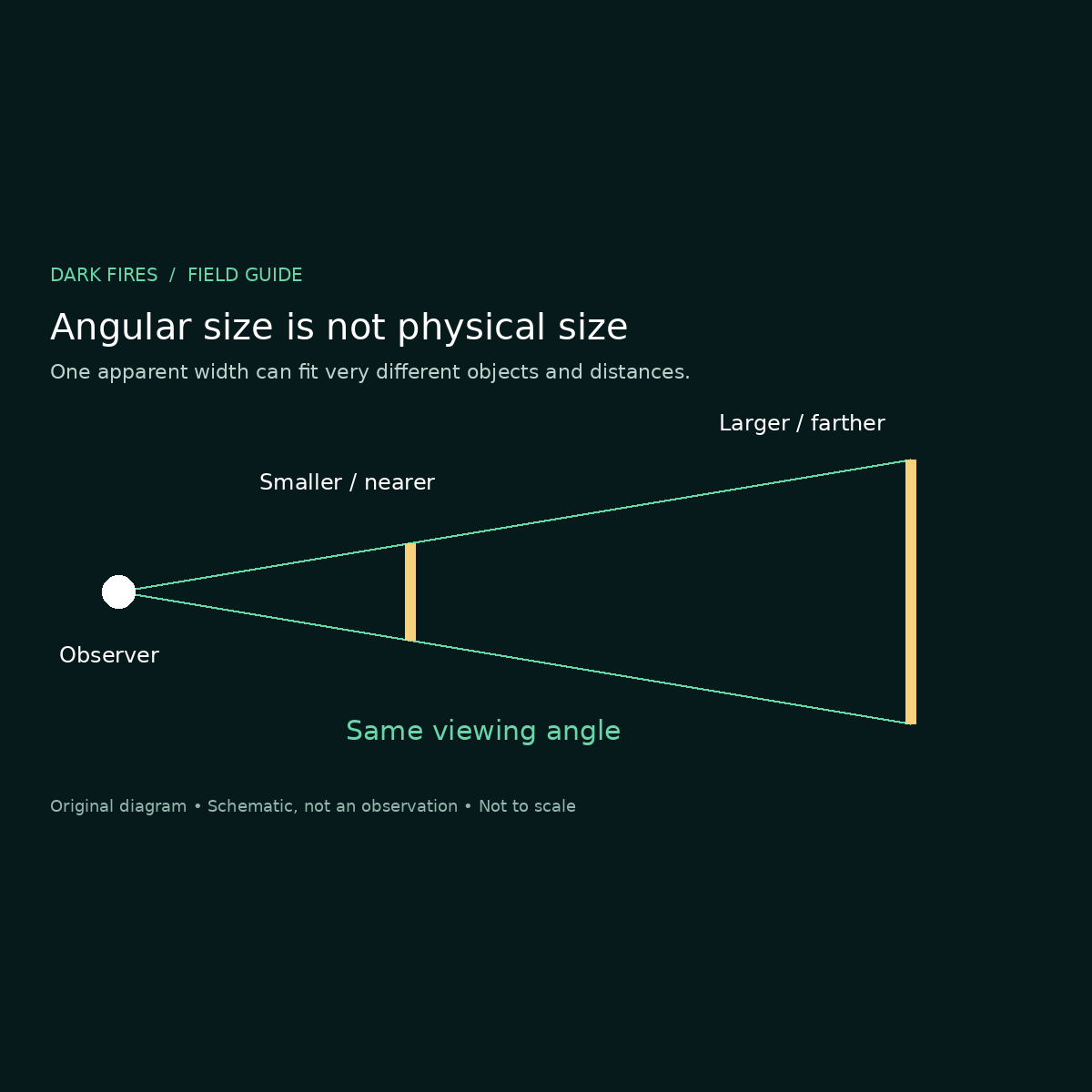
    Featured diagram: Dark Fires original illustration of the size-distance ambiguity in one view. Context for why range matters, not a stereo-camera layout; not to scale.

  • Brazil’s UFO Night of 19 May 1986: Following the Documentary Trail

    Brazil’s UFO Night of 19 May 1986: Following the Documentary Trail

    Generated illustration

    Brazil’s best-known military UFO episode began on 19 May 1986, when reports of unusual lights and radar detections triggered an air-defence response. Aircraft departed from Santa Cruz and Anápolis with orders to approach and identify the reported targets. The episode became known as the Noite Oficial dos OVNIs, or Official UFO Night.

    The name can sound like a government verdict on extraterrestrial visitors. The documents support a narrower, more useful starting point: the authorities recorded reports, launched aircraft and investigated an identification problem. Those actions make the case historically significant without deciding the origin of the phenomena.

    What the official summaries say

    A Brazilian government retrospective published on 20 May 2022 describes reports of 21 objects across four states and the deployment of five fighters. These figures belong to the government’s account of the episode; they should not be treated as an independently reconstructed catalogue of 21 physical machines.

    The same account includes an important qualification. Visual observations and radar indications did not always coincide. Sometimes pilots reported seeing something without a corresponding radar detection; at other times radar indicated a target that pilots could not see. That makes the detailed sequence more important than the headline totals.

    A report and a public explanation

    On 23 May 1986, Aeronautics Minister Octávio Júlio Moreira Lima held a press conference with participants. The government’s retrospective records his position as one of technical uncertainty and an intention to investigate.

    A subsequent report dated 2 June 1986 was signed by Brigadier José Pessoa Cavalcanti de Albuquerque. Brazil’s National Archives explicitly identifies this document among its holdings. Its archival presence establishes a dated investigation record that readers can seek out, rather than relying entirely on later recollections.

    The archive also reports that recordings of conversations involving pilots, controllers and the air-defence system were made publicly available in October 2015. Audio can help reconstruct what participants knew at a particular moment. An excited or confident transmission, however, still needs comparison with the underlying circumstances.

    Reading the evidence carefully

    The essential questions concern correlation: which sighting matched which radar return, at what time, with what uncertainty? Estimates of distance or size depend on how they were obtained. A large reported number is not a substitute for a documented measurement.

    Brazil’s UFO Night deserves attention because its public record offers several routes into those questions. The responsible conclusion preserves both the seriousness of the response and the limits of what an official investigation, by itself, proves.

    Sources

  • Europe’s Meteor Workshop Connects Asteroid Alerts With Evidence on the Ground

    Europe’s Meteor Workshop Connects Asteroid Alerts With Evidence on the Ground

    A small asteroid can be observed as a moving point in a telescope, a flash across the atmosphere and, sometimes, fragments on the ground. The EU–ESA Workshop on Meteor Observations for Planetary Defence, scheduled for November 3–5, 2026, in Petralia Sottana, Sicily, addresses how to connect those stages into a useful scientific and operational record.

    The official workshop overview identifies fragmented coordination between observing communities as a central problem. Its goals include linking discovery and rapid telescope follow-up with atmospheric observations and joint analysis. Radar, all-sky cameras, infrasound, seismic measurements and other sensors appear in the planned scientific scope.

    The emphasis is on small, imminent impactors, often in the metre-size range. Following these objects across different observing systems offers opportunities to compare an incoming orbit with the body’s behavior during atmospheric entry. The meeting’s dates and agenda establish the discussion being organized; they do not, on their own, establish that participants adopted a shared operating procedure.

    Predicting where fragments might land

    One November 4 contribution by Anna Moscati describes a model that starts with a pre-impact orbital solution and predicts a meteorite landing region. The abstract says it combines atmospheric conditions with a physical treatment of the luminous trajectory and subsequent dark flight, without needing event-specific fireball triangulation.

    The authors report nominal predictions within 100–200 metres of recovered fall locations in validation cases. That is a claim in a conference abstract, not a universal accuracy guarantee. The same abstract stresses uncertainties in fragmentation and the uneven availability of observations, both of which make individual events difficult to reconstruct.

    Understanding the limits of each measurement

    A November 5 presentation abstract by Eloy Peña-Asensio takes a wider view, covering meteor physics, fragmentation models and remaining uncertainties. It also considers how space-based coverage and ultraviolet spectroscopy could complement existing measurements. These are described as research opportunities, not newly deployed warning capabilities.

    Our analysis is that the workshop’s most consequential question is how evidence moves between teams. A precise orbit, a bright flash and a recovered meteorite become much more informative when researchers can relate them confidently. Clear uncertainty reporting is part of that connection. Readers should look for subsequent proceedings or operational announcements before treating the agenda as proof of a completed European response system.

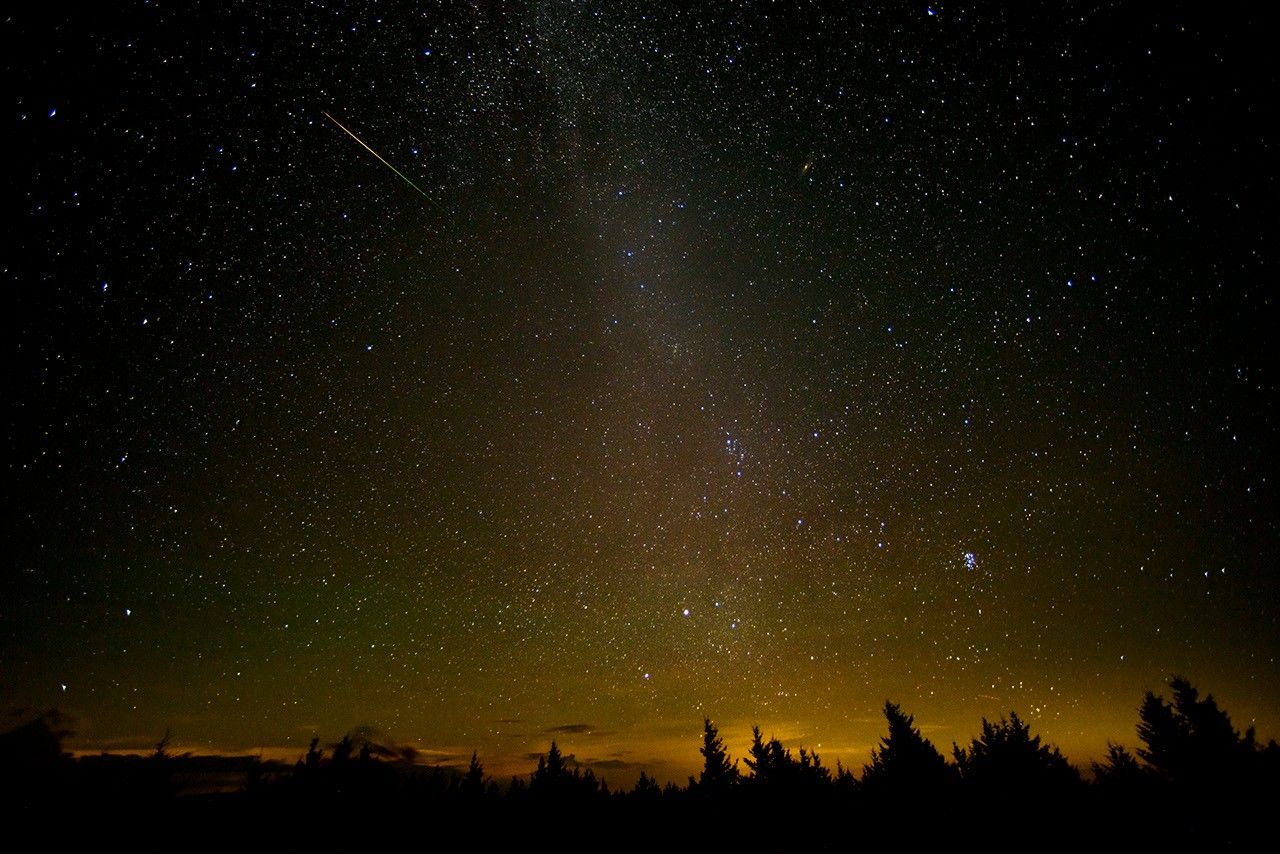
    Featured photograph: a Perseid meteor at Spruce Knob, West Virginia, August 12, 2016. Credit: NASA/Bill Ingalls. This archival photograph does not depict the workshop or a November 2026 impact. Image source.

  • Kaikōura, 1978: What the Film and Government Files Actually Establish

    Kaikōura, 1978: What the Film and Government Files Actually Establish

    Generated illustration

    On 30 December 1978, a cargo aircraft left Wellington carrying an unusual addition to its normal load: a television news crew. Earlier reports of unexplained lights off New Zealand’s Kaikōura coast had brought the journalists aboard. In the early hours of 31 December, they filmed lights themselves. The resulting footage carried a local aviation mystery to an international audience.

    Archives New Zealand preserves a revealing part of the aftermath. A file created by New Zealand’s Permanent Mission to the United Nations contains correspondence about the incident, including discussion of the film, atmospheric conditions and radar reports. Its existence shows how far the story travelled through official channels. It does not establish what produced every recorded light.

    Several kinds of evidence

    The surviving Royal New Zealand Air Force file, AIR 1080/6/897, places the episode within a wider sequence of reports. Its interim assessment distinguishes sightings on 20–21 December, 30–31 December and 3 January 1979. Keeping these dates separate matters: a proposed explanation for one observation cannot automatically identify everything reported on another flight.

    Film, witness testimony and radar indications also answer different questions. A camera can establish that light reached its lens without fixing the source’s distance. Radar can provide information that a witness cannot see, but linking a particular return to a particular light requires a reliable match in time and direction. Simply listing several instruments does not complete that comparison.

    What investigators proposed

    Reporting on the released defence files in December 2010, ABC described the contemporary Air Force explanation in terms of ordinary phenomena, including boat lights reflected by clouds and an unusual appearance of Venus. The official file also discusses anomalous propagation and the intense lighting used by squid-fishing boats. These were attempts to account for observations in their environmental setting, rather than evidence of an identified extraterrestrial vehicle.

    Such proposals should be judged observation by observation. A plausible mechanism needs to fit the timing, viewing direction and available conditions; its mere availability cannot settle every detail. Equally, uncertainty about a light’s identity cannot supply missing measurements of a craft’s size or performance.

    Kaikōura remains valuable because there is more to examine than a retold anecdote. The film, official correspondence and competing explanations allow readers to distinguish the reported experience from the conclusions subsequently attached to it.

    Sources

  • Final Roll-Out Array Completes the ISS Power Upgrade Campaign

    Final Roll-Out Array Completes the ISS Power Upgrade Campaign

    The International Space Station’s roll-out solar-array campaign reached its final installation on November 5, 2026. NASA astronaut Anil Menon and Canadian Space Agency astronaut Joshua Kutryk installed and deployed the eighth array on the station’s 3B power channel, according to NASA’s post-spacewalk report.

    The astronauts finished at 3:35 p.m. Eastern Standard Time, or 2:35 p.m. in Chicago, after six hours and 59 minutes outside. NASA says the broader upgrade effort began in February 2021 and required 18 spacewalks to prepare equipment and install all eight arrays. The agency puts the resulting generation capacity at approximately 215 kilowatts, compared with 160 kilowatts before augmentation.

    This was Menon’s fifth spacewalk and Kutryk’s second. It also marked the 286th excursion supporting station assembly, maintenance and upgrades, a measure of how much hands-on work the orbital laboratory has required.

    A new layer of generating hardware

    The approach adds compact generating surfaces rather than simply removing every older wing. NASA’s account of the first deployment in June 2021 describes arrays approximately 60 feet long and 20 feet wide, positioned to shade a little more than half of the larger original arrays.

    Boeing’s 2021 explanation of the first pair says the structure supplied by Redwire allows each array to travel tightly rolled and then extend using stored energy, without a deployment motor. That packaging is central to the design’s appeal: a large collecting area must first fit inside the constraints of a launch and delivery system.

    Power for the station’s remaining work

    In its November 5 preview, NASA said the added electricity supports critical station operations, including a safe, controlled deorbit. That context matters when interpreting an upgrade late in a spacecraft’s working life. Reliable power remains necessary through operations and the eventual retirement sequence.

    Our assessment is that the milestone illustrates the value of incremental refurbishment: astronauts have added capability to an operating facility over years of separate excursions. Completing the array campaign is a specific hardware achievement, not a declaration that all station maintenance is finished. NASA’s approximately 215-kilowatt figure describes generation capacity; it should not be read as a promise that every watt is continuously available to experiments.

    The achievement is therefore best understood as added operating margin for a facility that still needs sustained care.

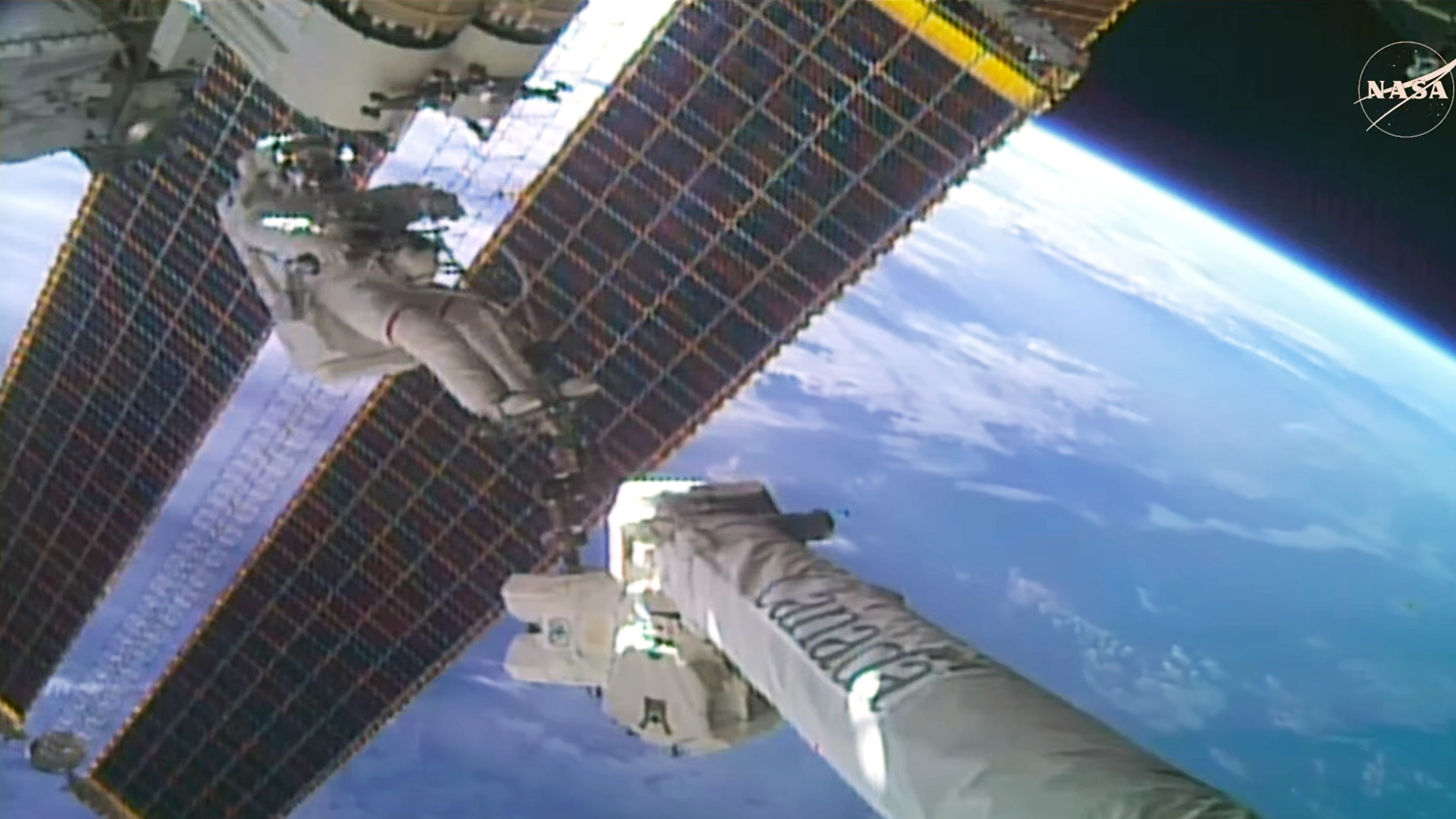
    Featured photograph: Anil Menon rides Canadarm2 during the earlier October 29, 2026 spacewalk. Credit: NASA+. This archival image illustrates the array campaign; it does not depict the November 5 installation.