A small asteroid can be observed as a moving point in a telescope, a flash across the atmosphere and, sometimes, fragments on the ground. The EU–ESA Workshop on Meteor Observations for Planetary Defence, scheduled for November 3–5, 2026, in Petralia Sottana, Sicily, addresses how to connect those stages into a useful scientific and operational record.
The official workshop overview identifies fragmented coordination between observing communities as a central problem. Its goals include linking discovery and rapid telescope follow-up with atmospheric observations and joint analysis. Radar, all-sky cameras, infrasound, seismic measurements and other sensors appear in the planned scientific scope.
The emphasis is on small, imminent impactors, often in the metre-size range. Following these objects across different observing systems offers opportunities to compare an incoming orbit with the body’s behavior during atmospheric entry. The meeting’s dates and agenda establish the discussion being organized; they do not, on their own, establish that participants adopted a shared operating procedure.
Predicting where fragments might land
One November 4 contribution by Anna Moscati describes a model that starts with a pre-impact orbital solution and predicts a meteorite landing region. The abstract says it combines atmospheric conditions with a physical treatment of the luminous trajectory and subsequent dark flight, without needing event-specific fireball triangulation.
The authors report nominal predictions within 100–200 metres of recovered fall locations in validation cases. That is a claim in a conference abstract, not a universal accuracy guarantee. The same abstract stresses uncertainties in fragmentation and the uneven availability of observations, both of which make individual events difficult to reconstruct.
Understanding the limits of each measurement
A November 5 presentation abstract by Eloy Peña-Asensio takes a wider view, covering meteor physics, fragmentation models and remaining uncertainties. It also considers how space-based coverage and ultraviolet spectroscopy could complement existing measurements. These are described as research opportunities, not newly deployed warning capabilities.
Our analysis is that the workshop’s most consequential question is how evidence moves between teams. A precise orbit, a bright flash and a recovered meteorite become much more informative when researchers can relate them confidently. Clear uncertainty reporting is part of that connection. Readers should look for subsequent proceedings or operational announcements before treating the agenda as proof of a completed European response system.
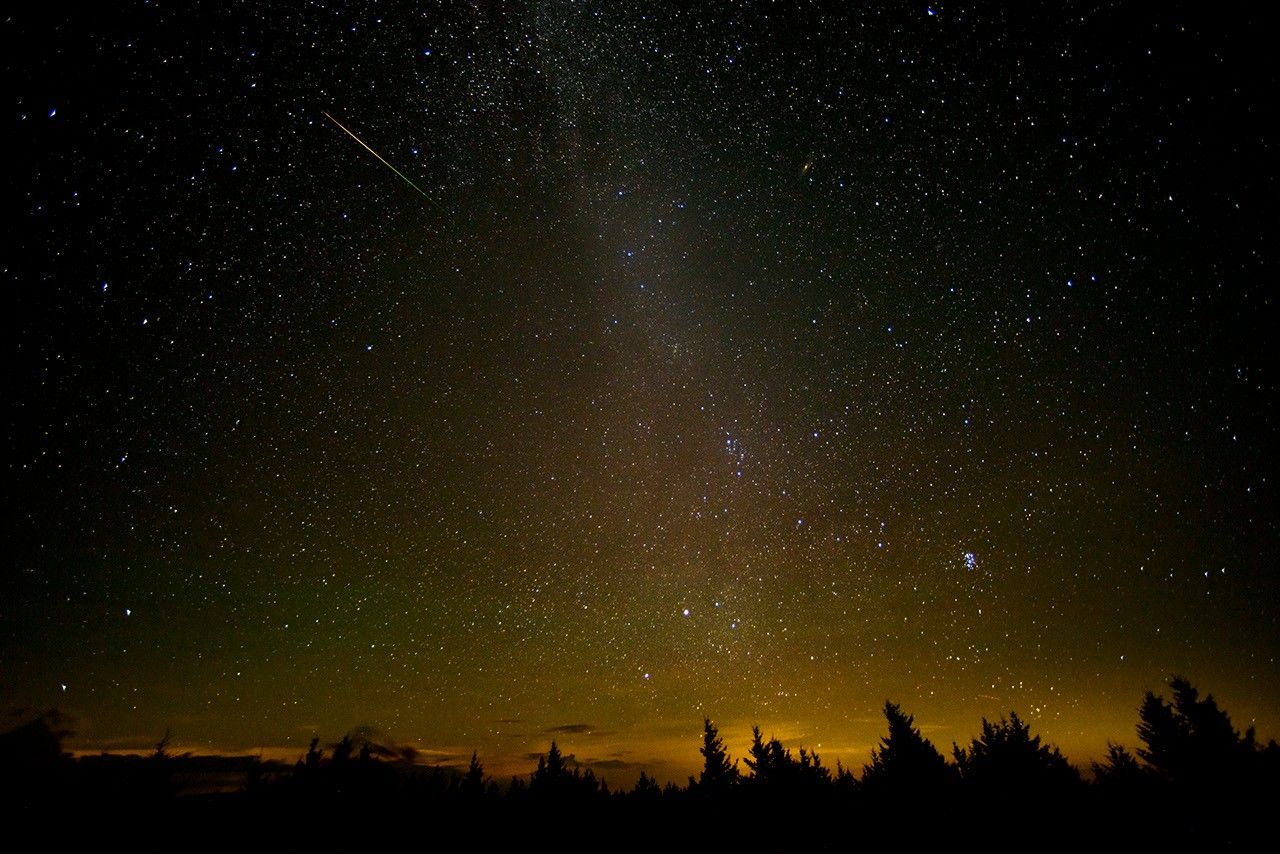
Featured photograph: a Perseid meteor at Spruce Knob, West Virginia, August 12, 2016. Credit: NASA/Bill Ingalls. This archival photograph does not depict the workshop or a November 2026 impact. Image source.
Leave a Reply