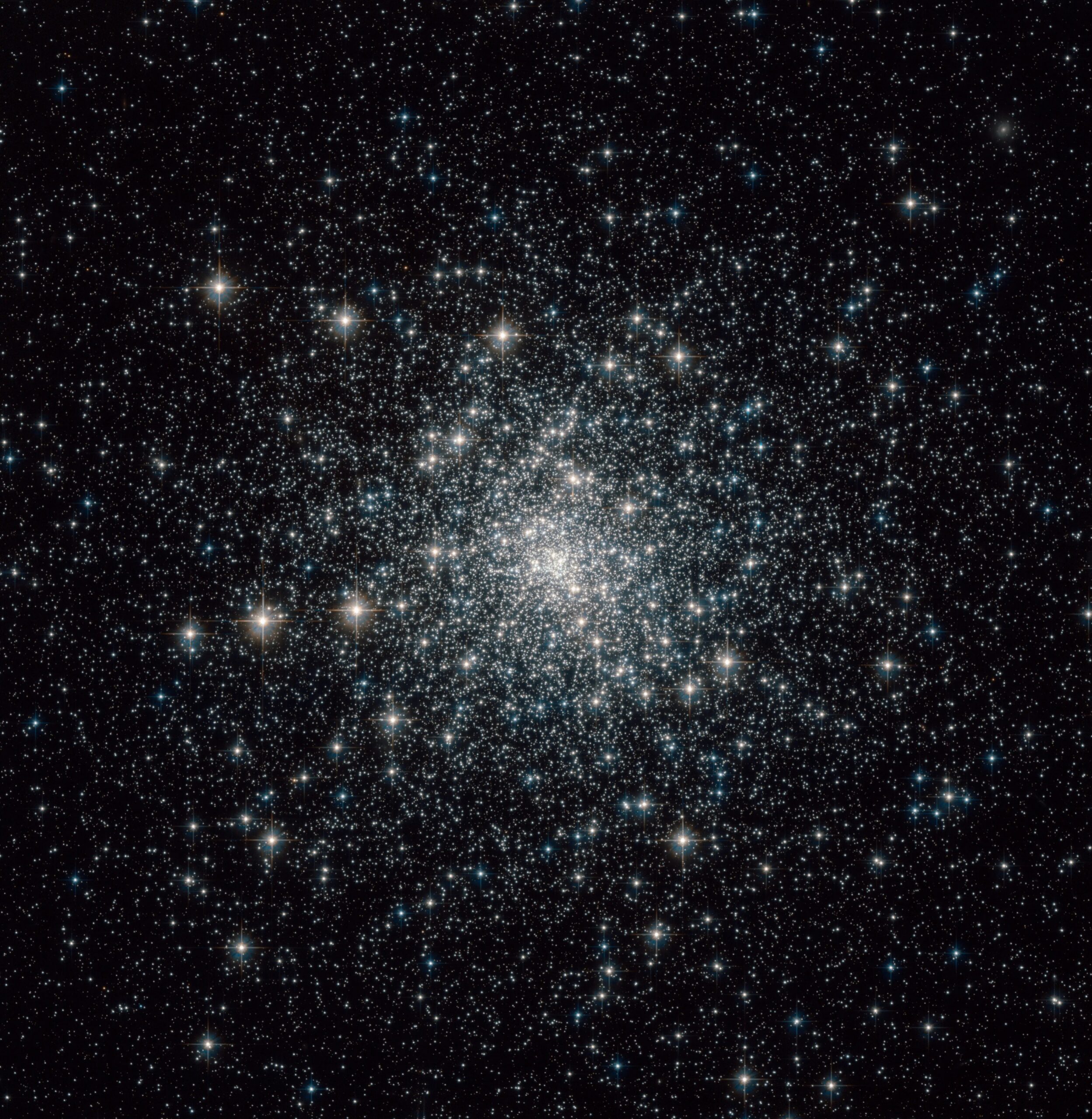
A Hubble image highlighted by NASA on November 5, 2026, presents Messier 30 as more than a dense field of stars. The globular cluster, about 27,500 light-years away in Capricornus, offers a way to investigate both stellar evolution and the Milky Way’s history.
NASA’s new image feature explains that the composite draws on three observing programs, combining ultraviolet, visible and near-infrared measurements. Earlier observations explored faint stars and multiple stellar populations; later work returned to measure how stars had moved over roughly 15 years.
There is also a larger historical question. M30 travels around the galaxy in the opposite direction from the galaxy’s overall rotation. NASA describes this as a possible clue that the Milky Way acquired the cluster from elsewhere. The orbit supports investigation of that possibility; the image release does not claim to have conclusively reconstructed M30’s birthplace.
The scientific value of coming back
The archive record for program 16298, led by Mattia Libralato, makes the repeat-observation strategy concrete. Its proposal sought sufficiently deep second-epoch imaging for 44 clusters whose archive coverage was inadequate, following an original survey of 66 cluster cores.
Matching observations taken years apart lets researchers measure proper motions, the apparent movement of stars across the sky. The proposal’s aim was to compare stars in different mass groups and investigate the clusters’ internal dynamics. It specifically identified the crowded, faint populations in cluster cores as a demanding observational problem. The archive lists the program as completed, but a completed observing program should not be confused with every scientific question having been answered.
Old stars with complicated histories
NASA’s M30 reference page describes another reason the cluster attracts attention: blue stragglers. Earlier Hubble work identified stars associated with close collisions and others in binary systems that acquire hydrogen from a companion. Such interactions help explain why an ancient population can include stars that appear unexpectedly youthful.
Our reading of the new release is that Hubble’s longevity is itself a scientific resource. A sharp image records where stars appear now; a comparable image from years earlier supplies the reference needed to study change. The November 5 feature brings those observing campaigns together for public viewing, while the underlying research depends on carefully measured positions, colors and uncertainty rather than appearance alone.
Featured image: earlier Hubble ACS observation of Messier 30 in visible and infrared light. Credit: NASA/ESA. This archival telescope image is not the new three-program composite highlighted November 5, 2026. Image source.
Leave a Reply