Skywatching guide · Sources checked November 5, 2026, Chicago time. The NASA example below occurred in December 2018.
A luminous streak disappears, yet a twisting shape remains in the sky. A video beginning at that later moment can look like footage of an object hovering or changing shape. One possibility worth checking is a meteor’s lingering trail, rather than continued flight by the original body.
The trail and the moving object have different lifetimes
The American Meteor Society’s fireball FAQ distinguishes glowing trains from particulate smoke trails. It describes trains as emission from ionized and excited air left after a meteor’s passage. Most fade quickly, but some persist for minutes and change shape under upper-atmospheric winds.
The society separately describes smoke trails made from material shed during ablation. This distinction matters: a visible trace need not have one universal lighting mechanism, and appearance alone is not a reliable chemical analysis.
A documented example, not a current sighting
NASA’s December 20, 2018 account describes a fireball observed the previous evening from several western states. The moving fireball lasted roughly one second, while its persistent trace remained visible for minutes.
For that particular event, NASA attributed the lingering visibility to sunlight reflecting from dust particles. Winds distorted the trace into a curving, corkscrew-like form. NASA’s use of the phrase persistent train in this account should not be taken to mean that every long-lived trace is produced by the same process.
Reconstruct the sequence before naming the shape
Our recommended first question is simple: did the witness see the beginning? A person who started filming after the flash may have recorded only the aftermath. That is not a defect in their testimony; it defines which part of the event the footage can establish.
Preserve the original recording and write separate durations for the fast luminous passage and the lingering trace. Note whether the shape translated across the sky, broadened, faded or gradually deformed. Avoid collapsing those observations into one description such as an object that moved quickly and then stopped.
Look for independent reports at the same time and in the appropriate region, including fireball records. An event listed somewhere on the same date is not enough. The timing, direction and observed sequence should fit before proposing a connection.
A persistent trail is a hypothesis to test, not a universal explanation for strange clouds or lights. If no initial meteor was observed and no matching event can be established, say that the origin remains uncertain. The strongest report preserves the distinction between what moved, what remained and what the camera actually captured.
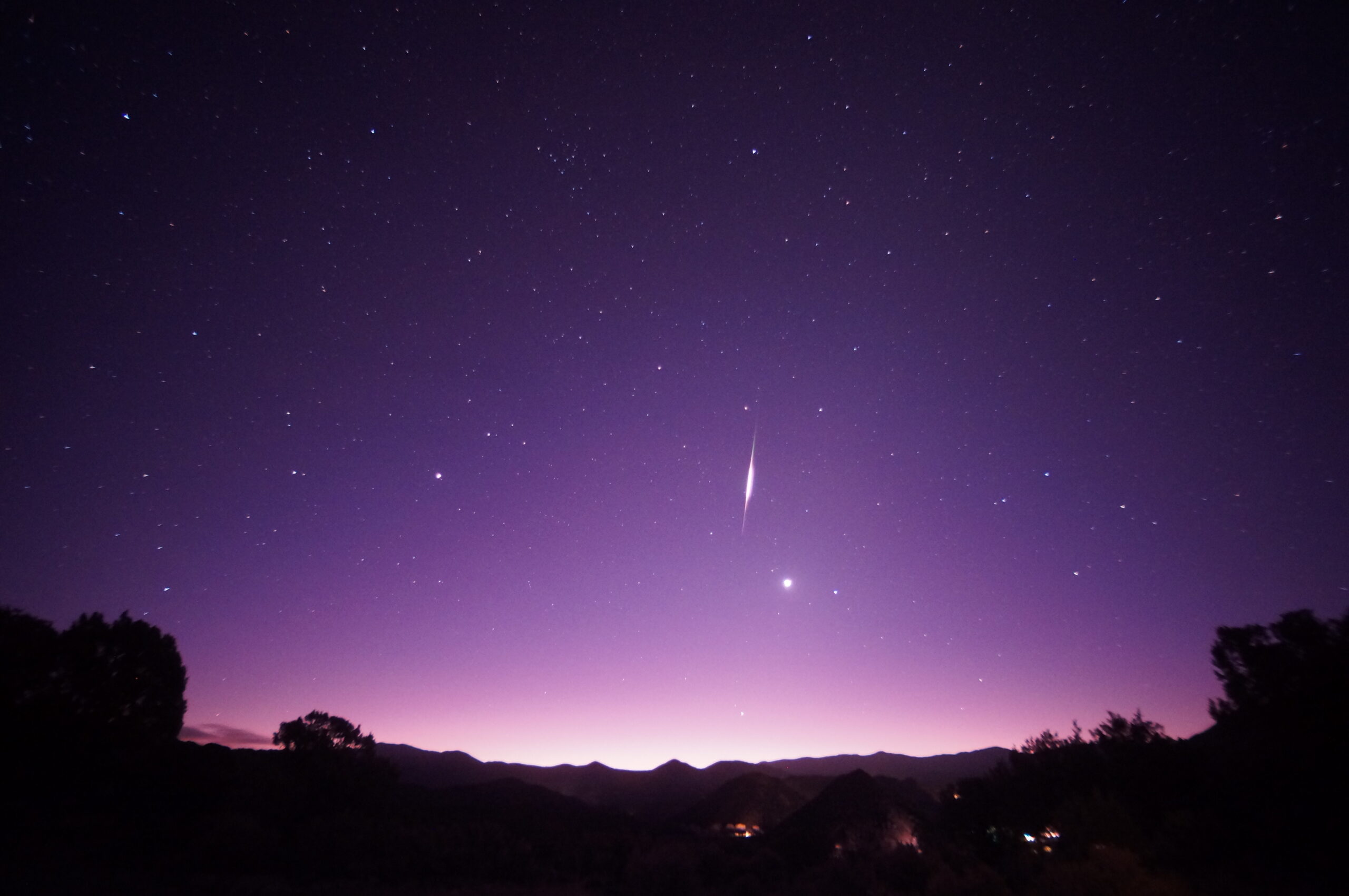
Featured photograph: Crack of Dawn, Mike Lewinski, November 17, 2012, CC BY 2.0. Archival meteor and dispersing afterglow, not the December 2018 event discussed above.

Leave a Reply