NASA’s planned asteroid-hunting telescope has passed another component milestone: the solar array on NEO Surveyor’s sunshade has completed functional and performance testing. The structure has two jobs that must work together, supplying electricity while shielding a sensitive infrared telescope from sunlight.
In its October 26, 2026 update, NASA describes work spread across several months. Solar cells were installed in January, environmental testing followed in March, and the assembly reached BAE Systems in Colorado in May. The accompanying inspection photographs were taken in July. The announcement date should not be mistaken for the date of every operation.
A shield that also powers the spacecraft
The sunshade stands about six metres tall. Its 864 interconnected solar cells can supply up to two kilowatts, charging the batteries that run the spacecraft. NASA says the team has also integrated Sun and temperature sensors.
The telescope will measure infrared radiation from Sun-warmed asteroids and comets. Keeping direct sunlight out of its aperture is essential to that work.
Looking where visible-light searches struggle
NASA’s mission overview explains the advantage: a dark object can reflect little visible light yet still stand out through its infrared emission. NEO Surveyor is also intended to search regions near the Sun’s direction, where glare makes observations difficult, and regions ahead of and behind Earth in its orbit.
Its purpose is to improve the inventory of near-Earth asteroids and comets and characterize potential hazards. The mission page currently lists launch as no earlier than September 2027. Completing tests on the sunshade does not establish that the entire spacecraft is ready to launch, and this update announces no newly discovered impact threat.
Why the featured image is an illustration
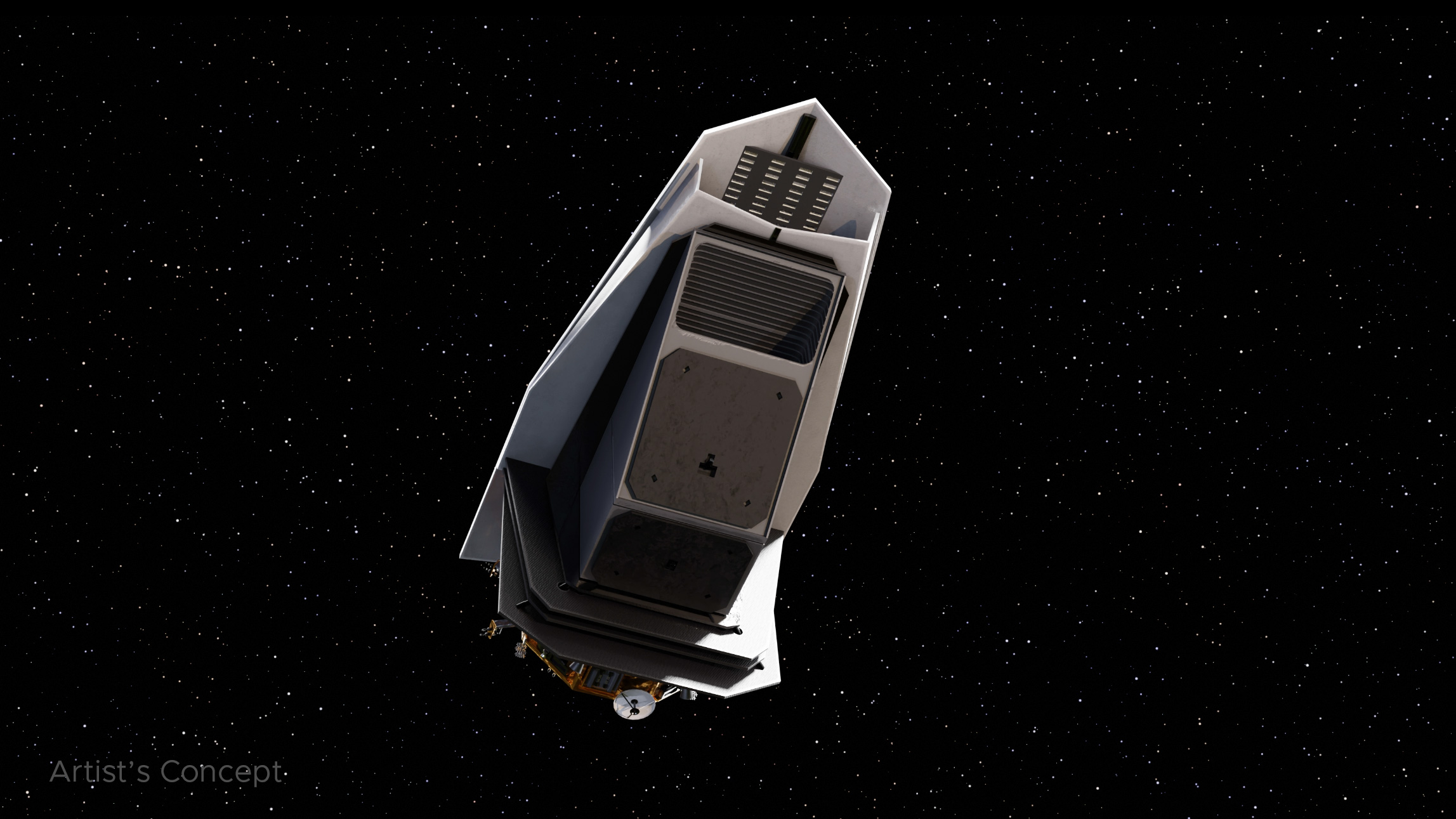
The NASA/JPL-Caltech concept shown above, released in August 2024, depicts the intended spacecraft in deep space, not a flight photograph. JPL describes its destination as the Sun–Earth L1 region, roughly a million miles from Earth. The dark instrument enclosure beneath the sunshade is designed to let heat escape so the telescope’s own warmth does not overwhelm the signals it seeks.
Featured image: Artist’s concept of NEO Surveyor. Courtesy NASA/JPL-Caltech. Reused under JPL’s image-use policy.
Leave a Reply