A UFO film in the National Archives can be both a genuine historical record and an unresolved visual puzzle. The civilian home movies preserved with Project Blue Book make that distinction especially clear: their presence documents material received for an Air Force investigation, not an official certification of what appears on screen.
In an October 28, 2013 archival essay, Audrey Amidon described 18 home movies filmed around the United States between 1952 and 1967. The post presents six examples and identifies the digital source: high-definition scans of 16mm enlargements made from 8mm films.
The copy history is part of the evidence
NARA says the films presented in that post were not edited or altered. That statement belongs alongside the disclosed copying history. The online versions are scans of larger-gauge copies, rather than direct digital captures from the original camera film.
An enlargement changes the carrier and scale of an image; it does not create detail the camera never recorded. Before measuring a bright spot, a researcher needs to ask which generation is available, whether the original survives, and what information exists about frame rate, exposure and the copying process. Apparent sharpness on a modern screen cannot answer those questions.
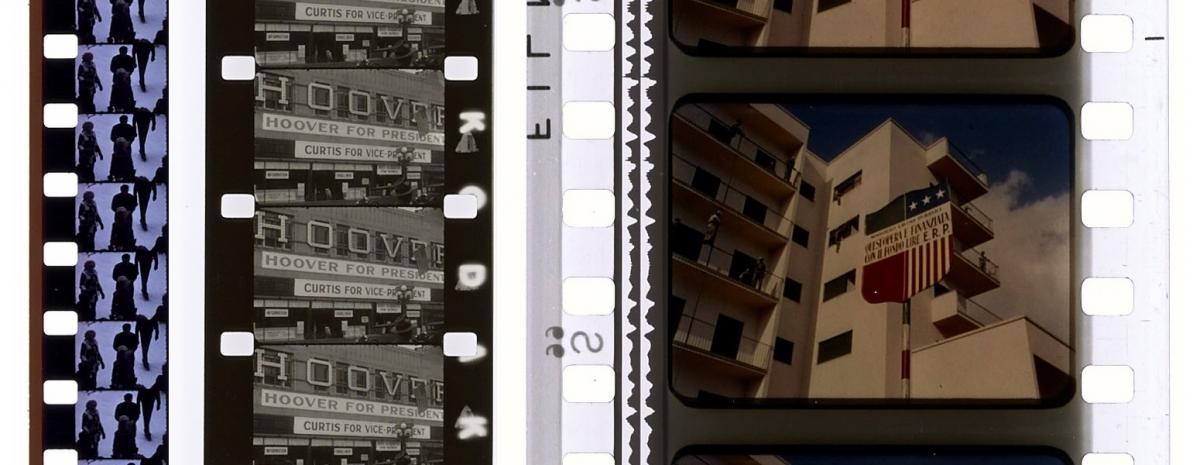
NARA’s film-format guidance explains that gauge refers to film width and perforation type. It also recommends checking containers, leaders and related paperwork for identifying information. Those apparently mundane materials can connect a viewing copy to the circumstances recorded in an investigation.
Custody, interpretation and reuse
The Blue Book essay explains why civilian footage belongs in a federal archive: material acquired for an agency’s essential work becomes a record of that agency’s activities. This establishes a reason for preservation. It does not resolve an object’s distance, size or identity.
Copyright is a separate question again. NARA’s use policy warns that privately created material in its holdings may carry restrictions. Federal custody alone does not turn a citizen’s movie into a government-created public-domain work.
A careful viewing therefore starts with the catalog identifier, follows the available copy history and reads the associated report before offering a physical explanation. That approach preserves the films’ historical value while keeping claims proportional to their contents. The archive supplies a traceable starting point; the interpretation still has to be demonstrated.
Featured image: National Archives and Records Administration, motion-picture preservation guidance. Public domain/CC0 1.0 for NARA-created works. Format comparison, not a Blue Book film frame. Image source.
Leave a Reply