Dark Fires / Topics
Space & Astronomy
Explore space missions, planets, stars, galaxies, and the science behind new discoveries, with reporting grounded in observatories, mission teams, and published research.
-
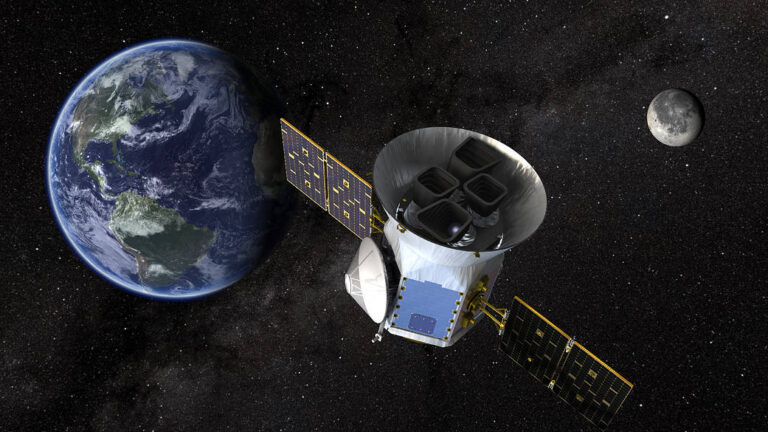
TESS Archive Search Finds Eleven Outer-Solar-System Objects and Eight Candidates
In a preprint submitted November 13, 2026, Te Han and colleagues report eleven previously unreported trans-Neptunian objects, supported by independent recoveries in ground-based archives. Two evidence levels, not nineteen equal…
-
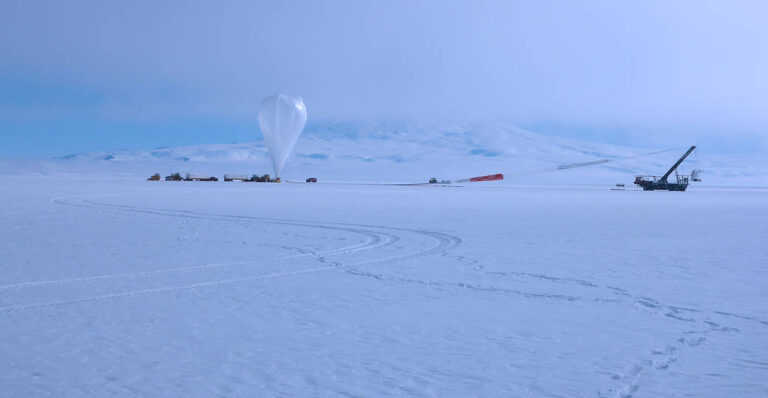
COSI’s Gamma-Ray Payload Reaches the Spacecraft Integration Stage
NASA’s next wide-field gamma-ray telescope has moved from instrument assembly toward becoming a spacecraft. In a November 16, 2026 update, NASA reported that the COSI science payload had reached Northrop…
-
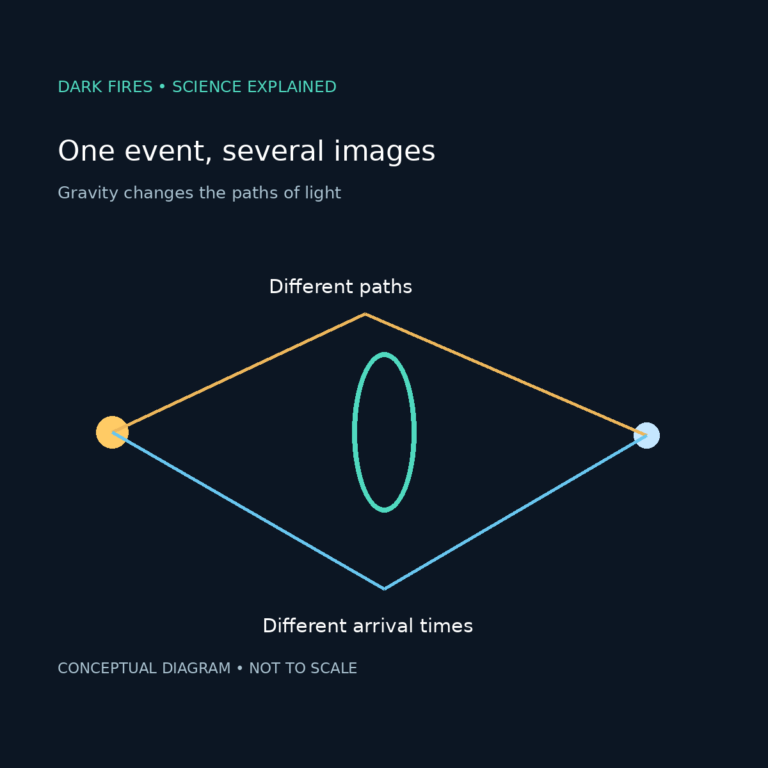
Why one supernova can appear more than once
When astronomers see a supernova reappear in a gravitational lens, the star has not necessarily exploded again. Light from the same event can reach us along different routes, arriving at…
-
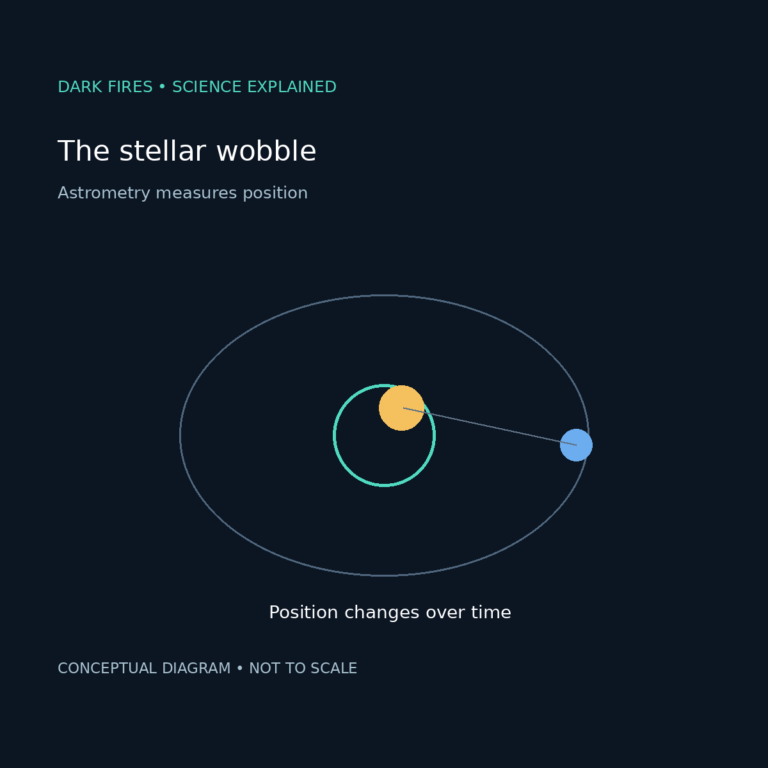
How a star’s tiny wobble can reveal an unseen planet
An unseen planet can announce itself through the motion of its star. Astrometry measures a star’s position on the sky over time, looking for the small wobble produced as star…
-
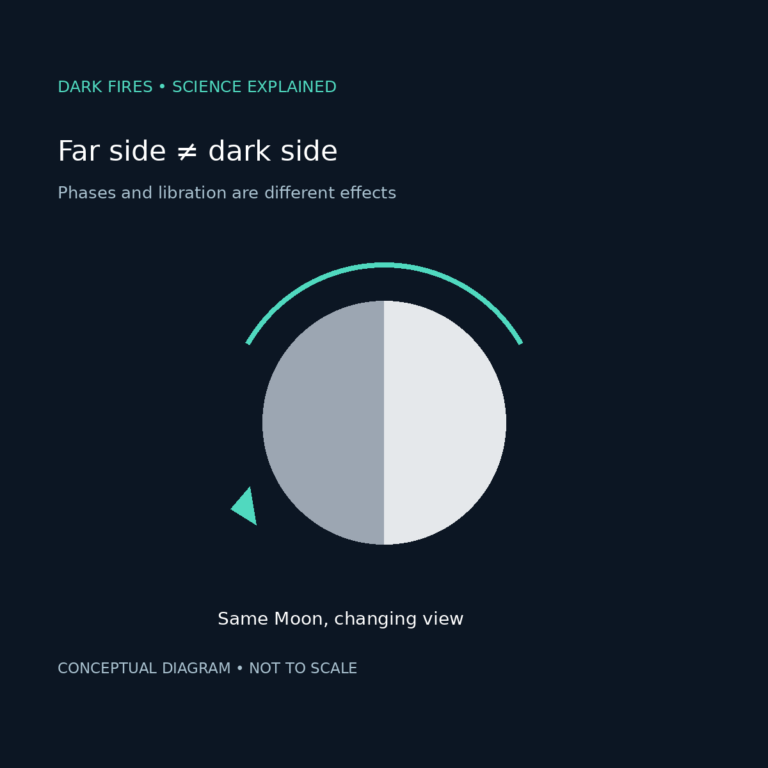
Why the Moon’s far side is not its dark side
The Moon’s far side describes where it faces, not whether sunlight reaches it. The hemisphere generally turned away from Earth experiences daylight and night just as the near side does.…
-
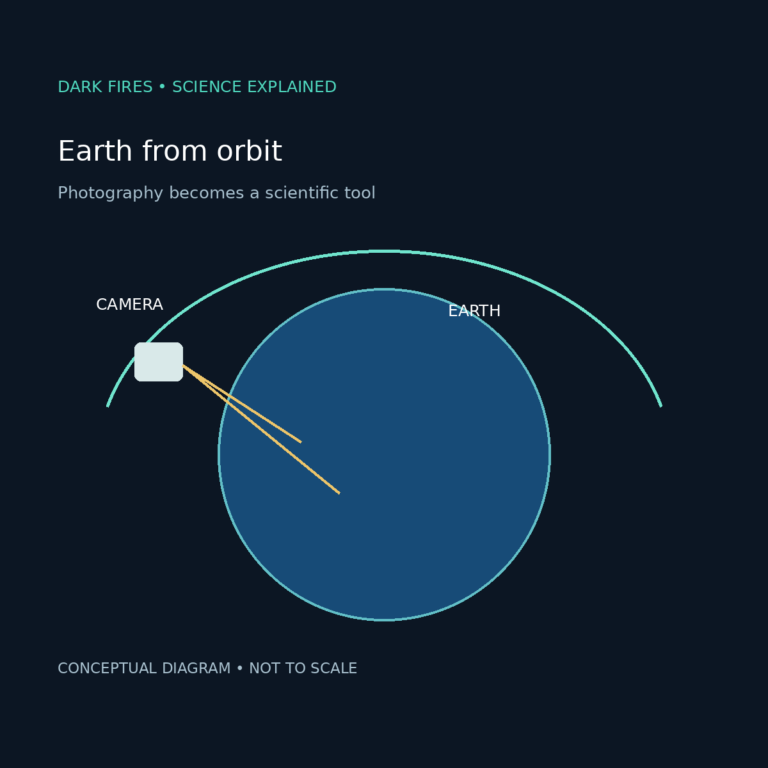
Gemini XII at 60: Earth photographs helped make the case for Landsat
Sixty years after Gemini XII, one part of its legacy points toward Earth rather than the Moon. In a November 13, 2026 historical feature, NASA revisited how astronaut photography helped…
-
Dark Fires Weekly: UAP Evidence, Roman Alignment and Mars-Bound Twins | November 8–14, 2026
This week’s briefing follows a simple distinction: a record, a measurement and an interpretation are not interchangeable. We lead with two reviews from our UAP coverage, then turn to fresh…
-
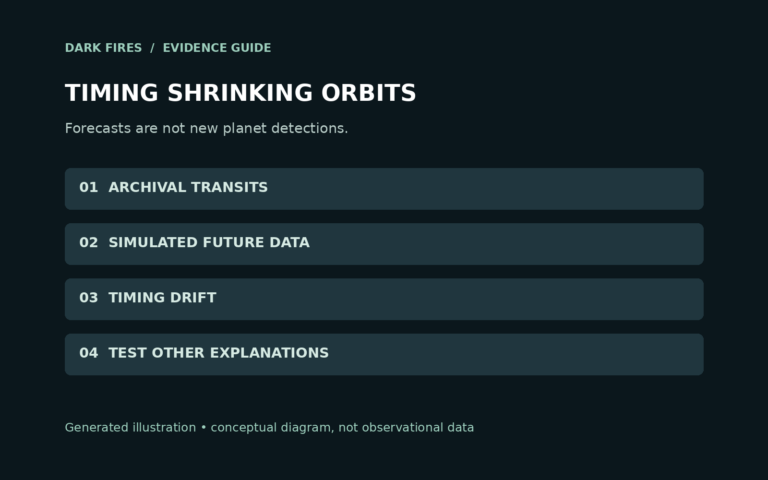
Timing Old Planet Transits Could Expose Shrinking Orbits
A future telescope could extract new physics from planets already discovered years ago. A study posted November 5, 2026 examines how the planned Earth 2.0 mission might reveal hot Jupiters…
-
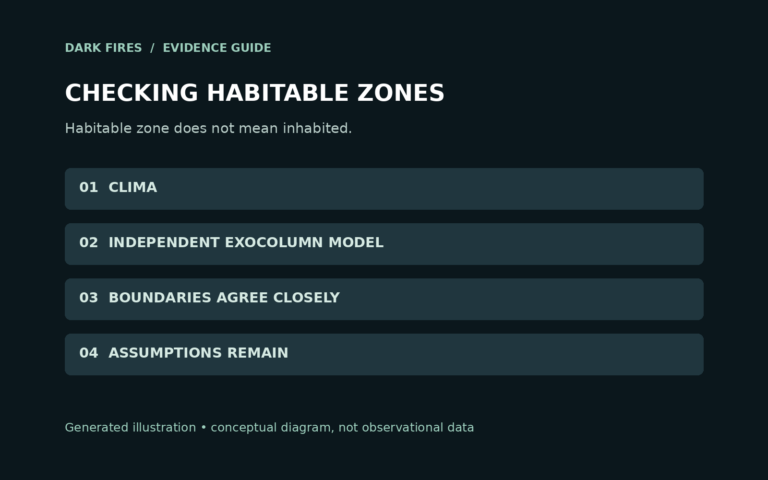
A Second Climate Model Checks the Habitable Zone
The familiar “habitable zone” is not a map of inhabited planets. It is a modeling tool for estimating where certain rocky worlds might sustain surface liquid water. A new study…
-
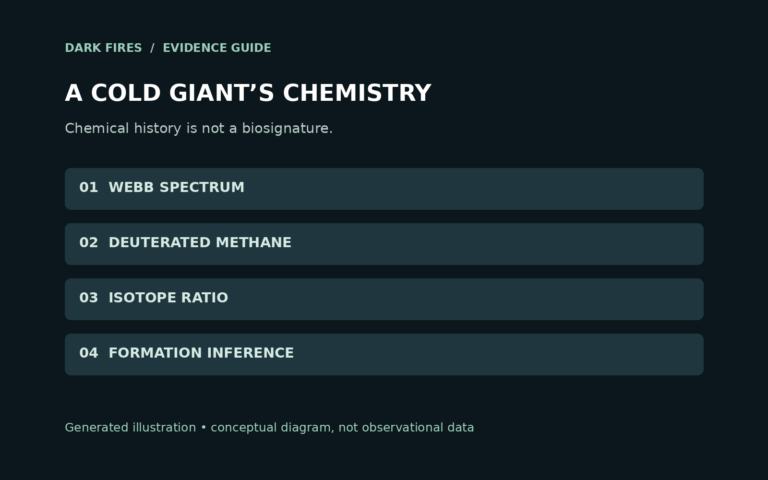
Webb Study Traces a Cold Giant’s Chemical Past
A new study uses an unusual form of methane to investigate how a giant planet assembled. Jerry Xuan and colleagues report detecting deuterated methane in the atmosphere of epsilon Indi…