NASA’s next wide-field gamma-ray telescope has moved from instrument assembly toward becoming a spacecraft. In a November 16, 2026 update, NASA reported that the COSI science payload had reached Northrop Grumman’s facility in Sterling, Virginia, earlier in the month.
The next steps are integration with a LEOStar-2 spacecraft, followed by vibration and thermal testing. NASA lists August 2027 as the planned launch date. The arrival is therefore a hardware milestone, not the start of observations, and the launch remains a future plan.
What COSI is designed to measure
COSI, the Compton Spectrometer and Imager, will investigate gamma rays associated with the creation and destruction of matter, stellar evolution and other energetic events. Its planned energy range is 0.2 to 5 million electron volts.
One target is the Milky Way’s positrons, the antimatter counterparts of electrons. Their annihilation produces a recognizable gamma-ray signal, but identifying where the positrons originate remains a scientific problem. COSI also aims to map emission from radioactive isotopes, measure polarization and help locate short gamma-ray bursts for follow-up by other observatories.
From balloons to orbit
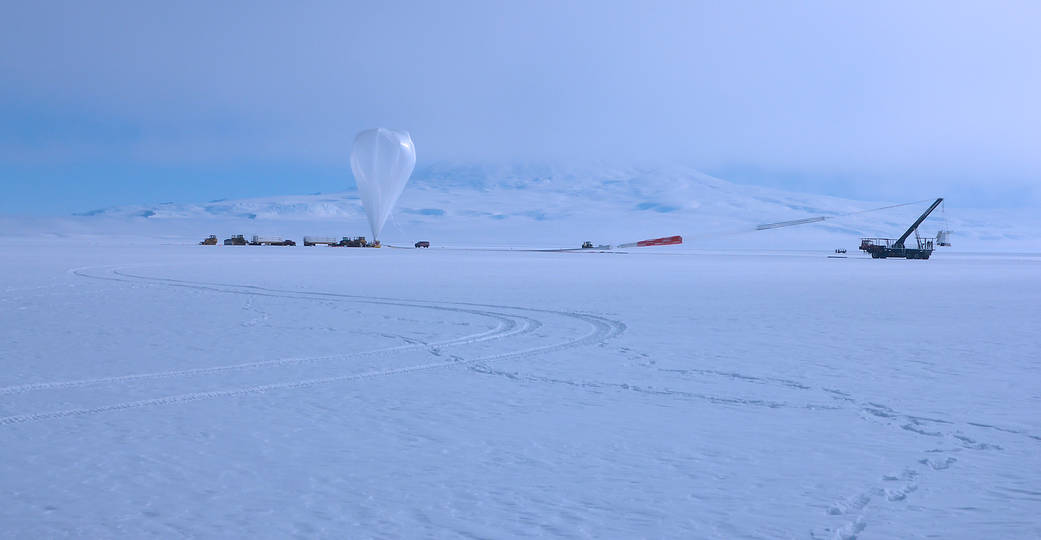
The satellite builds on technology developed through scientific balloon flights. That history explains the archival photograph accompanying this article: it shows an earlier COSI balloon payload at McMurdo, Antarctica, not the flight hardware delivered in November 2026.
The important distinction is between a detector’s scientific promise and demonstrated performance in its final operating environment. Integration and environmental testing still stand between this delivery and an orbital survey.
Image: Archival NASA photograph of a super-pressure balloon carrying an earlier COSI payload at McMurdo, published January 29, 2015. Credit: NASA.
Leave a Reply