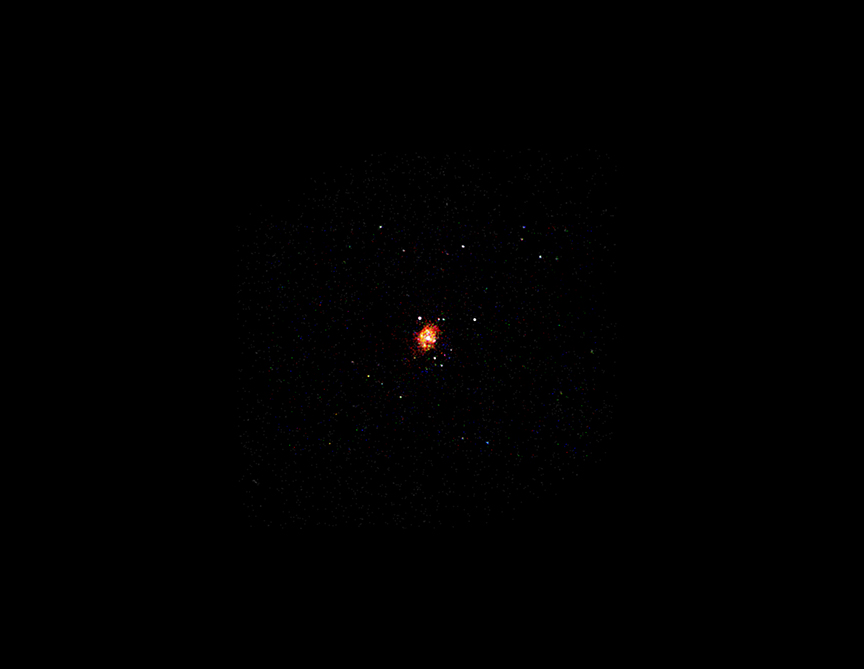
A new collection of galaxy images highlights a partnership that has helped astronomers study some of the universe’s most energetic activity. Released on October 8, the views combine observations from NASA’s Chandra X-ray Observatory and Neil Gehrels Swift Observatory with data from other telescopes.
The Chandra release features the Small Magellanic Cloud and the spiral galaxies NGC 1097, NGC 4151 and NGC 1365. Its timing is poignant: Swift is approaching the end of its orbital life after an unsuccessful attempt to raise its altitude.
The collection brings older observations together in newly released presentations. It offers a useful way to understand what different instruments contribute when astronomers examine the same object across several forms of light.
Fast reactions and detailed views
Swift launched in November 2004 to investigate gamma-ray bursts and other changing cosmic events. Its three telescopes cover gamma rays, X-rays, ultraviolet and visible light. The spacecraft’s ability to redirect its attention quickly lets it begin studying an outburst while that event is still unfolding.
Chandra adds exceptionally sharp X-ray observations. A fast response can establish when and where something is happening; a detailed view can help distinguish the sources and structures responsible. Coordinated measurements allow researchers to investigate a phenomenon with more information than either observatory could supply alone.
In the Small Magellanic Cloud image, ultraviolet, X-ray, infrared and optical measurements reveal different parts of a nearby galactic neighbor. The other three galaxies contain actively feeding supermassive black holes. Their bright central regions show how strongly the surroundings of a black hole can radiate as material is heated.
These are data-based composite images. Colors represent selected wavelength ranges, including radiation invisible to human eyes. The color key is therefore part of the scientific explanation: it tells the reader which instrument or kind of light produced a feature.
Why Swift’s orbit is running out of time
Space near Earth still contains a thin atmosphere. Over time, drag removes orbital energy from satellites, lowering their altitude. Increased solar activity intensified the drag affecting Swift, which has no propulsion system to maintain its orbit.
NASA contracted Katalyst Space to build a servicing spacecraft called LINK, designed to approach Swift, grasp it and lift it higher. LINK launched in July, but communications and orientation-control problems prevented it from carrying out the planned boost. NASA’s September 28 account of the effort says the agency ended its involvement on September 3; LINK re-entered the atmosphere on September 25.
The attempted rescue had already shaped Swift’s observing schedule. Controllers spent months pointing the observatory in ways intended to reduce drag, balancing its orientation against power and instrument-safety constraints. This bought time for the servicing effort while limiting normal science observations.
A legacy built on catching change
After the boost plan was scaled back, Swift resumed scientific work. A September 25 operations update reported that its Burst Alert Telescope was detecting gamma rays again and that automated repointing had restarted.
Normally, a detection by that wide-field instrument can interrupt the day’s planned observations. Swift then turns its other telescopes toward the event. That ability to react autonomously is central to the observatory’s contribution to time-sensitive astronomy.
The same update estimated that Swift would reach an altitude where science operations become difficult in early to mid-October. It was a forecast, not an announcement that observations had ended. The October 8 Chandra release described the telescope as nearing its final days in orbit; neither source establishes an exact end date.
Whatever the remaining operational time, the accumulated observations will retain their scientific value. The new galaxy collection illustrates why: measurements taken by different observatories, sometimes years apart, can be brought together to reveal structures and physical processes more clearly. Swift’s contribution extends from its rapid response to a fresh flash in the sky to the long-lived record that astronomers continue to examine.
Image: The Chandra X-ray component of the October 8 NGC 1097 release. This is an X-ray data image, rather than the full optical and ultraviolet composite. Credit: NASA/CXC/SAO; image processing: NASA/CXC/SAO/L. Frattare. Image source; usage information.
Leave a Reply