An unidentified light becomes a more useful aviation report when it is attached to a position, a time and a clear description of what was actually observed. The goal is not to make the account sound more extraordinary. It is to leave enough information for someone else to reconstruct it.
Start with the reporting aircraft
The FAA’s facility-order section 4-7-4 identifies five kinds of information to report when available: the aircraft call sign or identification of an air-traffic observer; the observer’s location and, for an aircraft, altitude and flight direction; the phenomenon’s relative location; its description and known movement information; and whether it appeared on ATC radar.
Those fields separate two things that easily blur in a dramatic retelling: the known position of the observer and the uncertain position of the object. An aircraft’s reported altitude does not automatically become the altitude of a distant light seen through its window.
Describe before interpreting
A useful account distinguishes a visible feature from an inference. “Three steady white lights above the horizon” records an appearance. “A triangular craft flying at our altitude” adds conclusions about physical connection, shape and distance that may need separate support.
Similarly, a direction relative to the aircraft should not be confused with a geographic heading. If the aircraft turns, its left and right change. Preserving the aircraft’s own direction helps a later reviewer understand what “off our left side” meant at that moment.
These are editorial suggestions for clearer records, not additional mandatory FAA fields. Where an estimate is unavoidable, label it as an estimate. Where information was unavailable, say so rather than manufacturing a precise number.
Preserve the sequence
A practical personal note can keep the event in order: when the observation began, what first attracted attention, what changed, when contact ended, and whether the observer or aircraft moved during it. Record the time zone alongside any clock time. Precision is valuable only when its origin is known.
Separate what the witness saw from what someone else said over the radio. If a controller mentioned a radar return, preserve that statement as such; do not silently upgrade it into a verified match between a particular return and the visible light. Matching those observations is an analytical step.
Original notes also help keep a later narrative from absorbing details supplied by other witnesses or online discussion. A supplementary correction can be useful without overwriting the first account.
Safety and reporting are not identification
The FAA’s controller instruction in section 9-8-1 directs reported or observed UAP activity to the operations supervisor or controller-in-charge. The facility order specifies onward reporting to its security coordination team. These are information-handling procedures, not declarations that an object has an exotic origin.
This guide is not a substitute for flight training, current operating procedures or instructions from air traffic control. Documentation should never distract from safely operating an aircraft. The lasting value of a report is its recoverable detail: who observed what, from where, and which parts remain uncertain.
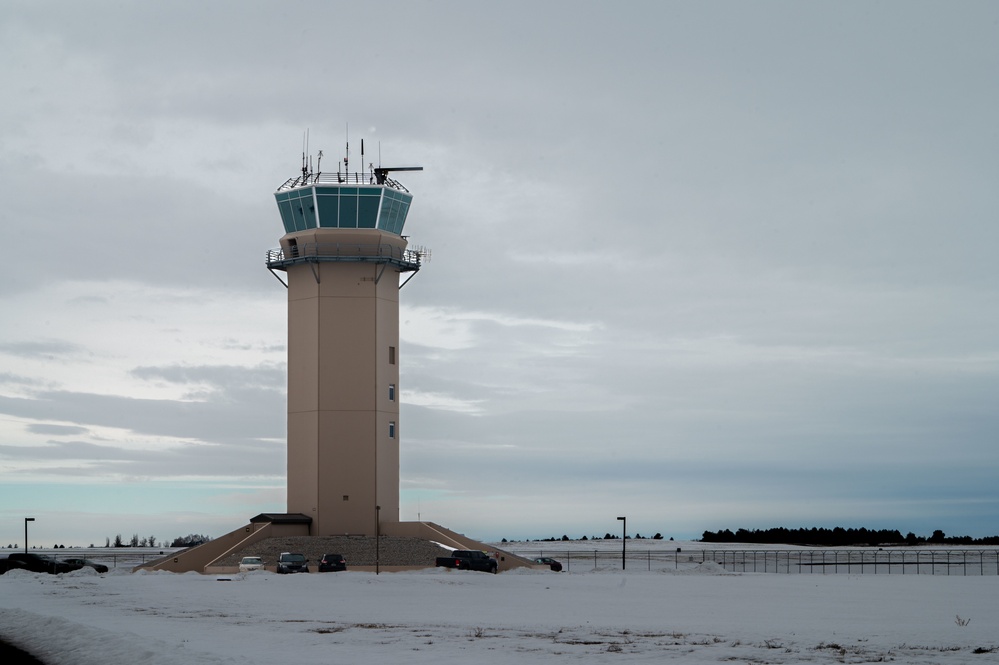
Featured image: Fairchild Air Force Base air-traffic control tower, January 5, 2023. Archival context photograph, not a UAP event or an FAA facility. Credit: U.S. Air Force/Airman 1st Class Stassney Davis. Public-domain image source.
Leave a Reply