A light appears to wander against a dark sky. The witness is sincere, the light is real, and its apparent motion may still be misleading. Autokinesis is one reason those statements can all be true at once.
When a fixed light appears to move
The FAA’s Aeronautical Information Manual describes autokinesis as the apparent movement of a stationary light after prolonged staring in darkness. It includes the effect among illusions that can contribute to disorientation. This is an established concern in aviation training, not a claim invented to dismiss UFO witnesses.
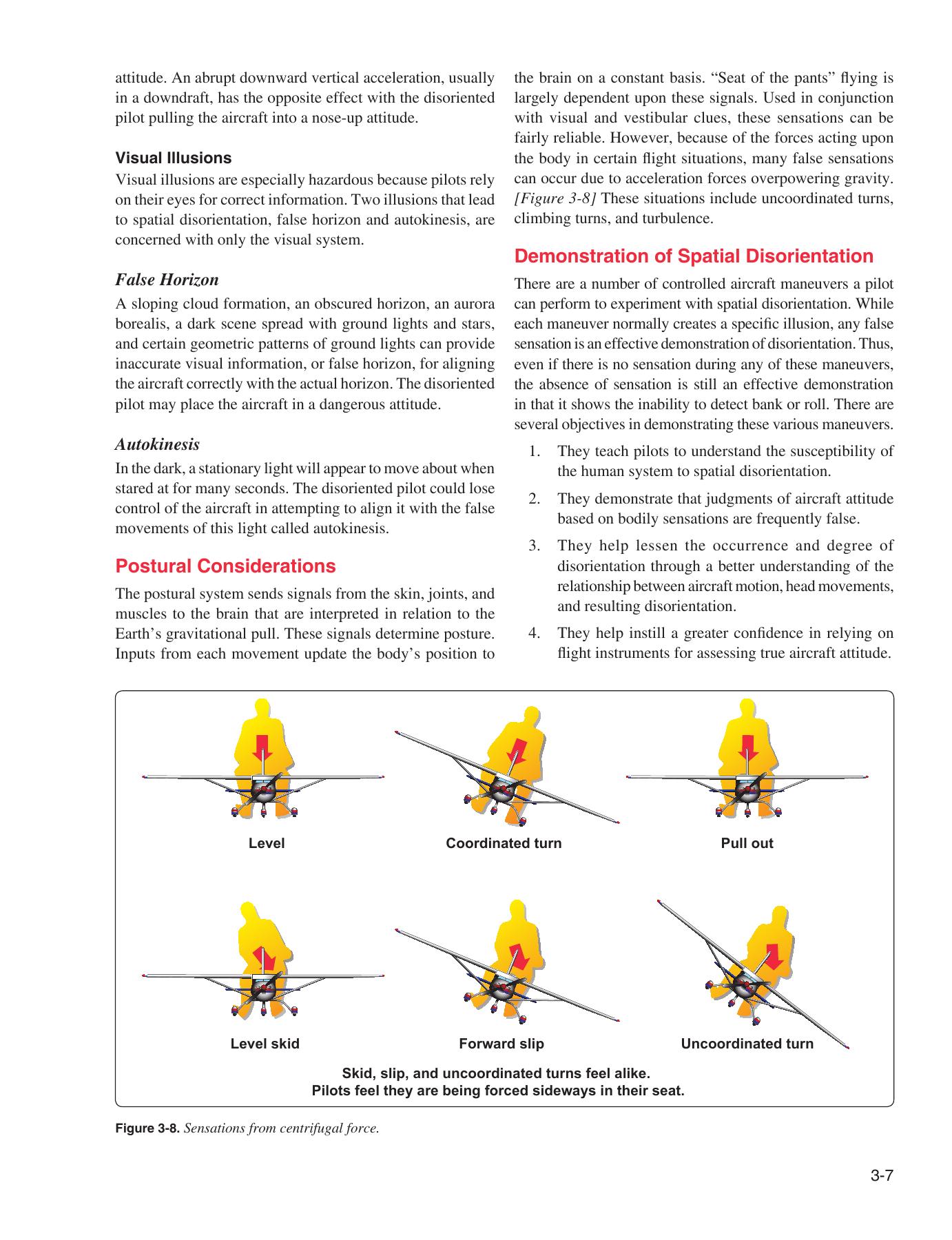
The FAA Instrument Flying Handbook, on printed page 3-7, makes the operational danger clear: a pilot who tries to follow the light’s illusory movement can misjudge aircraft control. The same chapter discusses the wider difficulty of interpreting orientation when visual and bodily cues are unreliable.
What this changes in a sighting account
For a reader evaluating an unusual-light report, the key question is not simply whether the observer saw motion. It is what that motion was measured against. “It moved to my left” and “it crossed behind the same fixed tower twice” contain different kinds of information.
Neither statement should be silently rewritten into a measured speed. To calculate physical velocity, apparent displacement needs a timescale and a defensible distance or geometry. A vivid impression of acceleration is not, by itself, a record of acceleration in metres per second squared.
This is also why a description such as “erratic” deserves unpacking. Did the light change position relative to a building, move within the observer’s field of vision, brighten and dim, or disappear when the observer looked away? Those are different observations, and collapsing them into one dramatic adjective loses useful evidence.
A better set of follow-up questions
- What references were visible? Record whether the scene included a horizon, buildings, trees, stars or only a light against darkness. Do not add a reference point that was not actually visible.
- How was the light watched? Ask whether the observer stared continuously, scanned around or looked through an optical device. Preserve the answer even if its significance is not yet clear.
- What changed when attention shifted? Note whether the impression persisted after looking elsewhere. A retrospective account may not contain this information; missing detail should stay missing.
- Was displacement recorded independently? A stable reference in a continuous recording can help, but camera shake and tracking must be considered separately. Video and naked-eye perception are not interchangeable measurements.
A possible mechanism is not a verdict
Autokinesis cannot be diagnosed from the mere fact that a sighting happened at night. Nor does describing the illusion identify the light’s source. A complete explanation still has to fit the actual record.
The point is to preserve an important distinction: an observer can report an experience accurately without having measured the external motion that seemed to cause it. Taking that distinction seriously makes an investigation more respectful and more useful—not less.
Featured image: Page 3-7 of the FAA Instrument Flying Handbook, including its autokinesis discussion. Archival training document, not an illustration of a reported encounter. Source: FAA; U.S. federal work, public domain.
Leave a Reply