The Tehran encounter begins with an important distinction: an authentic military document can preserve an extraordinary report without independently establishing everything described in it. The surviving record of 19 September 1976 is valuable precisely because readers can examine that distinction for themselves.
Two intercepts, one remarkable account
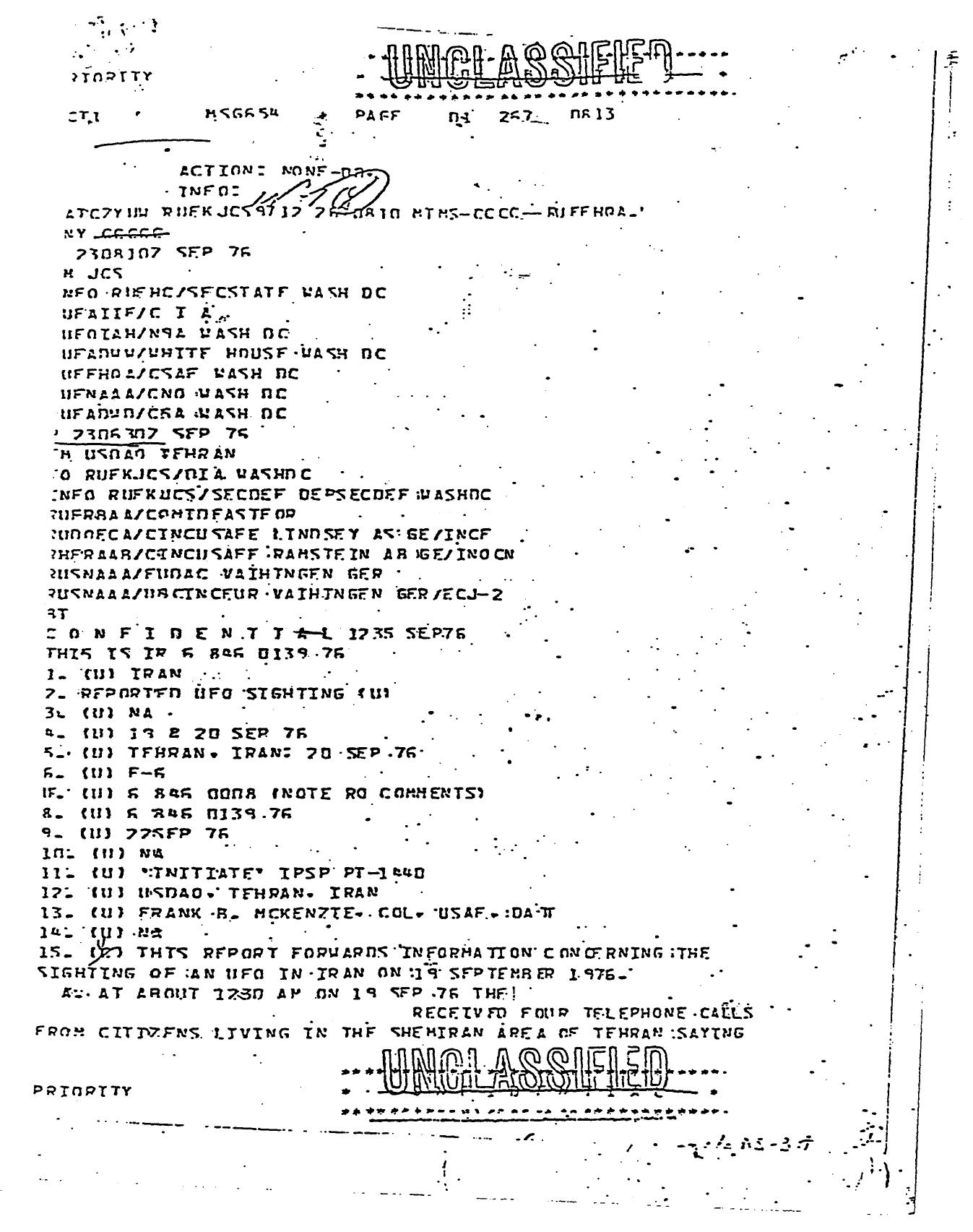
A U.S. Defense Attaché report, preserved in the NSA’s collection as a Joint Chiefs of Staff message, describes civilian calls about unusual lights near Tehran and the dispatch of Iranian F-4 fighters.
According to the account, the first aircraft lost instrumentation and communications while approaching the light, then recovered them after turning away. A second crew reportedly obtained a radar lock and observed rapidly changing colored lights. The report also describes a weapons-control interruption when the pilot attempted to fire a missile at another apparent object.
These are reported observations, not measurements reproduced for independent analysis. The three-page message contains no raw radar recording or aircraft maintenance log. Its narrative also says a daylight helicopter visit found nothing at the presumed landing location, while further checks were planned. It does not supply their results.
A file has more than one date
A separate routing packet preserved by the NSA includes a cover dated 8 December 1978, identifying Louis E. Foster of the Defense Intelligence Agency. That administrative date should not replace the September 1976 encounter date.
The distinction matters when historical records circulate online. A sighting date, a transmission date and a later archival upload describe different events. Confusing them can make old material appear newly discovered—or make separate layers of paperwork look like separate encounters.
Keep the questions separate
For a reader assessing the case, three questions are useful: Was this account genuinely recorded? How accurately does it describe what the crews experienced? What caused those experiences? Answering the first does not automatically answer the other two.
Instrument trouble occurring during an unusual sighting warrants investigation. Establishing that an external object caused it, however, would require additional evidence capable of excluding competing explanations. Likewise, the presence of radar language in a narrative is not a substitute for access to the underlying radar data.
The strongest reason to revisit Tehran is not that the file settles the UFO question. It is that the surviving documents let readers separate a serious historical report from conclusions the available evidence cannot securely carry.
Featured image: First page of the U.S. military message reporting the September 19, 1976 Tehran encounter. Archival document, not a photograph of the reported object. Source: National Security Agency; U.S. federal work, public domain.
Leave a Reply