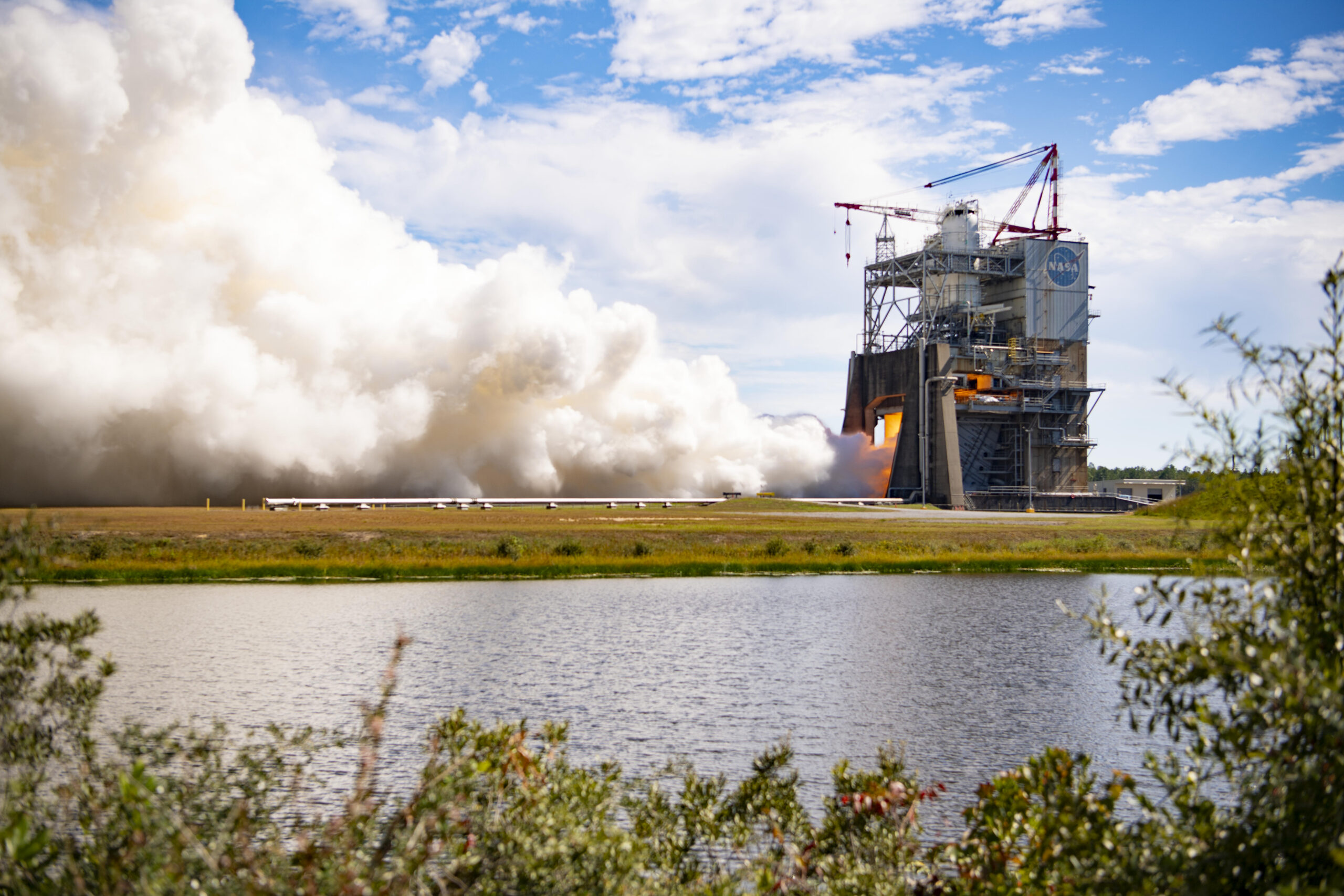
NASA fired developmental RS-25 engine No. 10001 for 500 seconds on October 21, 2026, at the Fred Haise Test Stand in Mississippi. The run matched the approximate duration of an engine firing during a Space Launch System ascent and reached a power setting of 111%.
The test announcement identifies two objectives: acceptance testing of flight components for future Artemis missions and validation of a new thermal protection system around the engine nozzle. Engine No. 10001 is a development unit and will not fly. Its role is to expose hardware to demanding operating conditions while engineers collect performance and reliability data.
Why an engine can run above 100%
The percentage uses a historical reference rather than a modern engine’s absolute limit. NASA’s RS-25 technical overview explains that the original rated thrust established the 100% baseline. Shuttle missions routinely operated at 104.5%; the newer SLS production engines are designed for 111%. Earlier ground tests also reached 113% to examine operating margin.
The RS-25 design comes from the space shuttle programme, but its new assignment brings different conditions. Four liquid-hydrogen and liquid-oxygen engines work together beneath the SLS core stage, alongside two solid rocket boosters. Adapting the inherited engines required new controllers and additional insulation against the hotter surroundings near those boosters.
The production programme also changes how engines are made. NASA describes simplified designs and manufacturing approaches such as selective laser melting, which builds metal components from powder. Using fewer separate pieces can reduce assembly work and manufacturing time. Newly produced engines are to undergo a hot-fire test before flight.
A component test, not a launch
Wednesday’s firing belongs to that continuing ground-development effort. It should not be mistaken for an Artemis launch or a test of an assembled Moon rocket. The immediate result reported is a completed engine run; its value lies in the evidence engineers can extract about the hardware exposed to it.
RS-25 engine No. 10001 during its October 21, 2026, hot-fire test at NASA Stennis. Credit: NASA/Danny Nowlin. Image source.
Leave a Reply