A key part of Europe’s next-generation navigation satellites has passed testing on the ground. In an October 20, 2026 update, ESA said Airbus’s first new signal generation module had completed examinations in Toulouse and returned to Friedrichshafen for the next stage of assembly.
Changing the signal without changing the satellite
The module turns timing information from onboard atomic clocks into navigation signals. Its important new feature is reprogrammability: Galileo Second Generation satellites are intended to generate different signals in real time and accept new configurations after launch. ESA says this flexibility could support improved resistance to interference, faster signal acquisition and greater positioning accuracy.
The hardware still needs integration with the radio-frequency output module. ESA expects payload testing and full integration of the first flying satellite model next year. The reported success is therefore a component milestone, not an announcement that the new service is already available.
Why timing belongs at the center of the story
Satellite navigation is fundamentally a measurement of travel time. As ESA’s explanation of the method describes, a receiver compares the arrival of a radio signal with the time it was transmitted. Combining that interval with the speed of radio waves gives a distance to the satellite.
Measurements from multiple satellites let the receiver work out where it is. Four are normally needed to solve for the three spatial dimensions and the receiver’s clock offset. That last unknown is essential: an ordinary receiver does not carry the same kind of precise time reference as the satellites overhead. Reliable positioning consequently depends on the transmitted timing information as well as the receiver’s calculations.
The satellite must also work with its control network
The latest hardware news follows a different test reported by ESA in August 2026. On July 3, a control center in Oberpfaffenhofen, Germany, sent commands to a Thales Alenia Space satellite model in Rome. The model interpreted and executed the commands, activated its navigation payload and returned telemetry about its condition.
That exercise tested compatibility between ground equipment and spacecraft systems. ESA described twelve second-generation satellites in development, split between Thales Alenia Space and Airbus, alongside upgrades to the ground segment. The new spacecraft are intended to join the existing constellation, so compatibility is part of the mission rather than an optional final check.
For users, the distinction between those stages is worth keeping in view. A successful component test answers whether particular hardware meets its test objectives. A ground-to-spacecraft compatibility test examines another part of the chain. Delivering a dependable navigation service requires those pieces to work together after launch. The reprogrammable module offers room for future changes, but the practical benefits will need to be demonstrated by the integrated system.
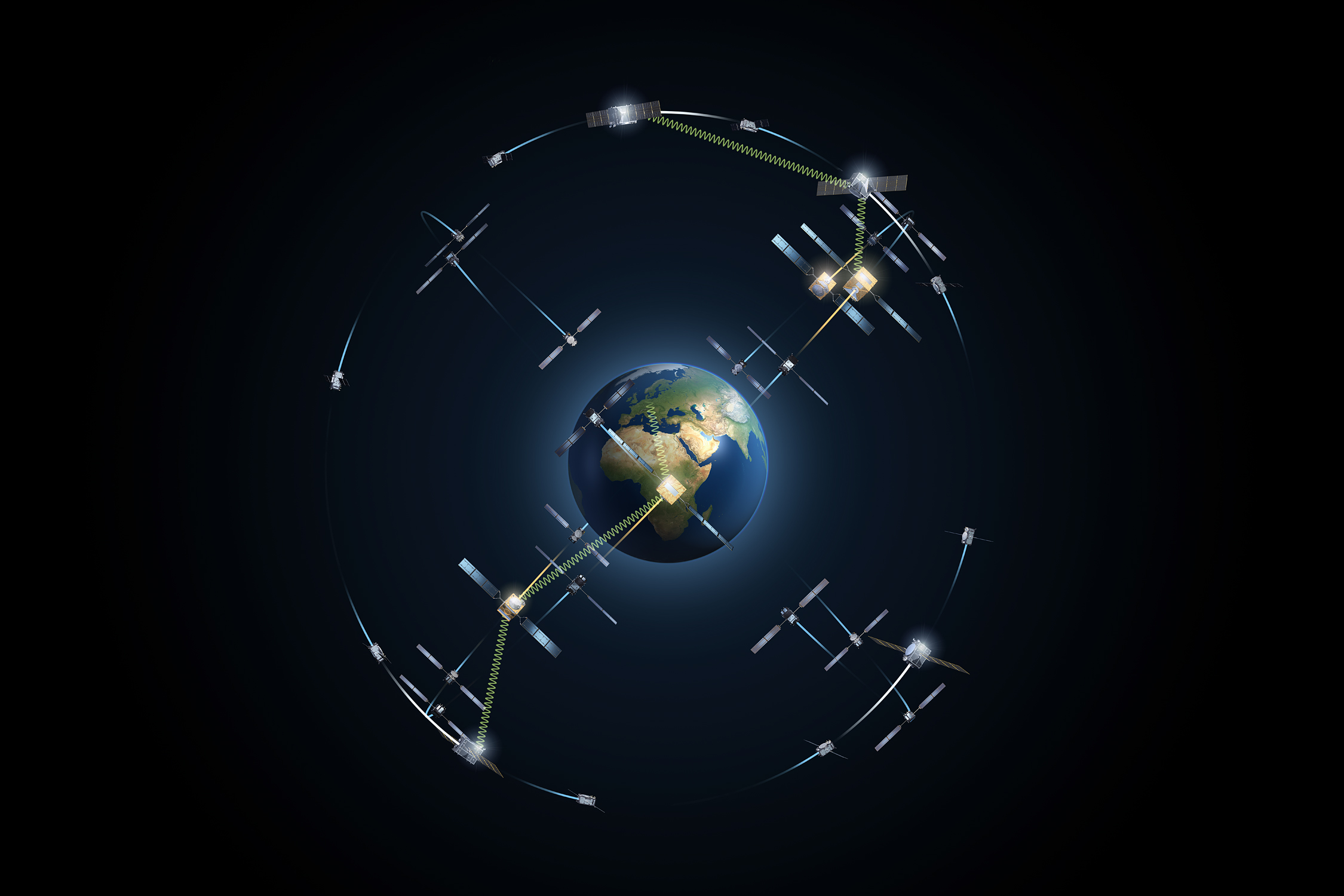
Artist’s illustration of the Galileo navigation constellation. It does not depict the newly tested module. Credit: © ESA/P. Carril.
Leave a Reply