DARK FIRESORIGINS UNKNOWN

Author: Dark Fires

  • NASA’s Simulated Mars Crew Completes a Year in Isolation

    Four volunteers in NASA’s second CHAPEA mission reached one year inside their isolated Mars-analog habitat on October 19. Ross Elder, Ellen Ellis, Matthew Montgomery and James Spicer have been living at Johnson Space Center in Houston since the same date in 2025. NASA says they are due to leave the habitat on October 31. Read the anniversary update.

    Their return to ordinary life will begin another research phase: two weeks of evaluations and debriefings. Those observations will add context to measurements gathered during the confinement.

    Testing daily life, not a journey through space

    CHAPEA Mission 2 is designed around the operational pressures of a long surface mission. Activities include crop growing, exercise, maintenance, robotic work and simulated excursions. Limited resources, delayed communications and equipment problems require the team to manage work with less immediate assistance from Earth-based controllers.

    The setting is deliberately compact. NASA’s habitat description lists 1,700 square feet, four private sleeping spaces, work areas, a medical station, shared living areas and food-growing facilities. Its 3D-printed construction is part of the exploration concept, while the research focuses on how people live and perform within it.

    This remains an Earth-based analog. It cannot reproduce a Mars expedition’s entire combination of gravity, radiation, transport risk and environmental exposure. Its strength is a more controlled look at selected human and operational demands over a long period.

    What the next results need to show

    NASA intends the findings to inform decisions about food, exercise, medical support and crew autonomy. The anniversary announcement does not yet present a completed analysis showing which arrangements worked best.

    The useful evidence will come from connecting conditions inside the habitat with measured outcomes: how workload changed, how resources were managed and how performance evolved. With only four people in this crew, individual experiences also need to be interpreted cautiously. The year-long milestone establishes a substantial observation period; it does not by itself establish that a particular Mars mission design has been validated.

    Reporting checked October 20, 2026 (UTC). Catch-up coverage of NASA’s October 19 milestone announcement.
  • Euclid’s First New Comet Tests a Route to Future Deep-Space Encounters

    Euclid’s First New Comet Tests a Route to Future Deep-Space Encounters

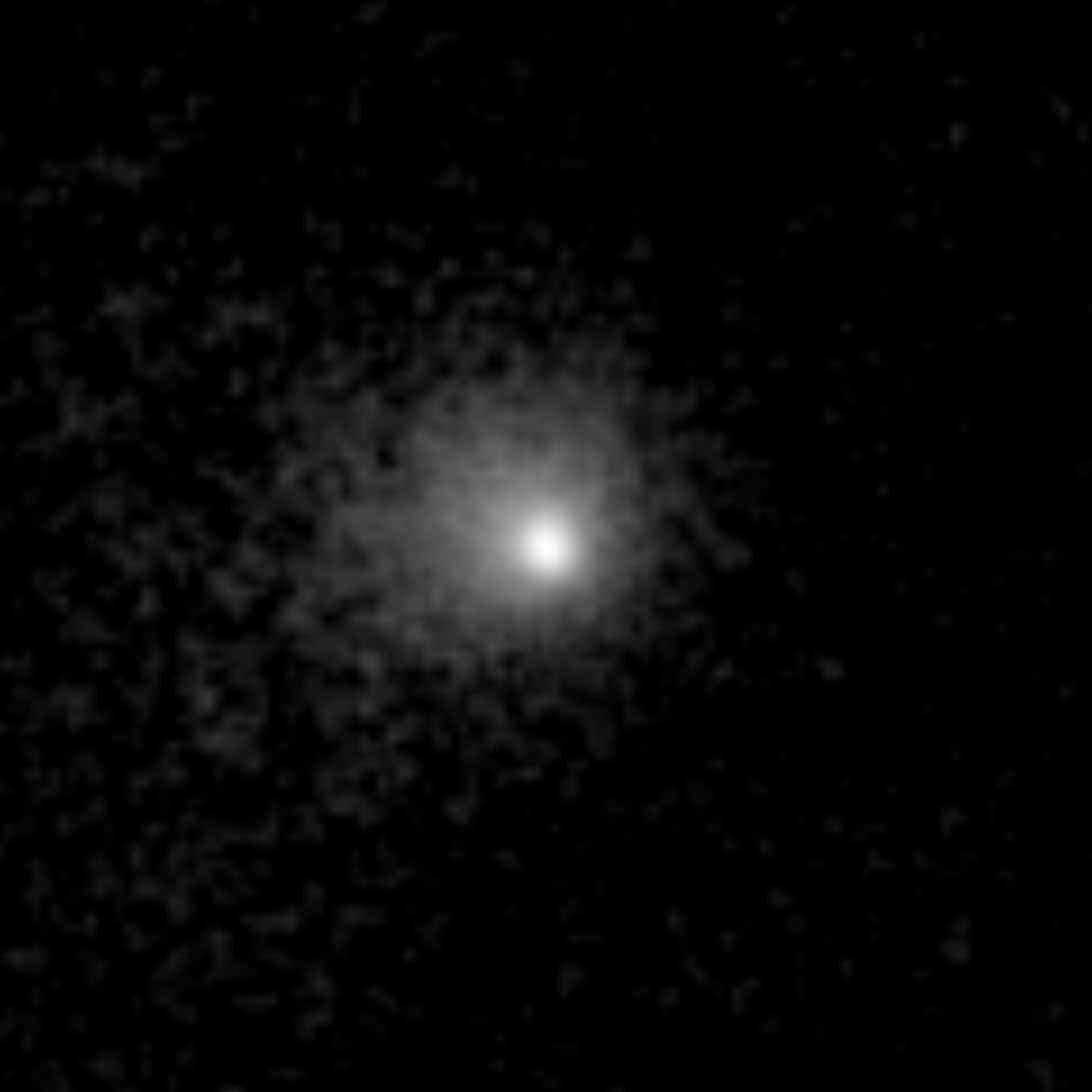
    ESA announced on October 19 that Euclid has discovered its first previously unknown comet. Designated C/2026 S1 (Euclid), the object appeared in observations made during September. The Minor Planet Center confirmed it on October 8 after follow-up work, according to ESA’s discovery account.

    Moving-object software developed by University of Helsinki researcher Mikko Pöntinen helped identify the candidate. A surrounding cloud of material, or coma, indicated activity characteristic of a comet. At the time described by ESA, the object was about 1.3 billion kilometres from Earth, on a path far outside the planets’ common orbital plane.

    How to read the image

    The released close-up composite is assembled from eight exposures, each lasting 89.5 seconds. They were aligned on the moving comet, with interfering regions masked and background objects removed. The image therefore emphasizes the coma rather than showing the untouched appearance of a single telescope exposure.

    This processing helps explain why a moving object can look compact in one published image but streaked in another. The image is a carefully constructed measurement product, with its method documented alongside it.

    A rehearsal for finding an encounter target

    ESA says this particular comet is unsuitable for Comet Interceptor. The useful connection is the discovery-and-alert process: identifying a distant object promptly can give other observers time to establish its orbit and character.

    Comet Interceptor, an ESA mission with JAXA participation, is planned to wait in space before departing toward a suitable target. Its main spacecraft would release two smaller probes, allowing simultaneous observations from different directions. ESA currently lists launch in late 2028 or early 2029.

    For Euclid’s new comet, further observations should refine the orbit. For the future encounter mission, the broader lesson is operational: a discovery becomes much more useful when detection, confirmation and follow-up work together. No flyby of C/2026 S1 has been announced.

    Reporting checked October 20, 2026 (UTC). Catch-up coverage of ESA’s October 19 announcement.

    Image: Eight Euclid exposures aligned on comet C/2026 S1, with background objects removed. Credit: ESA/Euclid/Euclid Consortium/NASA, M. Pöntinen et al. 2026. Source image, licensed CC BY-SA 3.0 IGO. Reproduced without further image edits.

  • The ISS Receives Its Final Roll-Out Solar Arrays as Spacewalk Preparations Begin

    The International Space Station has received the final pair of roll-out solar arrays intended for its power-system upgrade. SpaceX’s CRS-35 Dragon docked at Harmony’s space-facing port at 10:27 a.m. EDT on October 15, bringing more than 6,300 pounds of supplies, equipment and research cargo. NASA confirmed the arrival.

    By October 19, Anil Menon of NASA and Canadian astronaut Joshua Kutryk were preparing their spacesuits for the installation work. NASA’s latest station update describes cooling-loop cleaning, water servicing and a planning conference with mission controllers.

    Delivery is only the first step

    The arrays traveled in Dragon’s unpressurized trunk. NASA says ground controllers will use Canadarm2 to remove them and place them temporarily on the station’s external logistics platforms before the astronauts complete installation. The October 16 operations report also describes the crew moving newly arrived scientific samples into station freezers and research facilities.

    Spacewalks are planned for October 29 and November 5. The seventh array is assigned to power channel 2A and the eighth to 3B. NASA’s spacewalk advisory gives an expected total generating capacity of approximately 215 kilowatts after the upgrade, compared with 160 kilowatts previously.

    Why rolled-up panels help

    According to NASA’s technology overview, the compact arrays build on a station demonstration in 2017. They travel in a cylindrical package and unroll after installation. Six were installed between 2021 and 2023; the new pair completes the planned set of eight.

    The distinction between arrival and operation matters. Hardware secured in a cargo vehicle cannot yet contribute to the station’s electrical supply. Extraction, attachment, deployment and electrical activation all remain consequential steps, each with its own procedures and checks.

    The next public milestone is NASA’s October 20 briefing, followed by the two scheduled excursions. Until those operations are confirmed, the higher power capacity should be described as the expected result of the completed upgrade, rather than something already available aboard the station.

    Reporting checked October 20, 2026 (UTC). Catch-up coverage of the October 15–19 arrival and preparations.

  • Prospect’s Drill Rehearses the First Step Toward Lunar Polar Samples

    Prospect’s Drill Rehearses the First Step Toward Lunar Polar Samples

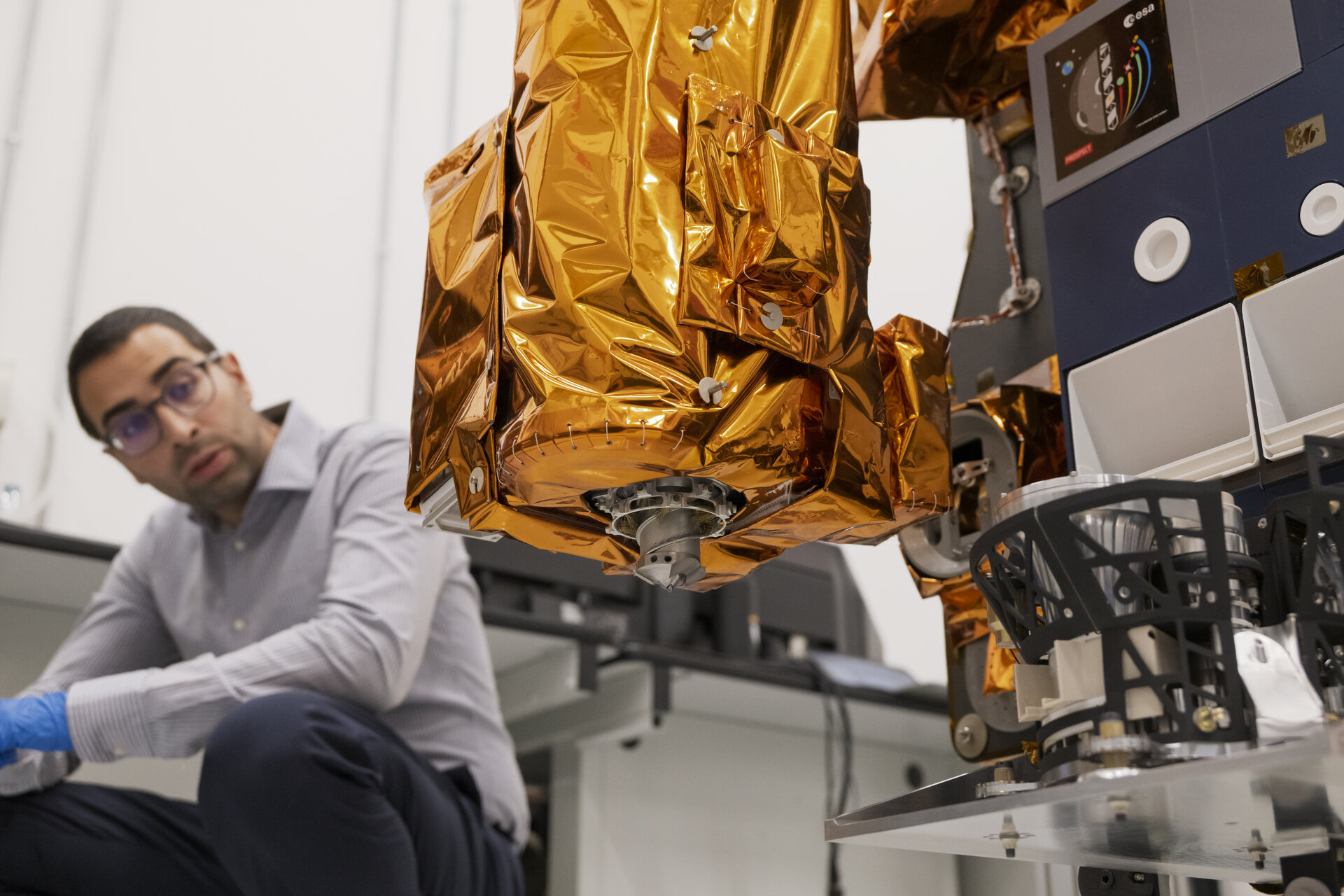
    ESA’s Prospect payload has demonstrated a practical step toward sampling the lunar subsurface: deploying its drill from a panel representative of the one it will use during flight. An October 15 update shows the test being watched by the drill’s technical lead at Leonardo.

    Prospect is planned to travel on Intuitive Machines’ IM-4 mission in 2027 under NASA’s commercial lunar delivery program. Its drill is intended to reach as far as one metre into the regolith, transferring samples to a small laboratory for controlled heating and analysis.

    The challenge is keeping cold material intact

    ESA’s mission overview explains the balancing act at the proposed south-polar location. Nearby permanently shadowed terrain may preserve ice, but a solar-powered lander needs illumination. Prospect therefore aims to investigate cold material beneath a surface that still receives some sunlight.

    Drilling and handling must avoid warming the sample prematurely. Once material reaches the laboratory, it will be sealed inside an oven and heated deliberately. Instruments will examine the released gases, including their chemical makeup and isotope ratios. The experiment also plans to introduce hydrogen during some analyses to investigate extraction of oxygen from minerals.

    The operational window is short. Prospect is expected to work for roughly five to ten Earth days and is not designed to continue through the lunar night. It must share its lander’s power, communications and available operating time with other payloads.

    What this test does and does not establish

    The deployment demonstration concerns hardware preparation. It provides no measurement of lunar ice and does not establish that a usable deposit exists at the eventual landing site. Those questions require successful delivery, drilling and laboratory results.

    Even a positive detection would need careful interpretation. Finding a volatile in a small sample is a different result from mapping an extensive deposit or showing that extraction can be sustained. Prospect’s value is that it can connect subsurface sampling with chemical measurements, giving future missions better evidence about what is present and how it behaves.

    Reporting checked October 20, 2026 (UTC). Catch-up coverage of the October 15 hardware update.

    Image: Prospect drill deployment testing on Earth. Credit: © ESA–A. Conigli. ESA source image, used under the ESA Standard Licence for editorial use. No image edits.

  • Artemis II Heat Shield Review Finds Far Less Char Loss Than Artemis I

    NASA’s October 15 assessment of the Artemis II heat shield offers a concrete comparison with the earlier uncrewed mission: engineers counted nine areas of char loss on the shield’s dish, against 103 after Artemis I. The agency reports that Orion’s thermal protection performed in line with preflight expectations. Read NASA’s postflight assessment.

    The result concerns a completed flight. Artemis II splashed down on April 10, 2026, and Navy divers photographed the heat shield immediately afterward. October’s update adds analysis to the initial recovery observations.

    Why the reentry path mattered

    NASA’s earlier Artemis I investigation identified a problem with gases generated inside Avcoat, the shield’s protective material. Where those gases could not escape sufficiently, pressure built up, cracking the material and detaching pieces of its charred outer layer.

    The timing of heating was important. Artemis I used a skip-entry profile, dipping into the atmosphere before rising and descending again. During the interval of reduced heating, gases accumulated inside material that had not become permeable enough to vent them. Ground tests eventually reproduced the relevant behavior, helping engineers separate the effects of the material from those of the flight environment.

    For Artemis II, NASA shortened the permitted distance between atmospheric entry and splashdown. The intention was to reduce time spent in the troublesome temperature regime. The new review supports that approach, although cracking and char loss were reduced rather than eliminated.

    What remains under examination

    NASA says sample extraction and material assessment are continuing. Engineers are also comparing laser measurements taken before and after flight to quantify how much material receded.

    The important distinction is between a successful protective system and a completely unchanged surface. An ablative shield is designed to change as it manages reentry heat. The engineering question is whether those changes match predictions and preserve adequate protection. Continued measurements will help establish how well the models explain the returned hardware and how that knowledge should inform later spacecraft.

    Reporting checked October 20, 2026 (UTC). Catch-up coverage of NASA’s October 15 postflight assessment.

  • Japan’s MMX Launches Toward Phobos After Successful H3 Flight

    Japan’s Martian Moons eXploration spacecraft has begun its journey. JAXA confirmed that MMX launched from Tanegashima aboard H3 Flight 10 at 19:41:03 UTC on October 19, 2026. In Japan, it was already 04:41:03 on October 20. The spacecraft separated approximately 71 minutes and 13 seconds after liftoff and entered its intended orbit, according to JAXA’s launch report.

    That confirmation turns a launch forecast into an achieved milestone. The much harder work of surveying a tiny moon, landing, collecting material and bringing it home still lies ahead.

    A round trip to the Martian system

    JAXA’s mission plan calls for roughly a year of travel before MMX reaches Mars. The spacecraft is designed to study Phobos closely, collect at least 10 grams of its surface material and observe the smaller moon Deimos. Departure from the Martian system is planned for 2030, followed by a sample-capsule return to Earth in 2031.

    Its three-module architecture divides the jobs of propulsion, exploration and return. The flight will also test the navigation, communications and surface-access techniques needed for a round trip to the vicinity of Mars. Success at launch establishes the starting point for those tests, rather than demonstrating them all at once.

    What the samples could resolve

    Phobos and Deimos could be captured asteroids or products of a major impact involving Mars. NASA’s account of its participation explains how chemical measurements and returned samples can help distinguish those histories. Its MEGANE instrument will measure gamma rays and neutrons to investigate Phobos’s elemental composition. A NASA-supported pneumatic sampler uses nitrogen gas to gather surface material, complementing Japan’s deeper-sampling system.

    NASA lists arrival at Mars in August 2027 and sampling no earlier than December 2028. Those remain mission targets. The next meaningful updates will concern spacecraft commissioning and cruise performance, followed by arrival and the observations needed to choose where to sample. The question of how Mars acquired its moons will be answered through those measurements, not by the successful launch alone.

    Reporting checked October 20, 2026 (UTC). The launch occurred October 19 UTC, or October 20 in Japan.

  • Sulfur Chemistry Points to Possible Giant-Planet Formation in Gomez’s Hamburger

    A nearly edge-on disk nicknamed Gomez’s Hamburger is giving astronomers a side view of a possible planet-building site. An October 19 National Radio Astronomy Observatory release describes ALMA observations of layered gas, concentrated dust and an unusual arc of sulfur monoxide near a previously identified dense clump.

    The clump, known as GoHam b, is a candidate location for material collapsing into a giant planet or a fragment of the disk. The chemical feature strengthens the case for investigating it, but the observations do not establish a finished planet.

    Reading the disk from the side

    Most familiar images of planet-forming disks emphasize rings viewed from above. GoHam’s orientation reveals height as well as distance from its star. The observations trace different molecular layers, with millimeter-sized dust concentrated in a comparatively thin central region and gas extending much farther above and below it.

    The disk is also asymmetric. One side is brighter and more extended in dust emission, and faint carbon monoxide structures suggest escaping gas. NRAO describes a system large enough for its carbon monoxide disk to reach nearly 1,000 astronomical units in radius. The observatory’s release summarizes this unusual geometry.

    A chemical clue, with alternatives

    The research paper identifies a narrow, one-sided sulfur-monoxide arc close to the gas overdensity. Sulfur-bearing molecules can become more conspicuous where shocks, warming or the release of ice-bound material change local chemistry. That makes them useful tracers of disturbance, rather than a unique fingerprint proving a planet is present.

    The team also estimates the central star’s mass at about 2.2 solar masses, with substantial uncertainty, and revises the system’s distance to roughly 139 parsecs. Both measurements matter when translating an image’s apparent dimensions into a physical model.

    GoHam therefore provides a demanding test for theories of giant planets forming far from their stars: any explanation must account for chemistry, motions and structure together. The paper first appeared as a September preprint and was revised in October; the new observatory announcement accompanies its journal publication.

    Reporting checked October 20, 2026 (UTC). Catch-up coverage of the October 19 announcement.

  • Webb Finds Metal-Enriched Gas Around the Milky Way’s Central Black Hole

    The material surrounding Sagittarius A*, the Milky Way’s central supermassive black hole, carries a chemical record of earlier stellar activity. In an October 19 announcement, McGill University highlighted James Webb Space Telescope observations showing that this nearby gas is enriched in elements heavier than hydrogen and helium.

    Astronomers call all those heavier elements “metals,” including familiar nonmetals such as oxygen. Their abundance influences how gas loses heat, so measuring them helps researchers understand the material available to a black hole and the conditions controlling its behavior.

    Separating a crowded neighborhood

    Nicole Ford and colleagues used Webb’s MIRI instrument to distinguish structures in the Galactic Center’s minispiral. Their paper examines the central tenth of a parsec, including the Bar and Northern Arm, along with smaller gas features closer to Sagittarius A* in projection.

    Spectral lines allowed the team to investigate neon, argon, sulfur, nickel and iron. They infer an overall metal abundance about 1.8 times the solar value. The observations also indicate that radiation from hot Wolf-Rayet stars plays an important role in ionizing the gas, while compact structures may require additional energetic processes such as shocks. These details are presented in the study’s research manuscript.

    A fuel supply with a history

    McGill reports similarities between the gas composition and nearby stars, consistent with a shared formation history. Past stellar explosions offer a possible source of the enrichment. Neither point means that every cloud’s origin or future path has been established.

    The broader puzzle is why Sagittarius A* feeds so weakly compared with many other galactic black holes. A chemical inventory is one part of that problem; it does not by itself show which material will ultimately fall inward. The researchers identify comparisons with longer-term gas simulations as an important next step.

    The university announcement concerns research already published in The Astronomical Journal; its preprint appeared in May. October 19 is the announcement date, not the date these clouds were first observed.

    Reporting checked October 20, 2026 (UTC). Catch-up coverage of the October 19 announcement.

  • Why One White Dwarf Would Look Green to Human Eyes

    A white dwarf called WD J1330+6435 would look chartreuse green to a nearby human observer, according to research highlighted by the University of Warwick on October 15. The result comes from interpreting the star’s spectrum with a model of human vision, rather than taking a close-up photograph of a green stellar surface.

    The distinction matters. Astronomical images often assign visible colors to selected wavelength bands, sometimes including radiation our eyes cannot see. This study instead asks a specific question: what color would the light actually appear if we could see the star under suitable viewing conditions?

    Dense atmospheres change the palette

    Ordinary stellar colors largely follow temperature. In the very dense atmospheres of some cool white dwarfs, however, chemical absorption spreads across broad wavelength ranges. Warwick’s team links the green example to an atmosphere enriched with rocky debris, including sodium, calcium and lithium. Sodium removes enough orange light to alter the overall perceived hue.

    Other compositions produce other results. Carbon-rich examples can look pink or purple, while some mixed hydrogen-and-helium atmospheres appear cyan. Most white dwarfs remain much less exotic: five of the 151 objects in the study’s nearby sample had unusually strong colors. Warwick’s account explains the atmospheric chemistry.

    A calculation, not a new colored photograph

    The paper combines observed and modeled spectra with established color-science functions, then converts the results into displayable colors. Its authors also account for the way brightness changes toward the edge of a stellar disk. Computer displays cannot reproduce a star’s actual surface brightness, so these visualizations reproduce chromaticity, not the experience of looking directly at a nearby star.

    That makes the work useful beyond an eye-catching headline. It offers a physically grounded way to depict faint stellar remnants, while showing why an astronomical object’s name need not describe every member of its class. The research manuscript, posted October 13 and accepted by RAS Techniques and Instruments, documents the method and its limits.

    Reporting checked October 20, 2026 (UTC). Catch-up coverage of the October 15 announcement.

  • Galilee Aerial Alert: Israeli Military Favors a Balloon Explanation

    An unidentified object that triggered a security response in northern Israel came with a more conventional explanation by October 13: the Israeli military assessed that it was probably a balloon-like object or another device supported by hot air. The object had not been recovered, leaving its origin and purpose uncertain.

    That assessment, reported by The Times of Israel from an IDF statement, is important context for footage and mystery-focused accounts circulating afterward. The military said its investigation indicated that the object was not a drone or unmanned aerial vehicle.

    How the alert unfolded

    The incident occurred on the evening of October 10 near Arab al-Aramshe in the Western Galilee, close to Lebanon. The Jerusalem Post’s initial reporting described overnight searches that resumed the following morning. Early concerns included a drone or a powered paraglider, and the search area expanded along the border.

    The military response establishes that officials took a possible intrusion seriously. It does not, by itself, establish unusual technology or extraordinary flight performance.

    What remained uncertain

    Israel Hayom’s October 13 account likewise reported the balloon assessment, while noting that the object’s source and purpose were still unknown. It said no changes had been made to the Home Front Command’s civilian safety guidance.

    The Debrief revisited the episode on October 15, discussing the circulated imagery and the difficulties of identifying a small object near sensitive airspace. Its account also included the military’s preliminary balloon explanation.

    The chronology matters: an October 10 detection, an October 13 assessment and October 15 follow-up reporting are different stages of the same case. Later coverage should not erase the assessment or present the original alert as a new incident.

    A recovered object or a public technical analysis could strengthen the identification. For now, the supported description is a genuine security alert followed by an attributed, probable conventional explanation. Uncertainty about exactly what crossed the border does not supply evidence of an extraterrestrial origin.

    Reporting checked October 20, 2026 (UTC). Catch-up coverage of the October 15 follow-up reporting; the incident occurred October 10.