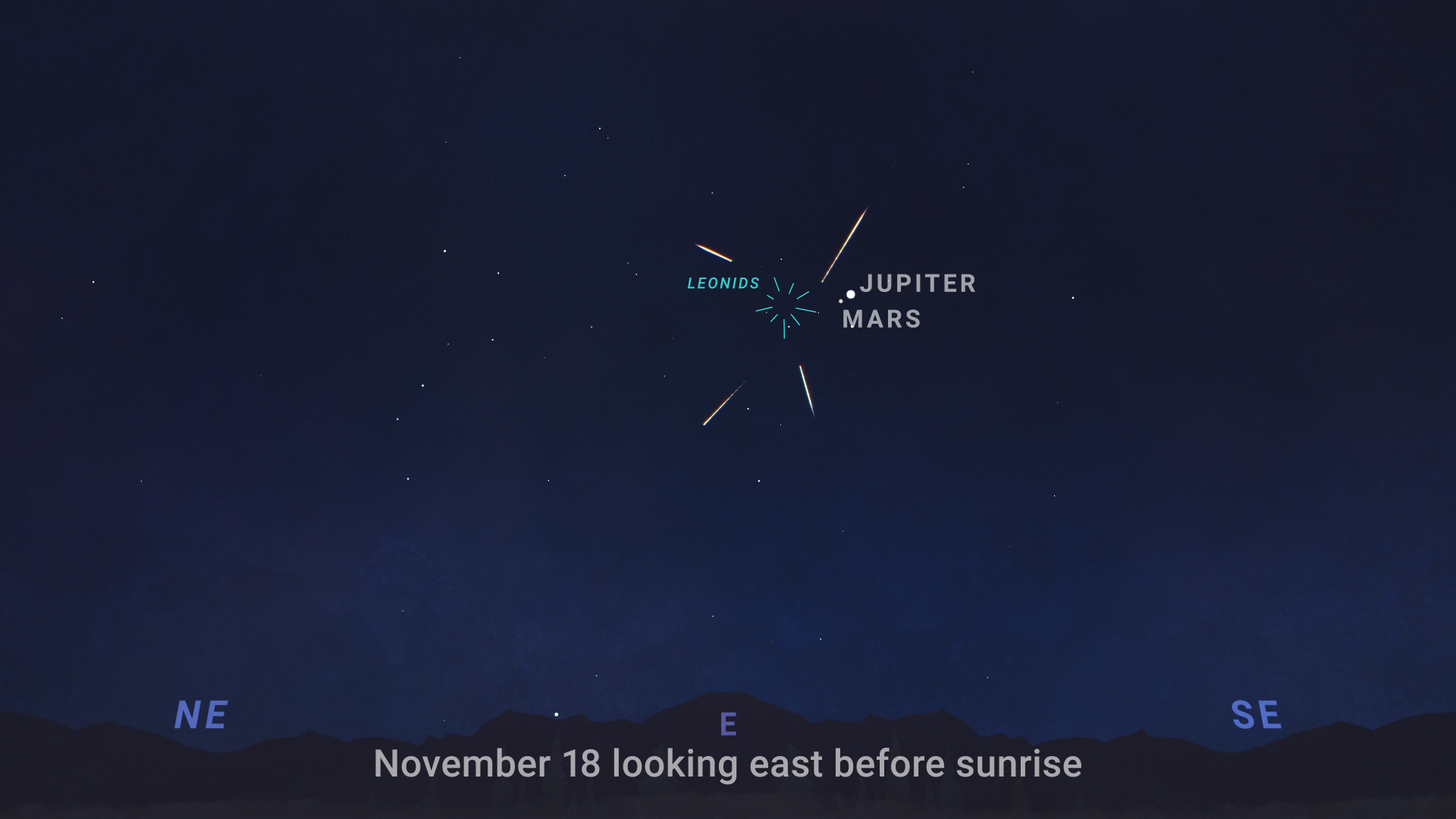
Three upcoming dates offer different reasons to step outside. NASA’s November skywatching guide, published November 2 and updated November 3, highlights two meteor showers and a bright planetary pairing.
November 12: a modest meteor shower
The Northern Taurids peak around November 12. Expect a patient watch: NASA estimates roughly five meteors per hour under ideal conditions, with an occasional bright fireball.
November 15–16: two planets together
Look southeast before sunrise for Mars and Jupiter, appearing about 1.2 degrees apart. Jupiter is brighter; Mars has a reddish cast. Both are naked-eye targets. Their closeness is an alignment in our sky, not physical proximity in space.
November 17–18: the Leonids
Try the early morning hours after moonset. Ideal conditions could bring around 15 meteors per hour, but most observers will see fewer. Choose a dark location, allow about half an hour for your eyes to adjust, and watch a broad area of sky.
Featured chart: NASA/JPL-Caltech. Illustrated streaks indicate the Leonid radiant, not a promise of simultaneous meteors. Source: NASA’s November 2026 guide linked above.
Leave a Reply