Voyager Technologies’ Griffin-1 lunar lander has completed environmental testing at NASA’s Jet Propulsion Laboratory and returned to Pittsburgh for final assembly. The 13 October 2026 update marks progress toward a planned launch later this year.
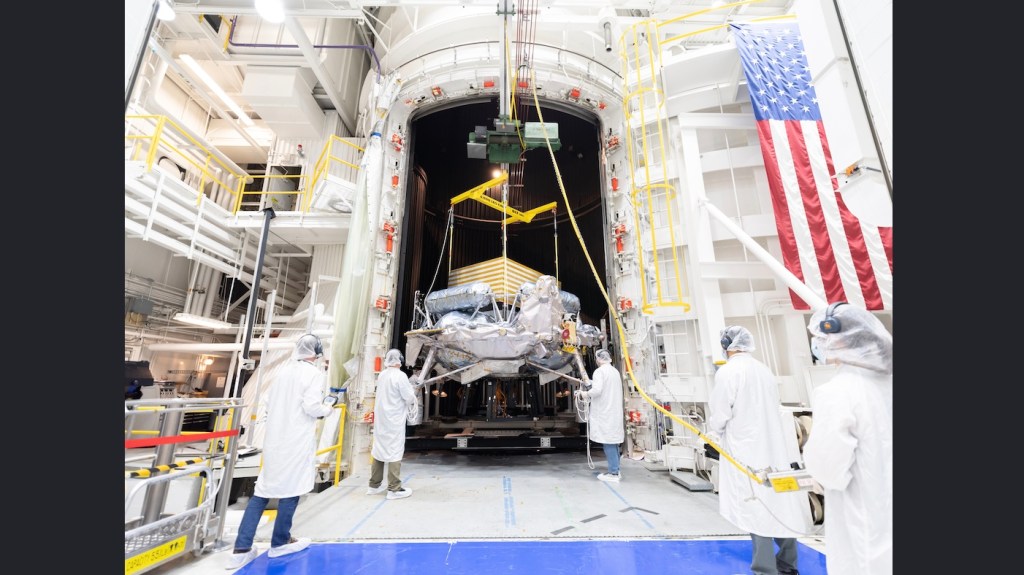
Rehearsing a harsh environment
The campaign checked the spacecraft’s response to vibration, launch noise, electromagnetic interference and the vacuum and temperature extremes of space. Engineers also measured its mass properties, which help characterize how the vehicle will move.
Griffin-1 is intended to carry ten science and technology payloads to the lunar south-polar region, including Astrolab’s FLIP rover. Launch-readiness work and shipment to Cape Canaveral remain ahead.
Why the lander now carries Voyager’s name
Readers who followed Griffin as an Astrobotic mission are following the same developing programme. In a 13 July announcement, Voyager reported that it had completed its acquisition of Astrobotic. The lunar business now operates as Voyager Lunar Systems.
That earlier announcement placed Griffin-1’s launch no earlier than November 2026. It also described separate future lunar delivery work. Those later contracts should not be confused with the spacecraft that has just finished this test campaign.
A step toward delivery
The mission belongs to Commercial Lunar Payload Services, NASA’s initiative for working with American companies to transport scientific, exploration and technology payloads to the Moon. Commercial delivery vehicles are an important part of that approach: instruments need both a ride and a working platform at their destination.
Successful ground tests reduce uncertainty about how flight hardware will behave. They cannot guarantee a launch or landing outcome. Griffin-1’s next milestones will test whether the programme can turn that preparation into a completed lunar delivery.
Leave a Reply