Earth’s magnetic environment is constantly shaped by the solar wind. A new modeling study helps explain why waves along its outer boundary can become much stronger on one side than another, even when the incoming conditions are held steady.
In an October 13 announcement, researchers at the University of Oulu described how the solar wind’s magnetic field wraps unevenly around the magnetosphere. That draping changes how effectively the field suppresses boundary waves in different regions.
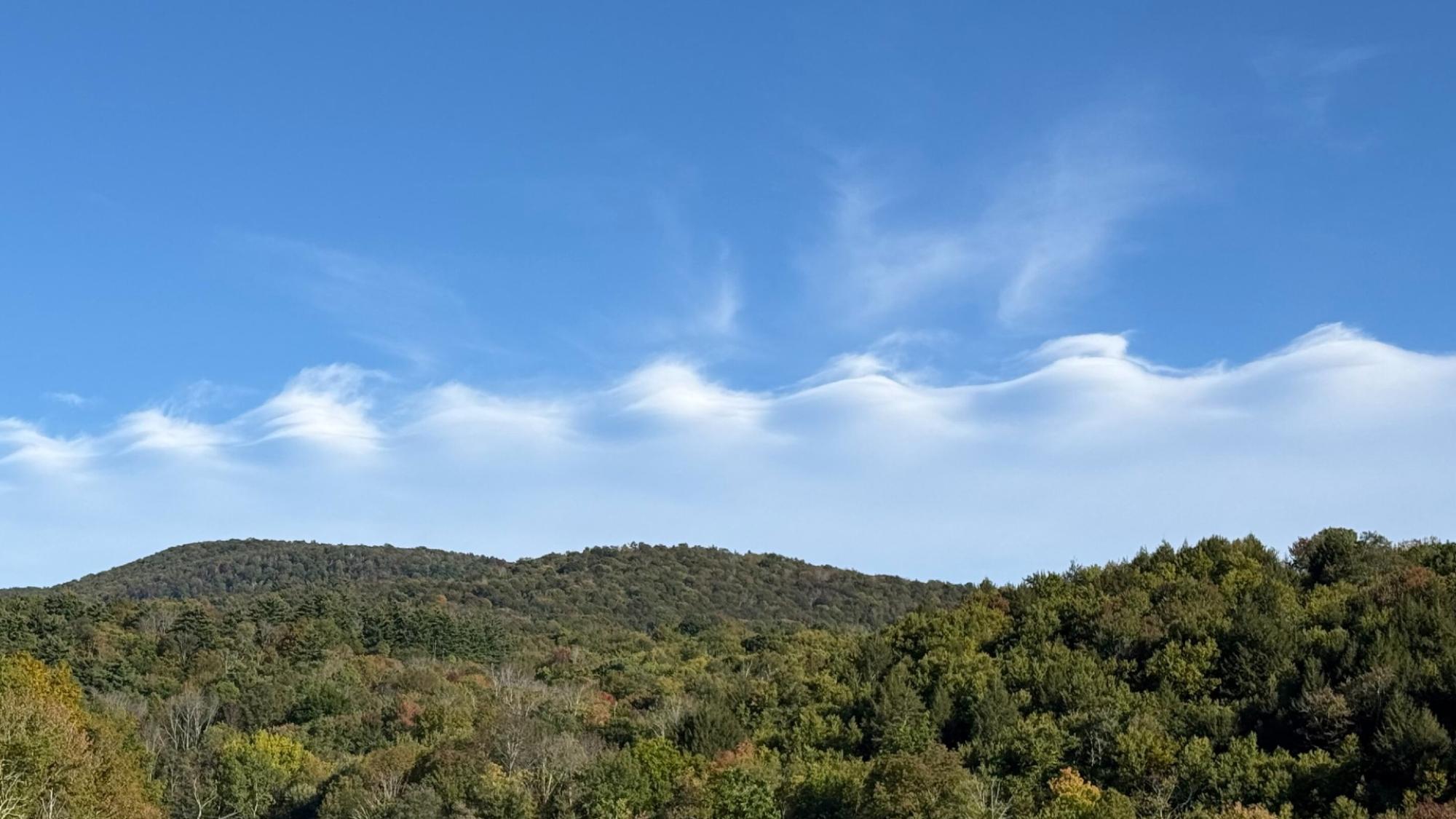
The waves arise through the Kelvin–Helmholtz instability, familiar in the curled shapes sometimes seen in clouds. At Earth’s magnetopause, the relevant flows are plasmas interacting along the boundary between the solar wind and the planet’s magnetic surroundings. Understanding the pattern matters because this boundary participates in the exchange of material and energy with near-Earth space.
Testing the geometry in a computer model
The peer-reviewed paper, first published September 16 in Geophysical Research Letters, used a global magnetohydrodynamic model to compare two controlled scenarios. The researchers reversed the east–west component of the incoming magnetic field while keeping other solar-wind inputs the same.
The simulations used a negative 35-degree tilt of Earth’s magnetic dipole. Under the tested conditions, wave activity was strongest in the winter hemisphere. A positive east–west magnetic component favored the dawn flank. Differences in flow speed across the boundary and in the draped magnetic field helped explain the uneven growth.
Magnetic reconnection geometry also mattered: in the positive-component case, a broader boundary layer on the dusk side slowed the instability. The result links several pieces of the system rather than assigning the asymmetry to a single factor.
These findings concern specific modeled conditions, so they should not be read as a universal rule for every solar-wind encounter. Nor are they an alert that Earth’s magnetic protection is suddenly failing. Their value is more precise: they give researchers a physical explanation to test when improving models of how the Sun and Earth exchange energy.
Leave a Reply