The Cosford UFO story contains two questions that are easy to merge: what people saw, and whether the sightings indicated a military threat. A parliamentary answer about March 31, 1993, shows why those questions could receive different answers. An unexplained observation did not automatically meet the Ministry of Defence’s threshold for further action.
The question Parliament asked
On July 15, 1998, Lord Hill-Norton asked how many military personnel had witnessed the reported craft over RAF Cosford and RAF Shawbury. He also challenged the assessment of its defence significance. In the published Hansard answer, Lord Gilbert said the ministry knew of one report from two military personnel concerning an alleged West Midlands sighting on March 31, 1993.
Gilbert said the reported facts had been examined, that no firm identification had been reached, and that the events had not been judged significant for defence. This records the government’s stated position five years later. It is not a transcript of the original observation.
The surrounding answers explain the remit: the ministry looked for evidence of hostile or unauthorized foreign military activity. It did not routinely seek a precise identification when there was no indication of a potential threat. That limited purpose helps explain how an unresolved report could be administratively closed.
The wider night of sightings
A separate source describes a broader reporting episode. In the National Archives’ August 2009 release commentary, consultant David Clarke describes more than 30 reports across the south and west of the British Isles during six hours. Witnesses included a police patrol at RAF Cosford.
Clarke says the UFO desk requested a replay of RAF radar tapes and that nothing unusual was found. He attributes the majority of sightings to the atmospheric re-entry of the rocket that had launched the Russian Cosmos 2238 satellite. This is retrospective commentary accompanying an archival release, rather than the original radar record or a fresh measurement.
Keeping the reports separate
The difference in scope matters. A minister answering a question about military witnesses and an archivist summarizing a regional wave need not be counting the same things. Neither account, by itself, warrants treating every reported light as one object travelling between named locations.
Likewise, an explanation for a majority leaves an important checking task. To apply a re-entry explanation to any particular report, researchers would need to compare its timing, viewing direction, duration and appearance with the predicted event. Extending the explanation solely because another witness reported lights that night would skip that work.
A negative radar review also has limits. Without the operating details, coverage and original records, it cannot be turned into a measurement of an object’s size or performance. Nor does a missing radar detection establish that a witness saw nothing.
The useful historical finding is narrower and more durable: the official record distinguishes identification from threat assessment, while the later archive account places the reports within a wider episode with a substantial conventional explanation. Reading those sources together preserves both the government’s stated reasoning and the limits of what these particular documents can settle.
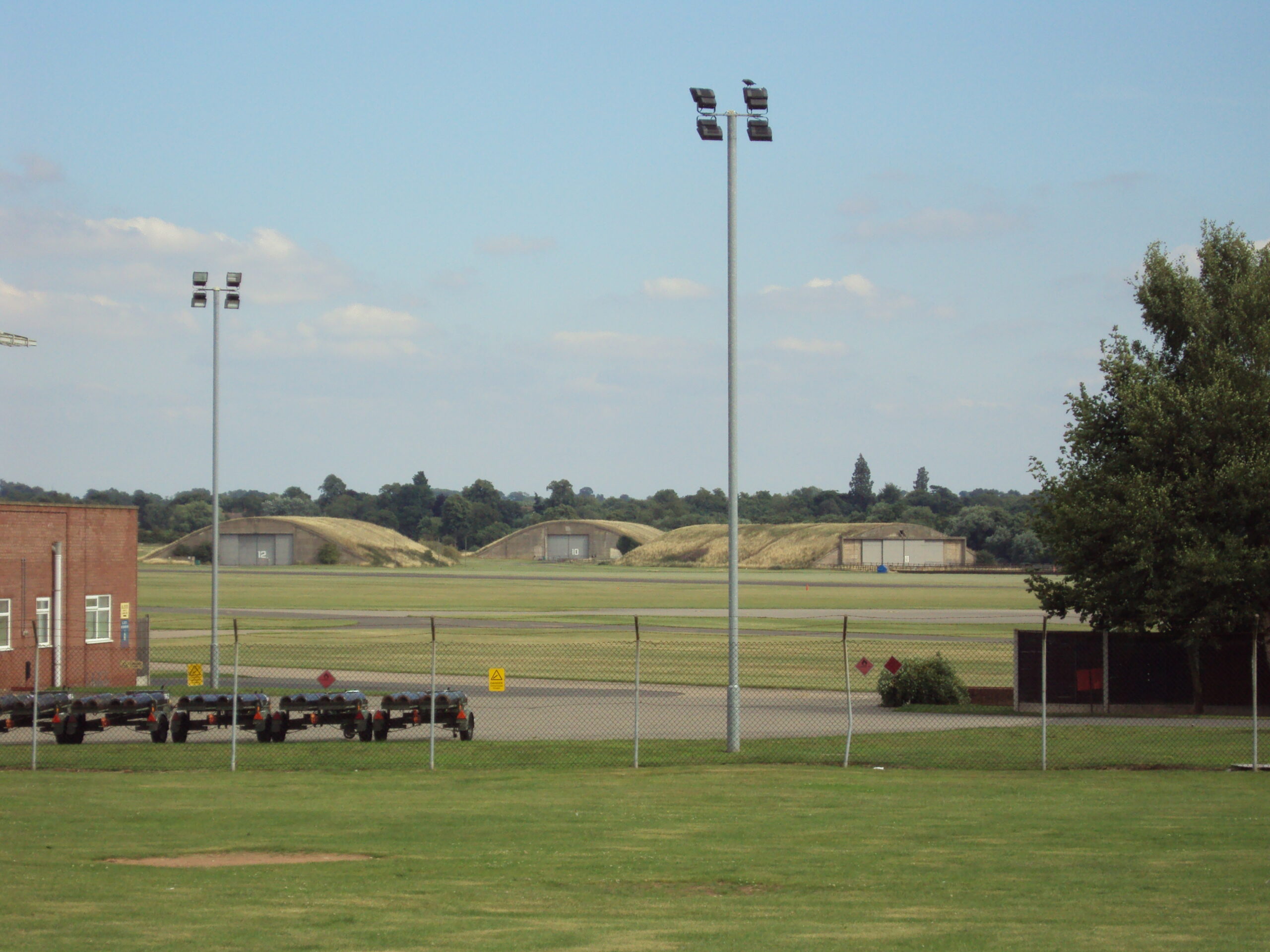
Featured image: RAF Cosford airfield, August 16, 2010, by Rept0n1x / Wikimedia Commons, CC BY-SA 3.0. Location photograph, displayed crop, not an image of the 1993 sighting.

Leave a Reply