A distant light appears to split, acquire a dark outline or change shape in a short sky video. Before treating those pixels as features of an unidentified object, establish which version of the recording they came from. The camera file, an exported edit and a social-media copy can contain different visual information.
What compression can change
Lossy compression reduces the amount of information needed to store and transmit a recording by discarding some data. Adobe’s encoding documentation distinguishes compression within an individual frame from temporal compression, which exploits relationships between frames. A decoded video frame is therefore not necessarily an independently stored photograph.
Compression and resizing are separate operations, and both can affect the result. Apple’s video-quality engineering presentation demonstrates blockiness, blur and disappearing detail introduced by encoding and downscaling. When a target occupies only a small area, a modest change at its boundary can become a large fraction of its apparent shape.
The practical consequence is narrow but important: a jagged edge or small appendage in a compressed copy needs verification before it becomes a claim about structure. Seeing an artifact-like pattern does not establish that the entire light is an artifact.
Compare versions rather than enlargements
Request the file directly exported or copied from the recording device, rather than a screen recording of a player. Ask whether it has been trimmed, stabilized, resized, enhanced or sent through a messaging service. Call it the camera file only when that description is supported. A download labeled “original” by a website may simply be the earliest upload available there.
The camera file may already use lossy compression. Its value is that it avoids additional, undocumented transformations. Adobe’s compression guidance warns that repeatedly re-encoding compressed material can further degrade quality.
Compare matching moments in the earliest available file and the circulated copy. Keep the surrounding scene visible, then inspect equivalent crops with the enlargement method recorded. Enlarging an image makes existing samples easier to see; it does not supply the measurements that were discarded. Smooth-looking enlargement should not be mistaken for newly resolved detail.
Check whether a disputed feature survives in the earlier version, across neighboring frames and under more than one straightforward display method. If it appears only after a particular export, that is evidence about the export’s effect. If it is present in the camera file, further questions about the optics, sensor and scene remain.
Match the conclusion to the test
A useful comparison can be simple: “The narrow projection is visible in the repost but is not resolved in the camera file.” That statement identifies the observation and its limit. “Compression proves the object was fake” goes beyond the comparison.
A technical analyst can also make a documented test export from the source and see whether a similar distortion appears. Matching an artifact strengthens a proposed mechanism, but unknown platform settings may prevent exact reproduction. Keep the test copy separate and disclose its settings.
When only a small, heavily processed clip survives, some shape questions may be unanswerable. The right response is to reduce the precision of the claim. A recording can still establish that a light was present while being inadequate to establish its outline, construction or a momentary physical transformation.
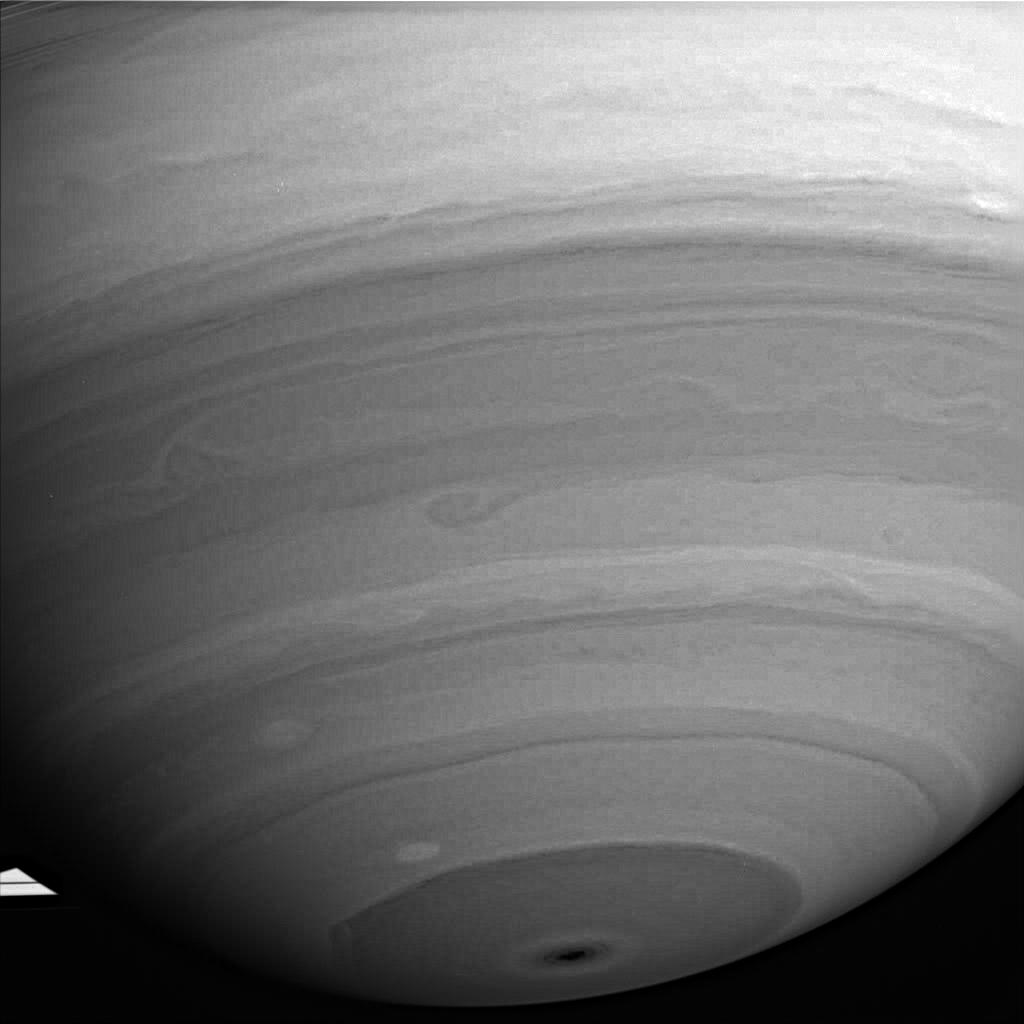
Featured image: Cassini’s July 31, 2005 infrared view of Saturn retains block-shaped compression artifacts after enhancement. It illustrates a documented imaging limitation, not a UAP observation. Credit: NASA/JPL/Space Science Institute. Image licence.
Leave a Reply