A small light that darts across a sky video may be an object in the scene, or a reflection created inside the camera. Telling those possibilities apart requires more than recognizing a familiar green dot. A useful lens-flare test asks whether the light’s position follows the camera’s optical geometry throughout the recording.
How a camera creates an extra light
Light does not pass perfectly through every glass surface. Some reflects, and a fraction can reach the sensor after bouncing within the optical system. Canon’s explanation of lens coatings describes how these reflections create displaced ghost images and flare. Coatings reduce the problem; their presence does not make every photograph immune.
A distinct ghost and a broad wash of glare are different appearances of unwanted light. Neither has to resemble the source that produced it. A bright lamp can therefore generate a faint feature elsewhere in the frame without a second lamp being present at that location.
Test a relationship across frames
The peer-reviewed paper Geometry by Deflaring derives a useful constraint for aligned, radially symmetric optical systems: aperture ghosts concentrate around a line connecting the bright source’s image and the point where the optical axis meets the image plane. Camera movement changes that relationship in a predictable geometric way.
The paper also documents a weak ghost away from the predicted line. Its model permits the illuminating source to be outside the frame. These qualifications matter when testing a real recording.
Examine several well-separated, uncropped frames. Mark the suspected ghost and plausible bright sources. Ask whether source-to-ghost lines pass near a consistent optical center as the camera changes direction. Include intervals when the proposed relationship fits poorly.
The center of a reposted rectangle need not be the optical center. Cropping and stabilization can complicate that reference. If the processing history is unknown, disclose the limitation rather than forcing a precise fit.
Separate camera behavior from scene behavior
Compare the light with background landmarks too. Camera shake moves genuine scene features as well as ghosts. A repeatable relationship to the source and optical geometry is a more useful test.
Where the equipment is available, a controlled recording of an ordinary bright lamp with the same camera, lens and accessories can test whether a similar ghost appears. Record the setup and preserve unsuccessful comparisons. A resemblance becomes more useful when it includes movement and position, rather than color alone.
Do not reject an optical explanation solely because the bright source disappears at the frame edge. NASA’s STEREO reflection examples show Venus producing reflections even after leaving the camera’s field of view. They also show that internal reflections can grow into large, unfamiliar shapes.
A successful test supports a specific explanation for a specific feature. It does not identify every other feature in the recording or discredit the witness. If there is no original framing, no plausible light source and too little camera movement, the honest result may be that the optical hypothesis remains untested.
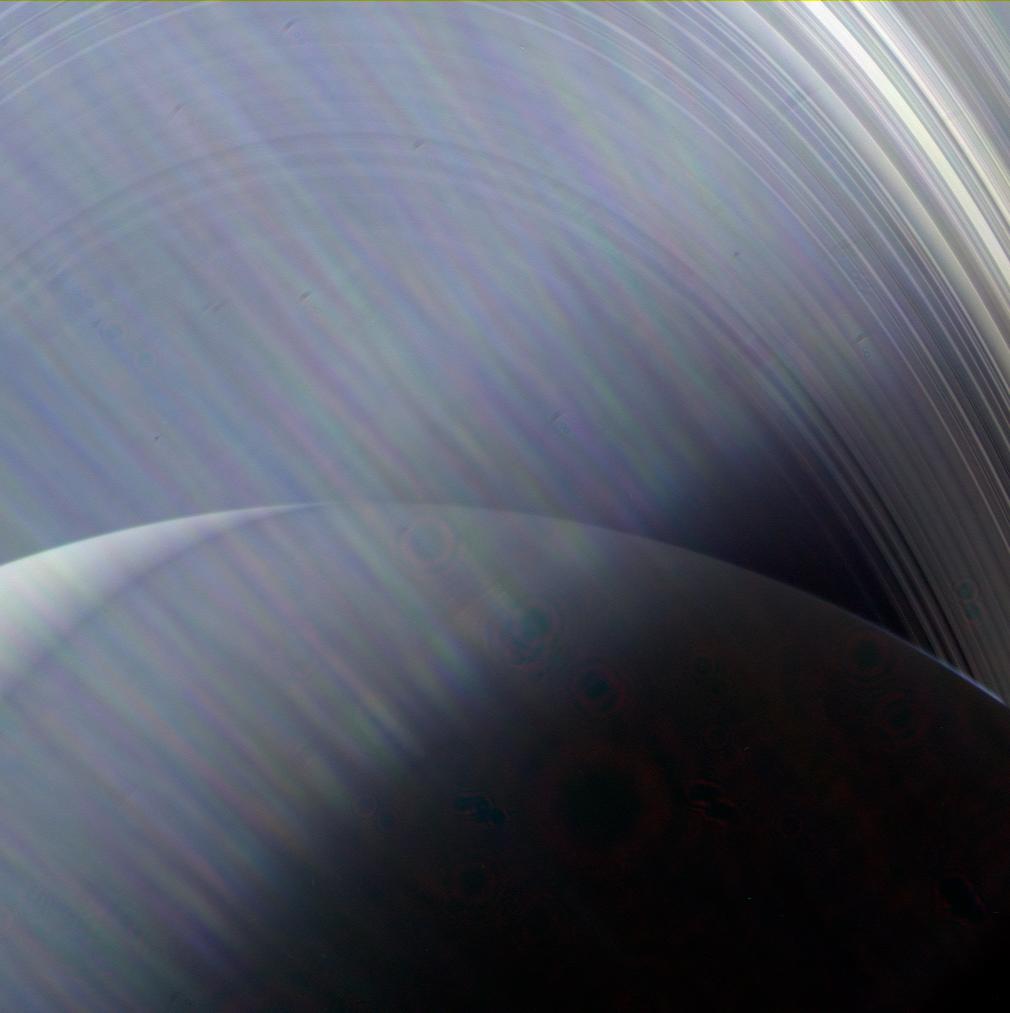
Featured image: Saturn and its rings photographed by Cassini on June 23, 2013, through sunlight glare in the camera optics. This is an example of an imaging effect, not a UAP photograph. Credit: NASA/JPL-Caltech/Space Science Institute. Image licence.
Leave a Reply