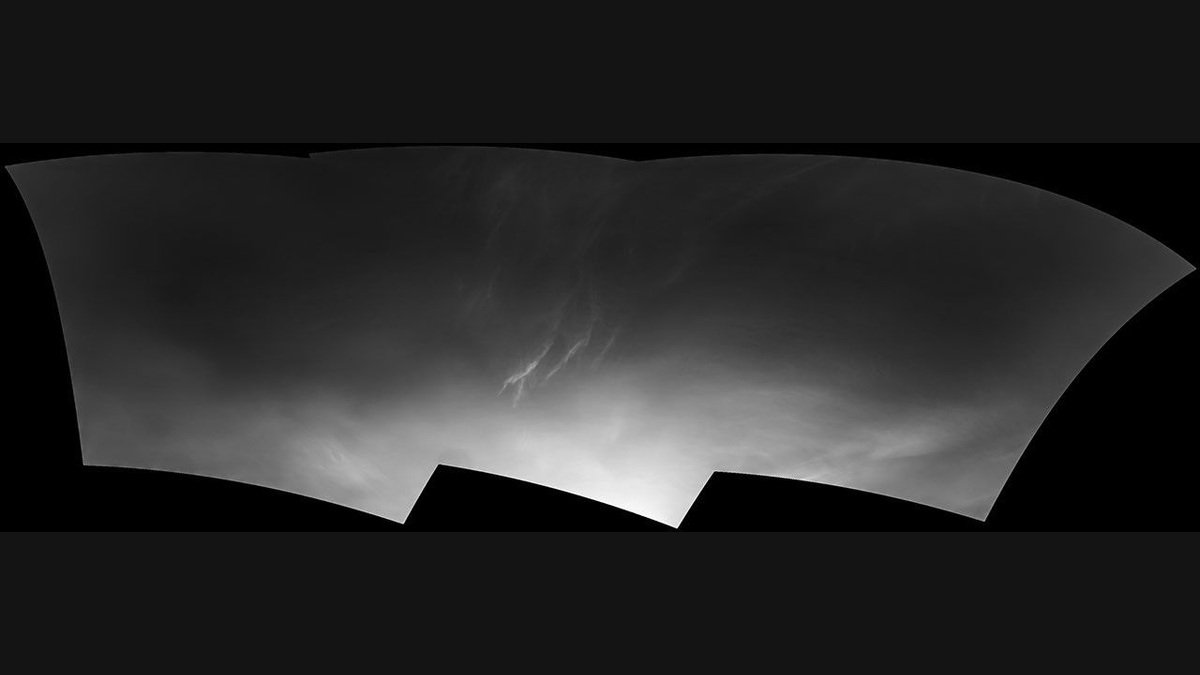
The sky over Gale Crater was dimming, but clouds above it were still catching sunlight. Curiosity’s navigation cameras recorded the wisps on October 31, 2026, its 5,061st Martian day. The NASA Photojournal release shows the still and animation from that same observation.
After sunset at ground level, sunlight can still reach higher clouds. They scatter that light against the shadowed sky rather than producing it themselves.
A study led by Mark Lemmon found a recurring season of twilight clouds at Gale and identified October–December 2026 as another observing opportunity. The new black-and-white frames show motion, not the clouds’ composition or height.
Featured image: Twilight clouds photographed by Curiosity’s navigation cameras at Gale Crater on October 31, 2026. Credit: NASA/JPL-Caltech. Resized and padded to preserve the full panorama.
Leave a Reply