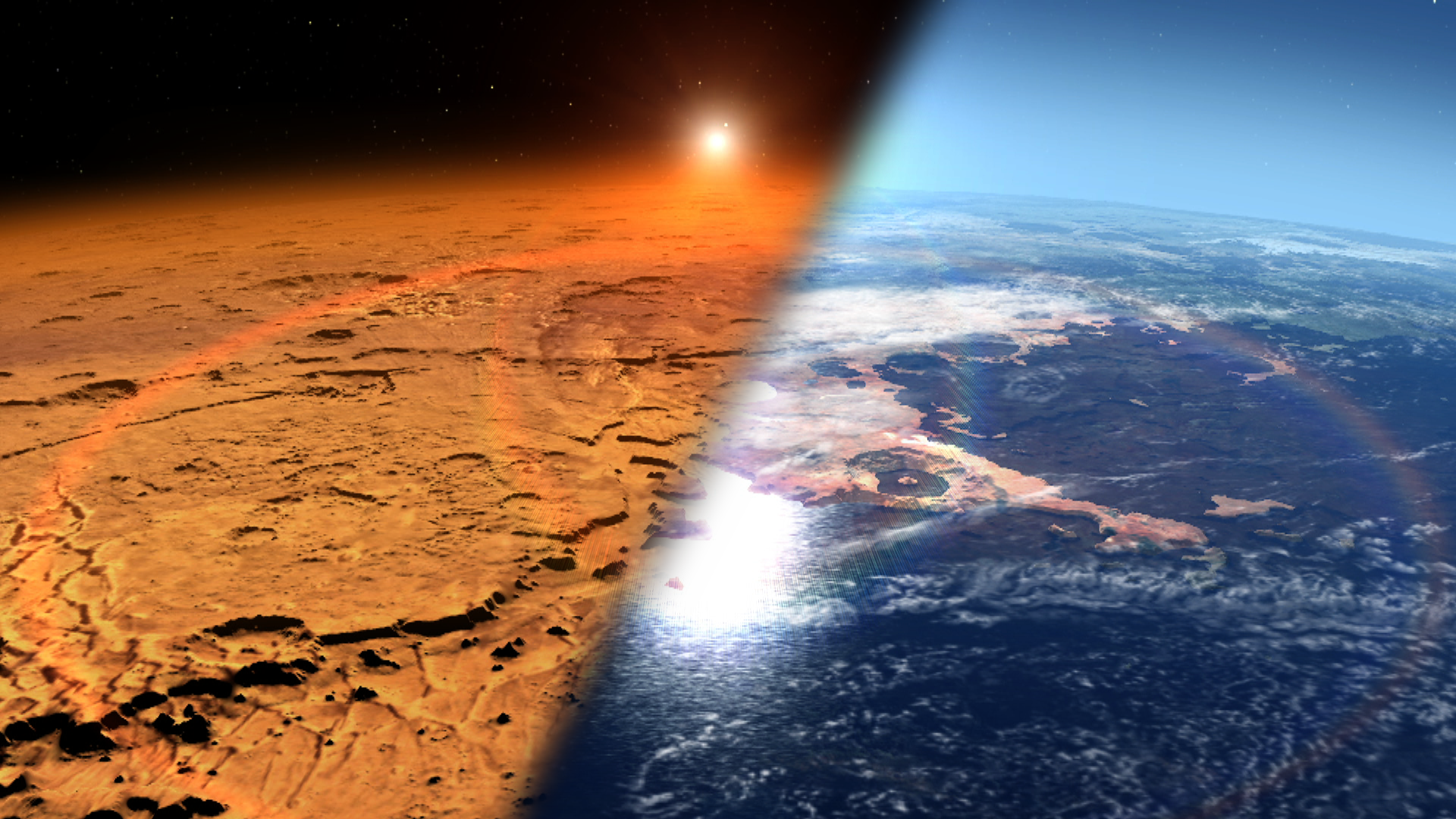
A thin atmosphere tells you what Mars has now, but not what it once had. In a study reported in March 2017, NASA’s MAVEN team used two forms of argon to estimate how much of that gas had escaped over the planet’s history.
The two isotopes are chemically alike but differ in mass. The lighter one escapes more readily, leaving the remaining atmosphere relatively enriched in the heavier isotope. To read that imprint, researchers combined MAVEN measurements of the upper atmosphere with measurements made on the ground by the Curiosity rover.
The team estimated that Mars had lost about 65 percent of its atmospheric argon to space. That figure is for argon, not a direct measurement of the fraction of the entire ancient atmosphere lost. Because argon is chemically unreactive, its isotope ratio helped the team estimate the contribution of sputtering, in which energetic particles knock atmospheric atoms into space. That gave researchers a way to constrain loss of other gases, including carbon dioxide.
Source: NASA’s March 2017 report. Featured artist’s concept: NASA Goddard Space Flight Center.
Leave a Reply