DARK FIRESORIGINS UNKNOWN

Author: Dark Fires

  • The Redlands UFO File Preserves Both a Cloud Verdict and Doubts About the Evidence

    The Redlands UFO File Preserves Both a Cloud Verdict and Doubts About the Evidence

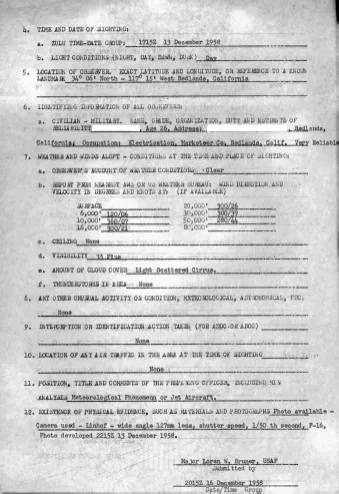
    A photograph taken in Redlands, California, on December 13, 1958 became a UFO case whose surviving paperwork is more instructive than a simple solved-or-unsolved label. The Air Force identified the form as a lenticular cloud, while correspondence in the file also acknowledged serious problems with the underlying report.

    Read the conclusion alongside the caveats

    The National Archives reproduces a December 16 worksheet, a January 30, 1959 report, and February 5 correspondence. Its 2018 archival review describes inconsistencies that prevented an accurate analysis. Those reservations belong in any retelling alongside the cloud classification.

    This is a historical case review, not a newly released sighting. The documents do not justify converting an unusual outline into a measured aircraft, but neither should an official classification erase the limitations its investigators recorded.

    What the record can support

    The useful distinction is between a proposed identification and the quality of the observations behind it. Redlands offers evidence of how investigators assessed a photograph and its accompanying account, not independent measurements of extraordinary performance.

    Read the National Archives review and reproduced case documents.

    Featured image: U.S. Air Force UFO worksheet, December 16, 1958. National Archives, Identifier 595175. Public-domain government record.
  • Hydrosat Osiris Clears NASA’s Prelaunch Calibration Tests

    Hydrosat Osiris Clears NASA’s Prelaunch Calibration Tests

    NASA announced November 18 that calibration work for Hydrosat’s four-satellite Osiris fleet was completed on October 30. The milestone concerns instruments tested on Earth, not a constellation already delivering observations from orbit.

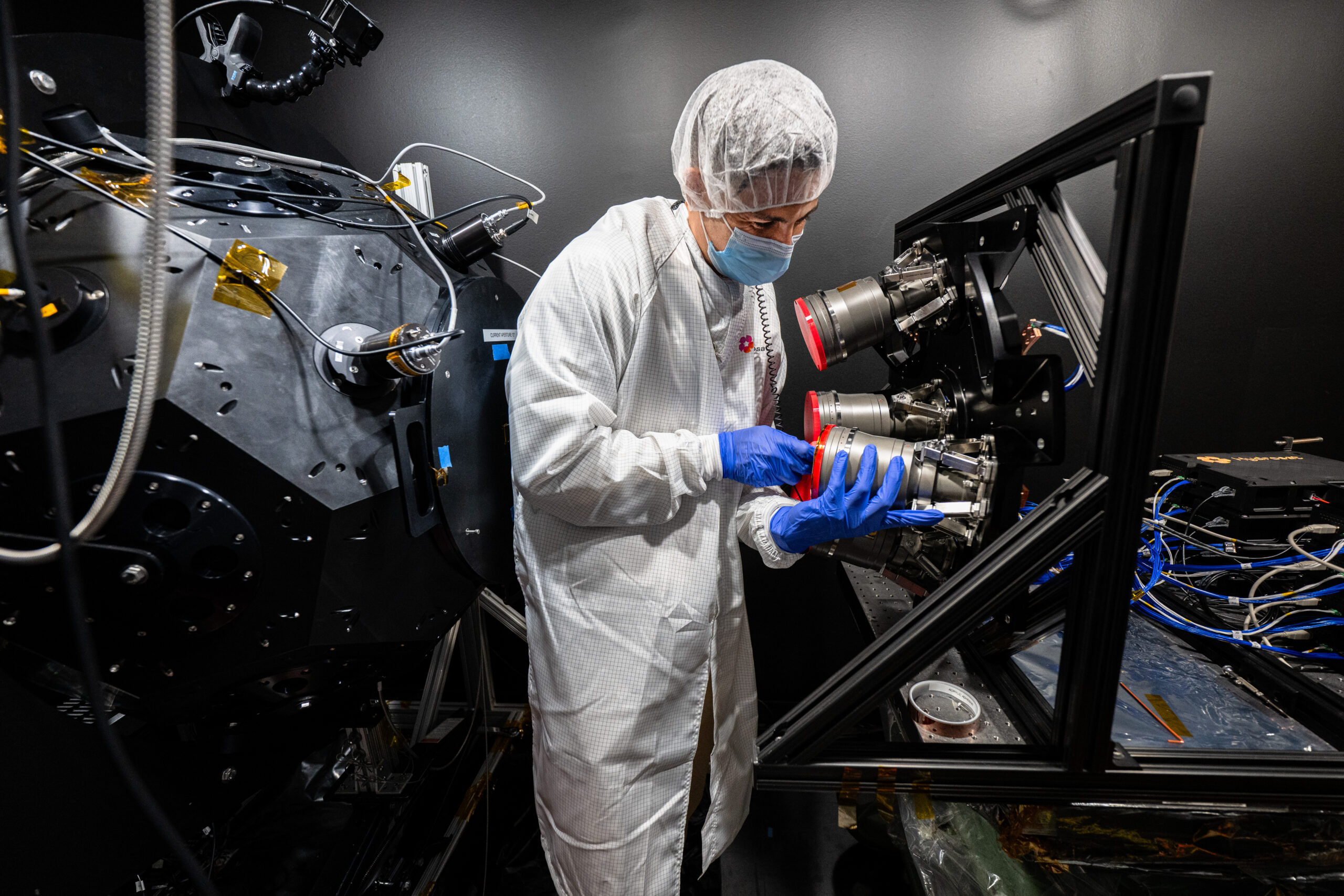
    At Goddard’s Laser for Absolute Measurement of Radiance laboratory, engineers placed eight visible-near-infrared cameras in front of an integrating sphere. Its interior spreads light uniformly, giving the sensors a controlled target rather than a patchwork of real terrain. A tunable laser supplied known wavelengths; additional tests varied brightness to check the cameras’ response.

    That preparation matters because small changes in reflected light can reveal vegetation stress before a field looks obviously unhealthy. Combined with thermal measurements, those observations could help target irrigation instead of treating every part of a field alike.

    The planned satellites carry visible-near-infrared and long-wave-infrared sensors. NASA says Osiris data will be available to authorized users through its Commercial Satellite Data Acquisition program. Calibration establishes a measurement baseline; useful agricultural results will still depend on subsequent observations and analysis.

    Source: NASA’s November 18 report. Featured photograph: sensors prepared for testing. Credit: NASA/Desiree Stover.

  • Surveyor 6’s Lunar Hop at 59: A Short Flight With a Scientific Purpose

    Surveyor 6’s Lunar Hop at 59: A Short Flight With a Scientific Purpose

    On November 17, 1967, Surveyor 6 did something no spacecraft had done before: it lifted off from the Moon. The flight was modest, but the reason for it was more interesting than a distance record.

    NASA’s mission history records a 2.5-second firing of three thrusters. The lander rose roughly three meters and settled about 2.5 meters west of its original position in Sinus Medii, where it had landed a week earlier.

    Moving the camera gave investigators a new view of the landing footprints, useful for studying the soil’s mechanical properties. The displaced viewpoint also enabled stereo imaging. The hop turned the spacecraft’s own contact with the ground into something it could inspect.

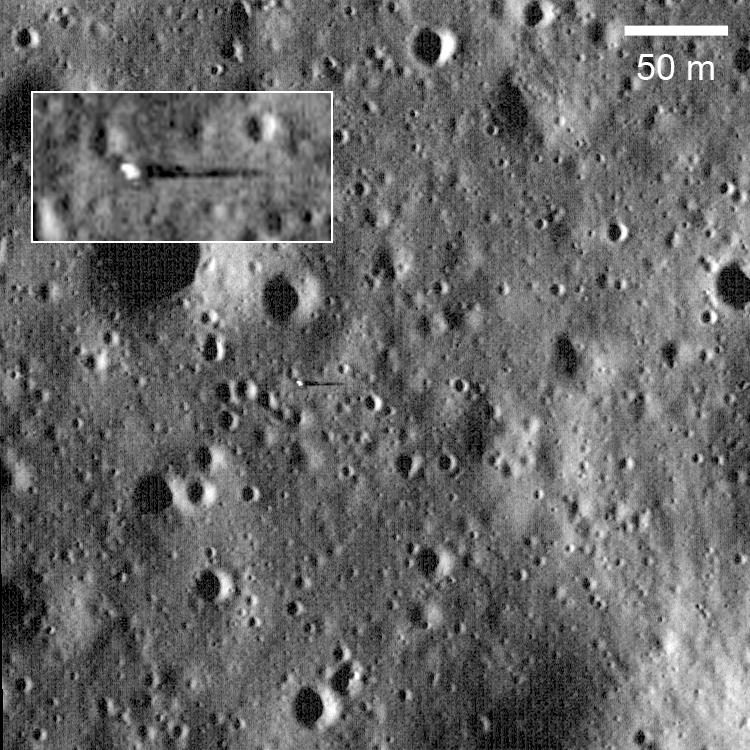
    Fifty-nine years later, the episode is a reminder that mobility can serve an experiment rather than simply extend a mission’s range. The featured orbital photograph is a later LRO view of the lander and its long shadow, not a photograph of the hop itself.

    Sources: NASA’s Surveyor 6 mission history; LRO image PIA12978. Featured image credit: NASA/GSFC/Arizona State University.

  • Curiosity’s 49 Drill Holes: Small Samples, a Growing Record of Mars

    Curiosity’s 49 Drill Holes: Small Samples, a Growing Record of Mars

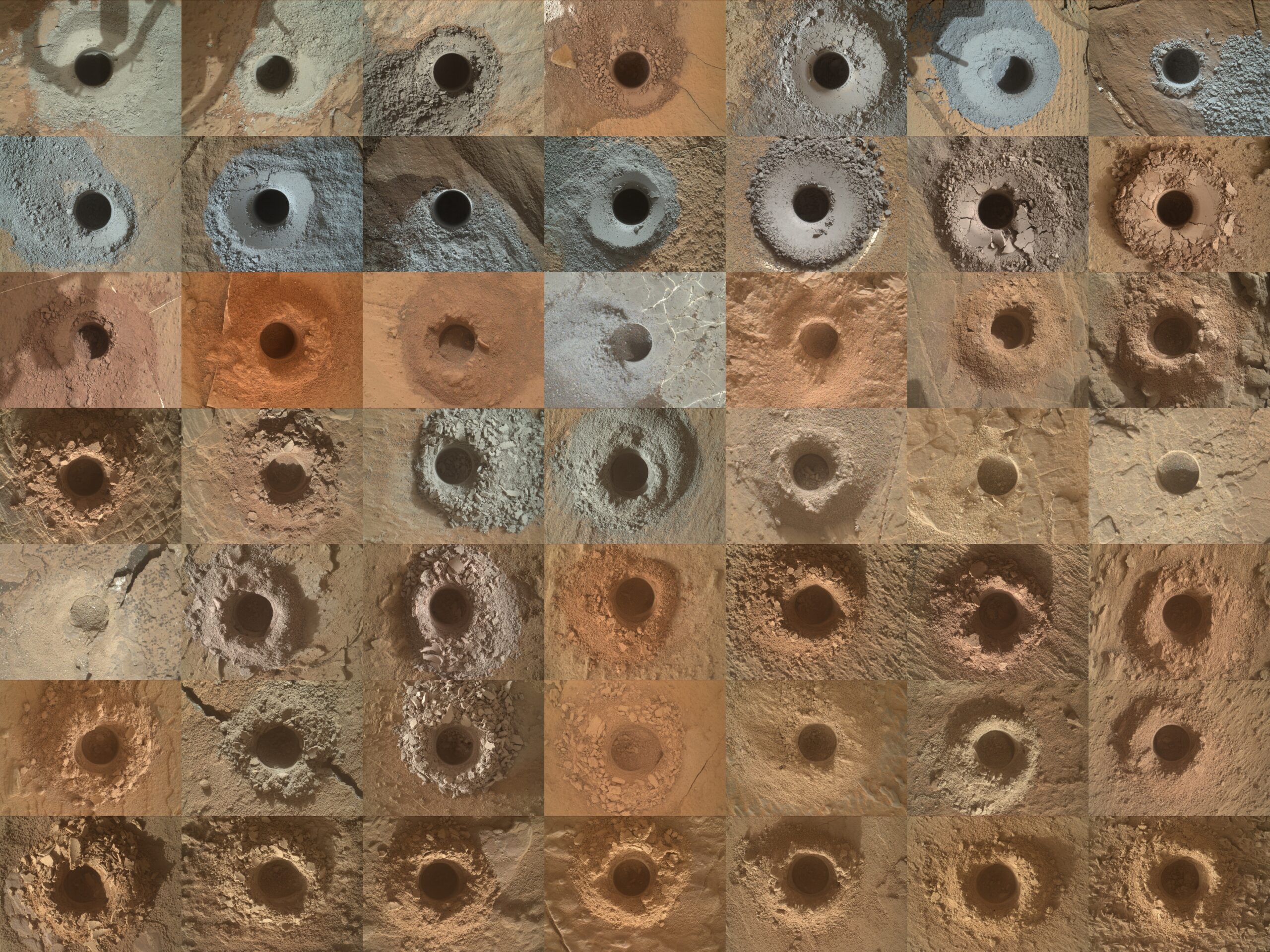
    A new JPL collage, released November 15, 2026, brings together 49 drill holes made by NASA’s Curiosity rover as of this month. It is a record accumulated across the mission, not an announcement that the rover drilled 49 holes in November.

    Each opening is just 16 millimeters across. The drill at the end of Curiosity’s robotic arm turns rock into powder, then delivers samples to instruments inside the rover for analysis of their composition. The photographs come from the Mars Hand Lens Imager, or MAHLI, which also rides on the arm.

    The distinction between a photograph and an analysis matters. The collage documents sampling sites and the appearance of drilled material; it does not, by itself, establish a chemical finding or evidence of life. Its value is the compact visual record of the repeated, physical sampling behind the mission’s science.

    Source and featured image: NASA/JPL’s November 15 image release. Image credit: NASA/JPL-Caltech/MSSS.

  • ClearSpace-1 Moves Into Construction for a Satellite-Removal Demonstration

    ClearSpace-1 Moves Into Construction for a Satellite-Removal Demonstration

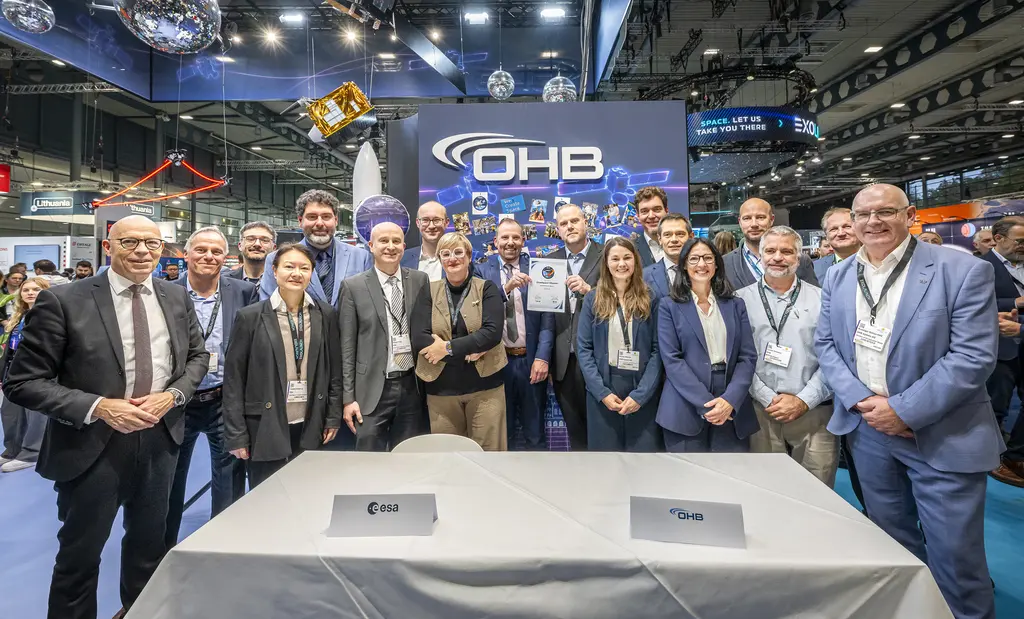
    ESA and OHB System signed the implementation-phase contract for ClearSpace-1 in Bremen on November 17, 2026. The mission is intended to approach, capture and deorbit an uncooperative spacecraft: ESA’s Proba-1, launched in 2001 and out of regular operations since 2022.

    Capturing a satellite that cannot help

    The challenge is different from docking with a vehicle built to cooperate. A successful demonstration would test an option for removing stranded satellites before collisions create further debris.

    The milestone begins construction; it is not a completed cleanup. ESA says launch is scheduled for 2030, so the operational demonstration remains ahead. The agency also describes a redesign phase and technical and industrial challenges that preceded this contract.

    For readers tracking orbital-debris solutions, the important next distinction is between building the spacecraft and proving the full capture-and-reentry sequence in flight.

    Primary source: ESA’s November 17 construction announcement.

    Featured photograph: ClearSpace-1 contract signing in Bremen, November 17, 2026. Credit: ClearSpace, via ESA.

  • Hera’s Heat Vision Reveals an Asteroid Moonlet Hidden in Shadow

    Hera’s Heat Vision Reveals an Asteroid Moonlet Hidden in Shadow

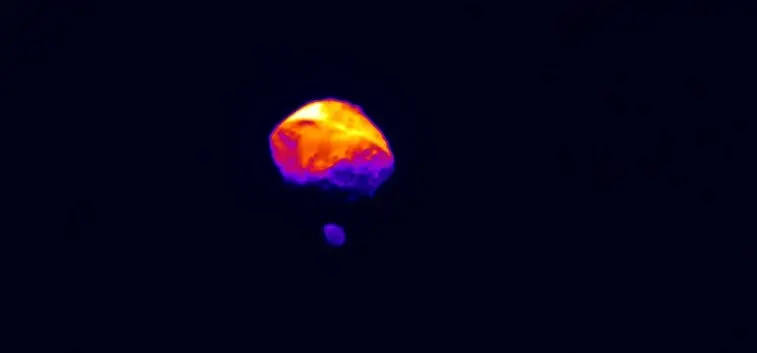
    ESA’s November 17, 2026 image release shows Didymos through Hera’s navigation camera, multispectral sensor and thermal imager. From 28.5 kilometres away, the visible image resolves features at approximately 2.7 metres per pixel.

    HyperScout H measures reflected light in 25 bands, while Japan’s TIRI instrument records thermal emission. The smaller moonlet Dimorphos is almost entirely dark in the reflected-light views, but appears in thermal infrared.

    Different measurements, complementary questions

    The distinction is not simply between a clear and a poor photograph. Reflected light provides information about the sunlit surface; emitted infrared reveals temperature patterns that can help characterize the material. The featured TIRI image was acquired November 6, rather than on the release date.

    These measurements support Hera’s investigation of NASA’s 2022 DART impact. They do not yet settle whether the collision excavated a crater or reshaped the moonlet. ESA says more detailed images are due November 25.

    Primary source: ESA’s November 17 multi-instrument release and image metadata.

    Featured image: TIRI thermal infrared view of Didymos and Dimorphos, November 6, 2026. Credit: ESA.

  • LOXSAT Will Test the Plumbing Behind Orbital Refueling

    LOXSAT Will Test the Plumbing Behind Orbital Refueling

    Keeping rocket propellant cold is only half the problem in orbit. In microgravity, liquid can cling to surfaces instead of collecting where a pump expects it. NASA’s LOXSAT project, led by Eta Space, will test liquid-oxygen storage, pressure control and transfer between tanks during nine months in low Earth orbit.

    Active cooling and insulation are intended to limit losses from boiling. The payload has been integrated with a Rocket Lab Photon bus for an Electron launch from New Zealand.

    A demonstration, not an operating depot

    NASA’s project-page update dated November 17, 2026, does not supply a launch date or announce a completed flight. The test addresses an enabling technology for future depots and landers, not an already-operational refueling service.

    The distinction is important: transferring cryogenic liquid reliably in orbit is a capability to demonstrate under actual flight conditions. Integration on the ground is a step toward that test, not its result.

    Primary source: NASA’s liquid-oxygen flight demonstration overview.

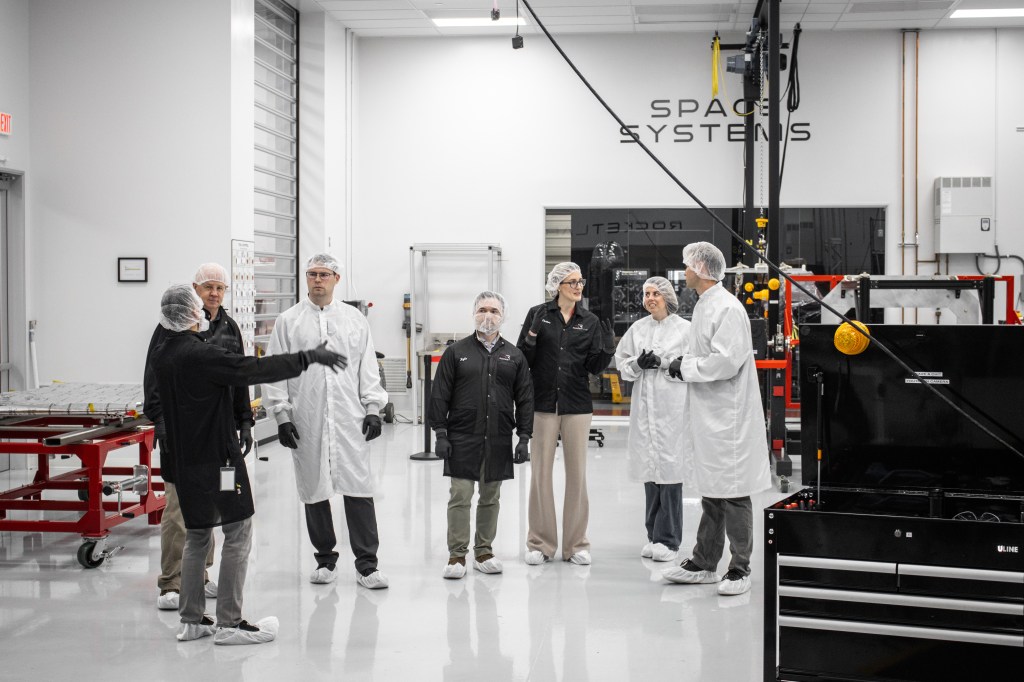
    Featured photograph: NASA cryogenic-fluid team touring Rocket Lab’s facility on February 12, 2026. Credit: Rocket Lab, via NASA.

  • Chandra Turns Four Star-Forming Regions Into Sound

    Chandra Turns Four Star-Forming Regions Into Sound

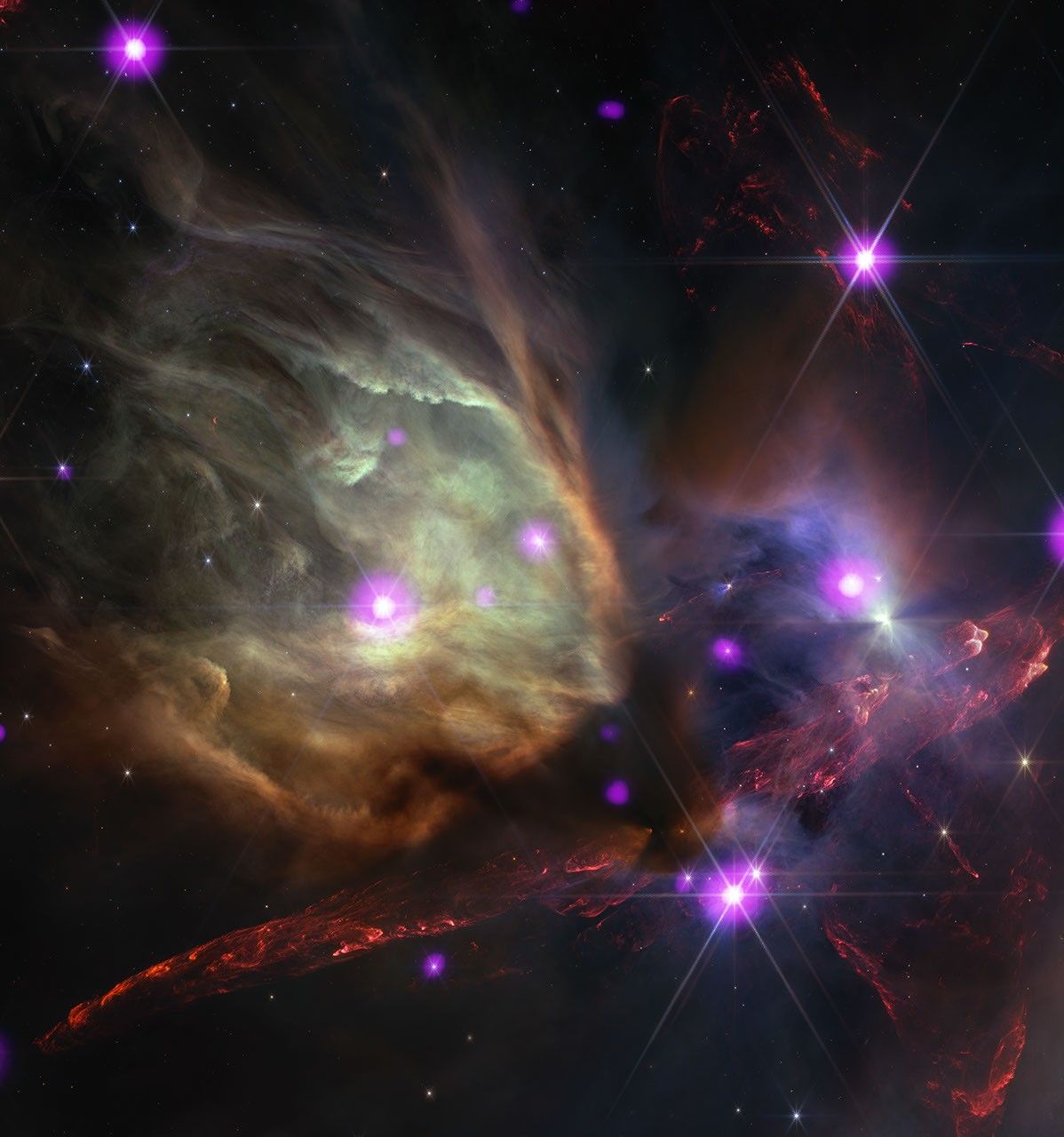
    New sonifications released November 17, 2026, translate observations of M82, Orion, Carina and Rho Ophiuchi into audio. They combine Chandra X-rays with optical and infrared imagery from other observatories.

    These are deliberate data-to-sound mappings, not microphones recording sound across space. In the M82 version, brighter features become louder, and different wavelength bands occupy different sonic roles. The other pieces similarly distinguish hot X-ray sources from cooler infrared structure.

    Listening to the arrangement of data

    Listening provides another way to follow the arrangement of young stars, gas and dust. The essential distinction is between the observed signal and the musical choices used to represent it: pitch and instrumentation are part of the translation, not literal sounds emitted by the photographed nebulae.

    The source page includes the audio pieces and explanations of how their features are mapped.

    Primary source: NASA’s Chandra sonification release.

    Featured image: Rho Ophiuchi composite. X-ray: NASA/CXC/MIT/C. Canizares; IR: NASA/ESA/CSA/STScI/K. Pontoppidan; Image Processing: NASA/ESA/STScI/Alyssa Pagan, NASA/CXC/SAO/L. Frattare and J. Major.

  • Why Two UAP Reviewers Agreeing Is Not the Same as Being Right

    Why Two UAP Reviewers Agreeing Is Not the Same as Being Right

    Independent reviewers can test whether a classification scheme is reproducible, but agreement alone does not identify an object. Jacob Cohen explained the distinction in his own 1986 retrospective on kappa: when both reviewers heavily favor one category, substantial agreement can occur even under independent random labeling.

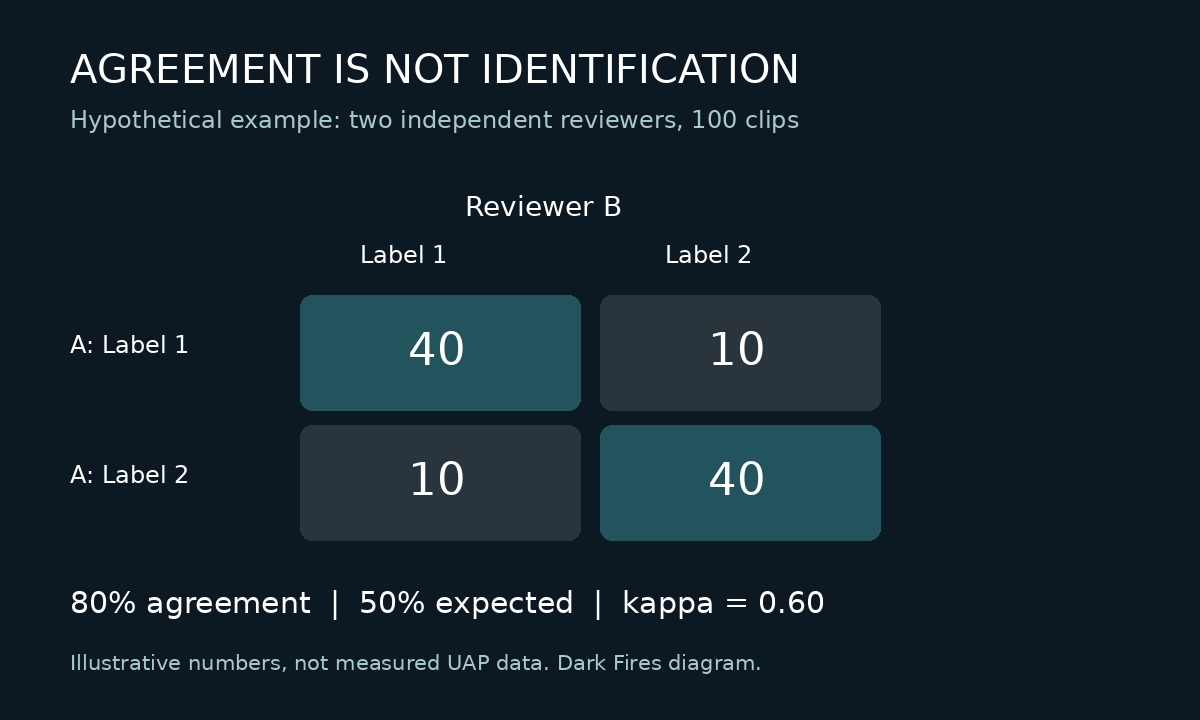
    For a hypothetical UAP exercise, give two reviewers the same 100 clips and predetermined categories without letting them see each other’s labels. Publish the complete cross-tabulation, not merely a percentage.

    Suppose each uses the two labels equally and they agree on 80 clips: expected agreement under independent labels is 50%, and kappa = (0.80 − 0.50) / (1 − 0.50) = 0.60. This is an illustrative calculation, not a real dataset or a quality threshold.

    Review the disagreements and category definitions; even perfect agreement cannot rule out a shared mistake.

    Source: Jacob Cohen’s author-written retrospective on agreement and kappa (1986). The UAP example is our explanatory application, not a finding in Cohen’s paper.

    Generated illustration

    Featured diagram: Dark Fires. Hypothetical counts, not measured UAP data.

  • The Arecibo Message at 52: A Small Picture Sent Across an Enormous Distance

    The Arecibo Message at 52: A Small Picture Sent Across an Enormous Distance

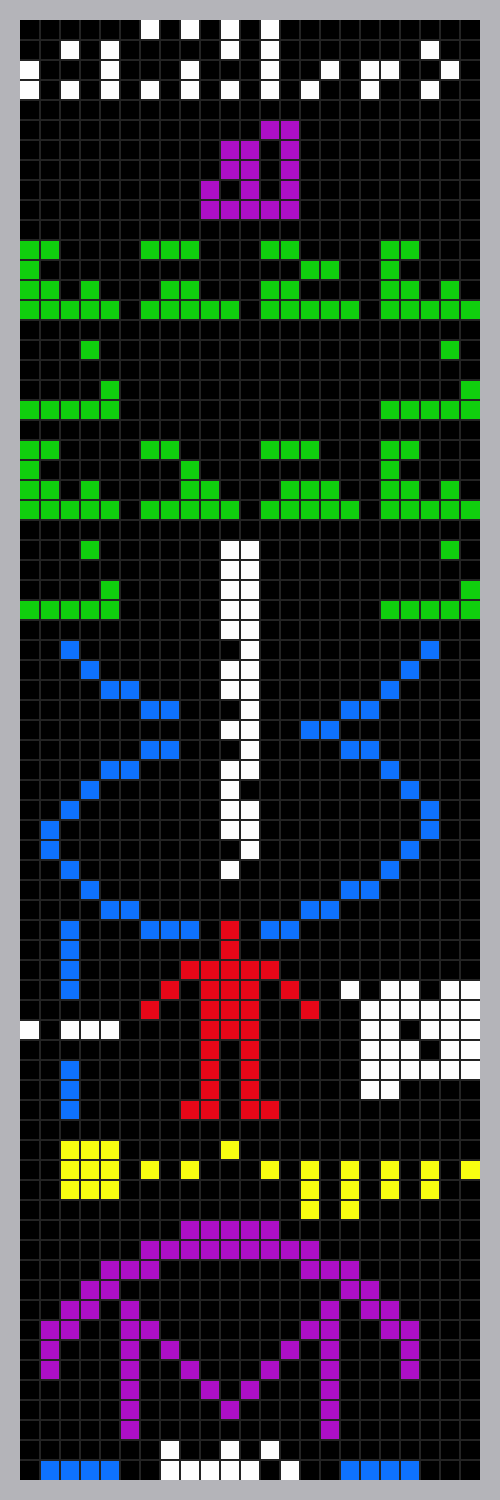
    On November 16, 1974, Arecibo broadcast a binary picture toward the globular cluster M13. Its 1,679 bits can be arranged as 73 rows of 23 columns, a prime-number pairing intended as a decoding clue.

    The resulting picture included a human figure, DNA, the Solar System and the telescope. Transmission took less than three minutes at 10 bits per second.

    The exercise was a demonstration and a thought experiment about communication, not evidence that anyone received or answered it. A recipient would still have to infer the layout and meanings across an unknown cultural gap. The message’s anniversary invites a sharper distinction between sending information and demonstrating that information is intelligible.

    Sources: SETI Institute’s Arecibo account; University of Puerto Rico at Arecibo: message history.

    Featured image: Color-coded rendering of the 1974 Arecibo message. Arne Nordmann (norro), CC BY-SA 3.0. Unmodified rendering.