A bright shape in infrared footage invites an apparently simple question: how hot is it? The answer depends on what the camera recorded, how the surface interacts with infrared radiation, and how the image was displayed. A video can show a real contrast without supplying enough information to turn that contrast into a reliable surface temperature.
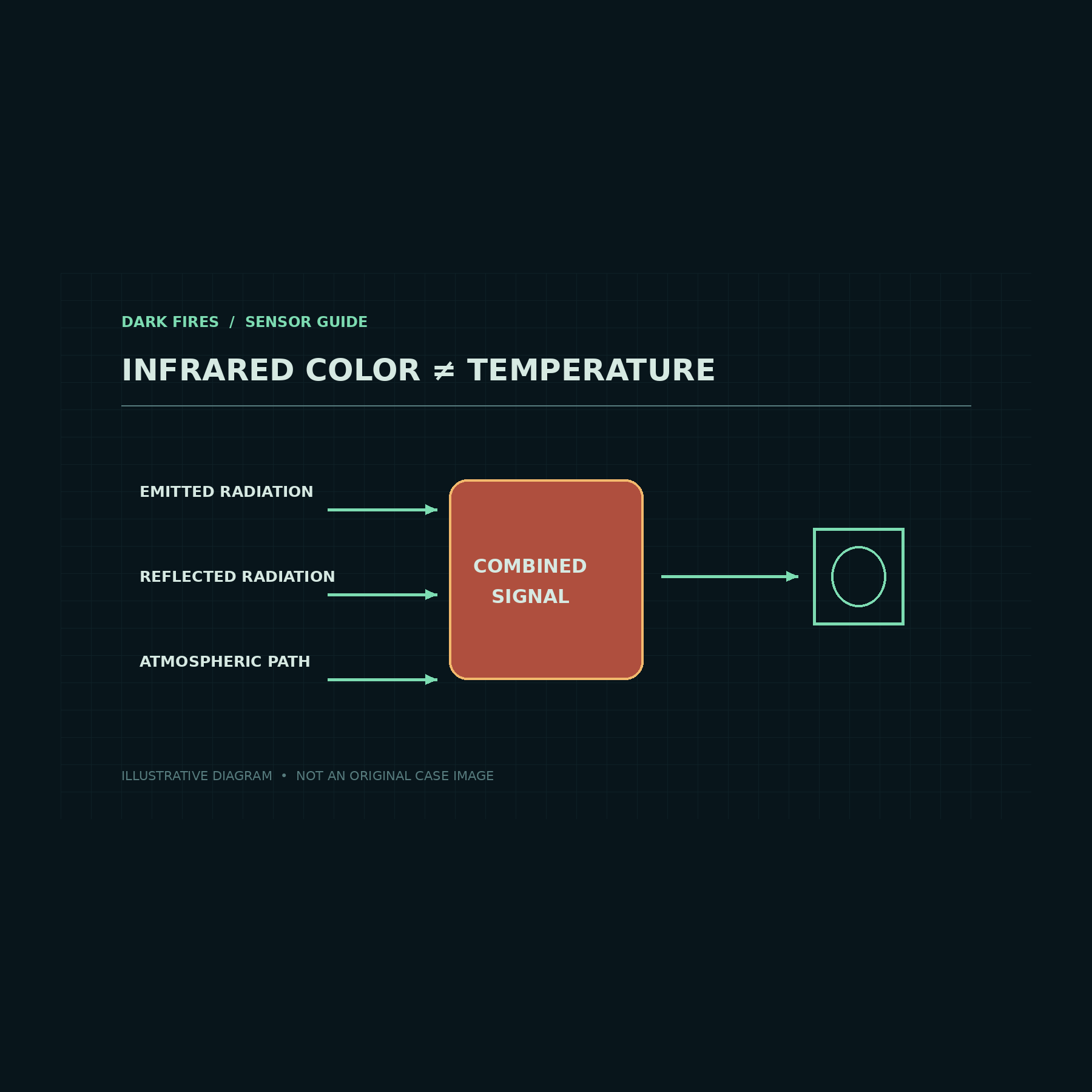
The camera receives more than the object’s own emission
Emissivity describes how effectively a surface emits thermal radiation compared with an ideal emitter at the same temperature. A surface with low emissivity can contribute a substantial reflected signal from its surroundings. The temperature assigned by a radiometric camera therefore depends on assumptions about both the surface and the reflected background. FLIR’s manufacturer explanation of emissivity describes why these settings matter.
This creates an important problem for unidentified targets: the material and surface finish may be precisely what investigators do not know. An apparent temperature calculated with an assumed emissivity is conditional on that assumption. It is not automatically a measurement of an object’s interior, engine or energy source.
The path to the camera also matters. Radiation can be absorbed along the line of sight, and the atmosphere contributes radiation of its own. FLIR’s thermographic measurement guidance identifies object distance and atmospheric conditions among the parameters relevant to compensation. A nearby laboratory measurement with known settings and a distant target observed through an uncertain air column are different measurement situations.
A display is another layer
The visible black, white or colored pixels are a representation of the infrared signal. They are not the object’s visible color. Camera software can change the palette and contrast treatment; FLIR’s FC-Series installation manual, for example, documents separate controls for automatic gain and display polarity or palette. The options of one camera should not be assumed to describe an unidentified military system, but the distinction between measurement and rendering remains essential.
Consider a deliberately simplified comparison. Two exported clips show the same target as pale gray. One export maps a narrow signal range onto the full display, while the other maps a much wider range. Matching shades would not establish matching temperatures. Conversely, a change in shade would need to be checked against display settings before being described as heating or cooling.
What would make a thermal claim testable?
A useful analysis should state whether the original file contains radiometric measurements or only rendered video, identify the camera and spectral band where available, and preserve the settings used during capture and export. It should explain the assumed emissivity, reflected background and atmospheric correction rather than hiding them inside a confident temperature claim.
These requirements do not make infrared footage uninformative. Such footage can reveal contrast and motion that visible cameras miss. They define the narrower conclusion the public image can support: an object stood out in that sensor’s recorded signal. Establishing how hot it was, or what powered it, requires additional evidence.
Featured image: Generated illustration. Original Dark Fires explanatory diagram, not sighting imagery.
Leave a Reply