On September 6, 2018, the Sunspot Solar Observatory on Sacramento Peak, New Mexico, temporarily closed and its on-site staff and residents left. The people running the site did not immediately give the public a detailed explanation. Ten days later, the Association of Universities for Research in Astronomy (AURA) put its explanation on the record: AURA and the National Science Foundation had decided to vacate the site as a precaution while authorities investigated criminal activity at Sacramento Peak.
AURA said it had become concerned that a suspect could pose a danger to staff and residents. It also explained why the setting mattered. The observatory sits at roughly 9,200 feet in the Sacramento Mountains, and protecting the handful of people living and working at that remote site on short notice presented logistical difficulties. AURA determined that moving them away was the most effective precaution. Its statement did not name a suspect, specify an offense, or give a detailed account of the investigation. It is a record of why the organization said it acted, not a case file or a finding of guilt.
The same September 16 statement addressed the silence. AURA said releasing details while the facility was empty could have tipped off the suspect and interfered with the investigation. It announced a transition back to regular operations beginning September 17, with staff returning and temporary private security for the reopening period. The fact that the closure was unusual helps explain why it drew attention. It does not establish an astronomical event or observation as the reason for the shutdown.
A separate record shows what the telescope does. A 2025 paper describing the Sunspot Solar Observatory Data Archive says it holds Dunn Solar Telescope observations starting in February 2018, including imaging, spectroscopy and measurements of polarization. That starting date is not a claim of uninterrupted coverage, and the archive paper does not explain the closure. The records answer different questions: one documents the observatory’s stated safety decision; the other describes the scientific observations the instrument collects and preserves.
Sources: AURA’s September 16, 2018 statement; Sunspot data archive paper.
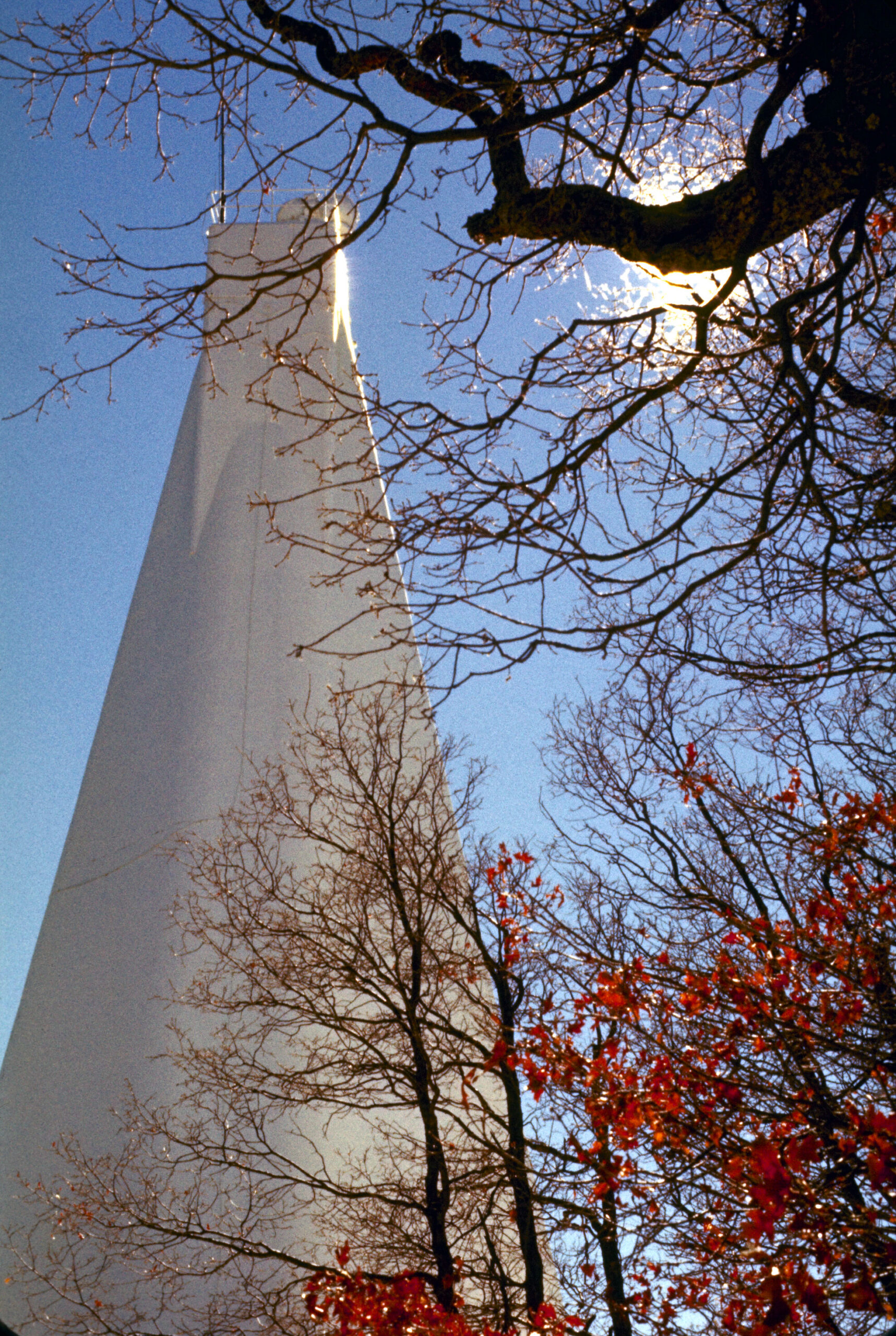
Featured photograph: the tower at Sacramento Peak in 1980, not the 2018 closure. NOIRLab/NSF/AURA, CC BY 4.0. Image resized and may be cropped by the site layout.
Leave a Reply