A red flash above a distant thunderstorm can look unlike familiar lightning. It may appear separated from the cloud, take a branching shape, and disappear before an observer has time to react. Sprites offer a documented example of an unusual-looking sky event that belongs to atmospheric physics, while still presenting active research questions.
NASA’s October 26, 2022 introduction to Spritacular describes sprites as brief electrical phenomena occurring high above thunderstorms, around 80 kilometres in altitude. Their forms can include diffuse regions and bright tendrils. The article traces the first credible camera recording to 1989, when researchers testing a low-light camera unexpectedly captured the phenomenon.
A documented example from orbit
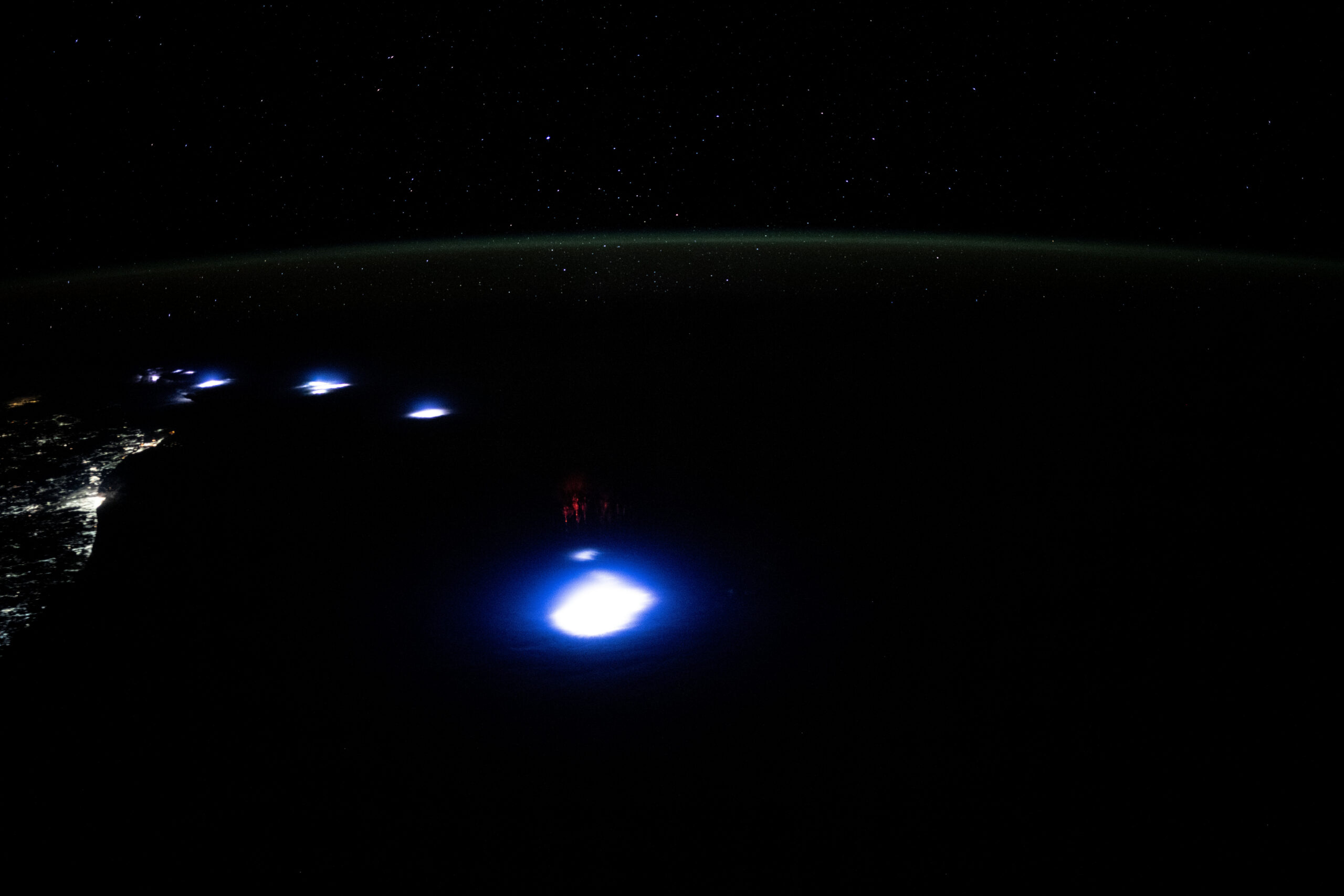
On June 3, 2024, NASA astronaut Matthew Dominick photographed red sprites from the International Space Station. NASA published the image on July 10. Its accompanying explanation places the flashes above storms off South Africa and identifies them as transient luminous events associated with powerful lightning activity. The agency also describes instruments that study such events using several kinds of detectors.
That example is useful because it places an unfamiliar flash within a documented observing context. The photograph has a date, an observer, and a known vantage point. A circulating crop without those details would be much harder to assess, even though it showed exactly the same physical event.
How to assess a possible sprite recording
Start with the full frame. Is a distant thunderstorm visible? Does the unusual feature appear above it, or is that relationship merely assumed because the clip was cropped? Preserve the frames before and after the flash. An isolated still may hide the connection between the brief upper-atmosphere feature and the activity beneath it.
Next, document the viewing direction and approximate location of the storm. Nearby weather conditions alone are an incomplete check: a clear sky over the observer does not tell you what was happening far along the camera’s line of sight. Record what you can establish and leave the remainder uncertain rather than filling gaps with a plausible story.
NASA’s Spritacular project was designed to bring observers’ photographs into a research database. Its published guidance asks for image details including time and location, and explains that scientists review submissions. That provides a practical route for a possible observation to receive informed attention instead of being judged solely through social-media reactions.
A red flash is not automatically a sprite, and a recognizable sprite does not explain unrelated lights in the same recording. Each feature needs its own assessment. The broader lesson is encouraging: an unfamiliar atmospheric event can be real, scientifically interesting, and open to investigation without requiring a vehicle behind it. Good documentation makes that investigation possible.
Featured image: red sprites above storms off South Africa, photographed June 3, 2024. Credit: NASA/Matthew Dominick. NASA source.
Leave a Reply