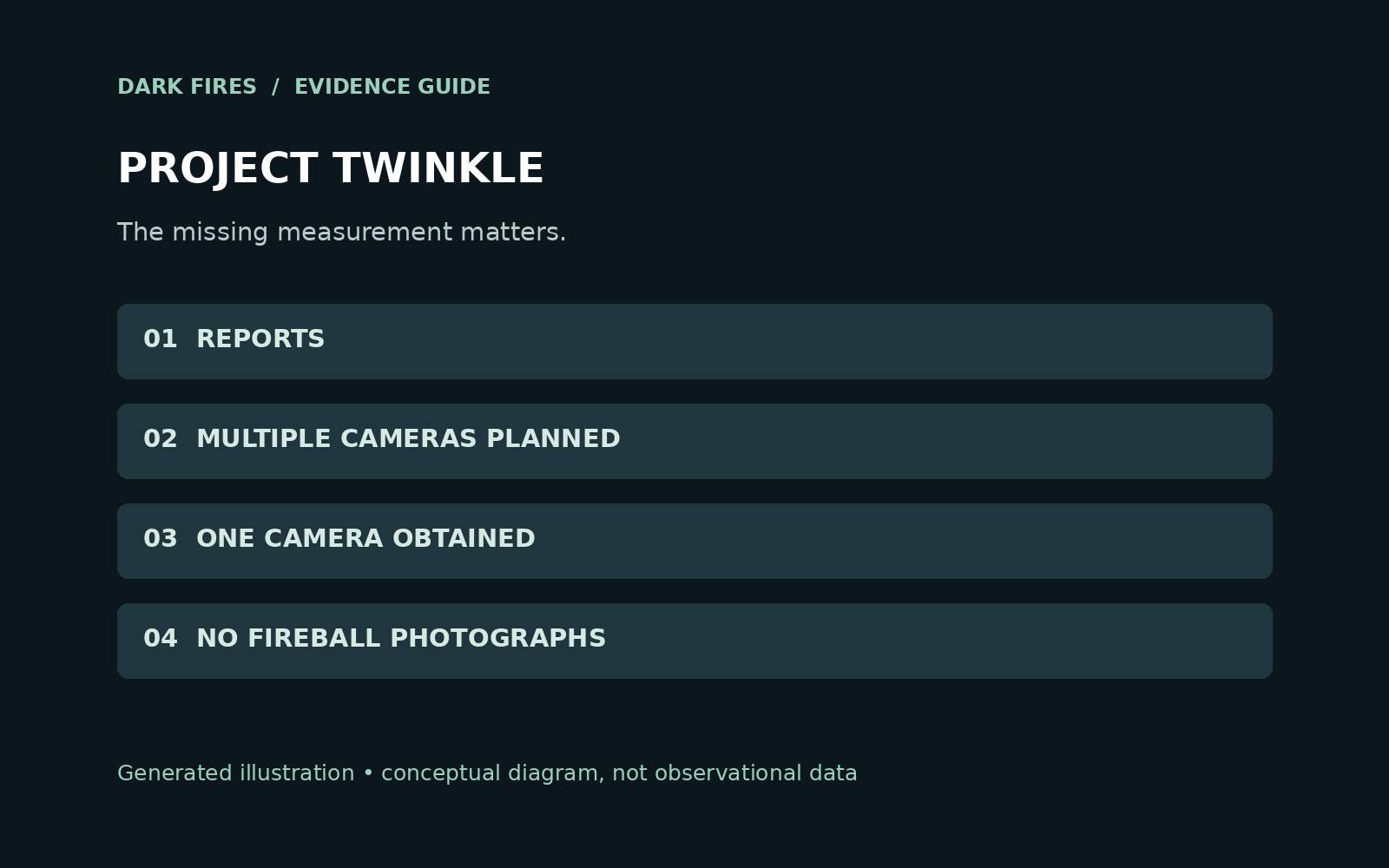
Project TWINKLE tried to turn reports of strange lights into measurable evidence. Its most instructive feature is the gap between that plan and the observations it actually secured.
AARO’s February 2024 historical review describes reports of green fireballs in Nevada and New Mexico and an investigation managed by the Air Force’s Cambridge Research Laboratory. Investigators intended to use multiple cameras near White Sands. Images of the same event from separate positions could help establish its altitude and speed, rather than relying entirely on how fast it appeared to a witness.
According to that review, the project obtained only one camera, moved it between locations following reports, and captured no photographs of the fireballs. AARO dates the effort to summer 1949–summer 1950 and notes uncertainty over its relationship with the original Project GRUDGE.
This is not evidence that the reported lights were extraterrestrial. Nor does an unsuccessful photography campaign show that witnesses saw nothing. It shows why an investigation can end without the measurements needed to discriminate among explanations. TWINKLE remains relevant to modern UAP work for that methodological reason: impressive intentions do not substitute for synchronized, usable observations.
Primary source: AARO Historical Record Report, Volume 1, February 2024, page 15.
Generated illustration
Original Dark Fires conceptual diagram, not observational data or a reconstruction of a sighting.
Leave a Reply