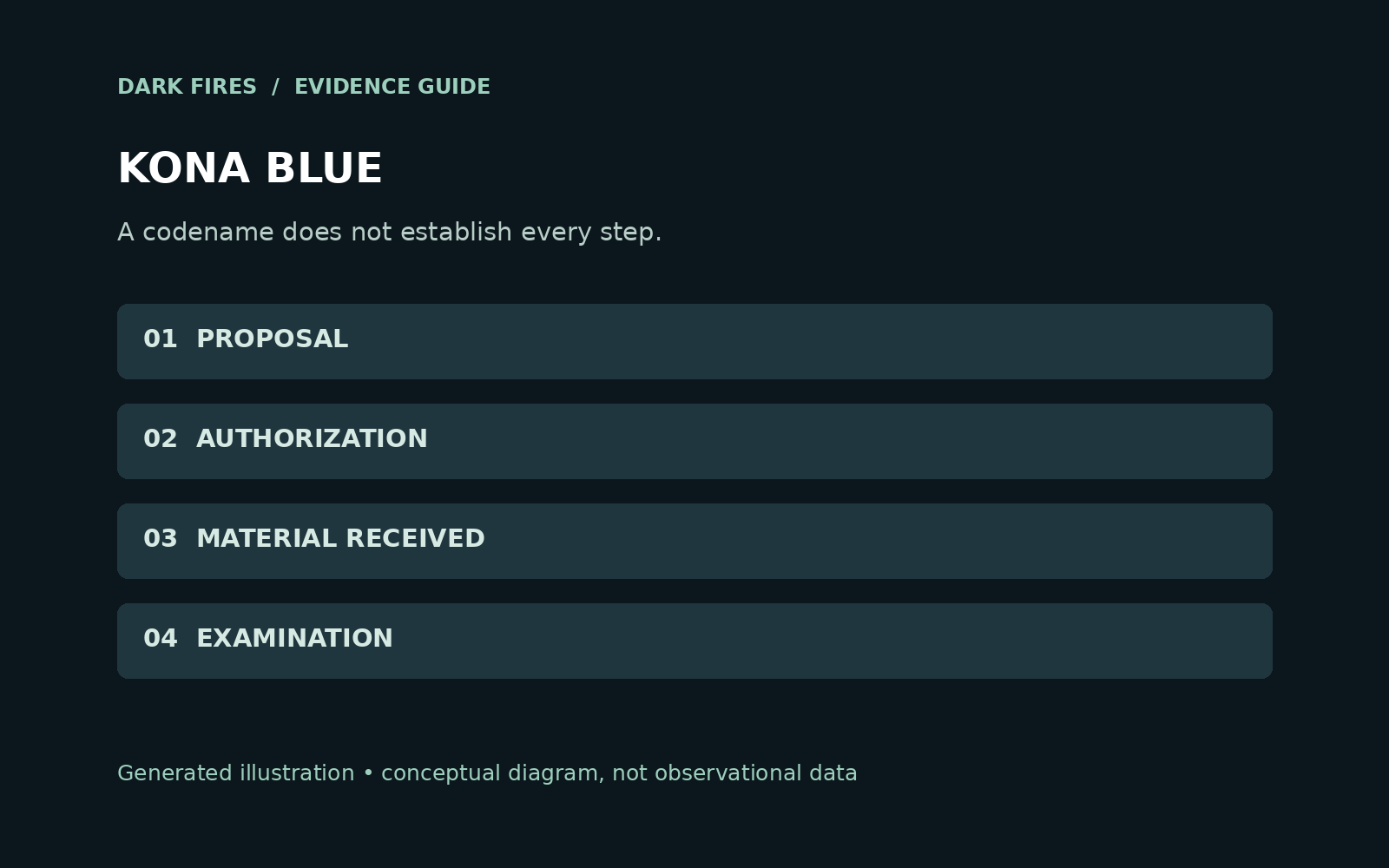
KONA BLUE matters to the UAP debate because it illustrates a crucial distinction: documents can establish that people proposed a secret program without establishing that the extraordinary material they hoped to study existed.
In its February 2024 historical review, AARO traced the proposal to supporters of the earlier AAWSAP/AATIP effort. They sought a Department of Homeland Security program that would investigate UAP and examine purported off-world technology. A prospective special-access arrangement was requested, but DHS leadership rejected the proposal, according to AARO.
The report says the program never became an approved special access program, and no extraterrestrial craft, bodies, data or material were transferred to DHS. Those are AARO’s findings, not a new discovery announced in November 2026.
The useful question for readers is therefore not simply whether the codename was real. It was. The question is what each record demonstrates: a proposal, authorization, funding, receipt of material, or an actual examination. Those are separate evidentiary steps. Treating the first as proof of the last turns an authentic document into support for a claim it does not establish.
Primary source: AARO Historical Record Report, Volume 1, February 2024, pages 34–35.
Generated illustration
Original Dark Fires conceptual diagram, not observational data or a reconstruction of a sighting.
Leave a Reply