Dark Fires / Topics
Space & Astronomy
Explore space missions, planets, stars, galaxies, and the science behind new discoveries, with reporting grounded in observatories, mission teams, and published research.
-
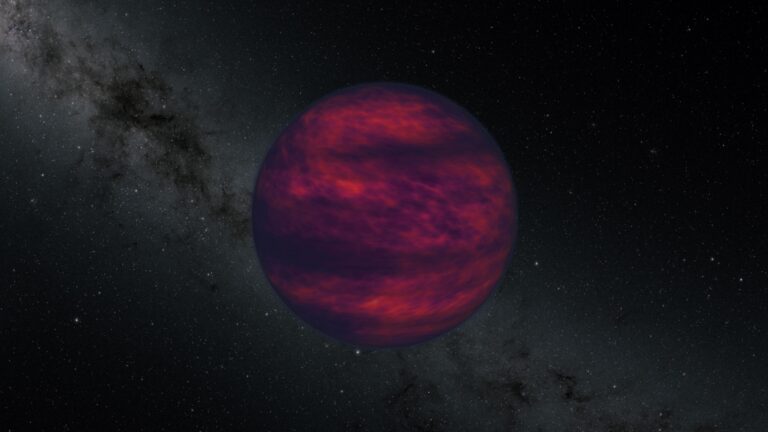
SPHEREx Reveals Brown-Dwarf Chemistry That Challenges Atmosphere Models
SPHEREx observations reveal molecular signatures in nearby brown dwarfs and expose gaps in models of their changing atmospheres.
-
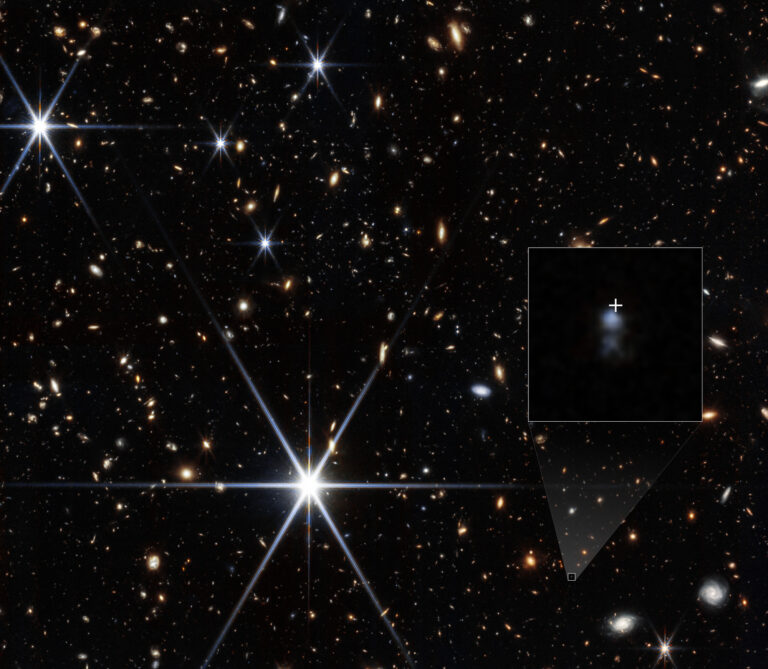
Webb Traces an Ancient Fast Radio Burst to a Young Dwarf Galaxy
An October 8 study places FRB 20240304B at a redshift of 2.148. Its small, rapidly growing host galaxy offers a clue to the burst’s origin and a way to study…
-
Webb Reads the Mineral Debris of Collisions Around Other Stars
Infrared observations of 21 dusty systems reveal mineral patterns that help researchers reconstruct violent stages of rocky planet formation.
-
Perseverance Traces Three Water Episodes in Jezero’s Ancient Rocks
A September study reconstructs groundwater, possible lake exposure and a later hot-water event in Mars’s Margin unit, sharpening its astrobiological interest.
-
Hubble’s Niobium Clue Points to a Planet Born After Its Star Aged
A new study connects unusual chemistry around white dwarf HS 0209+0832 with a possible gas giant formed from material its star shed.
-
Webb Finds Ammonia on HATS-6 b and a Temperature Puzzle to Solve
The giant planet’s atmospheric spectrum includes water, methane and ammonia, while unexpectedly low modelled temperatures expose uncertainties in interpreting distant atmospheres.
-
Beta Pictoris b Radio Bursts Offer a New Probe of an Exoplanet’s Magnetic Field
A September preprint traces natural auroral radio emission to a giant exoplanet, potentially opening a direct way to measure distant planetary magnetism.
-
NASA’s Asteroid Viewer Adds Close-Approach Replays: How to Read Them
New Eyes on Asteroids controls make close encounters easier to explore. Here is how to put the animation alongside the underlying orbit and risk information.
-
SunRISE Targets Mid-2027: How Six Small Satellites Will Study Solar Storms
NASA’s latest schedule puts SunRISE no earlier than mid-2027. Its distributed radio telescope aims to trace the origins of hazardous solar particles.
-
Mars’s Giant Morning Cloud Offers a New Test of Atmospheric Physics
New modelling suggests an unusual route to ice formation in a recurring Martian cloud. The observations and remaining mismatches make the finding worth following.