A repeating radio source now has a more specific physical explanation: a white dwarf paired with a star resembling the Sun. The result, reported by ICRAR on November 12, 2026, concerns GPM J071507−114153. It expands the known variety of long-period radio transients, rather than providing evidence for an artificial transmission.
Locating the pulse source
The white dwarf spins about once every eight minutes. Researchers detected the system with the Murchison Widefield Array, localized it with MeerKAT, and used Keck optical observations to identify its G-type companion. According to ICRAR’s account, more than 100 hours of radio observations helped reveal orbital motion in the pulses. That places the emission near the white dwarf, though it does not uniquely establish the exact emitting site.
The team also interpreted changes in the radio signal as evidence of magnetized material associated with the companion, possibly a stellar prominence. The qualification matters: detecting a signal change and explaining the intervening structure are related but distinct steps.
Why the companion matters
Previously identified systems of this kind commonly involved smaller, cooler red dwarfs. A Sun-like companion widens the circumstances in which astronomers must explain the phenomenon. The discovery does not establish that every slow radio transient has the same origin.
The Nature Astronomy paper, published November 12, provides links to the detected-pulse measurements and dynamic spectra, with processing code also identified. Those materials make this more than an intriguing description of a periodic signal: they give other researchers a route to scrutinize how the timing and interpretation were obtained.
The useful distinction is between recognizing a rhythm and identifying its source. A regular interval alone would leave many possibilities open. Here, radio localization, optical identification and orbital behavior constrain the explanation together. The remaining question is how the stars produce and modify the radiation, not whether a regular pulse is automatically a message.
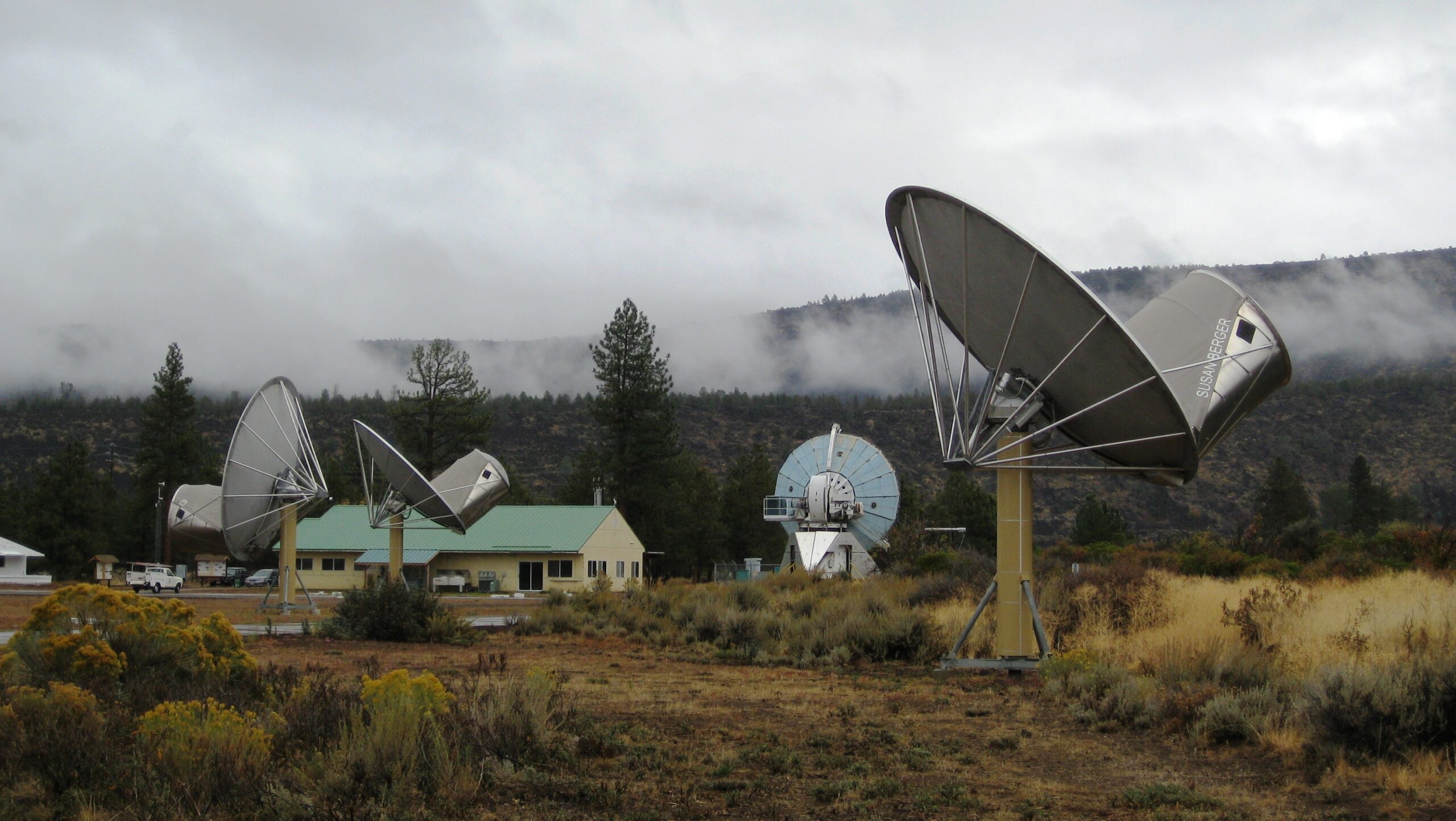
Featured image: Archival Allen Telescope Array photograph, used to illustrate radio astronomy; this is not one of the instruments used for this discovery. Photo: brewbooks, CC BY-SA 2.0.

Leave a Reply